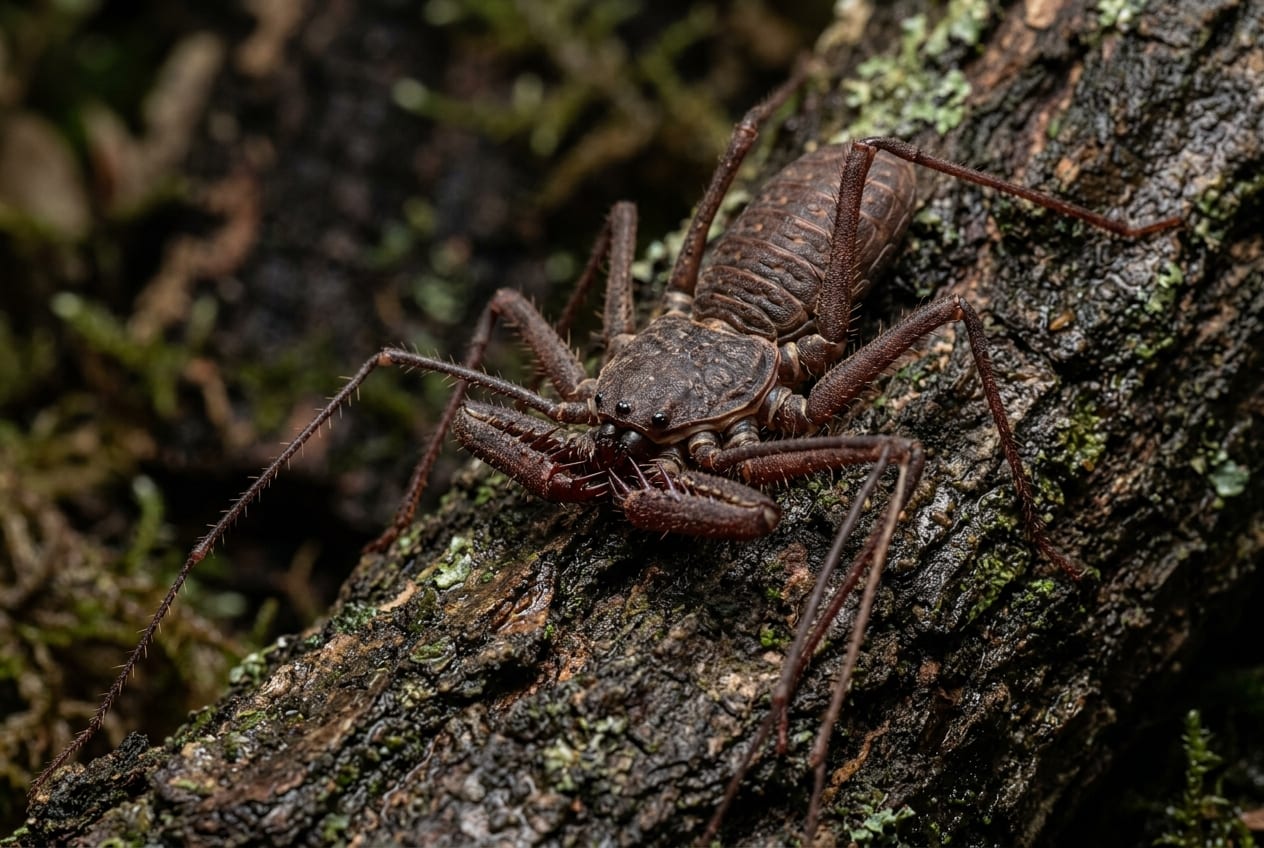
Tanzanian Whip Spider
The Tanzanian whip spider is a large amblypygid native to a wide range across central and southern Africa. Its flattened body and dramatically long, whip-like pedipalps give it an unmistakable silhouette. Despite its quick movements, it has a calm temperament, and unlike most whip spiders it rarely shows cannibalism, making it one of the few species suited to being kept in small groups. It thrives in warm, humid conditions and breeds readily, so despite its striking looks, it is considered an approachable entry point for anyone new to keeping whip spiders.
View Tanzanian Whip Spider encyclopedia →Breeder Wanted!
List on BreederDirect and sell directly to customers nationwide!
BreederDirect's 5 Transparency Commitments
When listing Exotic Invertebrates, Breeders disclose the following. We guarantee transparency on growth stage and breeding unit.
- Real Photos
- Breeding Unit
- Generation Info
- Body Length (mm)
- Country of Origin
Browse all 286 breeds
No listings match your filters
Adjust your filters, or get notified when new listings arrive.
Getting alerts is free with a member account. When new listings match your saved search, we'll notify you by email and in-app.
Browse other categories
Verified breeders (preview)
Are you raising exotic invertebrates?
Register as a breeder and connect with buyers directly.
Apply as a breederTanzanian Whip Spider key facts
- Care level
- Beginner-friendly
- Lifespan
- 5-7 years
- Size
- Body up to 3.6cm, pedipalp tibia up to 8.5cm (genus-level figures)
- Temperature
- 28〜30℃
- Humidity
- 80〜95%
- Diet
- Small insects such as crickets and red runner roaches; woodlice (Porcellio scaber) are readily taken
- Temperature & Humidity
- 28-30 C and 80-95% humidity. Mist regularly and add moisture-retaining materials such as lava stone to keep humidity stable.
- Enclosure
- A well ventilated tall enclosure with layered cork bark and stacked lava stone for crevices and climbing surfaces. Use tarantula substrate mixed with leaf litter, and add springtails to control mould and leftovers.
- Diet & Feeding
- Small insects such as crickets and red runner roaches. Woodlice (Porcellio scaber) are readily eaten, so establishing them in the substrate gives both food and cleanup.
- Temperament & Venom
- Venomless and silkless. Nocturnal and shy, and not aggressive even in groups.
- Notes
- No cannibalism has been observed, so groups work well. Separate the young after their first moult. They will drink from a shallow water dish.
About Tanzanian Whip Spider
A large whip spider from central and southern Africa, with a flat body and extremely long pedipalps. Rarely cannibalistic and suited to group housing, it thrives in heat and humidity and breeds easily, making it beginner-friendly.
7 things to know before welcoming a Tanzanian Whip Spider
1Warm, Humid Housing
This species prefers high heat and humidity, so mist the enclosure regularly and keep temperatures on the warmer side. Letting it dry out can lead to molting problems and other health issues.
2Handle the Long Pedipalps with Care
The pedipalps are important appendages used to catch prey; the sensing role is handled by the first pair of legs, which are extended like antennae. Grabbing or pulling on the pedipalps can cause them to break off, so keep handling to a minimum.
3Rare Among Whip Spiders: Group-Friendly
Unlike most whip spiders, this species is known for showing almost no cannibalism, making it one of the few suited to communal housing. Still, freshly molted individuals are vulnerable, so provide multiple hides to reduce encounters.
4Nocturnal, Provide Hiding Spots
During the day it tucks itself into bark or cork hides and stays still. It becomes active and starts moving around at night, so give it plenty of vertical hiding spaces in its setup.
5Leave It Undisturbed During Molting
Its body is extremely fragile just before and after molting. Keep humidity elevated during this period and avoid vibration or disturbance, simply leaving it be.
6Feeding Relies on Live Prey
It feeds by capturing live prey such as crickets. Remove any uneaten leftovers promptly to keep the enclosure clean and prevent mold or pests.
7Docile Despite Its Looks, No Venom
Its outstretched pedipalps make for a striking appearance, but its temperament is calm and it is not considered aggressive. It has no venom, but you should still avoid startling or handling it roughly to prevent unnecessary stress.
Frequently asked questions about Tanzanian Whip Spider
- Q.Does it really not cannibalize?
- A.There is individual variation, but this species is known for showing almost no cannibalism compared to other whip spiders, making group housing possible. Still, freshly molted individuals are vulnerable, so provide several hides for safety.
- Q.Is it dangerous to touch?
- A.It has no venom and is not considered aggressive. That said, grabbing it firmly or startling it can cause its pedipalps to break off, so it is best to keep handling to a minimum.
- Q.Is it suitable for beginners?
- A.It prefers warm, humid conditions and tends to breed readily, which is why it is considered a beginner-friendly whip spider. As long as temperature and humidity are managed properly, it is not difficult to keep.
- Q.How large does it grow?
- A.Body length reaches about 3.6 cm at most. Its distinctive pedipalps (the tibia segment) can extend up to around 8.5 cm in some individuals, based on figures reported for the genus.
- Q.Where is it usually during the day?
- A.Being nocturnal, it spends most of the daytime tucked motionless into bark or cork hides. Once it gets dark, it becomes active and starts moving around in search of food.
Learn more about Tanzanian Whip Spider in the encyclopedia
View Tanzanian Whip Spider encyclopedia entry →
Care difficulty, lifespan, size and diet — all basics covered.
More in this category
Can't find the one you're looking for?
Post your wishes for free and breeders with matching animals will contact you with introductions.