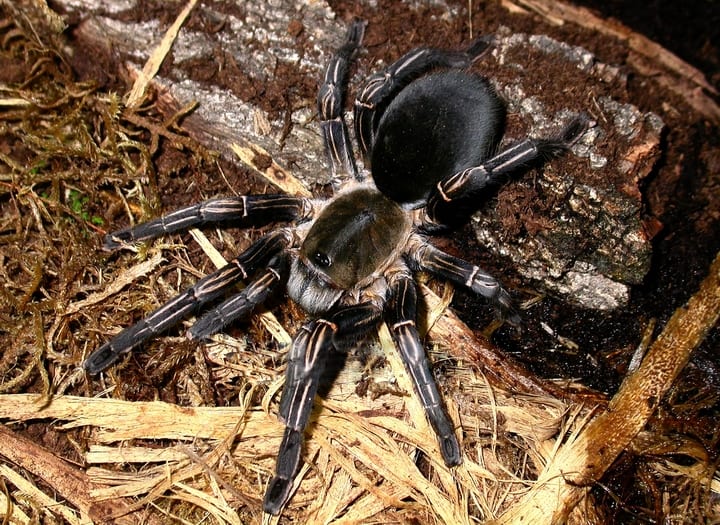
 © Www.universoaracnido.com / CC BY-SA 2.5
Thai Zebra Tarantula
The Thai Zebra Tarantula is a burrowing species native to Southeast Asia, easily recognized by the bold white stripes running down its black legs and the zigzag pattern across its abdomen. Found in tropical forests as well as bamboo groves and rice paddies, it digs deep, vertical burrows and spends its days hidden underground, emerging near the entrance at night to ambush prey. Adults reach a body length of about 5 to 6 cm with a leg span of roughly 12 to 13 cm, and their striking contrast becomes more pronounced as they mature. Because it spends much of its life out of sight and needs a deep substrate setup to burrow properly, this species is generally recommended for keepers with some prior tarantula-keeping experience rather than absolute beginners.
View Thai Zebra Tarantula encyclopedia →0% commission on your first sales!Register by September 30, 2026 and your first 2 sales are commission-free!
Breeder Wanted!
List on BreederDirect and sell directly to customers nationwide!
5 Transparency Standards You Can Trust
When listing Exotic Invertebrates, Breeders disclose the following. We guarantee transparency on growth stage and breeding unit.
- Real Photos
- Breeding Unit
- Generation Info
- Body Length (mm)
- Country of Origin
Browse all 249 breeds
Verified breeders wanted for Exotic Invertebrates
Breeders are signing up now ahead of launch. Subscribe to be notified when new listings go live.
Getting alerts is free with a member account. When new listings match your saved search, we'll notify you by email and in-app.
Browse other categories
Verified breeders (preview)
Are you raising exotic invertebrates?
Register as a breeder and connect with buyers directly.
Apply as a breederThai Zebra Tarantula key facts
- Care level
- Intermediate
- Lifespan
- Females 10-15 years / males 3-5 years
- Size
- Body 5-6cm, leg span 12-13cm
- Temperature
- 24〜28℃
- Humidity
- 70〜80%
- Diet
- Live insects such as crickets and roaches
- Temperature & Humidity
- Aim for 24-28C and 70-80% humidity, keeping the lower substrate damp to match a tropical monsoon climate.
- Enclosure
- It digs deep vertical burrows, so use a tall enclosure with thick substrate. A top-opening design is easier to service.
- Diet & Feeding
- Offer live crickets and roaches. It drags prey into the burrow, so remove leftovers within a day.
- Temperament & Venom
- It has no urticating hairs and is skittish and defensive. Its bite is painful, so it is not handled.
- Notes
- It cannot be housed with conspecifics or any other species. It is sometimes traded as Haplopelma albostriatum.
About Thai Zebra Tarantula
The Thai Zebra Tarantula is a burrowing species from Southeast Asia with bold black-and-white striped legs. This intermediate-level species digs deep vertical burrows and grows to a body length of 5-6 cm with a 12-13 cm leg span.
7 things to know before welcoming a Thai Zebra Tarantula
1A Deep Burrowing Species
The Thai Zebra Tarantula digs deep, vertical burrows and spends most of its life underground. Its enclosure needs a substrate layer deep enough for digging, such as coco fiber or a soil-based mix. You may not see it often, but staying hidden below ground is simply natural behavior for this species.
2Nocturnal and Reclusive
Activity centers on nighttime hours, and during the day it typically stays hidden inside its burrow. If you want to observe it, quietly checking near the burrow entrance after dark works best. Avoid digging it out or disturbing it frequently.
3Suited to Intermediate Keepers
This species carries an intermediate difficulty rating. Because it requires burrow-friendly housing and confident handling of its quick movements, it suits keepers who already have some basic tarantula-keeping experience.
4Fast-Moving and Alert
This tarantula is alert and quick to react. When startled, it may dart deep into its burrow or take a defensive posture. Handling is best avoided — enjoying it as an observation-focused pet is the safer approach.
5Requires Humidity Management
Since this species comes from tropical forests and rice paddy areas, maintaining appropriate humidity in the enclosure is essential. Before bringing one home, plan how you'll avoid both dryness and excess moisture, such as placing a water dish and keeping the substrate lightly moist.
6Handle Molting Periods with Care
Like all tarantulas, this species molts periodically as it grows. Appetite and activity often drop around molting, so keeping the enclosure undisturbed and quiet during this time is a basic part of good care.
7Feeding and Enclosure Hygiene
Feeding typically consists of insects, and leftover prey should be removed promptly to keep the enclosure clean. Adjust the amount and frequency of feeding based on the individual's condition and molting cycle.
Frequently asked questions about Thai Zebra Tarantula
- Q.Can beginners keep a Thai Zebra Tarantula?
- A.This species is rated as intermediate difficulty, requiring burrow-friendly housing and comfort handling its quick movements. Having some prior tarantula-keeping experience makes it easier to care for confidently.
- Q.How large does it grow as an adult?
- A.Adults reach a body length of about 5 to 6 cm, with a leg span of roughly 12 to 13 cm. They start out small as juveniles, and the striped pattern becomes more distinct as they mature.
- Q.Will I often get to see it out in the open?
- A.Since it's a burrowing species, it usually stays hidden underground during the day, so sightings are limited. It sometimes comes near the burrow entrance at night, which is the best time to try observing it.
- Q.Can I handle it directly?
- A.Because this species is alert and moves quickly, handling is generally not recommended. Enjoying it through observation rather than direct contact is the safer approach.
- Q.Is the Thai Zebra Tarantula listed under CITES?
- A.The Thai Zebra Tarantula is not listed under CITES.
Learn more about Thai Zebra Tarantula in the encyclopedia
View Thai Zebra Tarantula encyclopedia entry →
Care difficulty, lifespan, size and diet — all basics covered.
More in this category
Can't find the one you're looking for?
Post your wishes for free and breeders with matching animals will contact you with introductions.