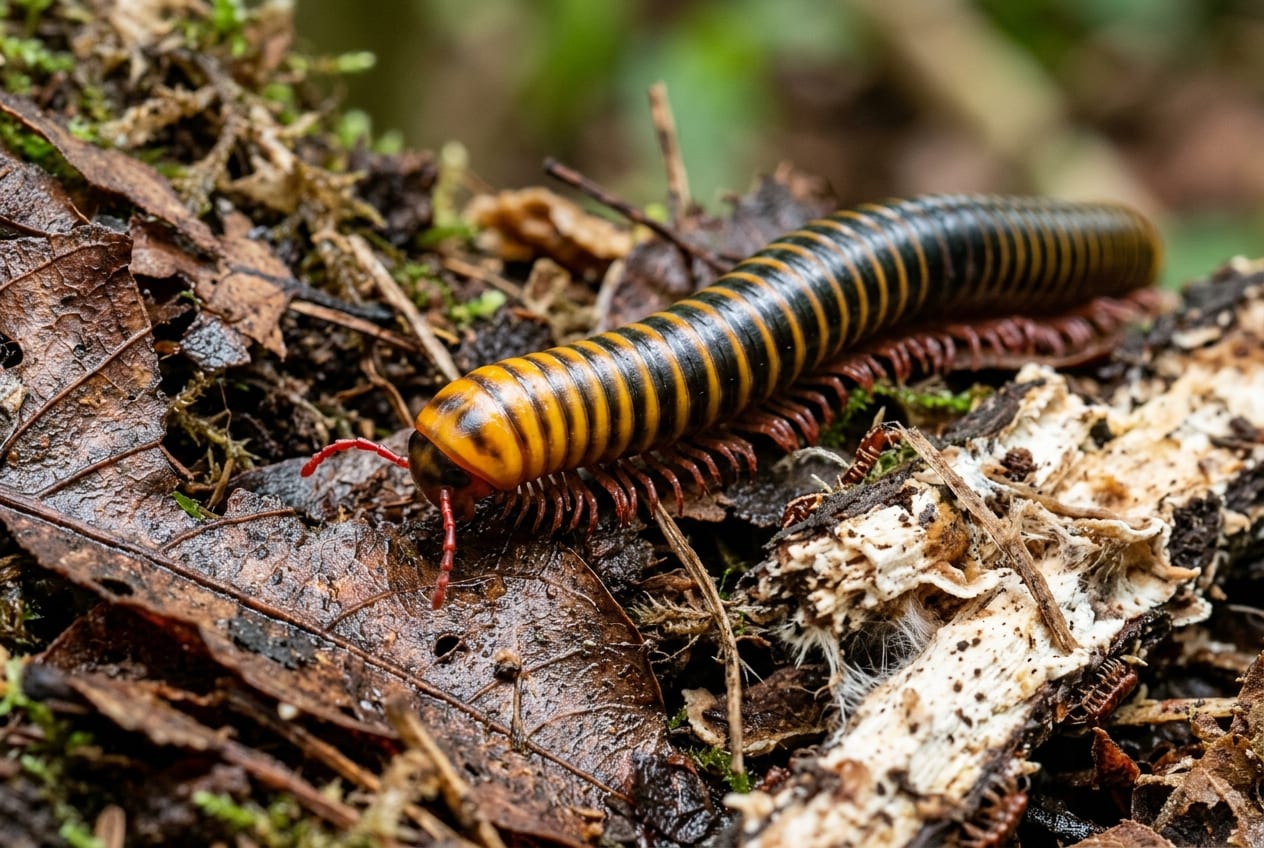
West African Red-legged Millipede
The Pelmatojulus millipede, known in English as the West African Red-legged Millipede, is a mid-sized species native to secondary forests in West Africa. Each body segment shows a striking contrast between a yellow-to-orange front half and a dark brown to near-black rear half, all wrapped in a glossy sheen and accented by red antennae and reddish-brown legs. Calm and slow-moving by nature, it curls into a tight coil when it feels threatened. Feeding mainly on fallen leaves and white-rotted wood, it settles in well once humidity is kept high, making it an intriguing choice for anyone who enjoys quietly observing a different kind of creature.
View West African Red-legged Millipede encyclopedia →0% commission on your first sales!Register by September 30, 2026 and your first 2 sales are commission-free!
Breeder Wanted!
List on BreederDirect and sell directly to customers nationwide!
5 Transparency Standards You Can Trust
When listing Exotic Invertebrates, Breeders disclose the following. We guarantee transparency on growth stage and breeding unit.
- Real Photos
- Breeding Unit
- Generation Info
- Body Length (mm)
- Country of Origin
Browse all 249 breeds
Verified breeders wanted for Exotic Invertebrates
Breeders are signing up now ahead of launch. Subscribe to be notified when new listings go live.
Getting alerts is free with a member account. When new listings match your saved search, we'll notify you by email and in-app.
Browse other categories
Verified breeders (preview)
Are you raising exotic invertebrates?
Register as a breeder and connect with buyers directly.
Apply as a breederAbout West African Red-legged Millipede
A mid-sized millipede from West African secondary forest, with a glossy yellow-orange and dark brown body and striking red antennae. It feeds on leaf litter and rotted wood, and suits keepers with some experience maintaining high humidity.
7 things to know before welcoming a West African Red-legged Millipede
1Keep humidity high
Keep the substrate consistently moist at all times. If it dries out, the body surface can become damaged, so regular misting and moisture checks are important. Balance this with adequate ventilation in the enclosure.
2Diet of leaves and rotted wood
This species favors fallen leaves and wood that has undergone white rot. Offering these natural foods, rather than just insect jelly, matches its feeding habits more closely. Try not to let its food supply run out.
3Calm, docile temperament
It shows almost no aggression and, when startled, curls its body into a spiral for defense. Its slow movements make it well suited to a quiet, observation-focused keeping style.
4Wash hands after handling
When disturbed, it may release a defensive secretion, so always wash your hands before touching your eyes or mouth after contact. If the secretion touches your skin directly, rinse it off promptly.
5Leave it alone while molting
Millipedes molt repeatedly as they grow. Around molting time they burrow into the substrate and become less active, so avoid digging around or disturbing them during this period.
6Best for experienced keepers
Because it is sensitive to extreme heat and dryness and requires ongoing humidity management, it is considered suitable for keepers with some experience. Once the basic environment is set up, day-to-day care is not difficult.
7Grows up to 14cm
Adults reach up to about 14cm in length and roughly 15mm in body width. Since animals are often sold as juveniles, plan to adjust enclosure size gradually as they grow.
Frequently asked questions about West African Red-legged Millipede
- Q.Is it aggressive or does it bite?
- A.It has a calm temperament and rarely tries to bite. Its main defense when disturbed is curling into a spiral. Since it may release a defensive secretion, wash your hands after handling before touching your eyes or mouth.
- Q.Can beginners keep this species?
- A.It's considered suitable for keepers with some experience. Because ongoing high-humidity management is required, having some basic keeping experience helps things go smoothly.
- Q.How large does it grow?
- A.Adults reach up to about 14cm in length and roughly 15mm in body width. Animals are often sold as juveniles and take time to reach full size.
- Q.What should I feed it?
- A.It mainly eats fallen leaves and wood that has undergone white rot. Providing food close to its natural diet makes for easier, more appropriate care.
- Q.Is this species subject to any regulations?
- A.This species is not subject to CITES.
Learn more about West African Red-legged Millipede in the encyclopedia
View West African Red-legged Millipede encyclopedia entry →
Care difficulty, lifespan, size and diet — all basics covered.
More in this category
Can't find the one you're looking for?
Post your wishes for free and breeders with matching animals will contact you with introductions.