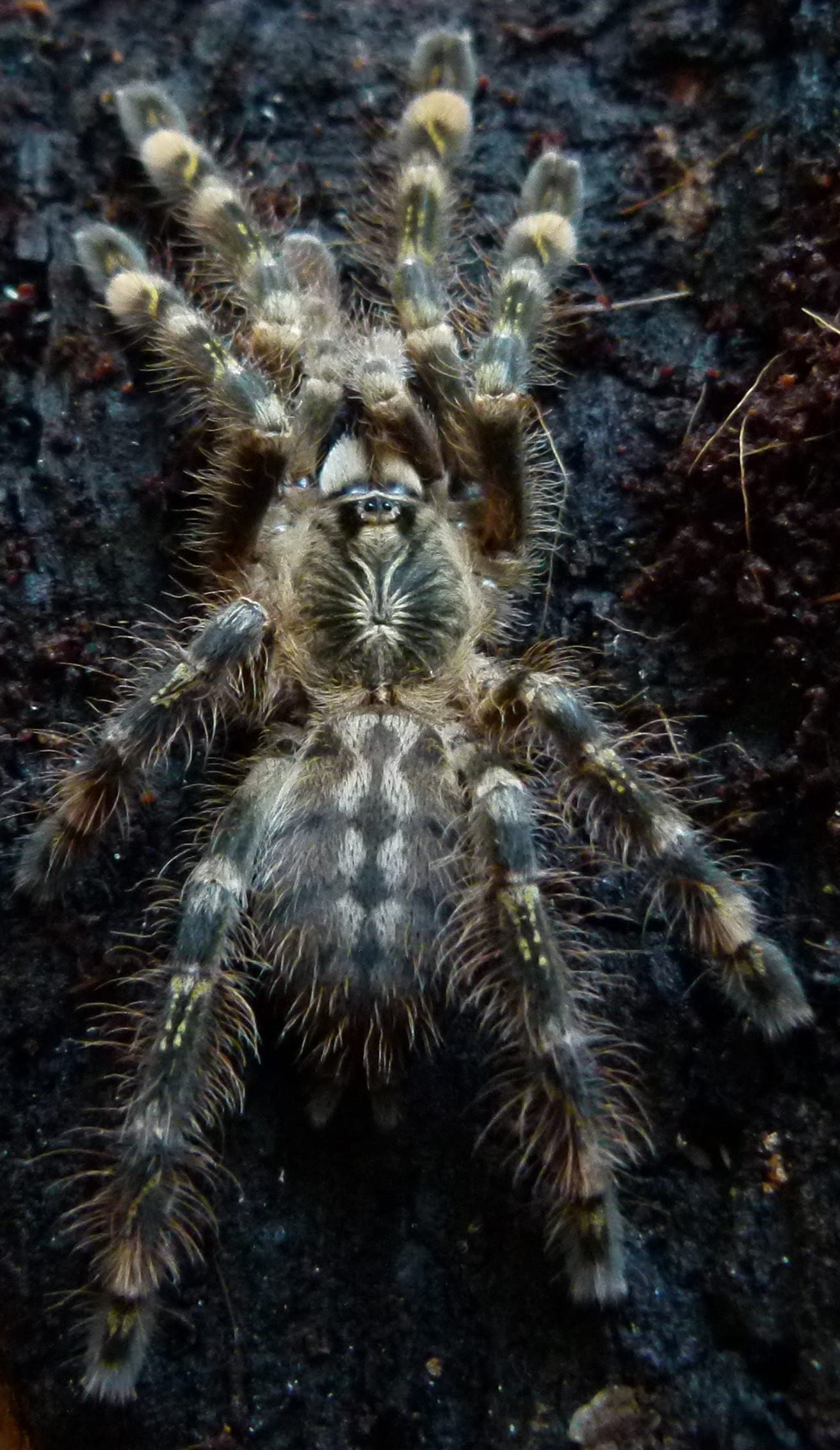
 © Pawel W. / CC BY-SA 3.0
Ivory Ornamental
The Ivory Ornamental is a tree-dwelling tarantula found only in Sri Lanka. Its dark, oversized abdomen carries a pattern of three connected black blotches, while the ivory-cream chelicerae and knee joints that give the species its name make it easy to identify. Two forms are known, highland and lowland, and both move remarkably quickly. That striking coloration and speed make it a rewarding species to observe, but its fast reflexes mean it's generally recommended for experienced keepers only. Females can live around 15 years, while males typically live only about 4 years after maturing. Understanding its temperament and care needs in advance is essential before bringing one home.
View Ivory Ornamental encyclopedia →0% commission on your first sales!Register by September 30, 2026 and your first 2 sales are commission-free!
Breeder Wanted!
List on BreederDirect and sell directly to customers nationwide!
5 Transparency Standards You Can Trust
When listing Exotic Invertebrates, Breeders disclose the following. We guarantee transparency on growth stage and breeding unit.
- Real Photos
- Breeding Unit
- Generation Info
- Body Length (mm)
- Country of Origin
Browse all 249 breeds
Verified breeders wanted for Exotic Invertebrates
Breeders are signing up now ahead of launch. Subscribe to be notified when new listings go live.
Getting alerts is free with a member account. When new listings match your saved search, we'll notify you by email and in-app.
Browse other categories
Verified breeders (preview)
Are you raising exotic invertebrates?
Register as a breeder and connect with buyers directly.
Apply as a breederIvory Ornamental key facts
- Care level
- Advanced
- Lifespan
- Females about 15 years, males about 4 years
- Size
- Body length: females 8-9cm, males 6-7cm (leg span about 15cm in the highland form, about 20cm in the lowland form)
- Temperature
- 20〜24℃
- Humidity
- 65〜75%
- Diet
- Live insects such as crickets and roaches
- Temperature & Humidity
- Aim for 20-24 C and 65-75% humidity. Mist occasionally but ventilate well to prevent mould. Prolonged heat or dryness is considered particularly harmful to the highland form.
- Enclosure
- Arboreal, so use a tall enclosure. Stand thick cork bark vertically as a tree-hollow retreat, provide a water dish, and leave the web intact once built.
- Diet & Feeding
- Offer live insects such as crickets and roaches. It grows fast and feeds readily; wait 24-48 hours after a moult before feeding.
- Temperament & Venom
- Very fast and skittish. It normally retreats into its hollow but bites if cornered. Adults are more defensive than juveniles and may strike with little visible warning, so it must not be handled.
- Notes
- Listed on CITES Appendix II, so international trade requires a permit, and it is listed as Endangered under the US Endangered Species Act. Deforestation is the main threat to its habitat. In the pet trade the lowland form is sometimes offered as Poecilotheria bara, but the World Spider Catalog treats that name as a synonym of this species, so the same spider can appear under both names.
About Ivory Ornamental
The Ivory Ornamental is a tarantula found only in Sri Lanka, known for its ivory-cream chelicerae and three connected black blotches. It moves extremely quickly and is best suited to experienced keepers.
7 things to know before welcoming a Ivory Ornamental
1Extremely Fast Movements
This species moves extremely quickly and can dart suddenly when startled. Move slowly and deliberately whenever you open the enclosure to avoid an accidental escape.
2Needs Vertical, Arboreal Housing
Being arboreal, it does best in a tall enclosure rather than a wide one. Provide cork bark or similar vertical surfaces and hiding spots for it to climb and retreat into.
3Highland and Lowland Forms
This species includes a highland form and a lowland form, which differ in leg span (about 15 cm for the highland form and about 20 cm for the lowland form). It's worth confirming which form you're getting before bringing one home.
4Lifespan Differs by Sex
Females can live around 15 years, but males typically live only about 4 years. Many keepers who want a long-term companion choose a female for this reason.
5Distinctive Coloration
Look for a dark, oversized abdomen marked with three connected black blotches, along with ivory-cream chelicerae and knee joints. The pattern can look slightly different at various growth stages.
6Handle With Care
Ornamental tarantulas, including this Sri Lankan species, may react to disturbance with rapid defensive postures or a bite. Avoid direct hand contact and use tools when caring for the enclosure.
7Set Up the Enclosure First
Set up temperature and humidity control along with climbing branches and hides before bringing your tarantula home. Be especially careful not to disturb the enclosure around molting time.
Frequently asked questions about Ivory Ornamental
- Q.Can I handle it with my bare hands?
- A.This species moves very quickly and is considered suitable for experienced keepers only, so bare-handed handling isn't recommended. It's best enjoyed mainly through observation.
- Q.What's the difference between the highland and lowland forms?
- A.Both are forms of the same species, but they differ in leg span (about 15 cm for the highland form versus about 20 cm for the lowland form). Their preferred temperature and humidity ranges are also said to differ slightly.
- Q.Does lifespan differ between males and females?
- A.Yes — females can live around 15 years, while males typically live only about 4 years. If you're planning to breed, it's worth factoring in this difference.
- Q.How large does it grow?
- A.Body length reaches about 8-9 cm in females and 6-7 cm in males. Leg span is about 15 cm for the highland form and about 20 cm for the lowland form.
- Q.Are there any legal regulations to be aware of?
- A.Ivory Ornamental is listed in CITES Appendix II. International trade requires a permit from the exporting country, but as far as CITES is concerned, no registration is needed to buy or sell individuals already legally in Japan.
Learn more about Ivory Ornamental in the encyclopedia
View Ivory Ornamental encyclopedia entry →
Care difficulty, lifespan, size and diet — all basics covered.
More in this category
Can't find the one you're looking for?
Post your wishes for free and breeders with matching animals will contact you with introductions.