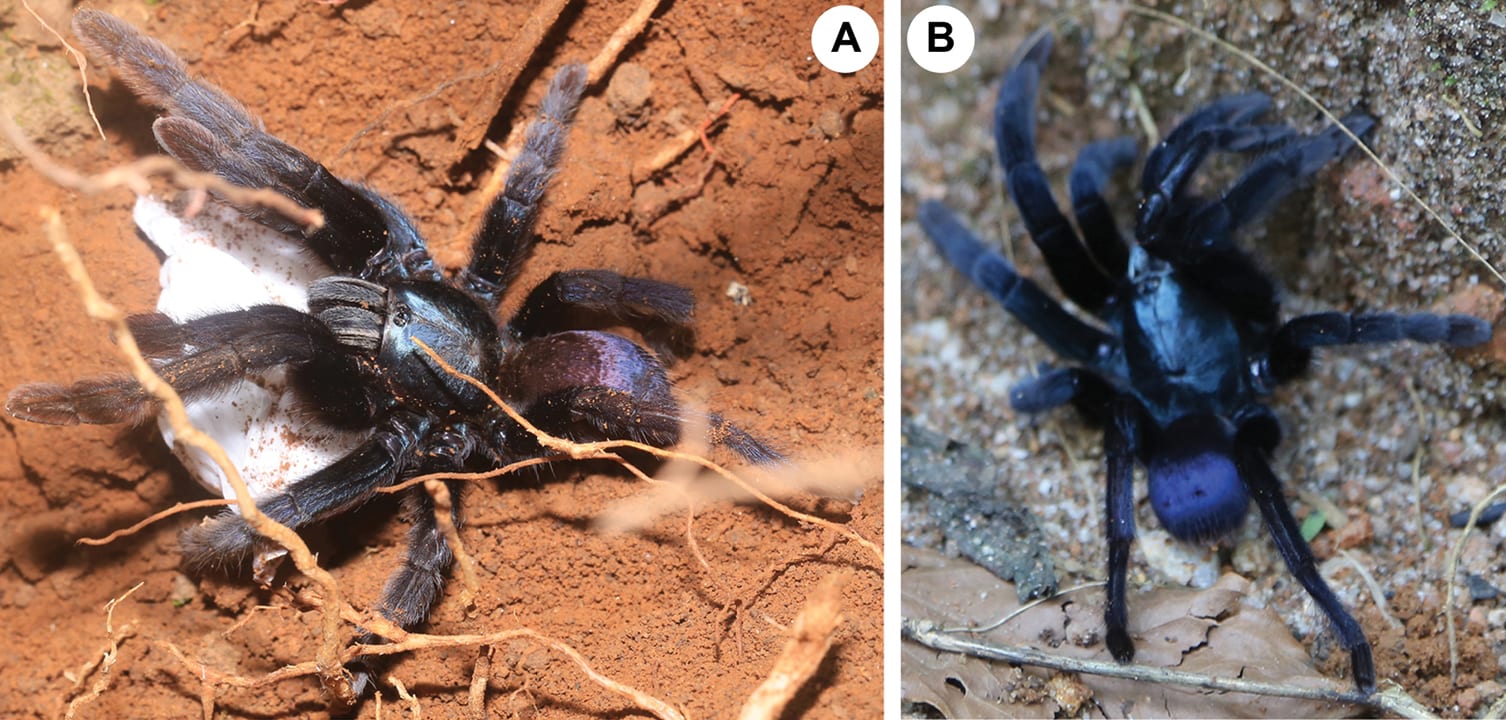
 © Jimmy Paul / Sankaran PM, Sebastian PA (2018) ZooKeys 749: 81-86 / CC BY 4.0
Indian Peacock Tarantula
The Indian Peacock Tarantula is a burrowing species found only in the Western Ghats mountains of India. Within this single species, two color forms occur — a striking blue form and a pinkish form — and it's the vivid blue individuals that gave rise to the "Peacock" name in the trade. These spiders dig burrows and spend much of their time tucked out of sight, but they can react with startling speed and defensive posturing when disturbed. Unlike New World tarantulas, they lack urticating hairs, so handling calls for real experience and a cautious approach — this is very much a keeper's tarantula rather than a beginner's.
View Indian Peacock Tarantula encyclopedia →0% commission on your first sales!Register by September 30, 2026 and your first 2 sales are commission-free!
Breeder Wanted!
List on BreederDirect and sell directly to customers nationwide!
5 Transparency Standards You Can Trust
When listing Exotic Invertebrates, Breeders disclose the following. We guarantee transparency on growth stage and breeding unit.
- Real Photos
- Breeding Unit
- Generation Info
- Body Length (mm)
- Country of Origin
Browse all 249 breeds
Verified breeders wanted for Exotic Invertebrates
Breeders are signing up now ahead of launch. Subscribe to be notified when new listings go live.
Getting alerts is free with a member account. When new listings match your saved search, we'll notify you by email and in-app.
Browse other categories
Verified breeders (preview)
Are you raising exotic invertebrates?
Register as a breeder and connect with buyers directly.
Apply as a breederIndian Peacock Tarantula key facts
- Care level
- Advanced
- Lifespan
- Females 12-15 years / males 3-4 years
- Diet
- Live insects such as crickets and roaches
- Temperature & Humidity
- It lives in humid forest in the Western Ghats, so the enclosure should not be allowed to dry out.
- Enclosure
- It is fossorial, digging burrows in mud embankments and forest floor in the wild. Give it substrate deep enough to dig and avoid collapsing its tunnels.
- Diet & Feeding
- Offer active live prey such as crickets and roaches and remove uneaten items within a day.
- Temperament & Venom
- As an Old World species in the subfamily Thrigmopoeinae it has no urticating hairs. It is defensive and fast, so handling is best avoided entirely.
- Notes
- The species includes both a blue and a pink form, so colour alone does not identify it. Its range is narrow and collecting pressure is a concern, so choose captive-bred animals.
About Indian Peacock Tarantula
Learn about the Indian Peacock Tarantula, a burrowing species native to India's Western Ghats — its traits, temperament, and what to know before bringing one home.
7 things to know before welcoming a Indian Peacock Tarantula
1Burrowing habit
This species is a fossorial tarantula that digs its own burrow in the substrate. It spends much of its time hidden inside that burrow or tucked away out of sight, so you won't see it moving around often.
2Warm, humid habitat needs
Its native range in the Western Ghats has a warm, humid climate. Setting up an enclosure that reflects these conditions, and avoiding excessive dryness, helps the spider settle in.
3No urticating hairs
Unlike New World tarantulas, this species has no urticating hairs, so it relies on more direct defenses — rearing up or bolting quickly when threatened. Handle it calmly and avoid startling it.
4Skittish, fast reactions
It's sensitive to sound and vibration, reacting to disturbance with sudden bursts of speed — either bolting for cover or adopting a defensive posture. A quiet setup with minimal disturbance suits it best.
5Two color morphs
Within this one species, both a more blue form and a pinkish form are known to occur. Which coloration an individual shows can vary with age and by individual.
6Why it's advanced-level
This species is rated for experienced keepers, since handling its quick movements and managing its enclosure safely takes some prior tarantula-keeping experience.
7Escape-proofing prep
Because it can move very quickly, make sure the enclosure lid and any gaps are secure, and stay alert to the risk of escape during feeding or maintenance. Checking where the spider is before opening the enclosure is a good safety habit.
Frequently asked questions about Indian Peacock Tarantula
- Q.What is the Indian Peacock Tarantula's temperament like?
- A.It's sensitive to noise and vibration, and can react to being startled with a quick dash for cover or a defensive posture. Most of the time, though, it stays quietly tucked away in its burrow or hiding spot.
- Q.Is this tarantula suitable for beginners?
- A.Its care level is rated for advanced keepers, so it's best suited to those with prior tarantula-keeping experience. It's a good idea to be comfortable handling fast-moving species before bringing one home.
- Q.Does it have urticating hairs?
- A.No — unlike New World tarantulas, this species doesn't have urticating hairs. When alarmed, it responds instead by rearing up or fleeing quickly.
- Q.Will I get the blue or the pink color form?
- A.Both a bluer form and a pinkish form occur within this species, and which one an individual displays depends on the animal and its growth stage. It's worth checking the specific individual's appearance at the time of purchase.
- Q.What kind of setup does it need?
- A.Since it's a burrowing species, the basic setup calls for substrate deep enough for it to dig into properly. Given its origin in the warm, humid Western Ghats, an enclosure that maintains similar warmth and humidity works well.
Learn more about Indian Peacock Tarantula in the encyclopedia
View Indian Peacock Tarantula encyclopedia entry →
Care difficulty, lifespan, size and diet — all basics covered.
More in this category
Can't find the one you're looking for?
Post your wishes for free and breeders with matching animals will contact you with introductions.