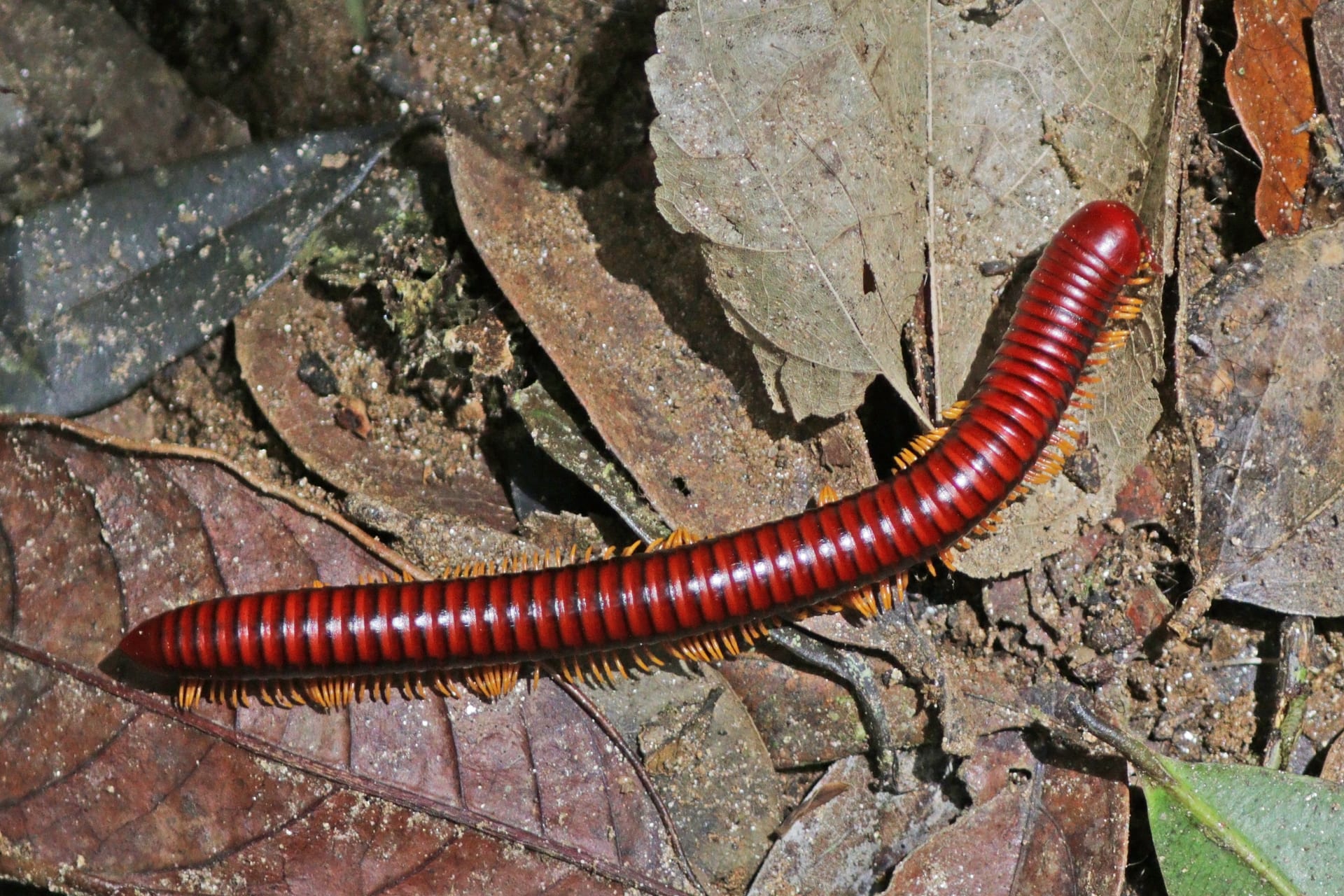
 © Charles J. Sharp / CC BY-SA 4.0
Madagascar Fire Millipede
The Madagascar Fire Millipede is a large millipede species found only in the rainforests of eastern Madagascar. Its striking look — a dark brownish-black body lined with vivid red legs — gives it the "fire" name and makes it a captivating animal to observe. Nocturnal by nature, it burrows into moist substrate during the day and emerges at night to forage slowly through leaf litter and decaying matter. Known for its calm temperament and unhurried movements, it's a favorite among keepers who enjoy quiet observation. With deep, humid substrate in place, it settles well into a stable, low-stress enclosure.
View Madagascar Fire Millipede encyclopedia →0% commission on your first sales!Register by September 30, 2026 and your first 2 sales are commission-free!
Breeder Wanted!
List on BreederDirect and sell directly to customers nationwide!
BreederDirect's 5 Transparency Commitments
When listing Exotic Invertebrates, Breeders disclose the following. We guarantee transparency on growth stage and breeding unit.
- Real Photos
- Breeding Unit
- Generation Info
- Body Length (mm)
- Country of Origin
Browse all 286 breeds
Verified breeders wanted for Exotic Invertebrates
Breeders are signing up now ahead of launch. Subscribe to be notified when new listings go live.
Getting alerts is free with a member account. When new listings match your saved search, we'll notify you by email and in-app.
Browse other categories
Verified breeders (preview)
Are you raising exotic invertebrates?
Register as a breeder and connect with buyers directly.
Apply as a breederMadagascar Fire Millipede key facts
- Care level
- Intermediate
- Lifespan
- 5-7 years
- Temperature
- 22〜26℃
- Humidity
- 80〜90%
- Diet
- Leaf litter, decaying wood, vegetables such as cucumber and sweet potato, calcium supplements
- Temperature & Humidity
- Follows published practice for the congeneric Madagascan A. polleni: 22-26 C and 80-90% humidity. Keep humidity high while maintaining ventilation.
- Enclosure
- A deep bed of leaf humus, decaying wood and leaves so they can burrow, with cork bark and moss for cover.
- Diet & Feeding
- Leaves and decaying wood in the substrate are the staple, supplemented with vegetables such as cucumber and sweet potato plus a calcium source.
- Temperament & Venom
- Placid and non-biting. It secretes defensive fluid from lateral glands when disturbed, so wash your hands afterwards and avoid rubbing your eyes.
- Notes
- Juveniles grow slowly. Several congeners trade under similar names, so check the scientific name when buying. The congener Aphistogoniulus polleni, traded as Spirostreptidae sp. 6, is the one most often confused with it.
About Madagascar Fire Millipede
A large millipede native to eastern Madagascar's rainforests, known for its dark body and vivid red legs. Nocturnal and best suited to keepers with some experience, it thrives in deep, humid, humus-rich substrate.
7 things to know before welcoming a Madagascar Fire Millipede
1High Humidity, Deep Substrate
As a species native to the rainforests of eastern Madagascar, it isn't adapted to dry conditions. Provide a deep layer of coconut fiber or leaf mold substrate and keep it consistently moist. Substrate that dries out can quickly affect the animal's health.
2Nocturnal, Buries by Day
During the day it stays hidden, burrowed deep in the substrate. If you want to watch it move around, check in the evening or under dim lighting instead.
3Calm and Easy-Going Temperament
This species is calm and rarely aggressive, typically just curling up when startled. It may release a defensive secretion if disturbed, so wash your hands after handling.
4Leave It Alone During Molting
Before and after molting, it may stay buried and motionless for an extended period. Avoid digging it up or disturbing it during this time, as the stress can be harmful.
5Diet of Leaf Litter and Detritus
This millipede feeds on decomposing leaf litter, rotten wood, and organic matter in the substrate. Rather than relying only on packaged insect jelly, providing natural substrate and decaying wood helps keep it stable long term.
6Keep Solo or in Small Numbers
Overcrowding can lead to stress and mold growth in the enclosure. Make sure the container size and ventilation match the number of animals you keep.
7Prepare Substrate Before Arrival
Set up a deep, humidity-retentive substrate before the millipede arrives. Having the enclosure ready in advance reduces stress from the transition.
Frequently asked questions about Madagascar Fire Millipede
- Q.Is it safe to handle with bare hands?
- A.It's not aggressive and rarely bites, but it may release a defensive secretion if it feels threatened. Wash your hands after contact and avoid touching your eyes or mouth.
- Q.How much humidity does it need?
- A.Since it comes from a rainforest habitat, it prefers high humidity. Mist the substrate regularly so it never fully dries out.
- Q.Can it be kept together with other individuals?
- A.It's generally best kept alone or in small numbers. Overcrowding can cause stress and hygiene problems in the enclosure.
- Q.Why doesn't it come out during the day?
- A.It's nocturnal, so it stays buried in the substrate resting during the day. You can usually see it active in the evening or under dim light.
- Q.Is this species regulated under CITES?
- A.The Madagascar Fire Millipede is not listed under CITES.
Learn more about Madagascar Fire Millipede in the encyclopedia
View Madagascar Fire Millipede encyclopedia entry →
Care difficulty, lifespan, size and diet — all basics covered.
More in this category
Can't find the one you're looking for?
Post your wishes for free and breeders with matching animals will contact you with introductions.