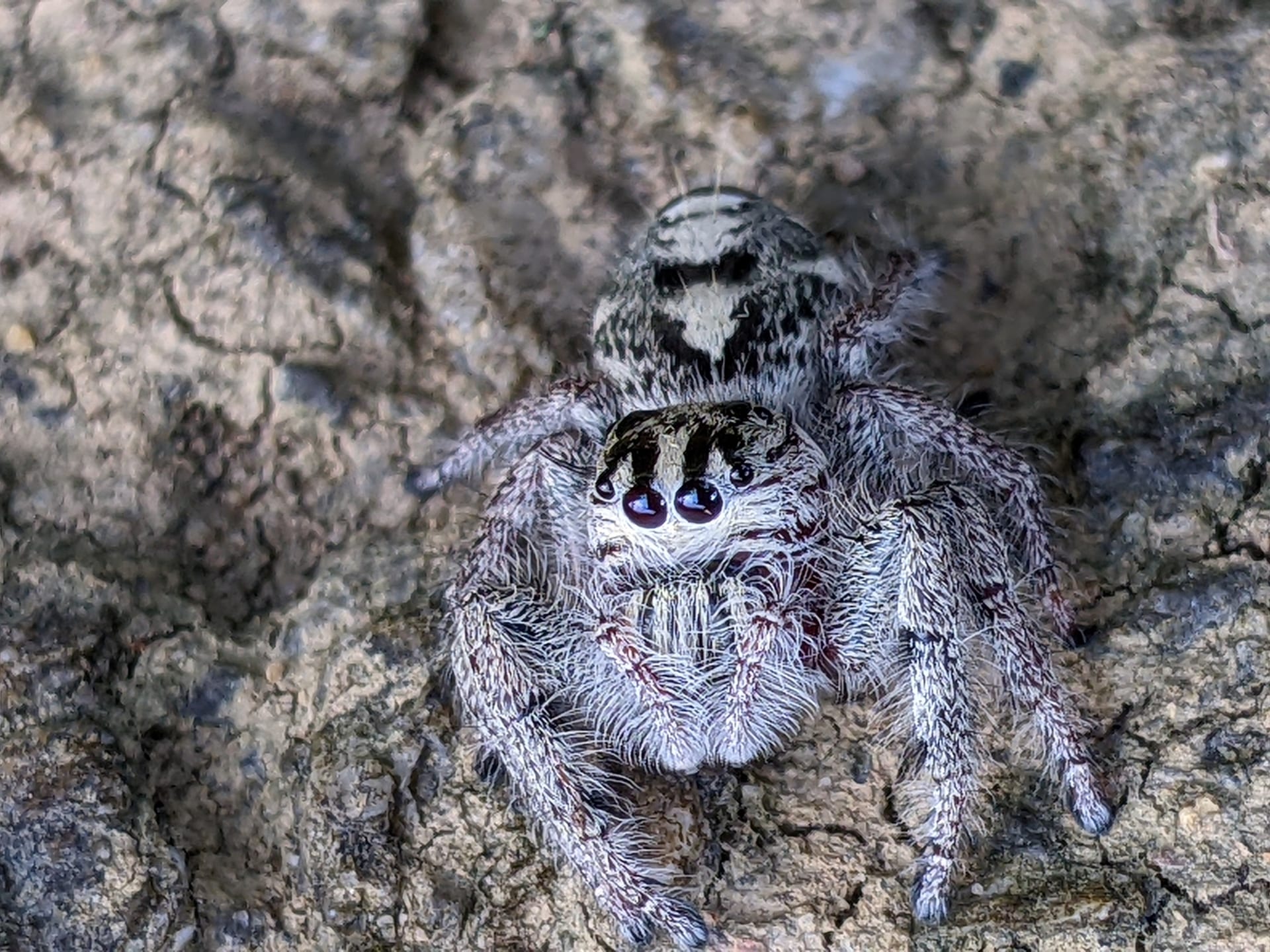
 © Doreen / CC BY 4.0
Heavy Jumping Spider
The Heavy Jumping Spider is a large jumping spider widely distributed across Southeast Asia. Its brownish-gray body is scattered with metallic yellow hairs that shift in appearance with the light, giving it a striking look. Females carry a horn-like tuft of black hair beneath their posterior median eyes, making it easy to tell them apart from males. With its large eyes constantly surveying its surroundings and quick, precise jumps when hunting, it has real presence and personality among jumping spiders. It thrives in hot, humid conditions and needs more careful humidity management than other species in its genus, which is why it's considered suitable for intermediate keepers. This species rewards anyone willing to stay on top of humidity control.
View Heavy Jumping Spider encyclopedia →0% commission on your first sales!Register by September 30, 2026 and your first 2 sales are commission-free!
Breeder Wanted!
List on BreederDirect and sell directly to customers nationwide!
5 Transparency Standards You Can Trust
When listing Exotic Invertebrates, Breeders disclose the following. We guarantee transparency on growth stage and breeding unit.
- Real Photos
- Breeding Unit
- Generation Info
- Body Length (mm)
- Country of Origin
Browse all 249 breeds
Verified breeders wanted for Exotic Invertebrates
Breeders are signing up now ahead of launch. Subscribe to be notified when new listings go live.
Getting alerts is free with a member account. When new listings match your saved search, we'll notify you by email and in-app.
Browse other categories
Verified breeders (preview)
Are you raising exotic invertebrates?
Register as a breeder and connect with buyers directly.
Apply as a breederHeavy Jumping Spider key facts
- Care level
- Intermediate
- Lifespan
- 1-2 years
- Size
- Body about 1.2cm (suppliers list about 2cm)
- Temperature
- 26〜28℃
- Humidity
- 70〜80%
- Diet
- Flies, crickets and small cockroaches
- Temperature & Humidity
- 26-28 C and 70-80% humidity. Mist the whole enclosure lightly every one or two days so droplets form. A live plant helps keep humidity steady.
- Enclosure
- A tall enclosure from about 20 x 20 x 30cm, with branches and bark for vertical footing and cover.
- Diet & Feeding
- Flies, crickets and small cockroaches are readily taken. It hunts actively, so offer live prey and remove leftovers.
- Temperament & Venom
- Diurnal and very active, tracking prey with excellent vision. Like all spiders it has venom, but it is medically insignificant and bites are rare.
- Notes
- It needs higher humidity than many congeners, so balance ventilation against misting. House singly, and leave it alone once it seals itself in to moult.
About Heavy Jumping Spider
A large jumping spider from Southeast Asia with metallic yellow hairs on a brownish-gray body. It favors hot, humid conditions and is considered suitable for intermediate keepers.
7 things to know before welcoming a Heavy Jumping Spider
1High Humidity Is Essential
This species needs more humidity than other spiders in its genus. A cage that's allowed to dry out can cause it to lose condition, so set up a way to maintain humidity, such as regular misting, before bringing one home.
2Keeping It Warm
Since this species prefers warm, humid conditions, heating support is essential during cooler seasons. Plan a cage setup that lets you manage temperature and humidity together for peace of mind.
3A Striking Appearance
Its brownish-gray body is dotted with metallic yellow hairs that catch the light differently depending on the angle. Females also have a distinctive horn-like tuft of black hair below their posterior median eyes, rewarding close observation.
4Quick Movement and Sharp Eyesight
Like other jumping spiders, it has large eyes that let it carefully watch its surroundings, and it moves quickly using its strong jumping ability. It often reacts to its keeper's movements, making daily observation enjoyable.
5Keep Individually
Jumping spiders are generally territorial and solitary, so keeping multiple individuals in the same enclosure risks cannibalism. Provide one enclosure per spider.
6Feeding Frequency and Diet
Live prey such as crickets forms the core of its diet. Adjust prey size and feeding frequency to the individual's size and appetite, and remove any uneaten prey from the enclosure promptly.
7Prepare the Enclosure First
To avoid scrambling after bringing your spider home, prepare the enclosure in advance with good ventilation, humidity retention, climbing surfaces, and a hiding spot. Installing a thermometer and hygrometer also makes ongoing care easier.
Frequently asked questions about Heavy Jumping Spider
- Q.Is the Heavy Jumping Spider listed under CITES?
- A.No, the Heavy Jumping Spider is not listed under CITES.
- Q.How does it differ from other spiders in its genus?
- A.Some related species have a similarly striking appearance, but the Heavy Jumping Spider stands out for needing hotter, more humid conditions and more careful humidity management than others in its genus.
- Q.How can you tell males and females apart?
- A.Females have a distinctive horn-like tuft of black hair beneath their posterior median eyes, which can be used to distinguish them from males.
- Q.How large does it get as an adult?
- A.Reference data lists a body length of about 1.2cm, though specialty stores sometimes list it as about 2cm when including the legs in the overall size.
- Q.Can a first-time exotic pet keeper care for one?
- A.The Heavy Jumping Spider is considered suitable for intermediate keepers due to its demanding humidity needs. It's best to gain experience with an easier species first before taking this one on.
Learn more about Heavy Jumping Spider in the encyclopedia
View Heavy Jumping Spider encyclopedia entry →
Care difficulty, lifespan, size and diet — all basics covered.
More in this category
Can't find the one you're looking for?
Post your wishes for free and breeders with matching animals will contact you with introductions.