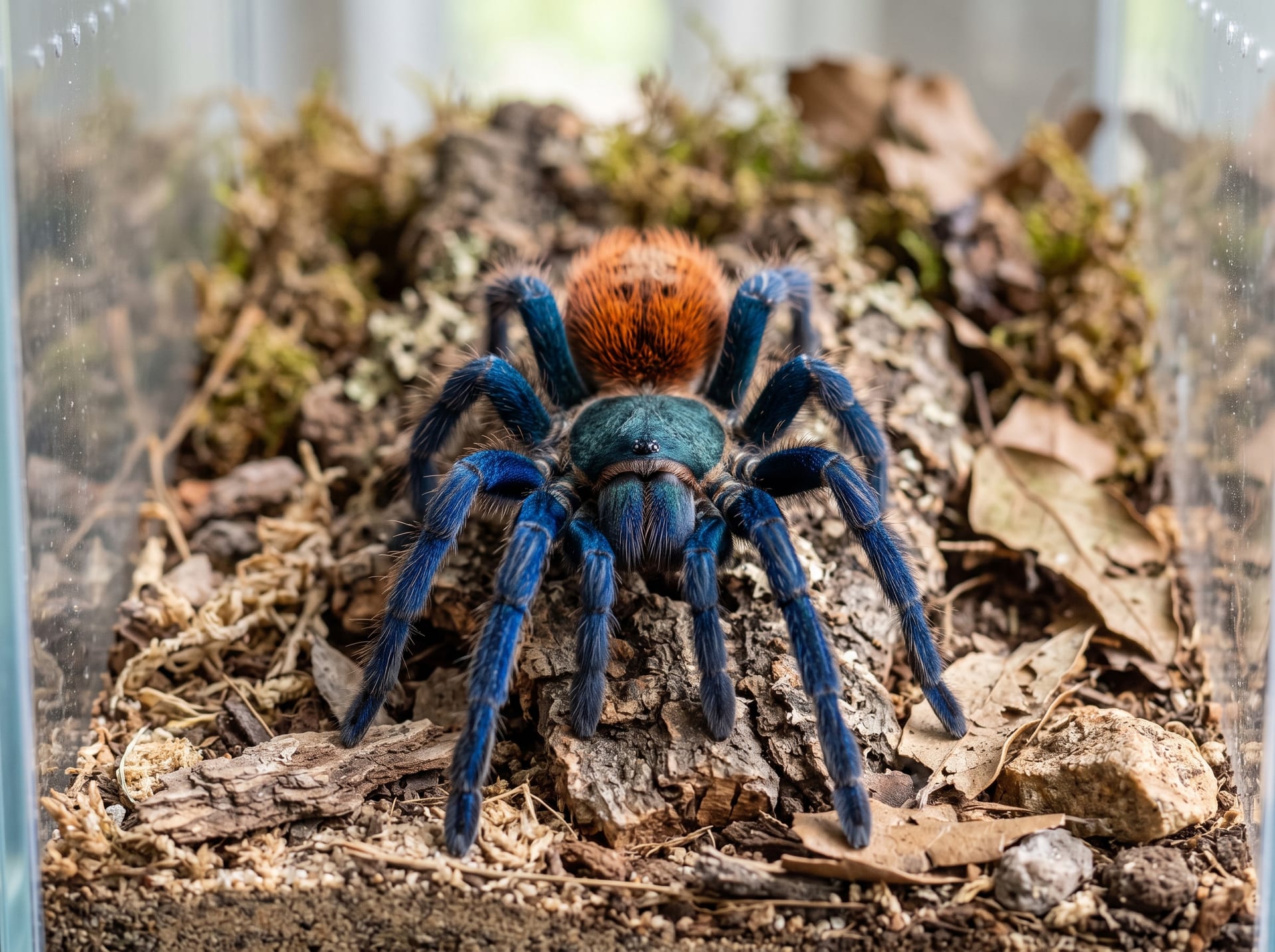
Green Bottle Blue
The Green Bottle Blue is a strikingly colored tarantula native to Venezuela, prized for its metallic blue legs, vivid green carapace, and orange abdomen. Hardy and tolerant of dry conditions, it's considered one of the more beginner-friendly species among exotic invertebrates. A ground-dwelling species, it's known for being an enthusiastic webber, often covering much of its enclosure in silk as it matures. Quick and somewhat skittish in temperament, it's generally easygoing to keep once its basic needs are understood.
View Green Bottle Blue encyclopedia →0% commission on your first sales!Register by September 30, 2026 and your first 2 sales are commission-free!
Breeder Wanted!
List on BreederDirect and sell directly to customers nationwide!
5 Transparency Standards You Can Trust
When listing Exotic Invertebrates, Breeders disclose the following. We guarantee transparency on growth stage and breeding unit.
- Real Photos
- Breeding Unit
- Generation Info
- Body Length (mm)
- Country of Origin
Browse all 249 breeds
Verified breeders wanted for Exotic Invertebrates
Breeders are signing up now ahead of launch. Subscribe to be notified when new listings go live.
Getting alerts is free with a member account. When new listings match your saved search, we'll notify you by email and in-app.
Browse other categories
Verified breeders (preview)
Are you raising exotic invertebrates?
Register as a breeder and connect with buyers directly.
Apply as a breederGreen Bottle Blue key facts
- Care level
- Beginner-friendly
- Lifespan
- Female 12-14 years / Male 3-4 years
- Size
- Leg span 12-14 cm
- Temperature
- 24〜28℃
- Humidity
- 55〜65%
- Diet
- Live insects such as crickets and roaches, offered roughly weekly.
- Habitat
- A terrestrial heavy webber: provide deep substrate plus branches/plants as anchor points, and it builds extensive three-dimensional webbing.
- Temp & Humidity
- 24-28°C, 55-65% humidity; keep dry with good ventilation.
- Feeding
- Good eater; weekly feeding suffices.
- Caution
- Fairly fast and skittish; has urticating hairs but venom is mild.
About Green Bottle Blue
A Venezuelan tarantula known for its blue legs, green carapace, and orange abdomen. Hardy, drought-tolerant, and popular among beginners, it's also famous for its heavy webbing habit.
7 things to know before welcoming a Green Bottle Blue
1Dry Enclosure Setup
Coming from Venezuela's arid habitats, the Green Bottle Blue does best in a dry, well-ventilated enclosure rather than a humid one. Keep the substrate on the dry side and provide a small water dish so it can drink as needed. Excessive moisture can lead to health problems, so avoid over-misting.
2A Prolific Webber
Despite being a ground-dwelling species, this tarantula is famous for spinning extensive webbing throughout its enclosure. Adding climbing branches or driftwood gives it material to work with and makes for interesting webbing to observe. Once the web is established, rearranging the enclosure becomes much harder, so plan the layout early.
3Fast and Skittish
This species moves very quickly and can bolt at high speed when startled, so it's not well suited to handling. Open the enclosure slowly and carefully to avoid an unexpected escape. Its temperament is generally calm otherwise.
4Urticating Hairs
As a New World tarantula, the Green Bottle Blue can kick barbed hairs from its abdomen as a defense when threatened. These hairs can irritate eyes, skin, or airways, so avoid bringing your face too close during enclosure maintenance.
5Lifespan Differs by Sex
Lifespan varies considerably by sex: females typically live 12 to 14 years, while males live only about 3 to 4 years after maturing. Many keepers choose females for a longer-term companion, but either way it's worth planning for the species' full lifespan.
6Adult Size
Adults reach a leg span of roughly 12 to 14 cm. Slings are very small, so make sure the enclosure is escape-proof for young specimens.
7Preparing Before Bringing One Home
Set up a well-ventilated enclosure with good temperature control, climbing branches or a hide, and dry-habitat substrate before bringing your tarantula home. Even without prior experience keeping exotic invertebrates, this species is considered manageable for beginners once the basics are in place. Decide where the enclosure and supplies will go ahead of time for a smooth setup.
Frequently asked questions about Green Bottle Blue
- Q.Is the Green Bottle Blue suitable for beginners?
- A.Thanks to its hardiness and tolerance for dry conditions, it's considered one of the more beginner-friendly tarantula species. With a basic setup in place, it's generally easy to keep without major issues.
- Q.Does it bite, and is its venom dangerous?
- A.It can bite or display threat postures if provoked, though its temperament is generally calm. Kicking urticating hairs as a defense is more common than biting, so that's the bigger practical concern.
- Q.How large does it get?
- A.Adults reach a leg span of about 12 to 14 cm. Slings start out very small, so enclosure size needs adjusting as they grow.
- Q.How long does it live?
- A.Females typically live 12 to 14 years, while males live only about 3 to 4 years. Lifespan differs significantly by sex, which is worth considering before bringing one home.
- Q.Is this species subject to any special regulations?
- A.The Green Bottle Blue is not subject to CITES.
Learn more about Green Bottle Blue in the encyclopedia
View Green Bottle Blue encyclopedia entry →
Care difficulty, lifespan, size and diet — all basics covered.
More in this category
Can't find the one you're looking for?
Post your wishes for free and breeders with matching animals will contact you with introductions.