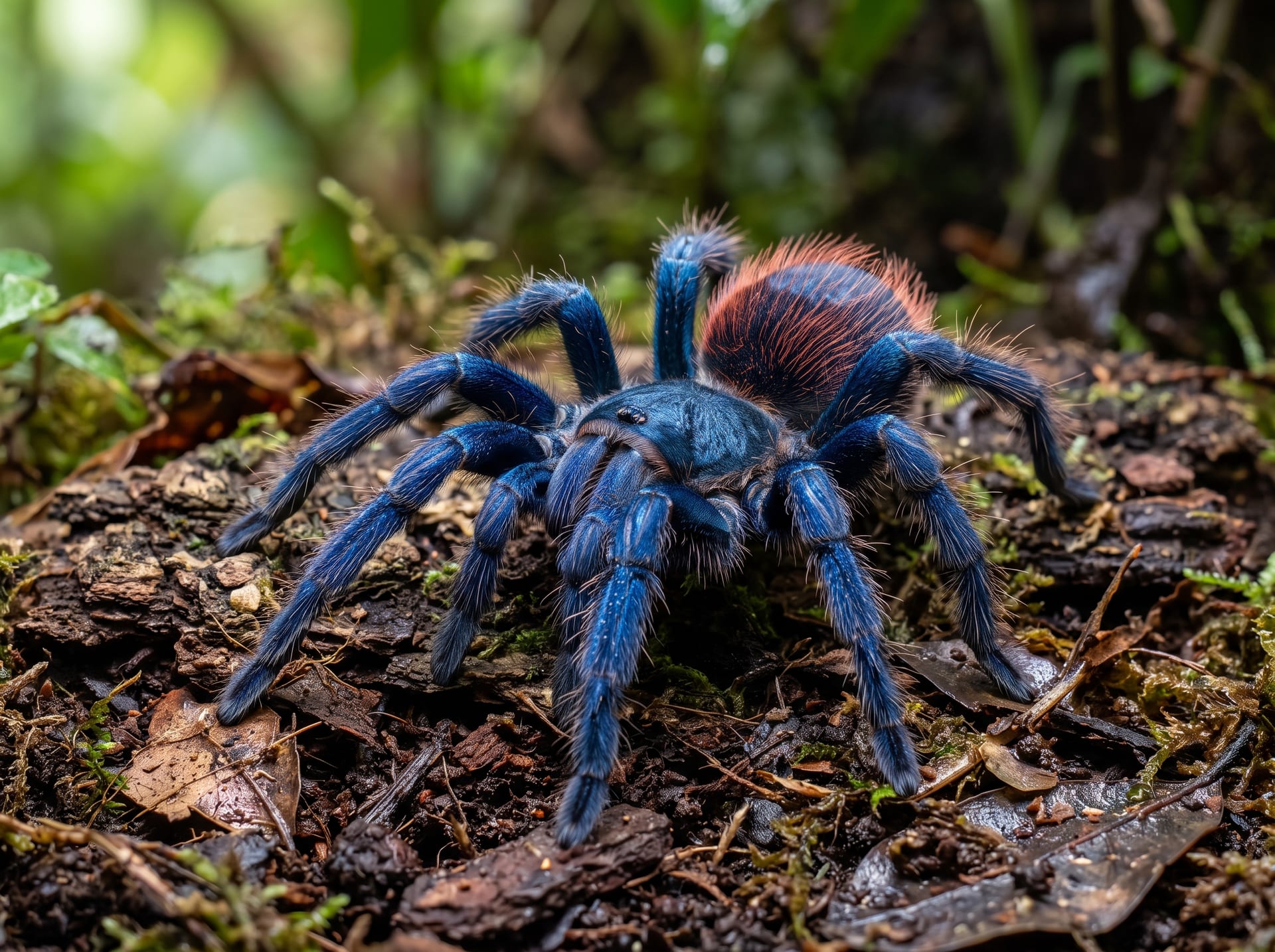
Brazilian Blue
The Brazilian Blue is a ground-dwelling tarantula native to Brazil, prized for its shimmering blue coloration that shifts with the angle of light. The iridescent hue comes from structural coloration and tends to deepen with each molt as the spider matures. Its temperament is relatively calm and not easily startled, though like other tarantulas it can flick urticating hairs when it feels threatened, so keeping a little distance during viewing is wise. Considered an intermediate-level species, it does best with generous floor space and moderate humidity typical of terrestrial setups. Hardy yet full of character, it's a favorite among keepers looking for a striking, engaging species.
View Brazilian Blue encyclopedia →Breeder Wanted!
List on BreederDirect and sell directly to customers nationwide!
BreederDirect's 5 Transparency Commitments
When listing Exotic Invertebrates, Breeders disclose the following. We guarantee transparency on growth stage and breeding unit.
- Real Photos
- Breeding Unit
- Generation Info
- Body Length (mm)
- Country of Origin
Browse all 286 breeds
Verified breeders wanted for Exotic Invertebrates
Breeders are signing up now ahead of launch. Subscribe to be notified when new listings go live.
Getting alerts is free with a member account. When new listings match your saved search, we'll notify you by email and in-app.
Browse other categories
Verified breeders (preview)
Are you raising exotic invertebrates?
Register as a breeder and connect with buyers directly.
Apply as a breederBrazilian Blue key facts
- Care level
- Intermediate
- Lifespan
- Female 12-15 years / Male 3-4 years
- Size
- Leg span 13-16 cm
- Temperature
- 23〜28℃
- Humidity
- 65〜75%
- Diet
- Live insects such as crickets and roaches, offered roughly weekly.
- Habitat
- Terrestrial setup with deep substrate, a hide and water dish.
- Temp & Humidity
- 23-28°C, 65-75% humidity; keep part of the substrate damp.
- Feeding
- Steady eater; weekly feeding suffices.
- Caution
- Has urticating hairs it may flick; venom is mild and bites are minor.
About Brazilian Blue
Brazilian Blue tarantula: a Brazil-native ground dweller with striking light-reactive blue coloring. An intermediate-level species — explore its temperament, care basics, and key facts.
7 things to know before welcoming a Brazilian Blue
1A Setup Built for Ground Life
Unlike arboreal species, this tarantula lives on the ground, so floor space matters more than height when choosing an enclosure. Provide a simple hide along with enough open area for it to move around comfortably.
2Mind the Urticating Hairs
When it feels threatened, it can kick urticating hairs from its abdomen as a defense. Keep your face at a distance during tank maintenance so the hairs don't come into contact with your eyes or skin.
3A Relatively Calm Temperament
Among tarantulas, it's considered relatively calm and not easily startled. That said, individuals vary, and it's worth remembering this isn't a species meant for handling like a typical pet.
4Color That Deepens With Each Molt
The shimmering blue coloring comes from structural color and tends to become more vivid with each molt as the spider grows. The period around a molt is also when its condition can change, so extra care is worthwhile.
5Lifespan Differs by Sex
Lifespan differs greatly by sex — females live around 12 to 15 years, while males typically live only about 3 to 4 years. If you're hoping for a long-term companion, this difference is worth keeping in mind.
6Humidity Management Matters
This species prefers moderate humidity, so the goal is to avoid both dryness and excess moisture that can lead to mold. Maintain good ventilation while misting periodically to keep humidity in a healthy range.
7Prepare the Enclosure in Advance
Adults reach a leg span of about 13 to 16 cm, so it's a good idea to prepare an enclosure sized for their eventual growth in advance. Since this is a ground-dwelling species, prioritize floor area over height when choosing a home.
Frequently asked questions about Brazilian Blue
- Q.Can beginners keep this species?
- A.It's classified as an intermediate-level species, so some prior experience with tarantulas is recommended. While reasonably hardy, factors like urticating hairs and humidity management mean it may be a bit much as a very first species.
- Q.Can I handle it?
- A.Its temperament is relatively calm, but because it has urticating hairs, frequent handling isn't recommended. It's best enjoyed mainly through observation rather than direct contact.
- Q.How different is the lifespan between males and females?
- A.Females live roughly 12 to 15 years, while males typically live only about 3 to 4 years — a substantial difference. If you want a long-term companion, this is worth factoring into your choice.
- Q.How big does it get as an adult?
- A.Adults reach a leg span of about 13 to 16 cm. Since it's a ground-dwelling species, an enclosure with ample floor space is more important than height.
- Q.What should I feed it?
- A.Crickets and dubia roaches are commonly used as staple food. Watch the spider's condition and appetite to determine an appropriate feeding interval.
Learn more about Brazilian Blue in the encyclopedia
View Brazilian Blue encyclopedia entry →
Care difficulty, lifespan, size and diet — all basics covered.
More in this category
Can't find the one you're looking for?
Post your wishes for free and breeders with matching animals will contact you with introductions.