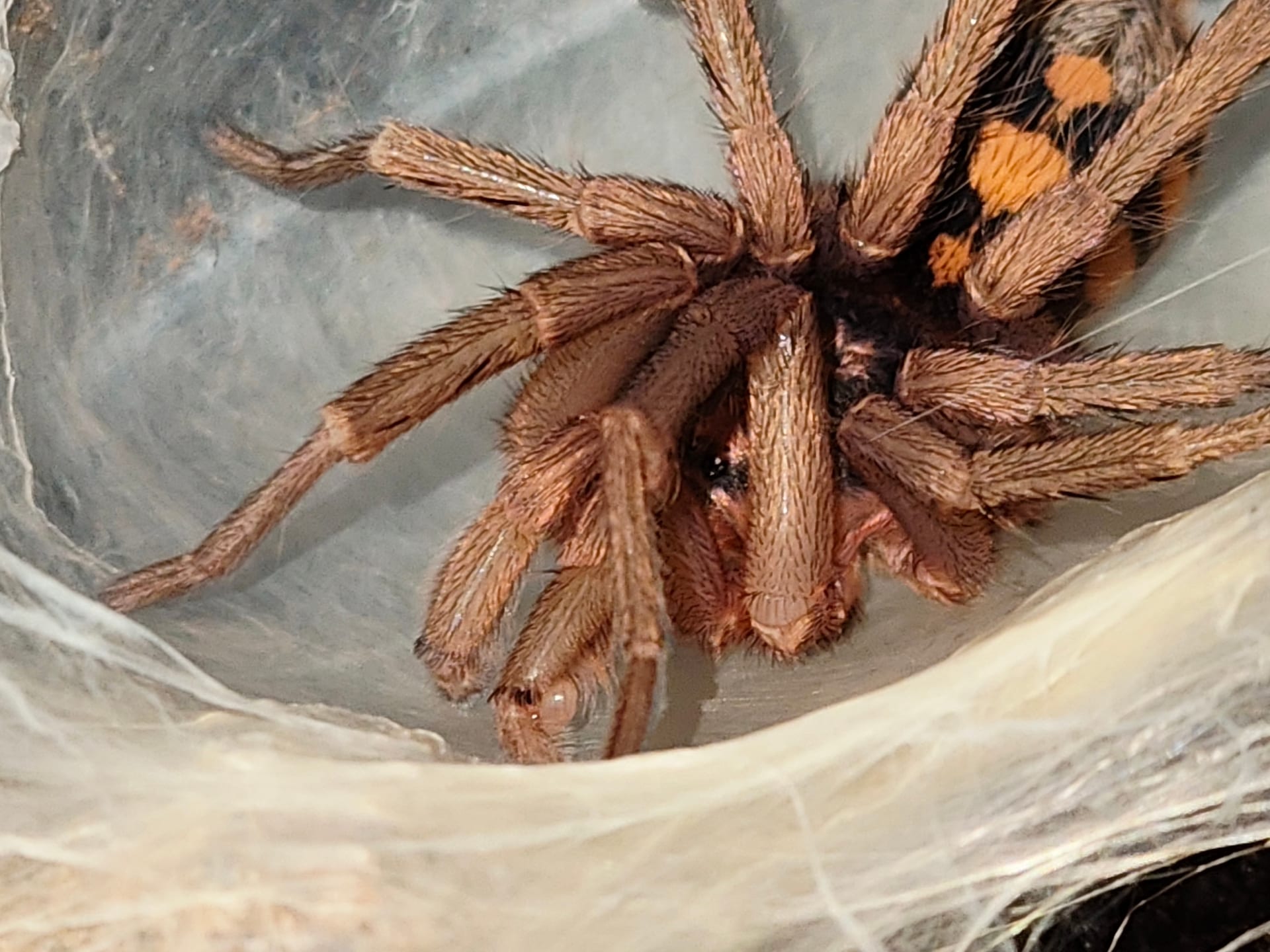
 © SpectralHauntings / CC0
Pumpkin Patch Tarantula
The Pumpkin Patch tarantula is a dwarf species native to Colombia, named for the orange markings that dot its black abdomen like pumpkins in a patch. Widely considered suitable for beginners, it tends to be calm and, while it builds thick webbing and a burrow, it doesn't stay hidden away — making it a rewarding species to watch day to day. It's also known to breed readily. Lifespan differs sharply by sex, with females living 8 to 10 years and males just 3 to 4. Adult leg span varies by bloodline, reaching up to about 10 cm in larger lines and up to about 6 cm in smaller ones, making it manageable even in a compact enclosure.
View Pumpkin Patch Tarantula encyclopedia →0% commission on your first sales!Register by September 30, 2026 and your first 2 sales are commission-free!
Breeder Wanted!
List on BreederDirect and sell directly to customers nationwide!
5 Transparency Standards You Can Trust
When listing Exotic Invertebrates, Breeders disclose the following. We guarantee transparency on growth stage and breeding unit.
- Real Photos
- Breeding Unit
- Generation Info
- Body Length (mm)
- Country of Origin
Browse all 249 breeds
Verified breeders wanted for Exotic Invertebrates
Breeders are signing up now ahead of launch. Subscribe to be notified when new listings go live.
Getting alerts is free with a member account. When new listings match your saved search, we'll notify you by email and in-app.
Browse other categories
Verified breeders (preview)
Are you raising exotic invertebrates?
Register as a breeder and connect with buyers directly.
Apply as a breederAbout Pumpkin Patch Tarantula
Discover the Pumpkin Patch tarantula, a Colombian dwarf species known for its calm nature and display-friendly habits — a great pick for beginners.
7 things to know before welcoming a Pumpkin Patch Tarantula
1A compact enclosure works fine
Even as adults, leg span tops out at around 10 cm for larger bloodlines and about 6 cm for smaller ones, so it needs far less space than bigger species. A layout with more floor area than height suits it well.
2It builds burrows and webbing
This species spins thick webbing and digs burrows. Provide substrate deep enough to burrow into, along with a hide or piece of driftwood, to help it settle in.
3Display-friendly and often visible
Despite building a burrow, it's known for not staying hidden away and often comes out into view. That makes it well suited to owners who enjoy watching their tarantula.
4Lifespan differs greatly by sex
Females can live 8 to 10 years, while males typically live only 3 to 4. If you're hoping for a long-term companion, it's worth confirming the sex before bringing one home.
5Considered beginner-friendly
It's generally regarded as calm and well-suited to first-time keepers. That said, individual temperament varies, so avoid sudden movements and always gauge the animal's mood before handling.
6Humidity and water management
As a dwarf tarantula species, it tends to dislike overly damp conditions. Keep the substrate from becoming waterlogged while always providing a shallow water dish with fresh water.
7Give it quiet space around molting
Tarantulas become especially fragile just before and after molting. Cut back on feeding and cleaning during this time, and avoid vibration or contact with the enclosure while it recovers.
Frequently asked questions about Pumpkin Patch Tarantula
- Q.Is the Pumpkin Patch tarantula listed under CITES?
- A.No, this species is not listed under CITES, so it isn't subject to that international trade regulation.
- Q.Can beginners keep this species?
- A.Yes, the Pumpkin Patch is generally considered beginner-friendly. Its relatively calm temperament makes it a good choice for first-time tarantula keepers.
- Q.How different is the lifespan between males and females?
- A.Quite significantly — females live around 8 to 10 years, while males live only about 3 to 4. Keep this gap in mind if you're hoping for a long-term companion.
- Q.How large does it get as an adult?
- A.Size varies by bloodline — leg span reaches up to about 10 cm in larger lines and about 6 cm in smaller ones. As a dwarf species, it stays compact compared to larger tarantulas.
- Q.Is it difficult to breed?
- A.The Pumpkin Patch is known to breed relatively readily. That said, successful breeding still requires proper conditions and compatible pairing, along with some specialized preparation.
Learn more about Pumpkin Patch Tarantula in the encyclopedia
View Pumpkin Patch Tarantula encyclopedia entry →
Care difficulty, lifespan, size and diet — all basics covered.
More in this category
Can't find the one you're looking for?
Post your wishes for free and breeders with matching animals will contact you with introductions.