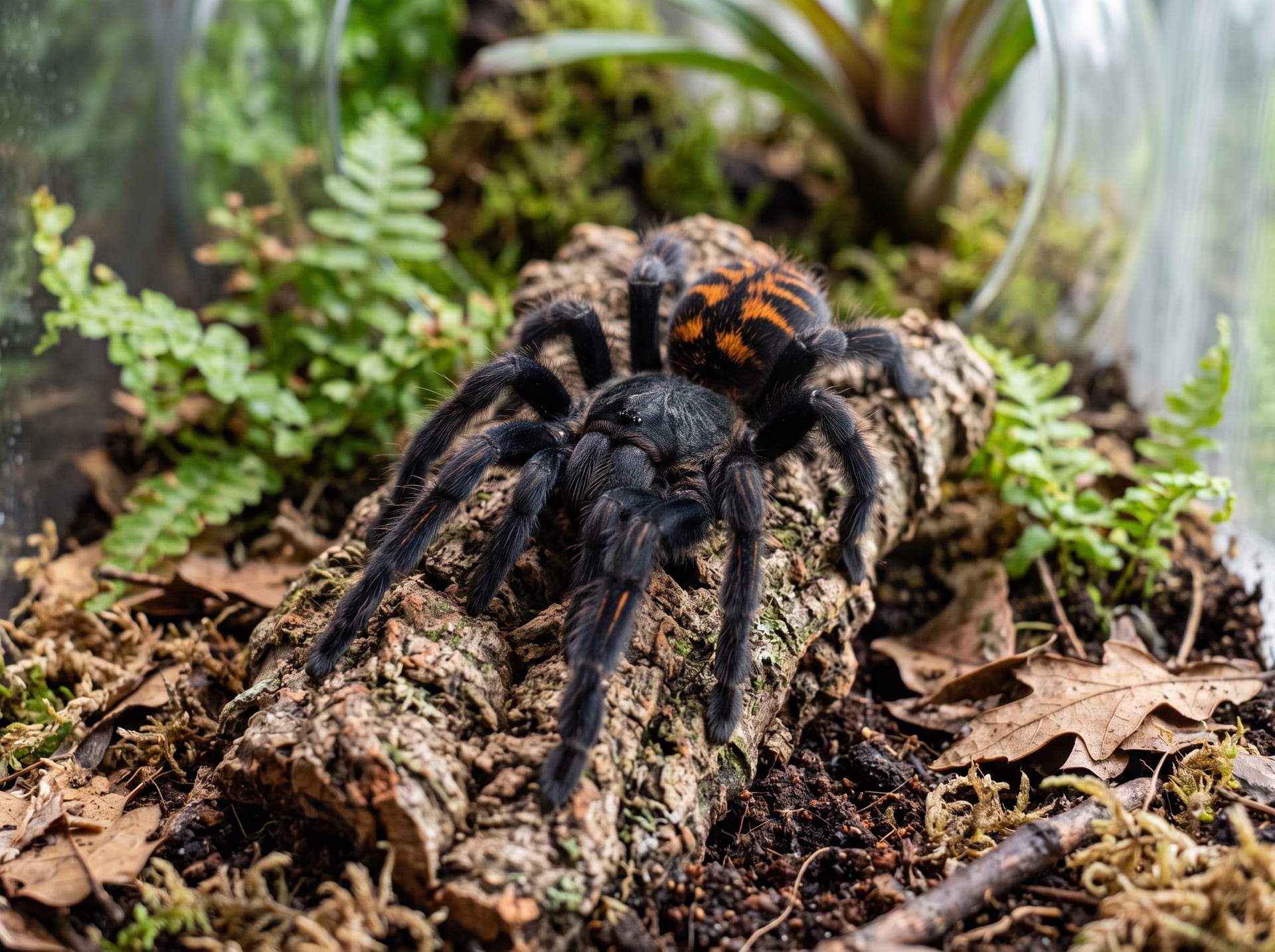
Venezuelan Suntiger
The Venezuelan Suntiger is an arboreal tarantula from Venezuela, known for the striking orange bands running across its otherwise black legs. It lacks urticating hairs, relying instead on remarkable speed and a defensive temperament to protect itself, bolting for cover the moment it feels threatened. Watch one build a silk-lined tube web in its enclosure and you'll see why keepers love its metallic sheen, which shifts with the light. Because its bite carries a fairly potent venom and it tends to be flighty and defensive, this species is best suited to experienced keepers comfortable with a fast-moving, alert tarantula.
View Venezuelan Suntiger encyclopedia →0% commission on your first sales!Register by September 30, 2026 and your first 2 sales are commission-free!
Breeder Wanted!
List on BreederDirect and sell directly to customers nationwide!
5 Transparency Standards You Can Trust
When listing Exotic Invertebrates, Breeders disclose the following. We guarantee transparency on growth stage and breeding unit.
- Real Photos
- Breeding Unit
- Generation Info
- Body Length (mm)
- Country of Origin
Browse all 249 breeds
Verified breeders wanted for Exotic Invertebrates
Breeders are signing up now ahead of launch. Subscribe to be notified when new listings go live.
Getting alerts is free with a member account. When new listings match your saved search, we'll notify you by email and in-app.
Browse other categories
Verified breeders (preview)
Are you raising exotic invertebrates?
Register as a breeder and connect with buyers directly.
Apply as a breederVenezuelan Suntiger key facts
- Care level
- Advanced
- Lifespan
- Female 10-12 years / Male 3-4 years
- Size
- Leg span 12-14 cm
- Temperature
- 24〜28℃
- Humidity
- 70〜80%
- Diet
- Live insects such as crickets and roaches, offered roughly weekly.
- Habitat
- Tall enclosure with vertical cork bark hides for an arboreal layout.
- Temp & Humidity
- 24-28°C, 70-80% humidity; keep humid with ventilation.
- Feeding
- Aggressive feeder; feed about weekly.
- Caution
- No urticating hairs but very fast to bolt and bite; venom is stronger than typical New World species—do not handle.
About Venezuelan Suntiger
A guide to the Venezuelan Suntiger, an arboreal tarantula from Venezuela with striking orange-banded legs, fast defensive behavior, and potent venom, best suited to experienced keepers.
7 things to know before welcoming a Venezuelan Suntiger
1Advanced-Level Care
The Venezuelan Suntiger is considered an advanced-level species. Instead of urticating hairs, it relies on speed and defensive behavior, and it can bolt suddenly when startled. It's best kept by someone with prior tarantula-keeping experience.
2Potent Venom
This species has venom considered stronger than that of many other tarantulas. A bite can cause pain and swelling, so handling is not recommended, use tools rather than bare hands during enclosure maintenance.
3Vertical Enclosure Needed
Because this species is arboreal, choose an enclosure with more vertical space than floor space, and add cork bark or artificial plants as hiding spots and climbing surfaces. It spins a tube-shaped web, so sturdy anchor points help it settle in.
4Watch for Escapes
This tarantula moves extremely fast and may dart out the moment the enclosure is opened. Always take escape precautions before doing any maintenance or cleaning.
5Lifespan Varies by Sex
Lifespan differs greatly between sexes: females typically live around 10 to 12 years, while males live only about 3 to 4 years. If you want a long-term companion, a female is the better choice.
6Plan for Adult Size
Adults reach a leg span of about 12 to 14 cm. As it grows, plan to upgrade the enclosure size so it always has enough room to move comfortably.
7Before You Bring One Home
Before bringing one home, prepare a well-ventilated vertical enclosure, a spray bottle for humidity control, and a reliable source of feeder insects such as crickets. Since it lacks urticating hairs and relies on biting to defend itself, long feeding tongs are a worthwhile addition.
Frequently asked questions about Venezuelan Suntiger
- Q.Can beginners keep a Venezuelan Suntiger?
- A.This species is considered suitable for advanced keepers rather than beginners. Its speed, defensive nature, and relatively potent venom mean it's best approached after gaining experience with easier tarantula species.
- Q.What does it mean that this species lacks urticating hairs?
- A.Many tarantulas defend themselves by kicking irritating hairs off their abdomen, but the Venezuelan Suntiger doesn't have this option. Instead, it relies on speed and a defensive bite to protect itself.
- Q.Is the Venezuelan Suntiger listed under CITES?
- A.The Venezuelan Suntiger is not listed under CITES. It falls outside that international trade-control framework.
- Q.What is the Venezuelan Suntiger's temperament like?
- A.It's a nervous, high-strung species that reacts instantly when startled, either bolting for cover or taking a defensive stance. It's not suited to handling and is better enjoyed as a species to observe and set up an enclosure for.
- Q.Does the expected keeping period differ between males and females?
- A.Yes, significantly. Females typically live around 10 to 12 years, while males reach the end of their lifespan in about 3 to 4 years, so keepers hoping for a long-term pet usually choose a female.
Learn more about Venezuelan Suntiger in the encyclopedia
View Venezuelan Suntiger encyclopedia entry →
Care difficulty, lifespan, size and diet — all basics covered.
More in this category
Can't find the one you're looking for?
Post your wishes for free and breeders with matching animals will contact you with introductions.