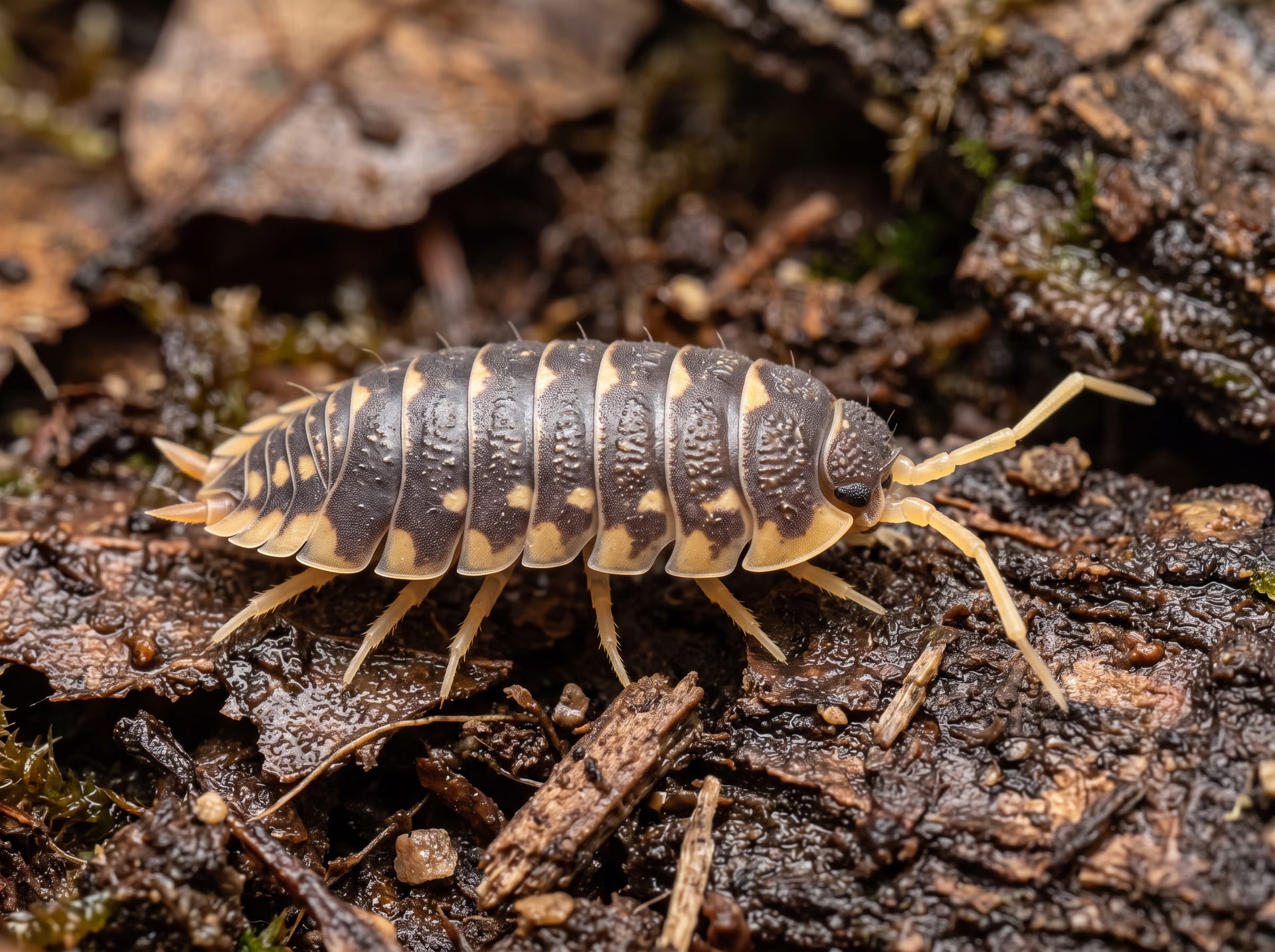
Haasi Isopod
The Haasi Isopod is a large isopod species native to Spain, easily recognized by its dark brown body marked with striking yellow spots. It is one of the few isopod species with a documented "giant" strain that grows noticeably larger than the standard form, making it a favorite among collectors who appreciate its distinct look. These isopods favor dry conditions with strong ventilation and are often found tucked beneath rotting wood and moss. Adults typically reach about 2.5 cm, with the giant strain reaching around 3.5 cm, and they live for one to two years. Suited to keepers with some prior isopod experience, this species rewards those comfortable managing airflow and humidity balance.
View Haasi Isopod encyclopedia →0% commission on your first sales!Register by September 30, 2026 and your first 2 sales are commission-free!
Breeder Wanted!
List on BreederDirect and sell directly to customers nationwide!
5 Transparency Standards You Can Trust
When listing Exotic Invertebrates, Breeders disclose the following. We guarantee transparency on growth stage and breeding unit.
- Real Photos
- Breeding Unit
- Generation Info
- Body Length (mm)
- Country of Origin
Browse all 249 breeds
Verified breeders wanted for Exotic Invertebrates
Breeders are signing up now ahead of launch. Subscribe to be notified when new listings go live.
Getting alerts is free with a member account. When new listings match your saved search, we'll notify you by email and in-app.
Browse other categories
Verified breeders (preview)
Are you raising exotic invertebrates?
Register as a breeder and connect with buyers directly.
Apply as a breederHaasi Isopod key facts
- Care level
- Intermediate
- Lifespan
- 1-2 years
- Size
- About 25mm (giant line about 35mm)
- Temperature
- 22〜27℃
- Humidity
- 45〜55%
- Diet
- Leaf litter and rotten wood as staples, with vegetables, fruit, protein about twice a week and a calcium source.
- Temperature & Humidity
- 22-27C and 45-55% humidity: slightly warmer than room temperature and drier than most isopods.
- Enclosure
- A lid with a large vent or no lid; moisten only one leaf-filled corner and provide dead wood and moss hides.
- Diet & Feeding
- Keep leaf litter and rotten wood available; add vegetables, fruit, protein about twice a week and calcium.
- Temperament & Venom
- Harmless and shy, fleeing quickly from light. Nocturnal. Keep in groups.
- Notes
- Sensitive to excess moisture and poor airflow. Breeding is seasonal and growth takes about nine months, so colonies build slowly.
About Haasi Isopod
The Haasi Isopod is a large Spanish isopod with dark brown, yellow-spotted coloring and a giant strain. This intermediate-level species favors dry, well-ventilated setups, reaching about 2.5cm with a 1-2 year lifespan.
7 things to know before welcoming a Haasi Isopod
1Strong ventilation is essential
Haasi Isopods dislike excess humidity and prefer well-ventilated environments. Use a mesh lid or similar to ensure good airflow and avoid stagnant, humid conditions in the enclosure.
2Keep the substrate on the dry side
This species prefers drier conditions, so avoid over-moistening the substrate. Creating a humidity gradient with drier and slightly damper zones lets the isopods choose their preferred spot.
3They hide under wood and moss
In the wild, they shelter beneath rotting wood and moss. Providing similar hiding spots in the enclosure helps them feel secure and settle in comfortably.
4A giant strain exists
While the standard form reaches about 2.5cm as an adult, a "giant" strain grows noticeably larger. Be aware of which strain you're acquiring, as final size varies accordingly.
5Best suited to intermediate keepers
This species is considered suitable for intermediate keepers who are comfortable managing ventilation and humidity balance. If you're new to isopod keeping, it helps to learn the basics beforehand.
6A lifespan of one to two years
The Haasi Isopod typically lives for one to two years. A keeping style that embraces breeding and generational turnover suits this species well.
7Prepare the enclosure before arrival
Setting up a well-ventilated enclosure with wood and moss before your isopods arrive helps them adjust smoothly to their new home. Prioritize dryness and airflow when preparing the setup.
Frequently asked questions about Haasi Isopod
- Q.Can beginners keep the Haasi Isopod?
- A.This species is considered suitable for intermediate keepers. It requires managing ventilation and a relatively dry substrate, so some prior isopod-keeping experience is helpful. Beginners are encouraged to learn the basics first.
- Q.What's the difference between the giant strain and the standard form?
- A.The standard form reaches about 2.5cm as an adult, while the giant strain grows to around 3.5cm, noticeably larger than the standard type. The Haasi Isopod is one of the few species known to have such a giant strain.
- Q.How long can I expect to keep this species?
- A.The Haasi Isopod has a lifespan of about one to two years. Many keepers enjoy breeding them to maintain the colony across generations.
- Q.What should I pay special attention to in their care setup?
- A.This species prefers dry, well-ventilated conditions, so avoid overly humid, stagnant setups. Provide hiding spots like rotting wood and moss while choosing a well-ventilated enclosure.
- Q.Is this species subject to any regulations?
- A.The Haasi Isopod is not subject to CITES.
Learn more about Haasi Isopod in the encyclopedia
View Haasi Isopod encyclopedia entry →
Care difficulty, lifespan, size and diet — all basics covered.
More in this category
Can't find the one you're looking for?
Post your wishes for free and breeders with matching animals will contact you with introductions.