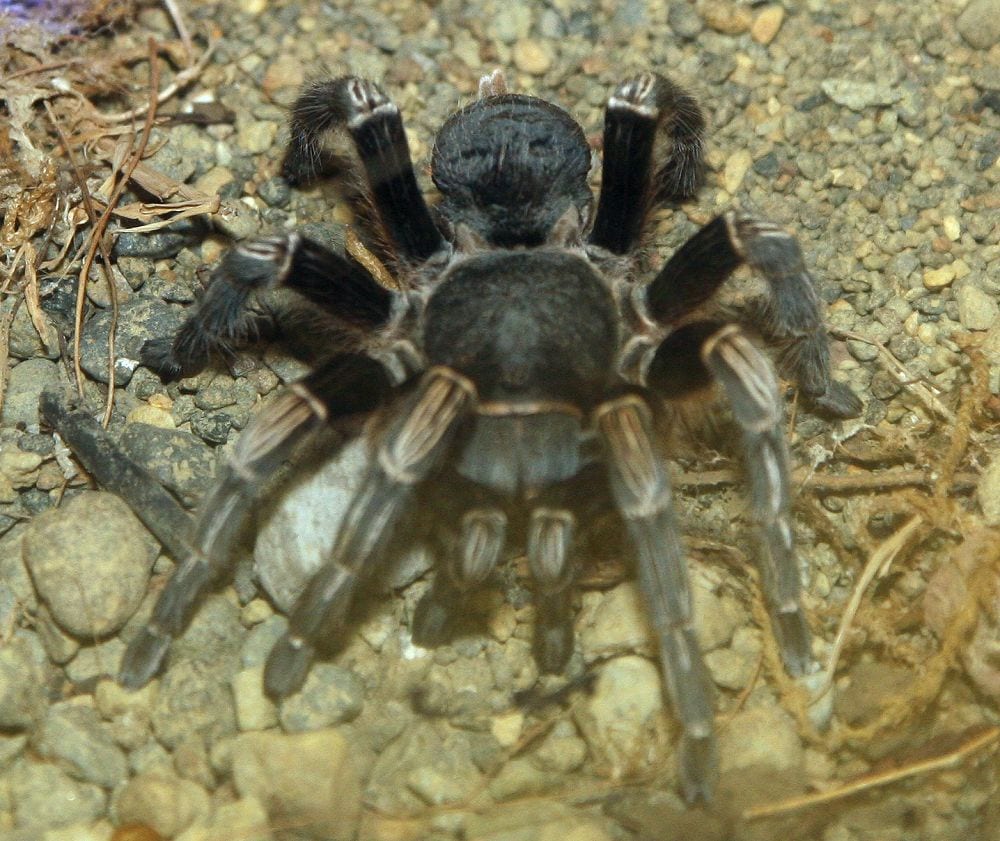
 © David J. Stang / CC BY-SA 4.0
Costa Rican Zebra Tarantula
The Costa Rican Zebra Tarantula is a ground-dwelling species native to Central America, easily recognized by its dark brown body and the pale, zebra-like bands around each leg joint. In the wild it digs deep burrows and spends much of its time tucked out of sight, giving it a calm, unhurried temperament. Hardy and easygoing, it tolerates dry substrate and typical room temperatures without special equipment, which is why it's such a popular choice for anyone keeping a tarantula for the first time. Females can live an impressive 20 years or more, making this a long-term companion for patient keepers.
View Costa Rican Zebra Tarantula encyclopedia →0% commission on your first sales!Register by September 30, 2026 and your first 2 sales are commission-free!
Breeder Wanted!
List on BreederDirect and sell directly to customers nationwide!
5 Transparency Standards You Can Trust
When listing Exotic Invertebrates, Breeders disclose the following. We guarantee transparency on growth stage and breeding unit.
- Real Photos
- Breeding Unit
- Generation Info
- Body Length (mm)
- Country of Origin
Browse all 249 breeds
Verified breeders wanted for Exotic Invertebrates
Breeders are signing up now ahead of launch. Subscribe to be notified when new listings go live.
Getting alerts is free with a member account. When new listings match your saved search, we'll notify you by email and in-app.
Browse other categories
Verified breeders (preview)
Are you raising exotic invertebrates?
Register as a breeder and connect with buyers directly.
Apply as a breederCosta Rican Zebra Tarantula key facts
- Care level
- Beginner-friendly
- Lifespan
- Females up to about 20 years; males 5-10 years, about one year after maturing
- Size
- 10-15cm leg span (body about 9cm)
- Temperature
- 20〜24℃
- Humidity
- Diet
- Live insects such as crickets and roaches
- Temperature & Humidity
- Room temperature of 20-24 C is adequate. High humidity is unnecessary: let the substrate dry between waterings and keep a water dish. Only spiderlings need slightly damp substrate.
- Enclosure
- An enthusiastic burrower: use a horizontal enclosure with at least 10-15 cm of substrate, add a cork bark hide, and leave the burrow undisturbed once it is dug.
- Diet & Feeding
- Offer live insects such as crickets and roaches: adults roughly every 3-4 weeks, spiderlings once or twice a week. Space out feedings while the abdomen is plump.
- Temperament & Venom
- Docile but skittish, retreating into its burrow when disturbed. It rarely kicks urticating hairs. The venom is weak and no serious effects on humans are known.
- Notes
- It is fast and escape-prone, so secure the lid and check for gaps. Growth is slow: females take 8-10 years to mature.
About Costa Rican Zebra Tarantula
A hardy, docile burrowing tarantula from Costa Rica, with a dark brown body banded in white at each leg joint — an easy-care, long-lived species well suited to first-time keepers.
7 things to know before welcoming a Costa Rican Zebra Tarantula
1Provide Deep Substrate for Burrowing
In the wild this species digs deep burrows and spends much of its life underground, so providing substrate several times its body length in depth helps it settle in. Adding a piece of cork bark or driftwood as a burrow entrance encourages more natural behavior.
2Keep the Enclosure on the Dry Side
This species is adapted to relatively dry conditions, so the substrate should be kept mostly dry rather than damp. Always provide a water dish, but avoid heavy misting, which can encourage mold and break down the substrate.
3Docile, but Watch for Urticating Hairs
This is one of the more even-tempered tarantulas to keep, but like other Latin American species it can kick urticating hairs from its abdomen when it feels threatened. These hairs can irritate skin and eyes, so it's best to avoid direct handling.
4Expect Long Stretches Out of Sight
This is a somewhat shy species that tends to stay deep in its burrow during the day. Not seeing it for days at a time is normal and not necessarily a sign of illness, so resist the urge to dig it out and just check on it quietly.
5Leave It Undisturbed Around Molting
Before molting it's normal for activity and appetite to drop off as it prepares to shed. Right after a molt its new exoskeleton is very soft and vulnerable, so hold off on feeding or cleaning the enclosure for a while to avoid disturbing it.
6A Fall Can Be Fatal
As with tarantulas in general, the abdomen is soft and even a short fall can cause fatal internal injuries. When moving the enclosure or doing maintenance, work close to the ground and take extra care not to drop the animal.
7Females Are a Decades-Long Commitment
Females of this species can live up to around 20 years, so bringing one home means committing to a companion for the long haul, through whatever life changes come your way. Males, by contrast, live only about a year after reaching maturity, so choose a female if you want a long-term pet.
Frequently asked questions about Costa Rican Zebra Tarantula
- Q.Is the Costa Rican Zebra Tarantula suitable for beginners?
- A.Yes — it's docile and hardy, and can be kept on relatively dry substrate at normal room temperature without special equipment, which is why it's a popular starter species for new tarantula keepers.
- Q.How big does it get?
- A.Adults typically reach a leg span of 10 to 15 cm, with a body length of around 9 cm. Watching it grow from a small sling to that size is part of the appeal.
- Q.How long does the Costa Rican Zebra Tarantula live?
- A.Females are remarkably long-lived, reaching up to about 20 years. Males have a shorter overall lifespan of roughly 5 to 10 years, living only about a year after they mature.
- Q.Is it safe to handle with bare hands?
- A.It has a calm temperament, but like other New World tarantulas it can flick irritating hairs from its abdomen when stressed, so it's best to avoid direct handling. Enjoying it as a species to observe rather than hold is the safer approach.
- Q.Does the Costa Rican Zebra Tarantula fall under CITES?
- A.No, this species falls outside CITES. There's nothing specific to note on that front.
Learn more about Costa Rican Zebra Tarantula in the encyclopedia
View Costa Rican Zebra Tarantula encyclopedia entry →
Care difficulty, lifespan, size and diet — all basics covered.
More in this category
Can't find the one you're looking for?
Post your wishes for free and breeders with matching animals will contact you with introductions.