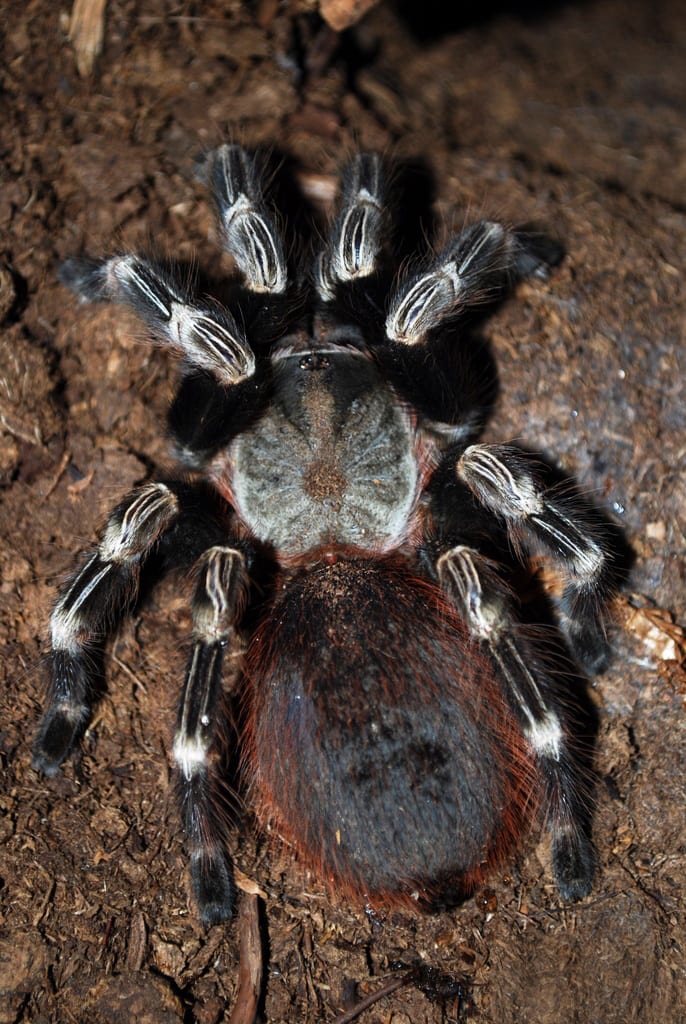
 © Flamesbane / CC BY 3.0
Brazilian Red and White
The Brazilian Red and White is a large, ground-dwelling tarantula known for its striking contrast of velvety black legs with white stripes, a grayish-brown carapace, and an abdomen covered in red hairs. Adults reach a leg span of 15 to 17 cm, and their relatively fast growth from sling to adult makes it easy to enjoy watching their coloration develop. That said, they move quickly and tend to be skittish, sometimes kicking urticating hairs from the abdomen when startled, so calm, careful handling during care is essential. This is an intermediate-level species best suited to keepers who already have some tarantula experience.
View Brazilian Red and White encyclopedia →0% commission on your first sales!Register by September 30, 2026 and your first 2 sales are commission-free!
Breeder Wanted!
List on BreederDirect and sell directly to customers nationwide!
5 Transparency Standards You Can Trust
When listing Exotic Invertebrates, Breeders disclose the following. We guarantee transparency on growth stage and breeding unit.
- Real Photos
- Breeding Unit
- Generation Info
- Body Length (mm)
- Country of Origin
Browse all 249 breeds
Verified breeders wanted for Exotic Invertebrates
Breeders are signing up now ahead of launch. Subscribe to be notified when new listings go live.
Getting alerts is free with a member account. When new listings match your saved search, we'll notify you by email and in-app.
Browse other categories
Verified breeders (preview)
Are you raising exotic invertebrates?
Register as a breeder and connect with buyers directly.
Apply as a breederBrazilian Red and White key facts
- Care level
- Intermediate
- Lifespan
- Females 10-12 years, males about 4 years
- Size
- Leg span 15-17cm; body about 9cm (female) and 7cm (male)
- Temperature
- 20〜24℃
- Humidity
- 65〜75%
- Diet
- Live insects such as crickets, roaches and mealworms
- Temperature & Humidity
- Aim for 20-24 C and 65-75 percent humidity. Keep most of the substrate on the dry side with a full water dish and one damp corner, and ensure cross-ventilation.
- Enclosure
- Use a horizontal enclosure three to five times the leg span across, filled half to two thirds with substrate, and add a cork bark hide.
- Diet & Feeding
- Offer live crickets or roaches. The feeding response is very strong; adults suit a feed every two to three weeks.
- Temperament & Venom
- It is skittish, quick to bolt and frequently kicks urticating hairs, which are strongly irritating. Treat it as a species to watch from outside the enclosure.
- Notes
- Growth is fast and it matures within a few years. Breeding is relatively easy, but an egg sac yields very many spiderlings, so plan where they will go.
About Brazilian Red and White
A large ground-dwelling tarantula with velvety black legs, white stripes, and striking red abdominal hairs. Adults reach a 15-17cm leg span, grow relatively fast, and are considered suitable for intermediate keepers.
7 things to know before welcoming a Brazilian Red and White
1A large, striking ground species
Adults of this species reach a leg span of 15 to 17 cm, making them a large and impressive tarantula. The combination of velvety black legs with white stripes, a grayish-brown carapace, and red abdominal hairs makes them popular to keep and observe.
2Fast-moving, skittish temperament
Compared to other large tarantulas, this species moves quickly and tends to react strongly when startled. Day-to-day care calls for a calm, quiet approach and avoiding sudden vibrations near the enclosure.
3Watch out for urticating hairs
When it feels threatened, it may rub its hind legs against its abdomen to kick urticating hairs into the air as a defense. Contact with skin or eyes can cause itching or irritation, so it's wise to keep your face at a distance during enclosure maintenance.
4Lifespan differs greatly by sex
Females typically live around 10 to 12 years, while males have a much shorter lifespan of about 4 years after maturing. If you want a long-term companion, choosing a female is one factor worth considering.
5Relatively fast growth from a sling
This species molts at a relatively quick pace compared to others, so growth is easy to notice over time. As it matures, its coloration and pattern become more distinct, making it rewarding to raise from a young sling.
6Provide a wide floor area
As a terrestrial species, the enclosure should prioritize floor space over height. Provide a hide for shelter and a substrate of moderate depth to create a secure, comfortable environment.
7Prepare knowing it suits intermediates
Given its speed and use of urticating hairs, this species is generally considered less suited to a first-ever tarantula and better suited to intermediate keepers. It's best to gain some basic handling experience first, or research thoroughly before bringing one home.
Frequently asked questions about Brazilian Red and White
- Q.Can beginners keep this species?
- A.This species is generally considered suitable for intermediate keepers. Since it moves quickly, is skittish, and may kick urticating hairs, it's recommended to gain some experience with tarantulas first.
- Q.How large does it get as an adult?
- A.Adults reach a leg span of about 15 to 17 cm. Body length is around 9 cm for females and 7 cm for males, making for an impressive size once legs are included.
- Q.How long does it live?
- A.Females are said to live around 10 to 12 years, which is relatively long-lived. Males, however, live only about 4 years after maturing, so lifespan differs significantly by sex.
- Q.What are urticating hairs, and are they dangerous?
- A.These are fine hairs on the abdomen that the spider kicks into the air with its hind legs as a defense when threatened. Contact with skin or eyes can cause itching, so avoid getting your face too close during care.
- Q.Is this species subject to CITES?
- A.The Brazilian Red and White is not subject to CITES.
Learn more about Brazilian Red and White in the encyclopedia
View Brazilian Red and White encyclopedia entry →
Care difficulty, lifespan, size and diet — all basics covered.
More in this category
Can't find the one you're looking for?
Post your wishes for free and breeders with matching animals will contact you with introductions.