Source: Wikimedia Commons
Brazilian Red and White
IntermediateNhandu chromatus
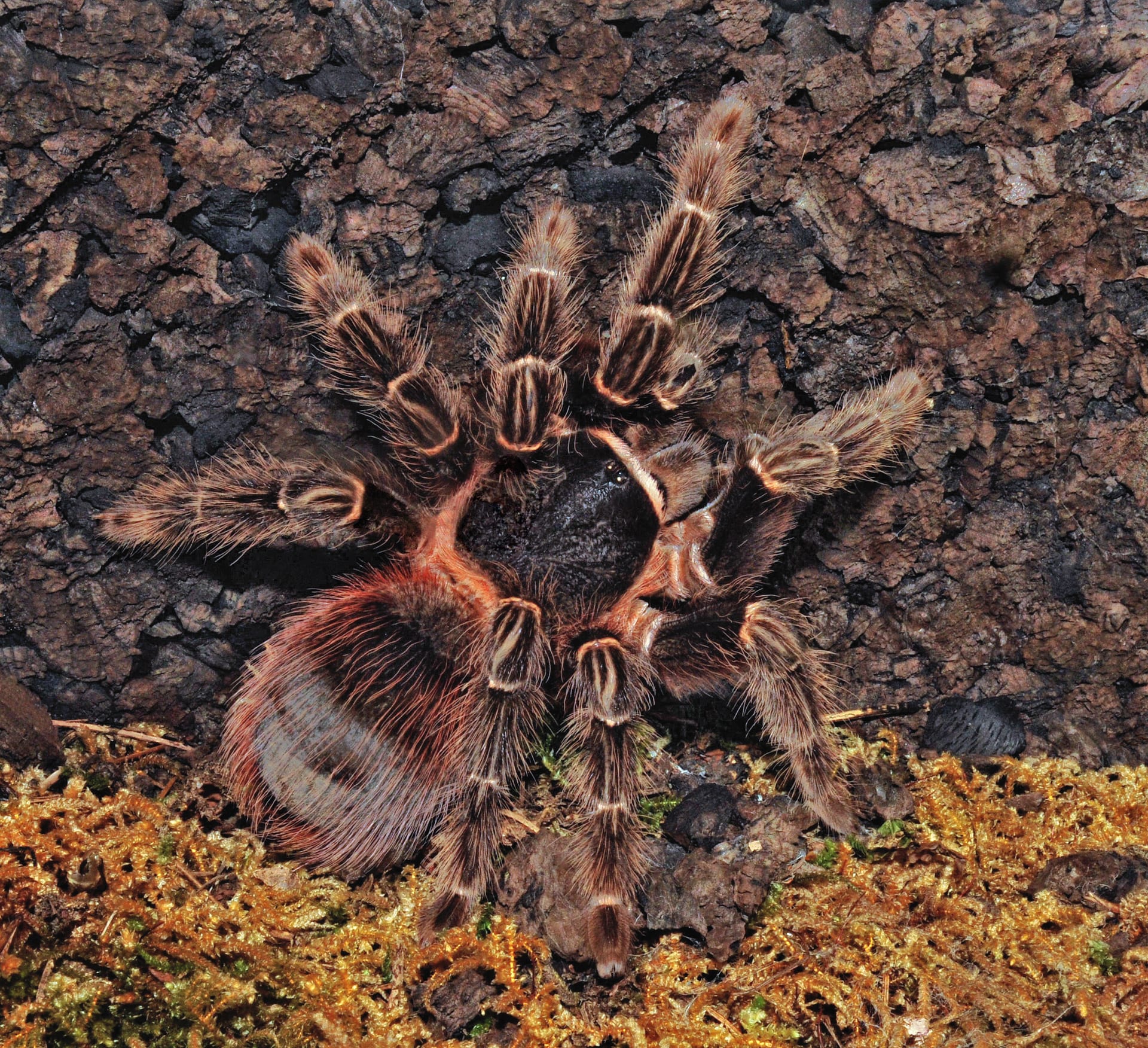
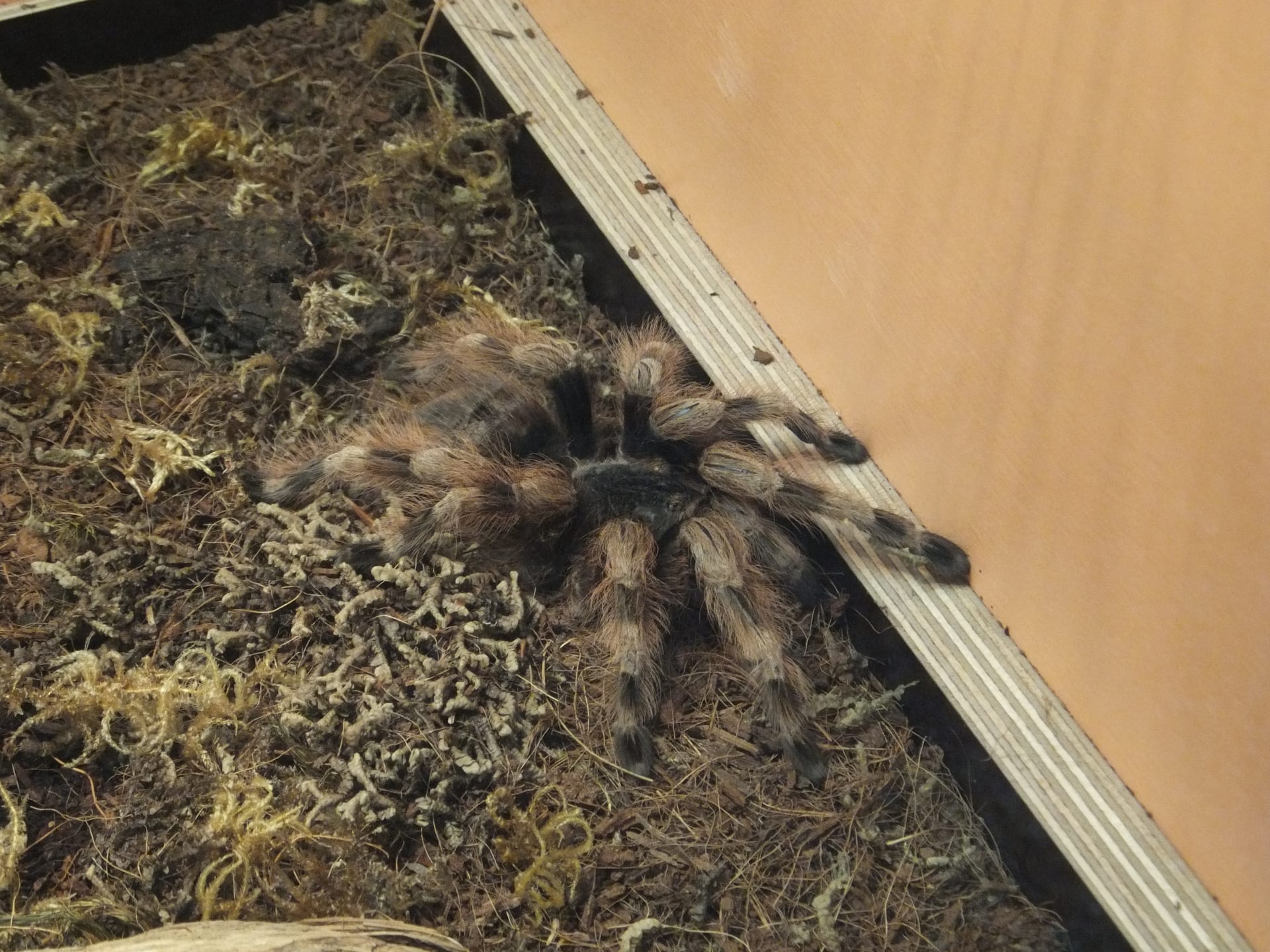
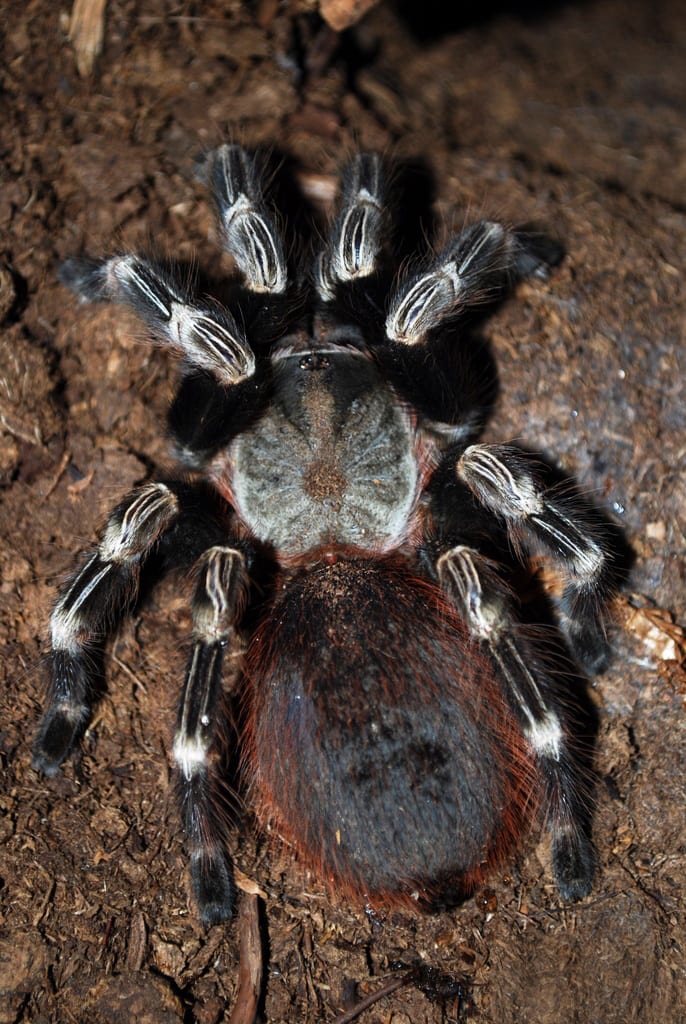
A large terrestrial tarantula with striking white stripes on velvety black legs, a beige-grey carapace and red setae on the abdomen. It grows fast and displays well, but is fast, skittish and readily kicks urticating hairs.
Difficulty
Intermediate
Temperature
20〜24℃
Lifespan
Females 10-12 years, males about 4 years
Size
Leg span 15-17cm; body about 9cm (female) and 7cm (male)
Humidity
65〜75%
Diet
Live insects such as crickets, roaches and mealworms
About
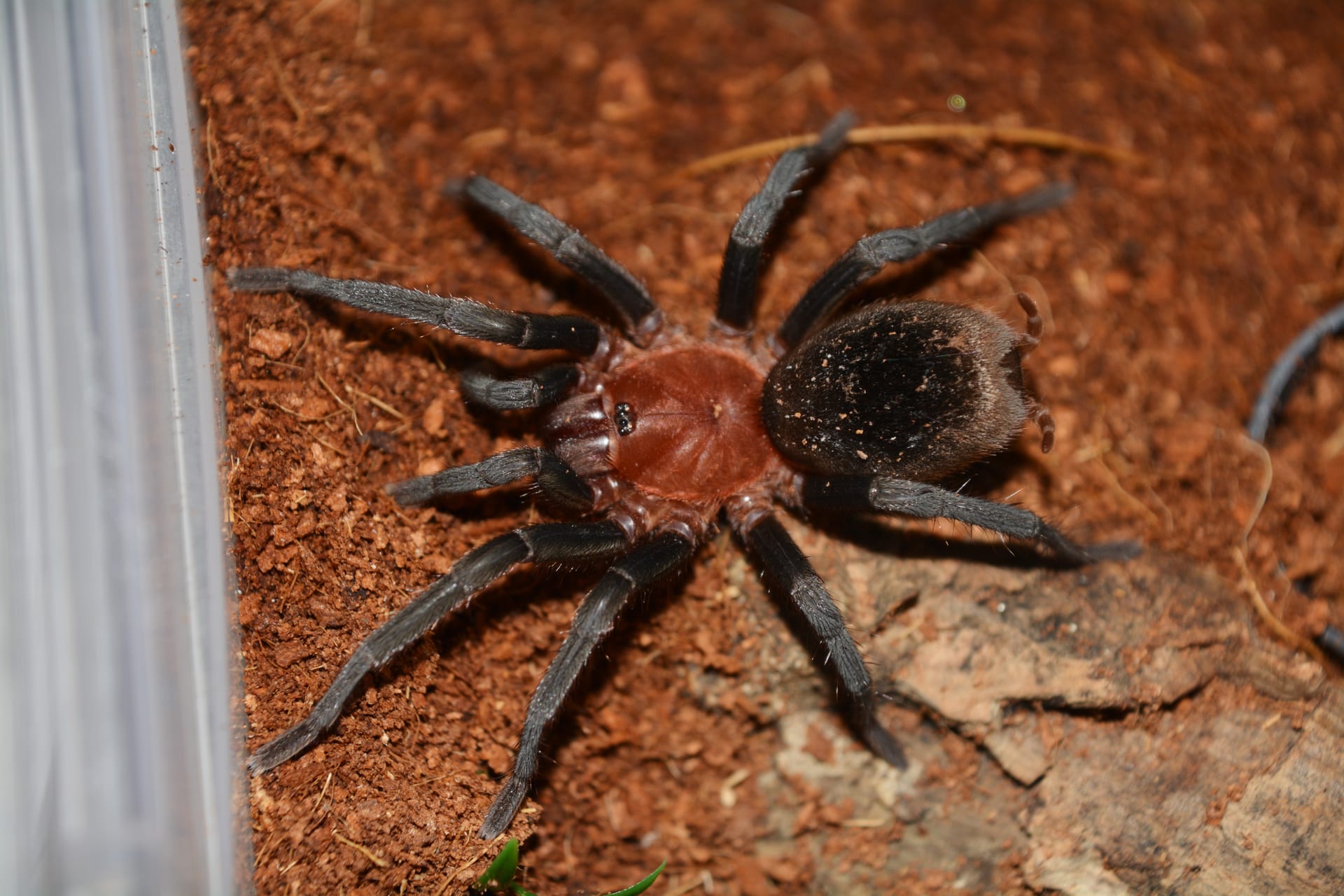
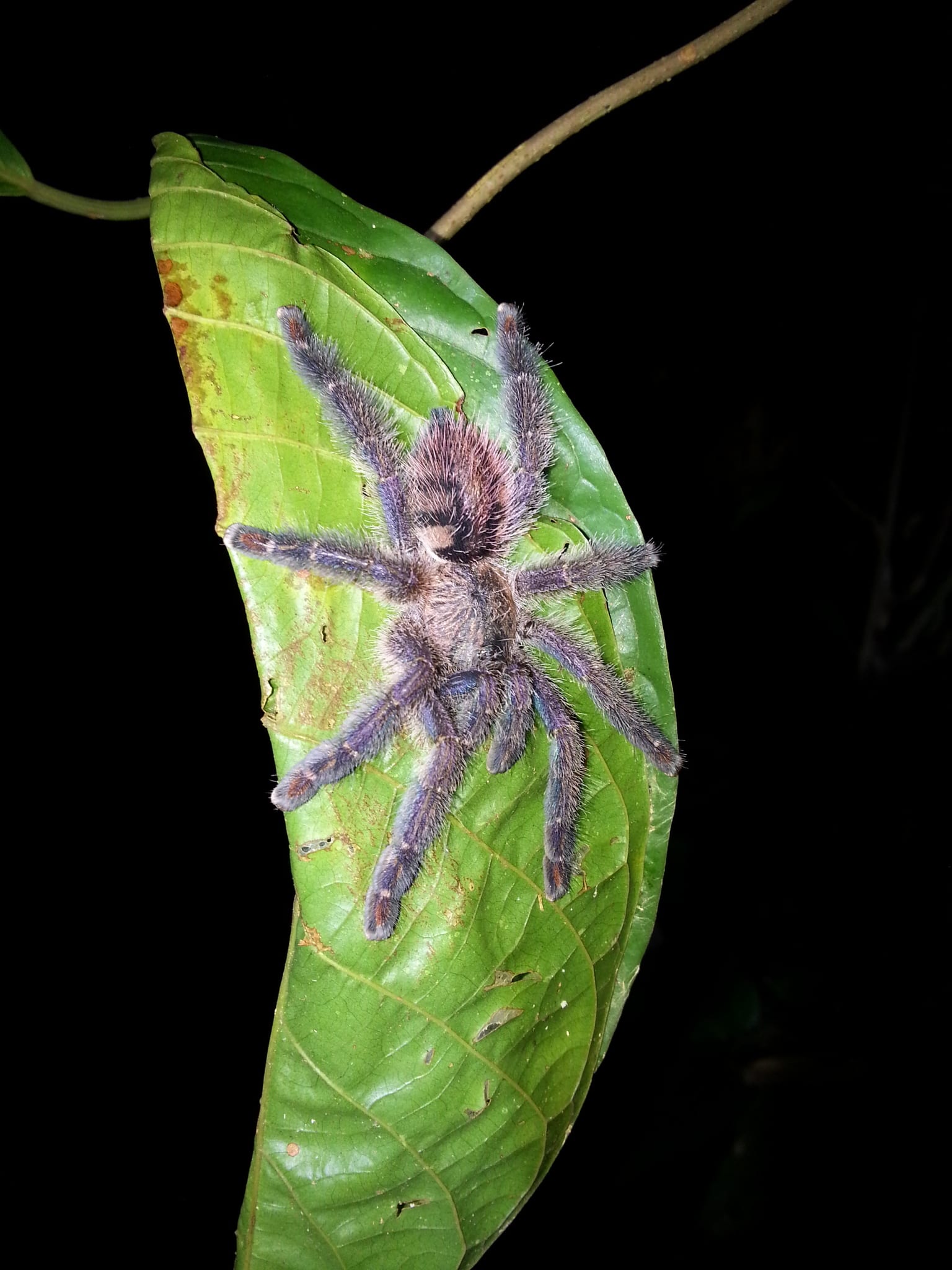
Nhandu chromatus was described by Schmidt in 2004 and is a large terrestrial tarantula from Brazil. Diagonal leg span reaches 15-17cm, and the combination of velvety black legs with white stripes, a beige-grey carapace and red abdominal setae makes it popular. The sexes look alike until the male's final moult, after which he becomes duller and longer-legged and develops palpal bulbs and tibial hooks. Its name has changed repeatedly: Bertani moved it to Vitalius in 2023, so Vitalius chromatus spread through the trade, but a 2026 redescription returned it to Nhandu. It lives in tropical forest and savannah, digging its own burrow or occupying an abandoned one. It is hardy, suiting 20-24 C and 65-75 percent humidity. Because it is fast, skittish and quick to flick urticating hairs it is best handled by experienced keepers. Breeding is relatively straightforward and egg sacs contain large numbers of spiderlings.
Source: Wikipedia (CC BY-SA 4.0)
Lifespan of the Brazilian Red and White
The Brazilian Red and White lives Females 10-12 years, males about 4 years.
Size of the Brazilian Red and White
The Brazilian Red and White grows to Leg span 15-17cm; body about 9cm (female) and 7cm (male).
Temperature & humidity for the Brazilian Red and White
The ideal temperature for the Brazilian Red and White is 20〜24℃. Ideal humidity is 65〜75%.
Basic Info
Origin
Brazil, in tropical forest and savannah
Care Specifications
Semi-aggressiveSolitaryBreeding: Easy
Sources: The Tarantula Collective: Nhandu chromatus / Polish Wikipedia: Nhandu chromatus (husbandry) / Wikipedia: Brazilian red and white tarantula / GBIF
References & Sources
Edited & verified by: BreederDirect editorial team
The taxonomic, regulatory, and husbandry data on this page are compiled and verified against the authoritative primary sources below.
Taxonomy & Authority
Accepted name: Nhandu chromatus Schmidt, 2004
Synonyms: Vitalius chromatus (Schmidt, 2004)
Authority databases: GBIF
Nomenclature follows global taxonomic authority databases.
Regulations & Conservation Status
Not CITES-listed
Sources: CITES Appendices (species not listed)
Regulations may change. Always verify the latest information with the relevant authorities.
Brazilian Red and White Listings
Loading latest listingsFind listings for this species