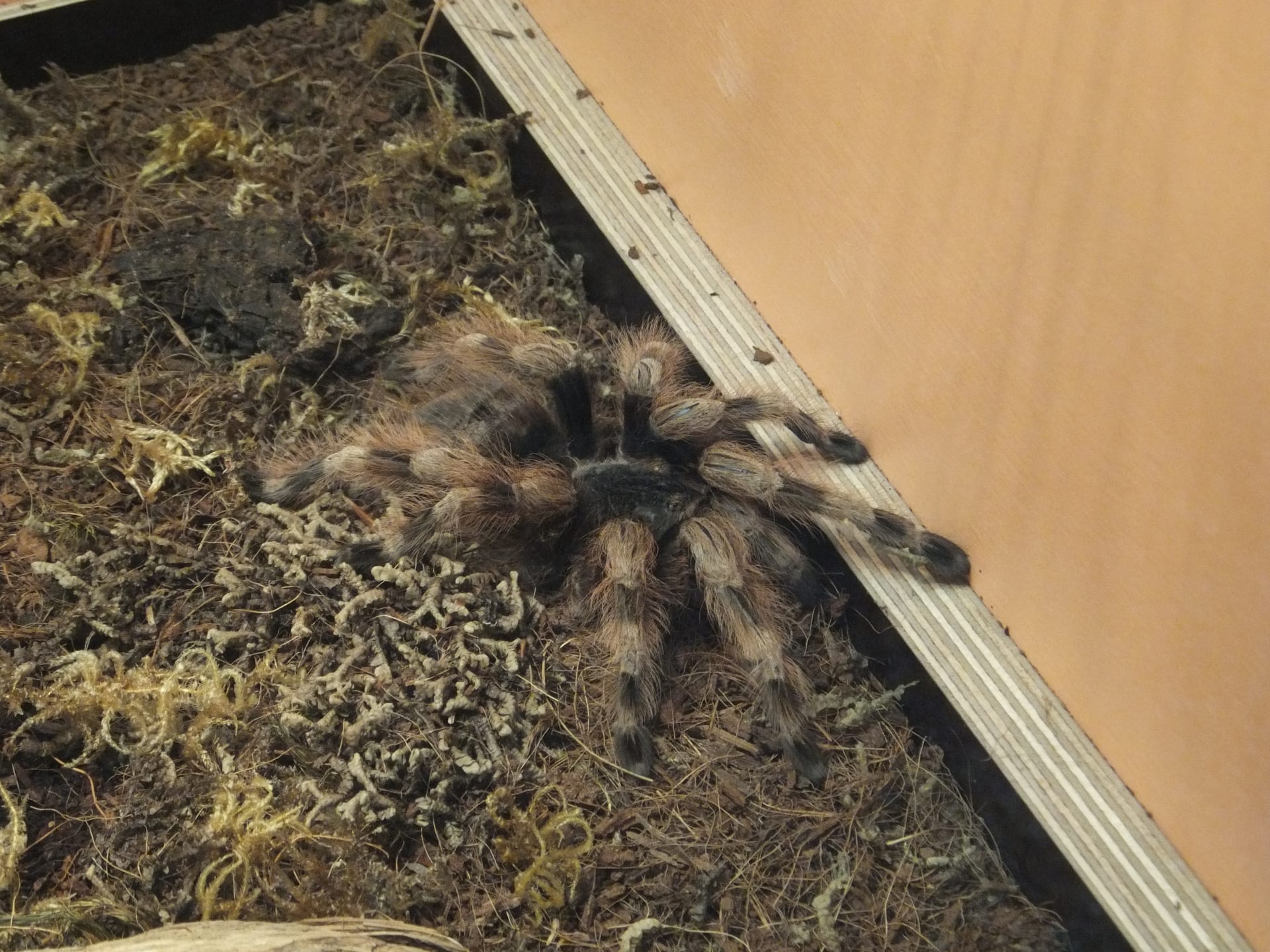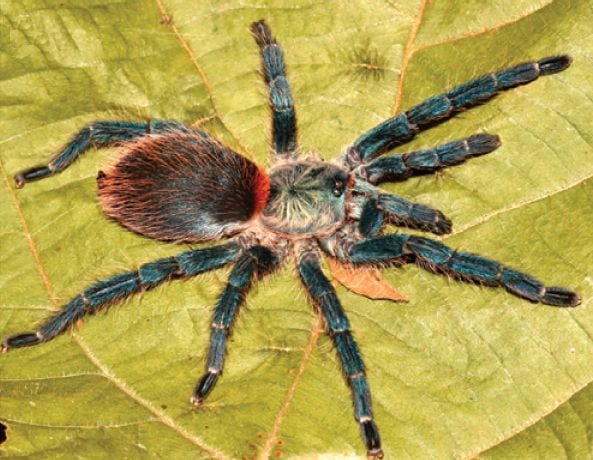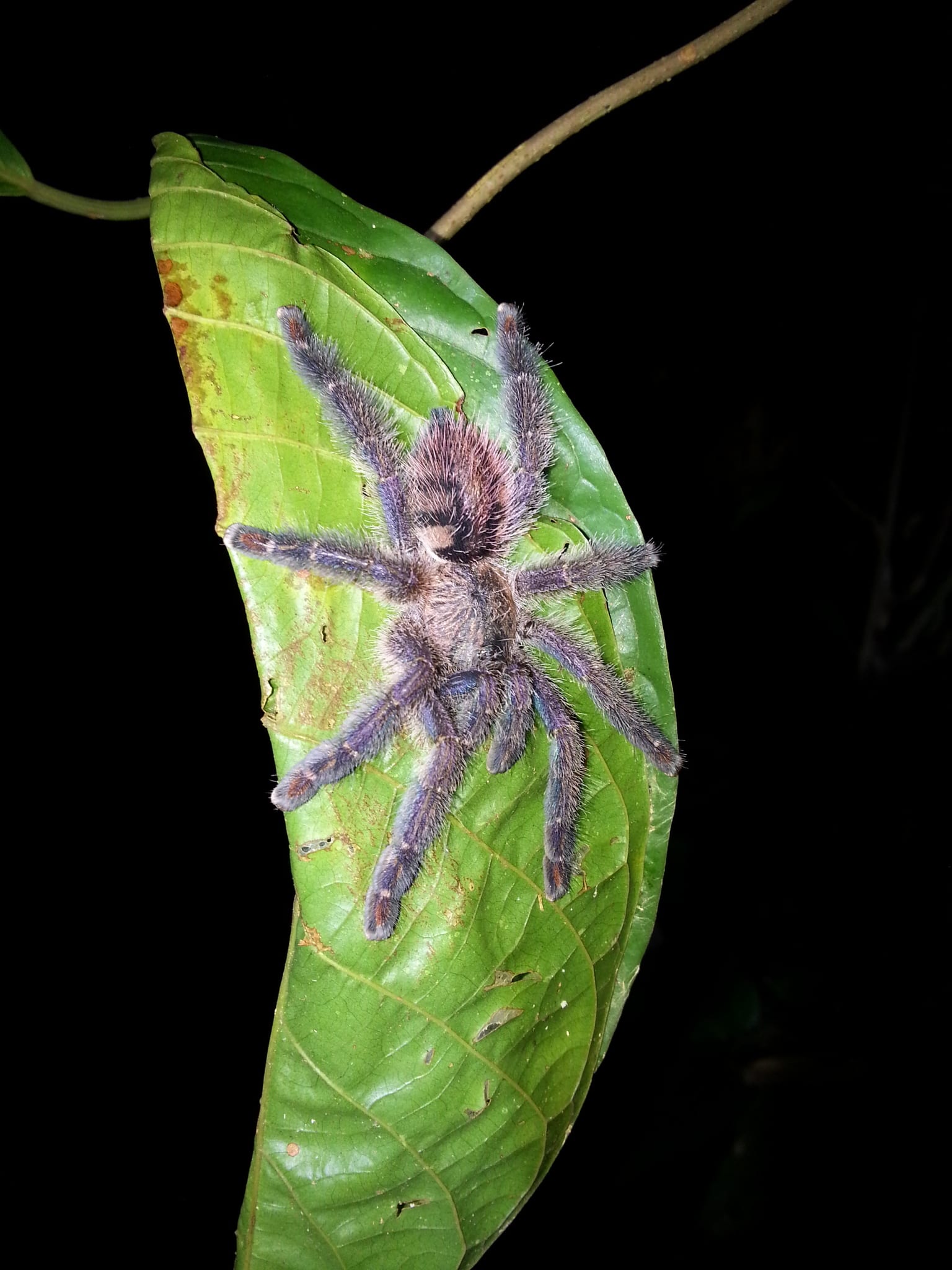
Source: Wikimedia Commons
Amazon Sapphire Pinktoe
IntermediateYbyrapora diversipes
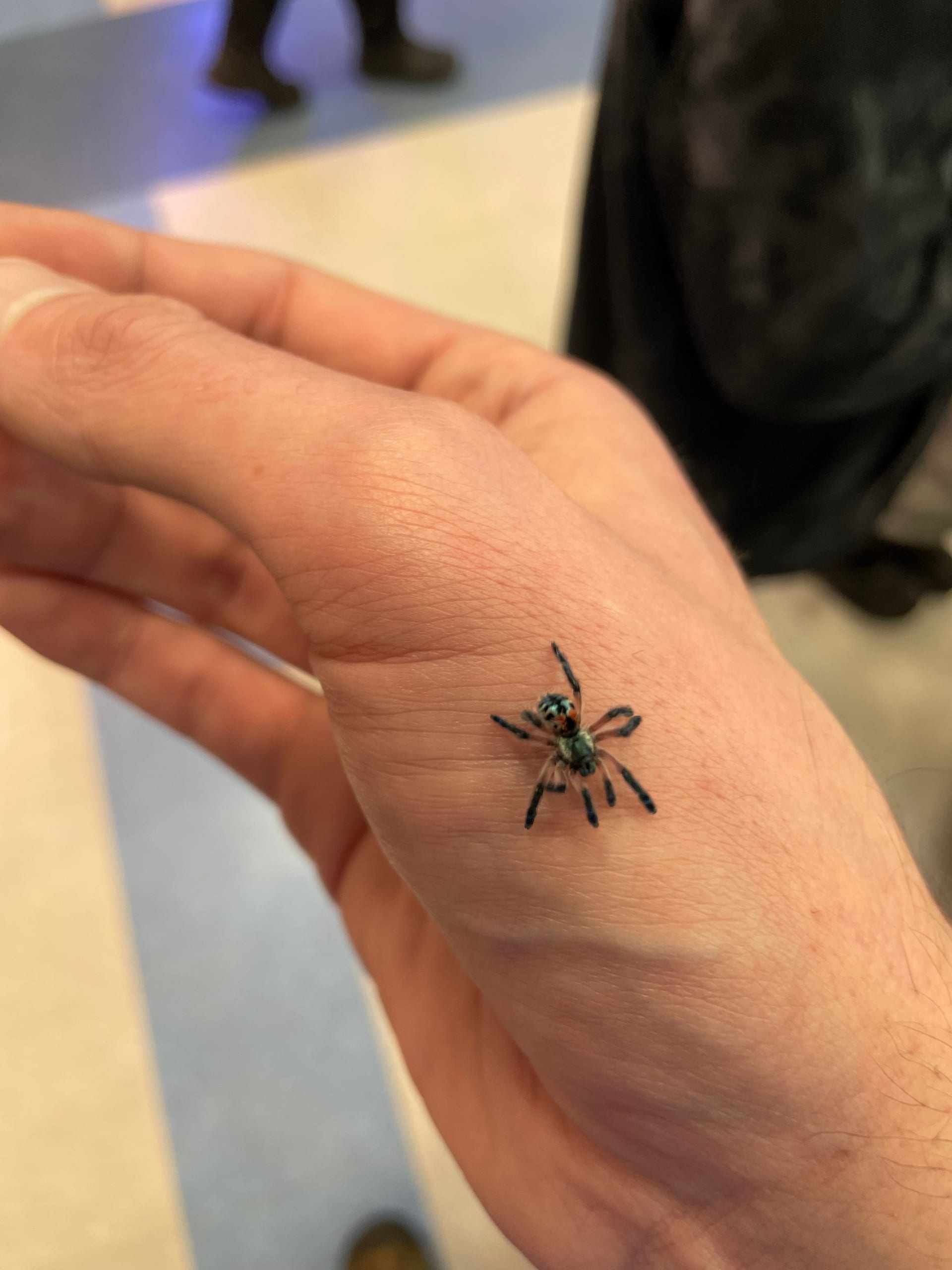
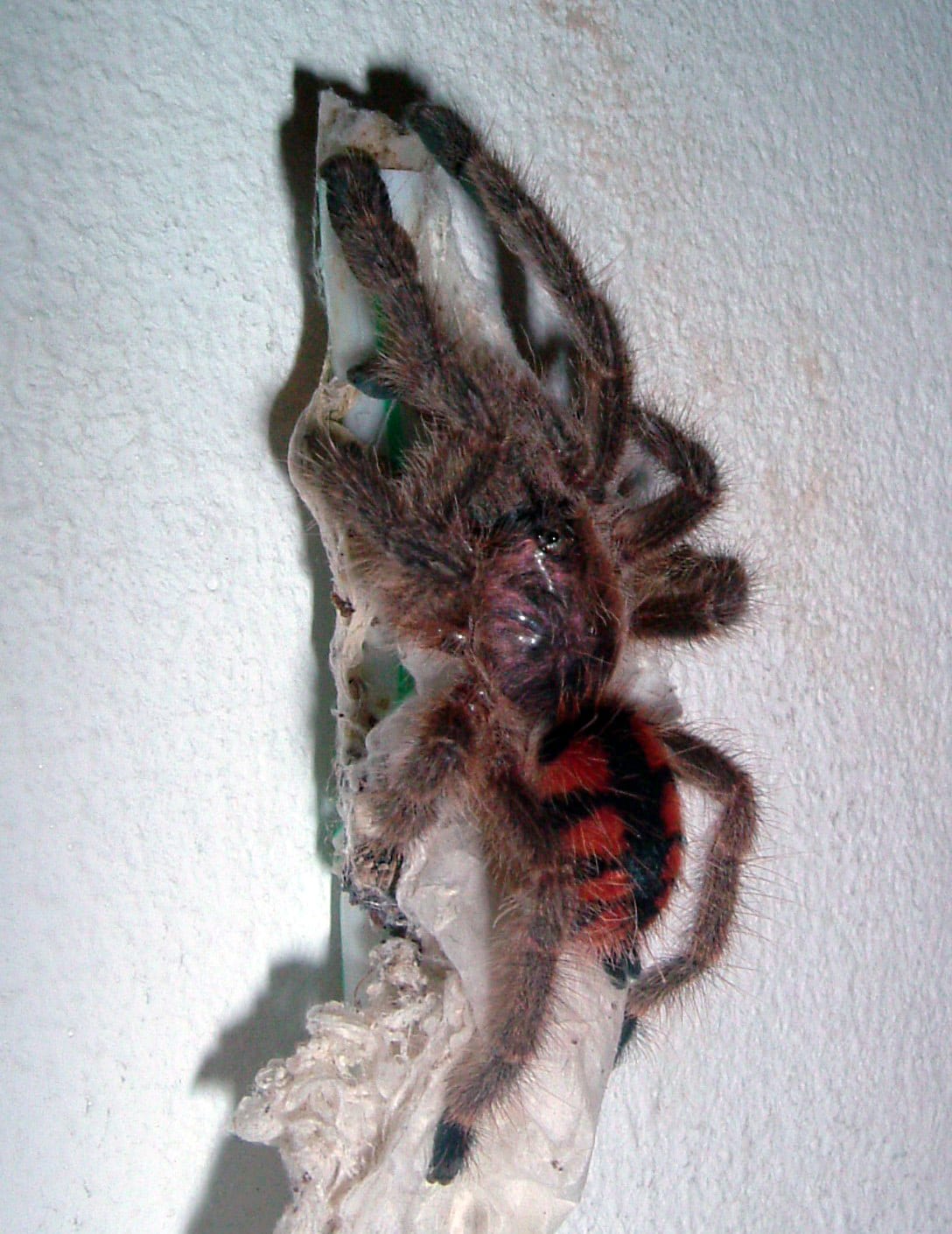
A small arboreal tarantula from the Atlantic forest of Brazil. Immatures carry a jagged-edged reddish mark down the centre of the abdomen with dark stripes; the pattern fades with maturity. It was split out of the genus Avicularia in 2017.
Difficulty
Intermediate
Temperature
21〜27℃
Lifespan
3-5 years
Humidity
60〜70%
Diet
Small live insects such as crickets
About
Ybyrapora diversipes was described by C. L. Koch in 1842 and was long known as Avicularia diversipes. In 2017 Fukushima and Bertani separated three species from Avicularia on morphological and distributional grounds and erected the genus Ybyrapora, to which this species was moved; the genus name comes from Tupi and means tree dweller. Members of the genus are smaller than most aviculariines, females have strongly curved and almost non-sclerotised spermathecae, and the tibial apophysis on the first leg is absent or small. Colour changes markedly with maturity: immatures show a central reddish mark with jagged edges along the abdomen, surrounded by a dark area connected to dark transverse stripes, and these patterns become duller or disappear in adults, particularly females. The species is recorded from the Brazilian Atlantic rainforest between Bahia and the south of Rio de Janeiro.
Source: Wikipedia (CC BY-SA 4.0)
Lifespan of the Amazon Sapphire Pinktoe
The Amazon Sapphire Pinktoe lives 3-5 years.
Temperature & humidity for the Amazon Sapphire Pinktoe
The ideal temperature for the Amazon Sapphire Pinktoe is 21〜27℃. Ideal humidity is 60〜70%.
Basic Info
Origin
Brazil (Atlantic forest, from Bahia to southern Rio de Janeiro)
Lifespan
3-5 years
Temperature
21〜27℃
Care Specifications
References & Sources
Edited & verified by: BreederDirect editorial team
The taxonomic, regulatory, and husbandry data on this page are compiled and verified against the authoritative primary sources below.
Taxonomy & Authority
Accepted name: Ybyrapora diversipes (C. L. Koch, 1842)
Synonyms: Avicularia diversipes (C. L. Koch, 1842)
Authority databases: GBIF
Nomenclature follows global taxonomic authority databases.
Regulations & Conservation Status
Not CITES-listed
Sources: CITES Appendices (species not listed)
Regulations may change. Always verify the latest information with the relevant authorities.
Amazon Sapphire Pinktoe Listings
Loading latest listingsFind listings for this species