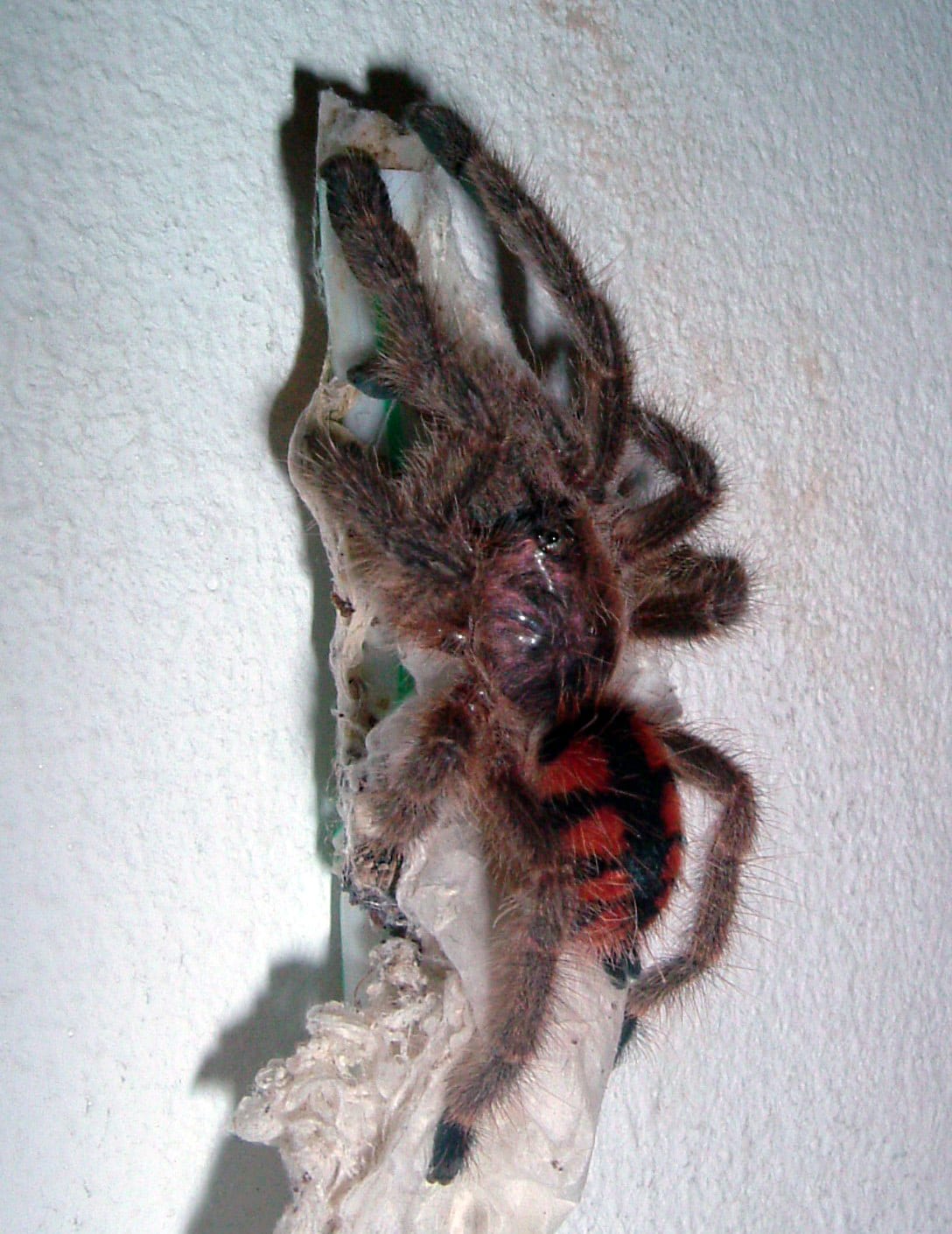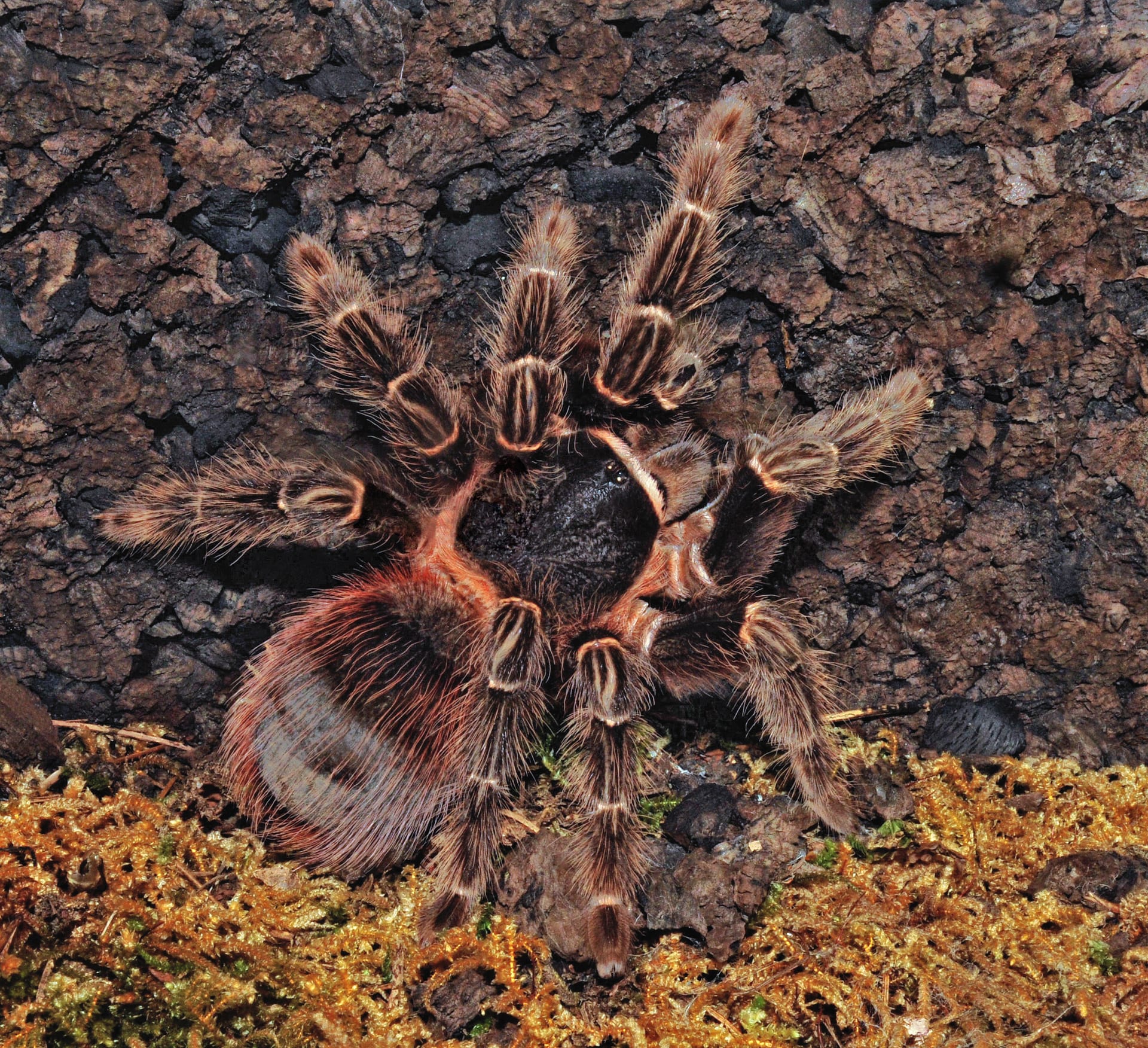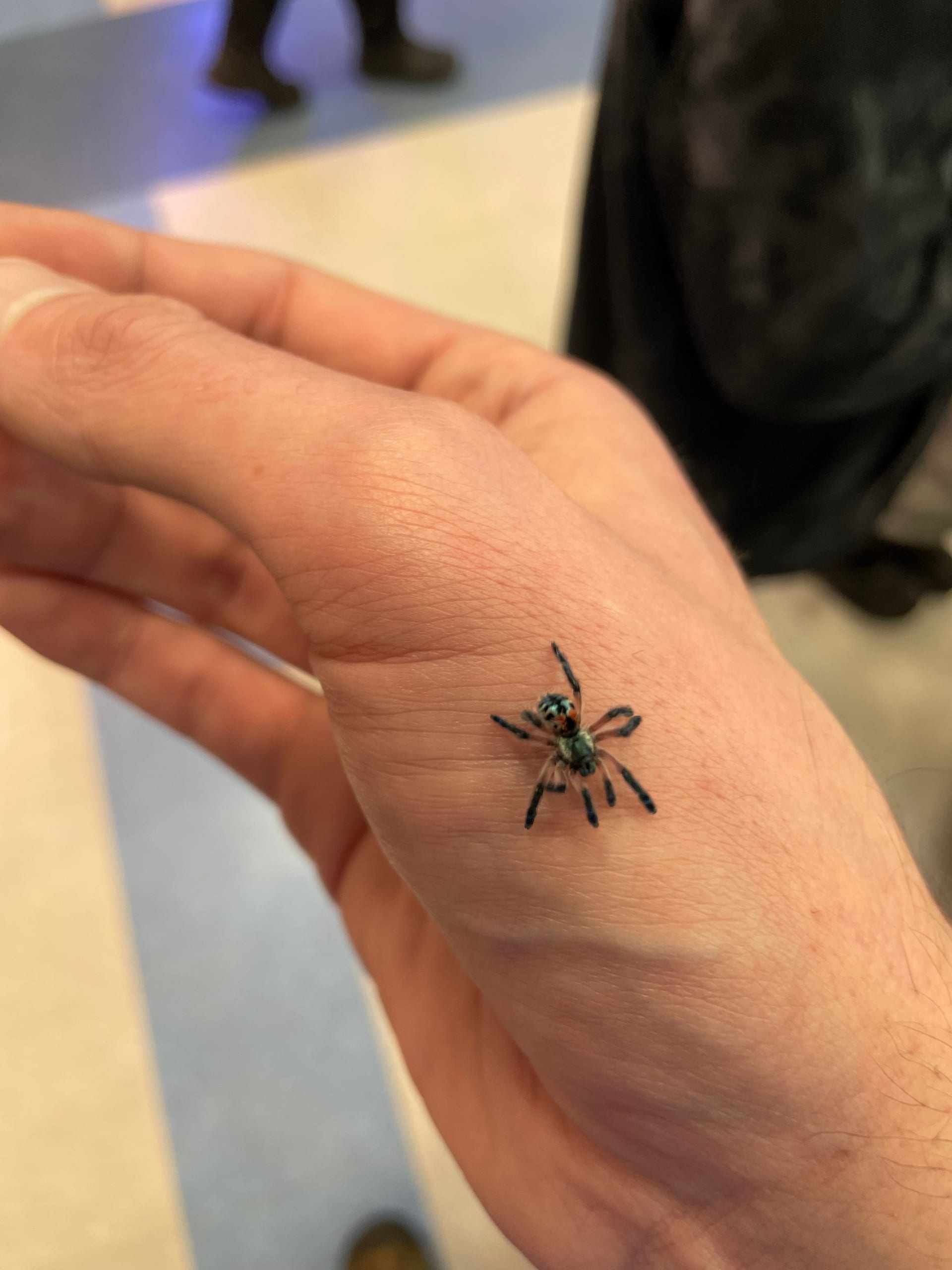
Source: Wikimedia Commons
Brazilian Jewel Tarantula
AdvancedTyphochlaena seladonia
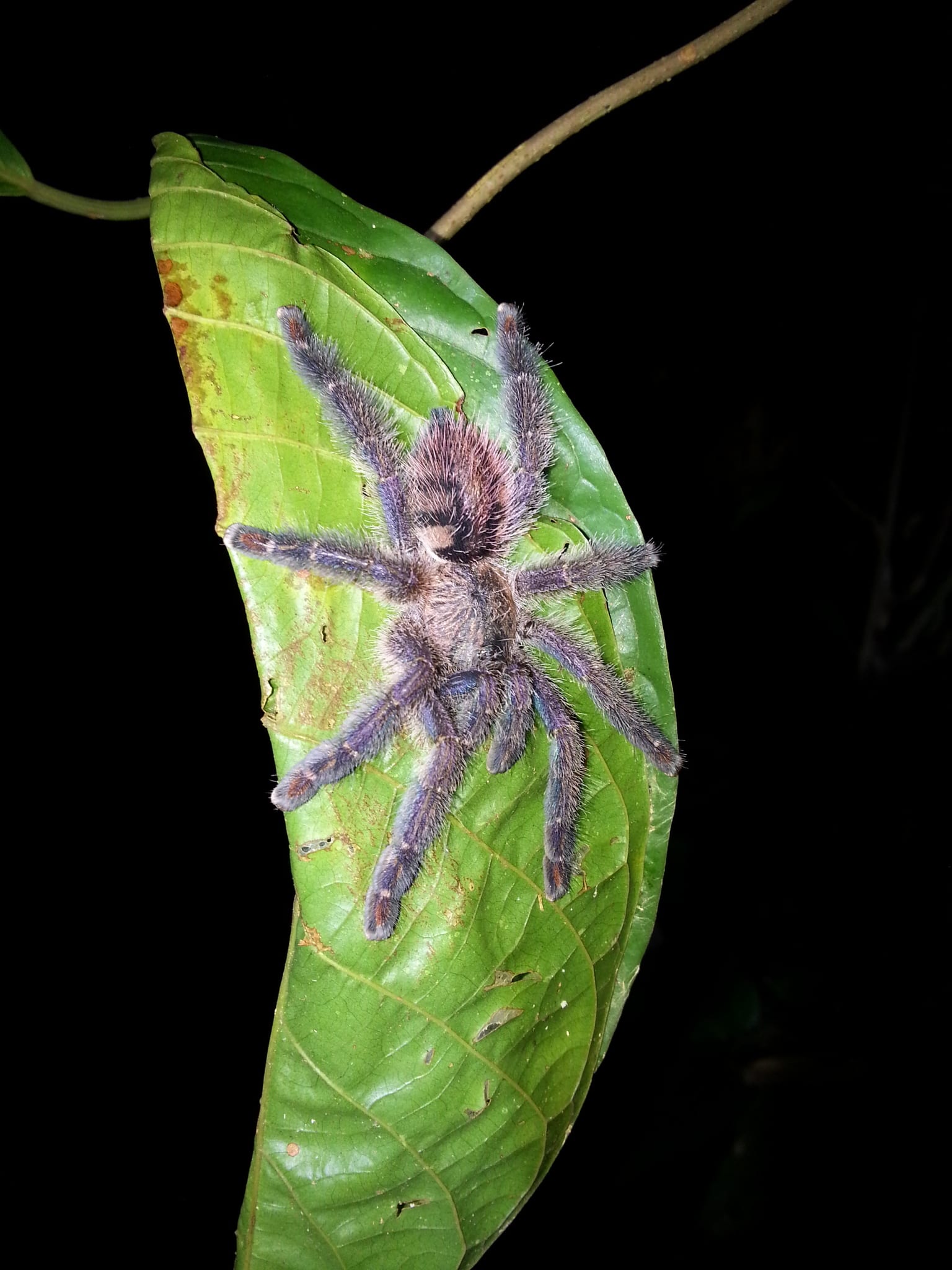
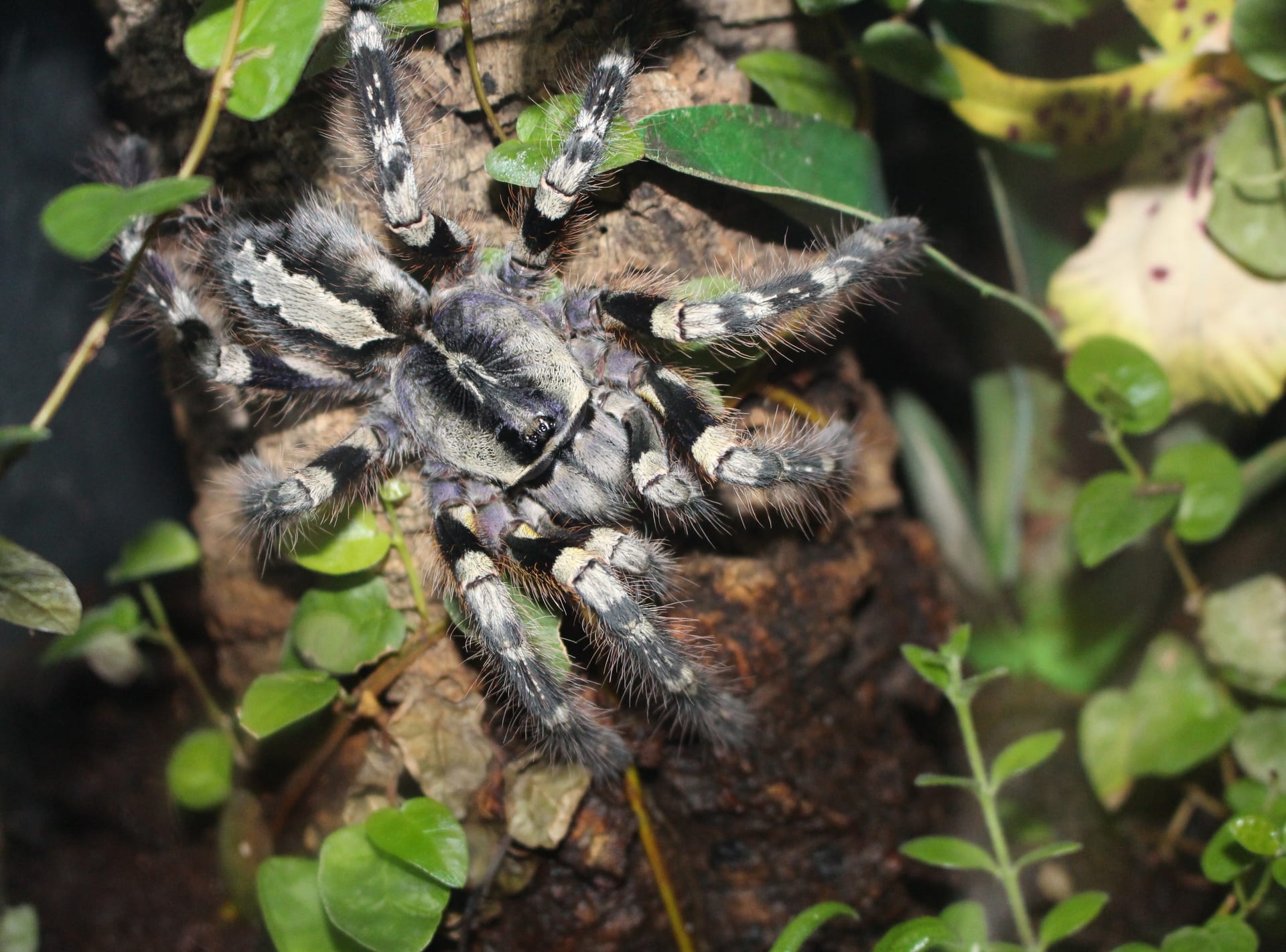
A small arboreal tarantula endemic to the Atlantic Forest of northeastern Brazil, unusual for building a trapdoor retreat in crevices of tree bark. It has a greenish cephalothorax and a black abdomen marked with yellow and red spots.
Difficulty
Advanced
Lifespan
Females 15-18 years / males 3-5 years
Size
Body length: males 9.5-12.5mm, females up to 21mm
Diet
Small flying insects, cockroaches and crickets
About
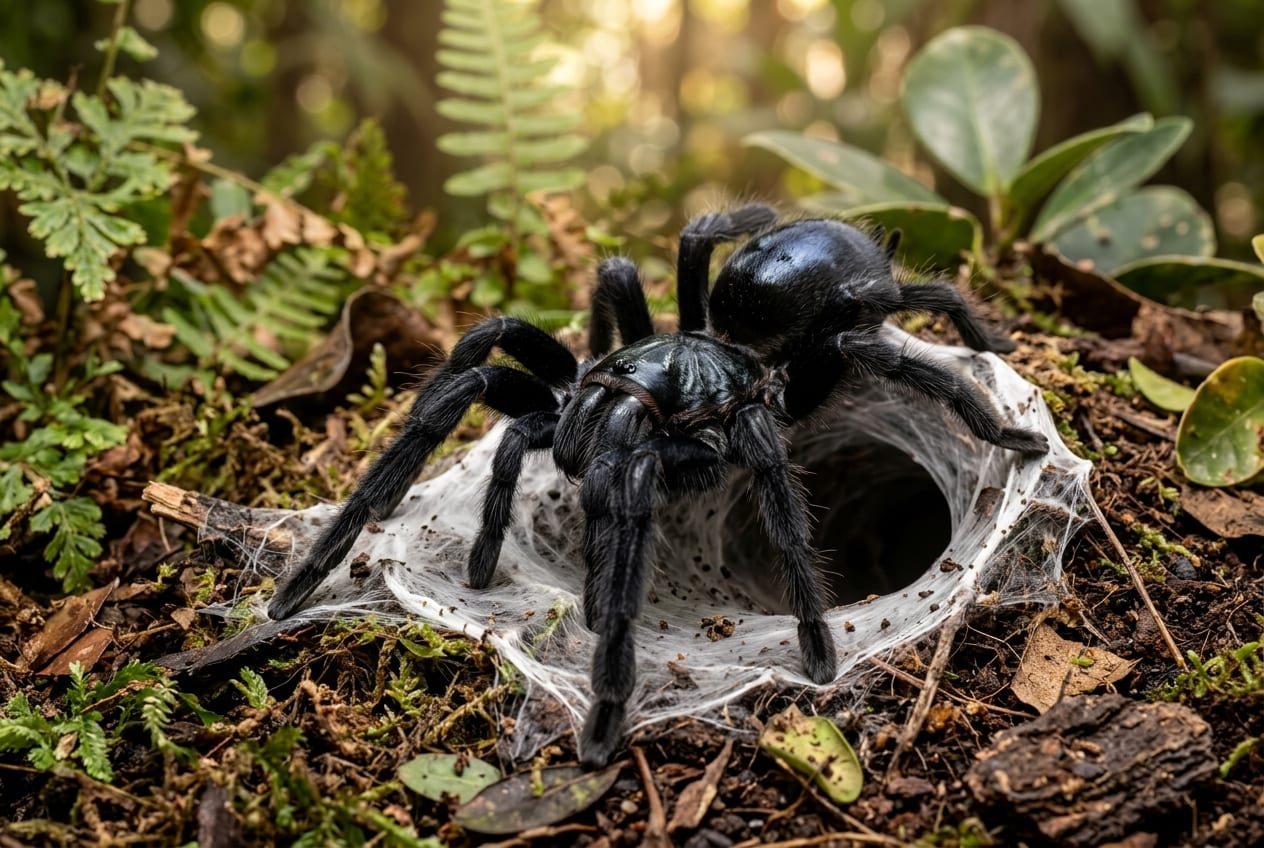
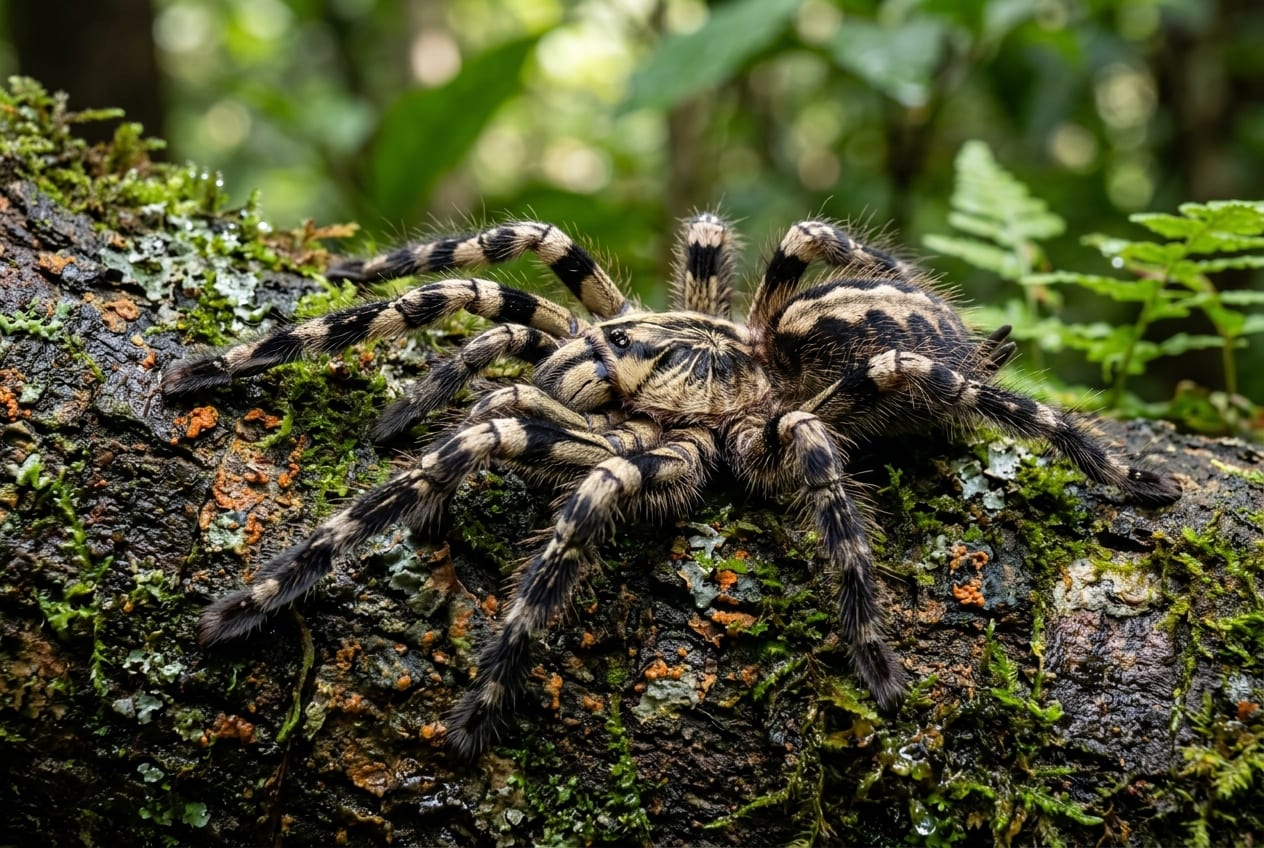
Typhochlaena seladonia is a small tarantula endemic to the Atlantic Forest of northeastern Brazil, chiefly in the states of Bahia and Sergipe. Both sexes have a greenish cephalothorax and a black dorsum bearing two rows of six spots, the posterior pair reddish and the rest yellowish. The genus is arboreal and builds a trapdoor retreat in crevices of tree bark in humid forest, an unusual habit within the Theraphosidae. Unlike typical tarantulas that dig burrows in the ground, it spends its whole life in trees, ambushing small flying insects and cockroaches that come near the entrance of its trapdoor. Its bright colours and distinctive retreat make it highly sought after among keepers.
Source: Wikipedia (CC BY-SA 4.0)
Lifespan of the Brazilian Jewel Tarantula
The Brazilian Jewel Tarantula lives Females 15-18 years / males 3-5 years.
Size of the Brazilian Jewel Tarantula
The Brazilian Jewel Tarantula grows to Body length: males 9.5-12.5mm, females up to 21mm.
It is small: mature males measure 9.5-12.5 mm in body length and females reach up to 21 mm.
Basic Info
Origin
Northeastern Brazil (states of Bahia and Sergipe)
Lifespan
Females 15-18 years / males 3-5 years
Size
Body length: males 9.5-12.5mm, females up to 21mm
Diet
Care Specifications
PeacefulSolitary
Sources: Wikipedia: Typhochlaena seladonia / Wikipedia: Typhochlaena (genus) / GBIF
References & Sources
Edited & verified by: BreederDirect editorial team
The taxonomic, regulatory, and husbandry data on this page are compiled and verified against the authoritative primary sources below.
Taxonomy & Authority
Accepted name: Typhochlaena seladonia (C. L. Koch, 1841)
Synonyms: Mygale seladonia C. L. Koch, 1841, Iridopelma seladonium (C. L. Koch, 1841)
Authority databases: GBIF
Nomenclature follows global taxonomic authority databases.
Regulations & Conservation Status
Not CITES-listed
Sources: CITES Appendices (species not listed)
Regulations may change. Always verify the latest information with the relevant authorities.
Brazilian Jewel Tarantula Listings
Loading latest listingsFind listings for this species