Beginner's Guide to Keeping Tarantulas: Difficulty by Species and Basic Care Environment | ブリちょく
Exotic Invertebrates| ✍️ BreederDirect Editorial
Beginner's Guide to Keeping Tarantulas: Difficulty by Species and Basic Care Environment
Tarantulas are surprisingly easy pets. Learn the difficulty levels of different species like Gramostola, Poecilotheria, and birdseaters, plus the fundamentals of temperature, humidity, and feeding management.
Key Takeaways
Tarantulas are surprisingly easy pets. Learn the difficulty levels of different species like Gramostola, Poecilotheria, and birdseaters, plus the fundamentals of temperature, humidity, and feeding management.
Many people imagine tarantulas as "scary," but in reality, keeping them is relatively simple, and many individuals tolerate handling. The vibrant colors, unique ecology, and mysterious phenomenon of molting offer a unique appeal that only tarantula keeping can provide. This article covers everything from tarantula care basics to species-specific difficulty levels, explained in a way that beginners can easily understand.
✍️
BreederDirect Editorial
The BreederDirect editorial team specializes in care information for animals, covering veterinary care and breeding to deliver beginner-friendly guides.
Find Exotic Invertebrates on BreederDirect
Buy directly from verified breeders
Browse Related Listings
Find Exotic Invertebrates listings related to this article on BreederDirect. Buy directly from verified breeders.
Related Articles
Browse by Category
🪸Coral
🐠Marine Fish
🐟Tropical Fish
🐡Goldfish
🐟Medaka
🦎Reptiles
Share
Basic Information and Toxicity of Tarantulas
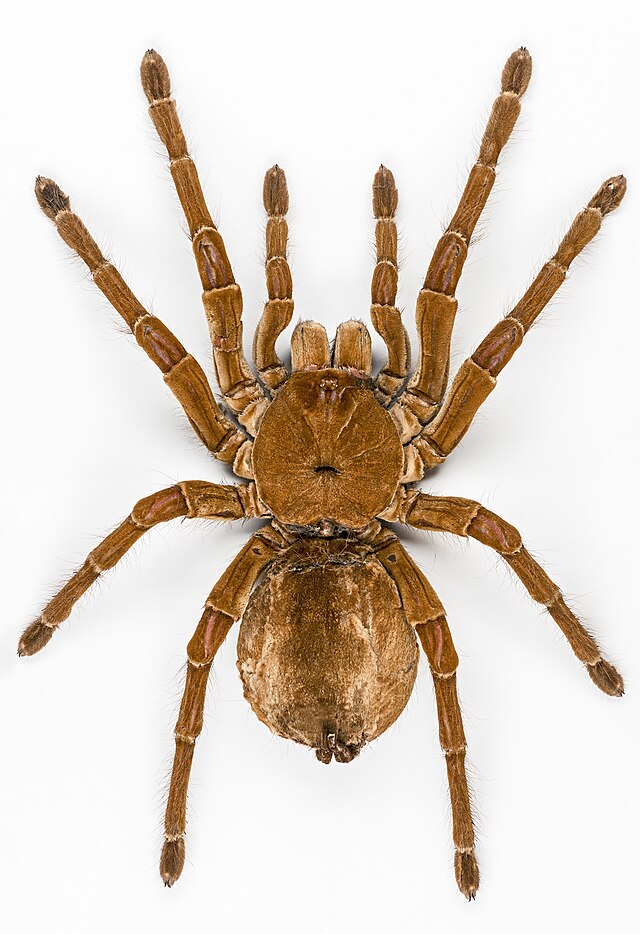
Tarantulas are a general term for large spiders that inhabit tropical and subtropical regions of Africa, South America, and Asia, formally belonging to the superfamily "Theraphosoidea." Body length varies greatly by species, ranging from small species with a leg span of about 5 cm to the Goliath birdeater, which exceeds 30 cm.
Lifespan
Females are long-lived, with some species reaching 20–30 years or more. Males are significantly shorter-lived than females, typically dying 1–2 years after maturity. If you want a long-term companion, choosing a female is the wise choice.
Toxicity
Most tarantulas have venom glands, but their toxicity to humans is extremely low. In most cases, a bite causes pain comparable to a wasp sting. However, those with allergies should be cautious, as severe reactions may occur. If bitten, observe your condition carefully.
Additionally, most New World tarantulas (from North and South America) have "urticating hairs" on their abdomen. When threatened, they flick these hairs with their hind legs, which can cause intense itching and inflammation if they contact the eyes or skin. Always wash your hands after handling and avoid touching your face.
Beginner-Friendly Species and Characteristics
When choosing a tarantula, the most important factor is "difficulty level." Beginners should start with docile, hardy ground-dwelling species.
The table below compares the characteristics of major species (prices and body length are estimates).
Species
Habitat
Difficulty
Temperament
Max Body Length
Price Range
Chilean Rosehair
Ground-dwelling
Beginner
Very docile
~15 cm
¥3,000–6,000
Mexican Red Knee
Ground-dwelling
Beginner
Docile
~15 cm
¥5,000–15,000
Brazilian Salmon Pink
Ground-dwelling
Beginner–Intermediate
Docile, large
~25 cm
¥5,000–10,000
Indian Ornamental
Arboreal
Advanced
Fast, requires caution
~18 cm
¥5,000–15,000
Cobalt Blue
Burrowing
Advanced
Shy, nervous
~13 cm
¥5,000–10,000
For your first tarantula, the Chilean Rosehair or Mexican Red Knee are reliable choices.
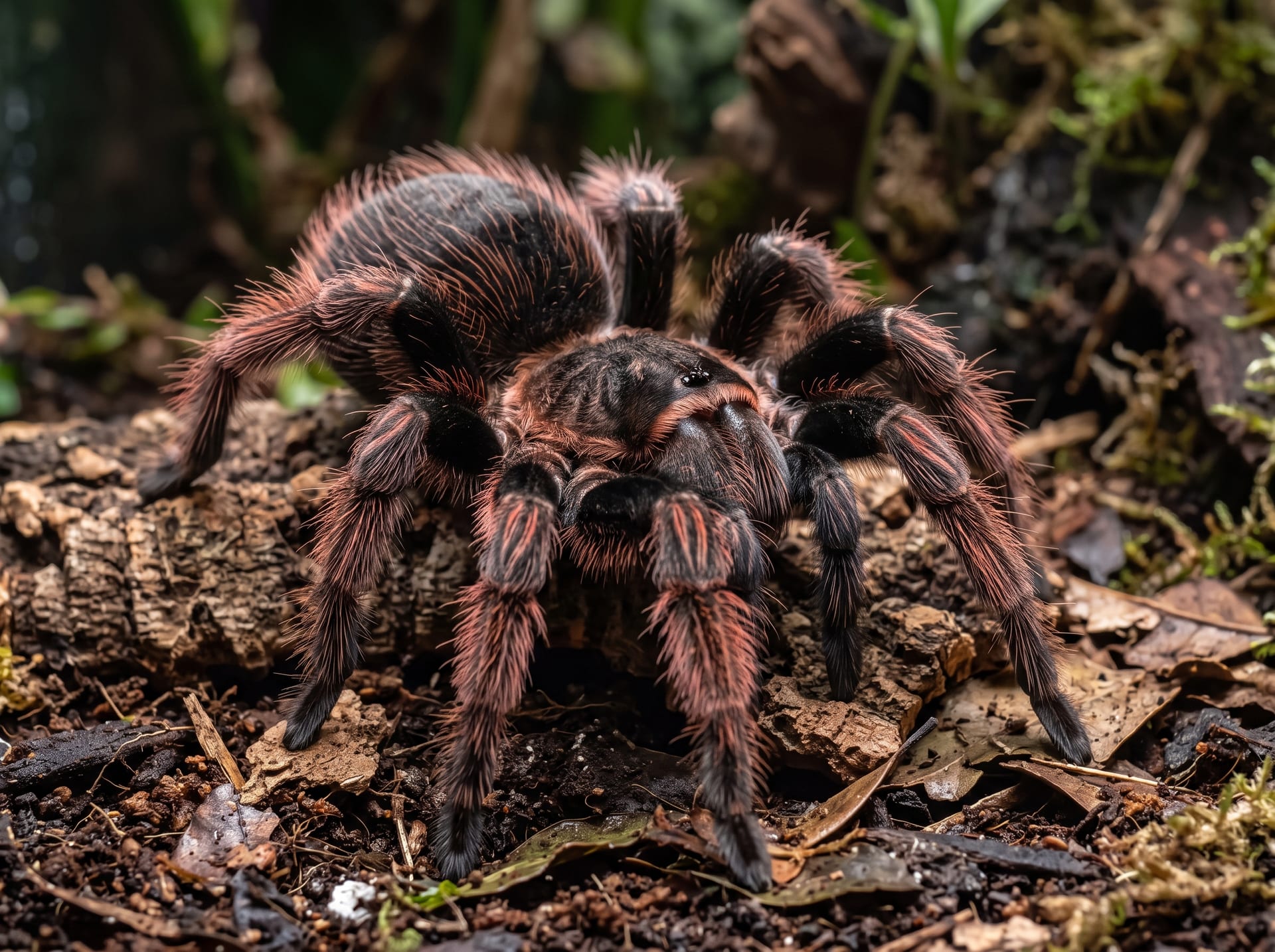
Gramostola rosea (Chilean Rosehair)
The classic beginner species. Slow-moving and very docile, with many individuals tolerating handling. Resistant to low temperatures and humidity, making management simple. However, "feeding refusal" can last several months, so patience is needed when feeding stops. Don't panic during these periods.
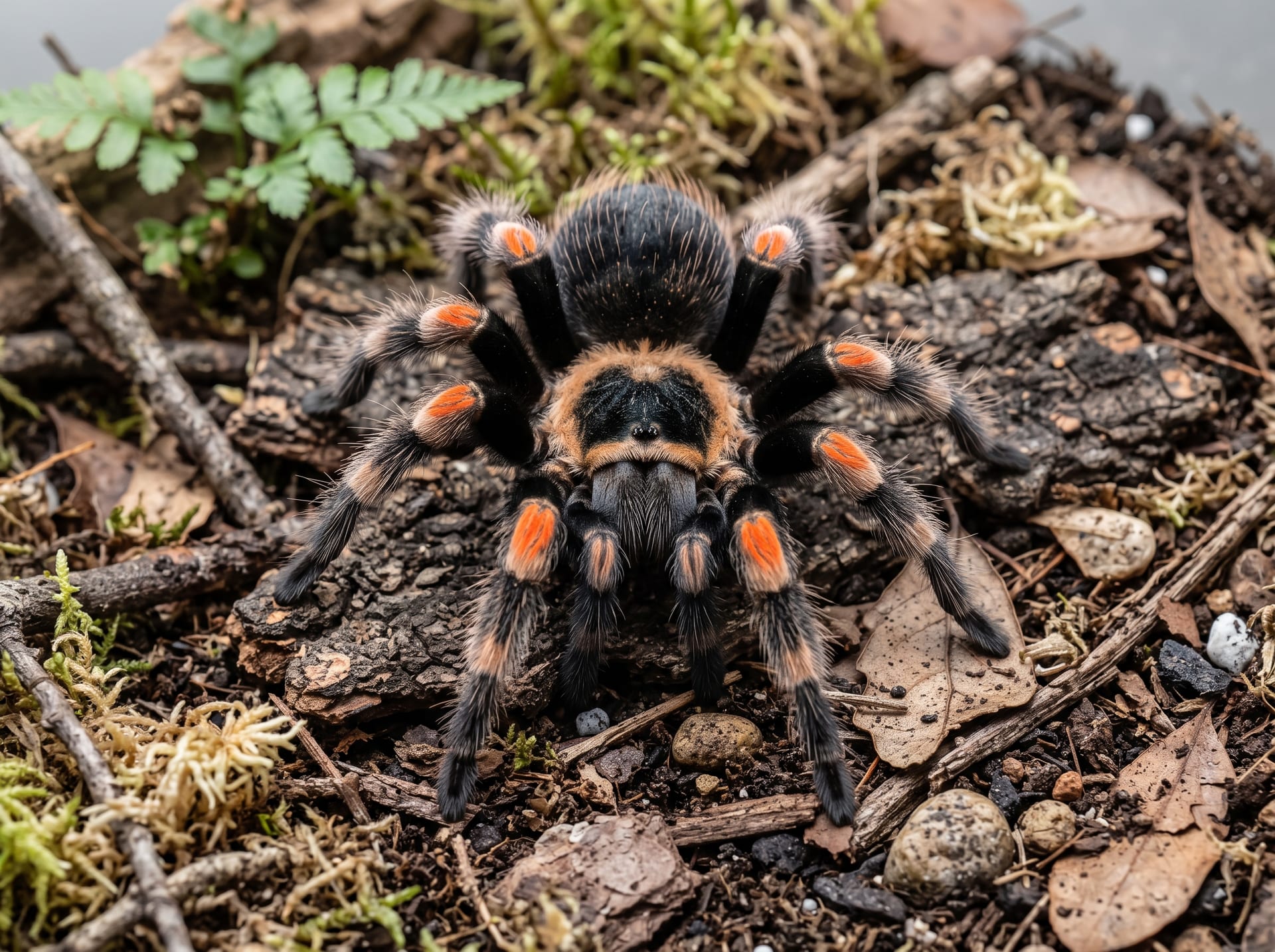
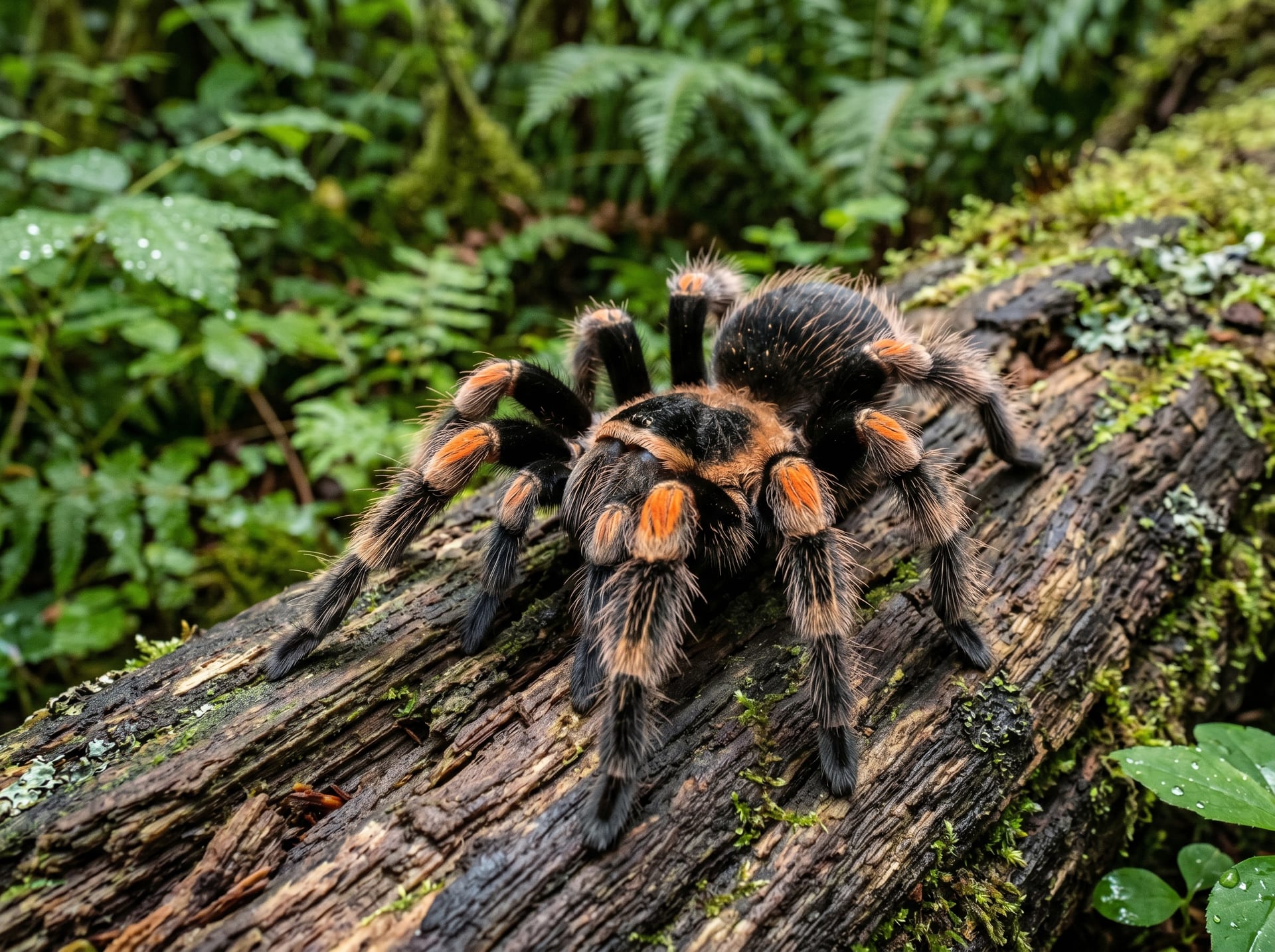
Brachypelma hamori (Mexican Red Knee)
A popular species with striking red and black contrast. Slow movements make it easy to observe, with high visual satisfaction. Due to CITES Appendix II export regulations, always verify that specimens are captive-bred (CB) before purchase.
Lasiodora parahybana (Brazilian Salmon Pink)
A large species reaching 25 cm in body length, with impressive visual impact. Relatively docile, requiring slightly higher humidity but hardy and beginner-to-intermediate friendly.
Species for Intermediate to Advanced Keepers
Poecilotheria spp. (Indian Ornamental, etc.)
Arboreal tarantulas with beautiful geometric patterns. Extremely fast-moving with quick reflexes that allow them to close distances instantly. As Old World species (from Asia and Africa), they lack urticating hairs but have relatively strong venom; bites can cause pain and swelling lasting several days. Handling should be avoided entirely; keep them as display specimens instead.
Lampropelma spp. (Cobalt Blue, etc.)
Old World burrowing tarantulas with striking blue-violet coloration. They require high humidity (80–90%) and deep substrate, demanding delicate management. Shy by nature, they spend most time underground and are rarely seen. Collectors prize them for the beauty of those rare glimpses, making them a coveted advanced species.
Basic Care Equipment and Environment Setup
Enclosure Selection
Use plastic containers or dedicated reptile enclosures sized to match the species. The key is balancing secure sealing with adequate ventilation. Tarantulas are escape artists capable of squeezing through tiny gaps. Install mesh vents on the sides or top to prevent moisture buildup. For adults, the substrate area should be 2–3 times the body length.
Substrate
Use coconut husk, peat moss, leaf litter, or a combination. Depth should be approximately 1–2 times body length. Adjust moisture based on the species' humidity requirements.
Ground-dwelling, dry-preference species (Chilean Rosehair, etc.): Keep substrate slightly dry with a "wet corner" in one area
Arboreal species (Poecilotheria, etc.): Install driftwood or artificial plants for hides, maintaining 70–80% humidity
Burrowing, high-humidity species (Cobalt Blue, etc.): Keep substrate 15+ cm deep and consistently moist
Temperature Management
Most species thrive at 25–28°C. In winter, apply adhesive heating panels to the enclosure side and monitor with a thermometer. Avoid under-tank heating, as tarantulas trapped on hot surfaces face danger. Temperatures exceeding 30°C can be fatal, so summer management is equally important.
Feeding, Water, and Molting Management
Feeding
Crickets (sized SS–LL), dubia roaches, and mealworms are standard feeders. Offer live prey once or twice weekly. Prey size should match or be slightly smaller than the tarantula's abdomen (opisthosoma).
Remove uneaten prey immediately. Accidents occur when live food bites recently-molted or non-feeding tarantulas. Remove any uneaten prey within 24 hours.
Water Provision
For juveniles, mist one corner of the substrate. For adults, provide a small shallow water dish. Avoid deep containers to prevent drowning; placing cork or stones inside to shallow the dish is effective.
Before and After Molting
Signs of pre-molt include "refusing food," "darkening abdomen," and "webbing and nest building." When observed, stop feeding and watch quietly. Never touch during molting; disturbing the soft exoskeleton during this delicate phase can cause permanent damage. After molting, allow 1–2 weeks for the exoskeleton to harden before resuming feeding; provide only water during this period.
Conclusion
With proper species selection and basic environmental management, tarantulas are highly rewarding pets for beginners. Start with beginner species like the Chilean Rosehair or Mexican Red Knee to get a feel for keeping them, then progress to intermediate and advanced species. Choosing a female allows for a partnership lasting decades. Experience the unique presence and mysterious ecology of these remarkable creatures firsthand.