Coral Encyclopedia — 74 Species Directory
Encyclopedia of popular coral species with care requirements, traits, and difficulty levels.
Showing 74 of 74 species(1–24)
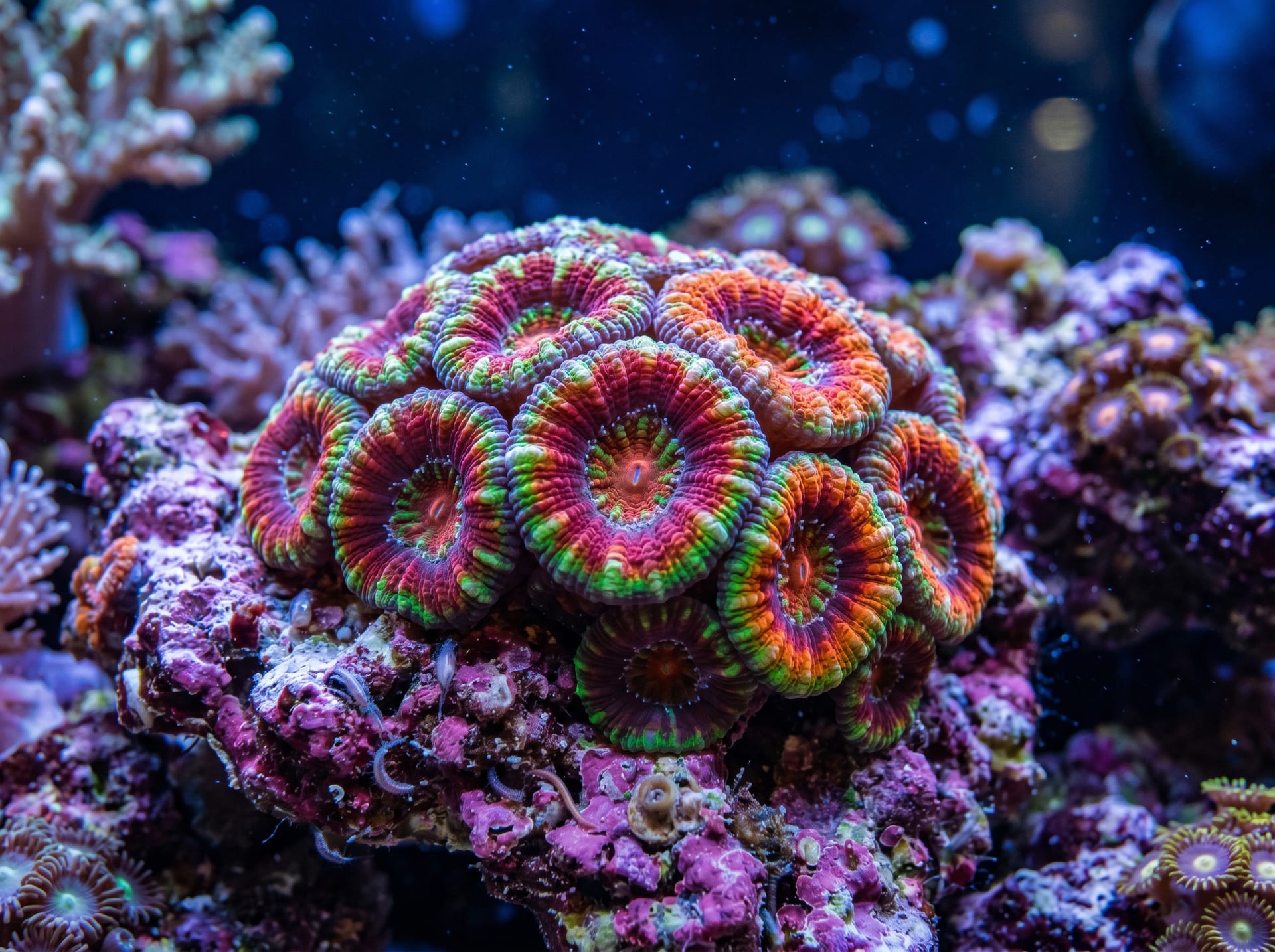
Acan Coral
An LPS coral with rich colorful variations. Highly popular among collectors with many high-value specimens.
 © Dwergenpaartje / CC BY-SA 3.0
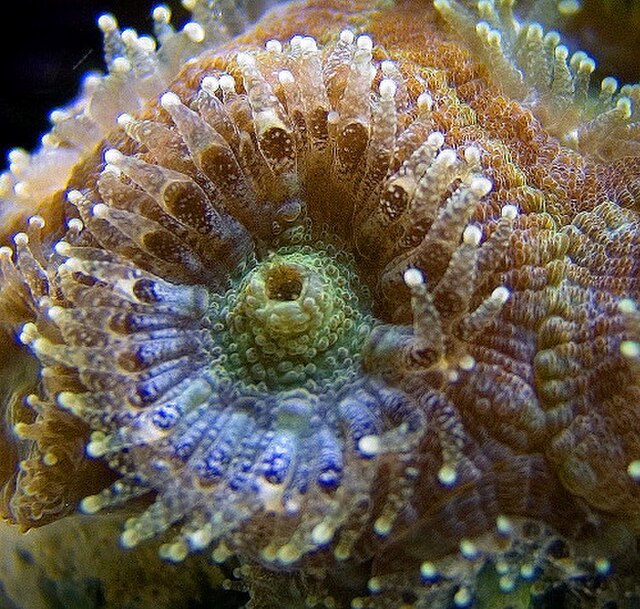
Acan Lord
Micromussa lordhowensis
An LPS coral with vivid multicolor patterns beautiful as jewels. Premium species popular among collectors.
 © Philippe Bourjon / CC BY-SA 3.0
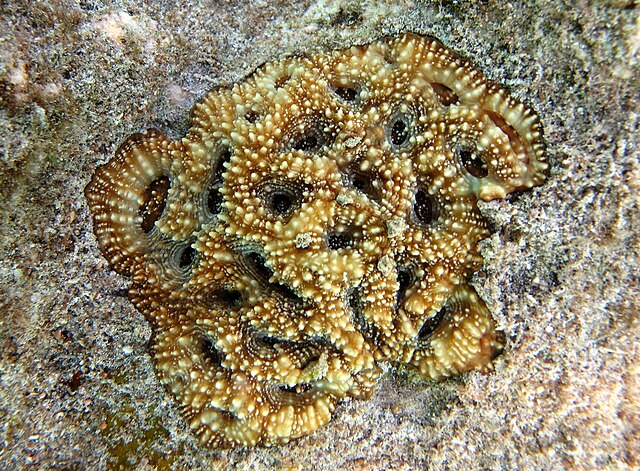
Acanthastrea
An LPS coral with metallic colors in large polyps. Australian specimens are popular as premium pieces.
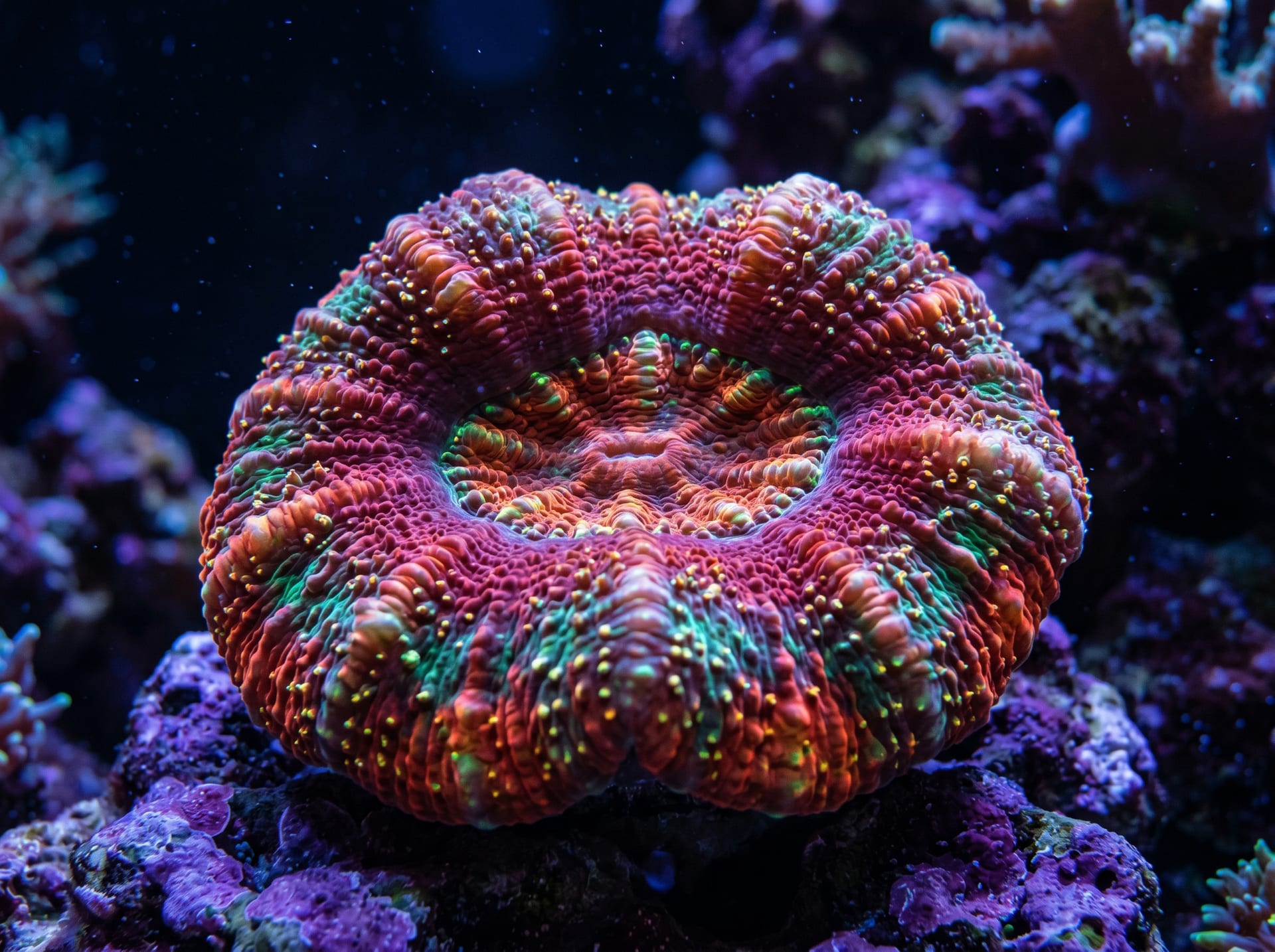
Acanthophyllia (Meat Coral)
Acanthophyllia deshayesiana
LPS coral with single massive polyp. Vivid red, green, blue colors earn it the 'Meat Coral' nickname. Impressive when fleshy tissue inflates fully.
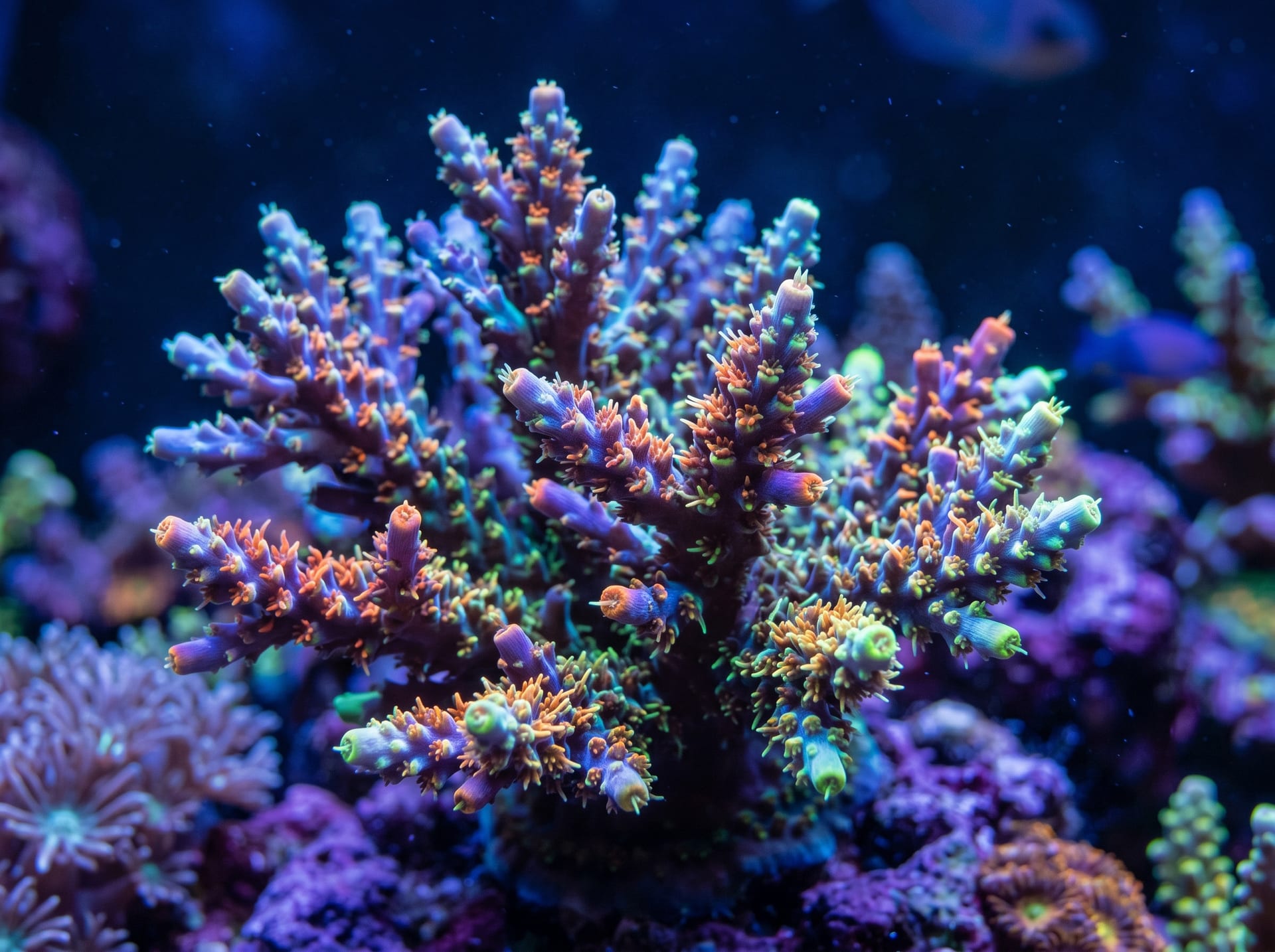
Acropora
Acropora sp.
The pinnacle of coral keeping. Requires intense lighting and pristine water quality, but rewards with stunning growth and coloration.
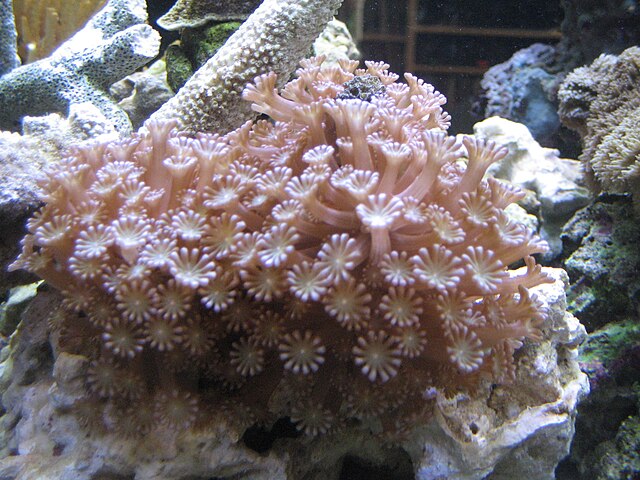 © Jessica Rosenkrantz / CC BY-SA 4.0
Alveopora
An LPS coral with long tentacles similar to Goniopora. Hardier and easier to keep than Goniopora.
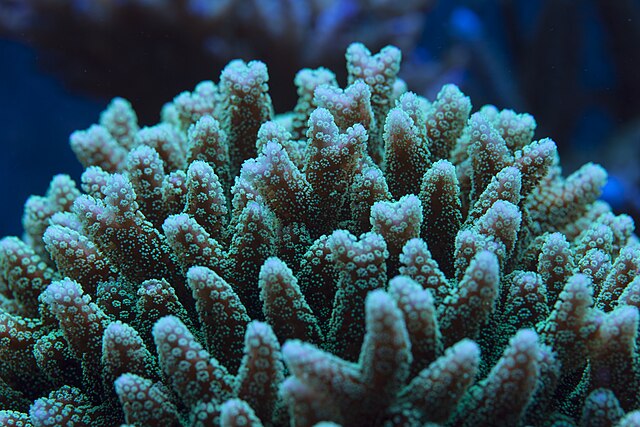 © Will Thomas / CC BY 2.0
Birdsnest Coral
Seriatopora sp.
SPS coral with thin branches intertwining like a birds nest. Hardier than Acropora, ideal SPS entry. Pink and purple popular.
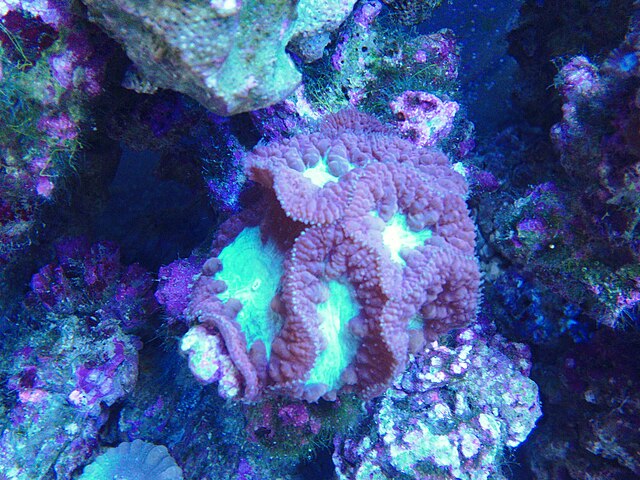
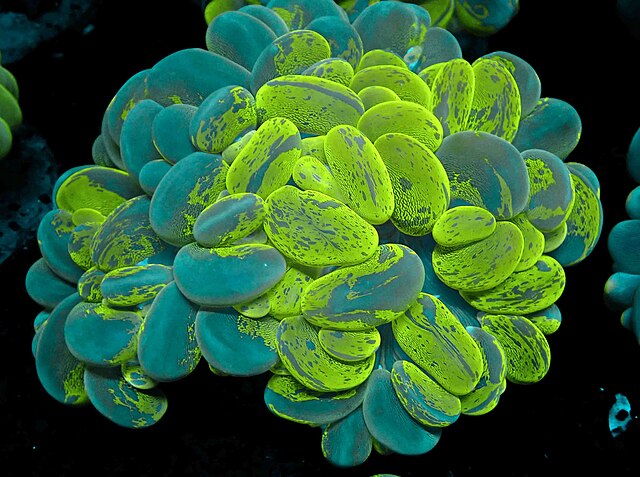
Blastomussa
A beautiful LPS coral with densely packed large polyps. Popular for vivid red and green colorations.
 © bondolo / CC BY 3.0
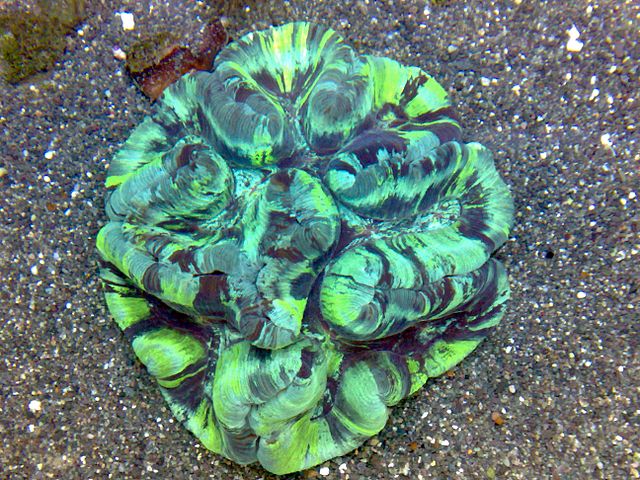
Brain Coral
Trachyphyllia geoffroyi
LPS coral with brain-like skeletal ridges. Vivid reds, greens, and purples. Relatively easy to keep. Extends large feeding tentacles at night.
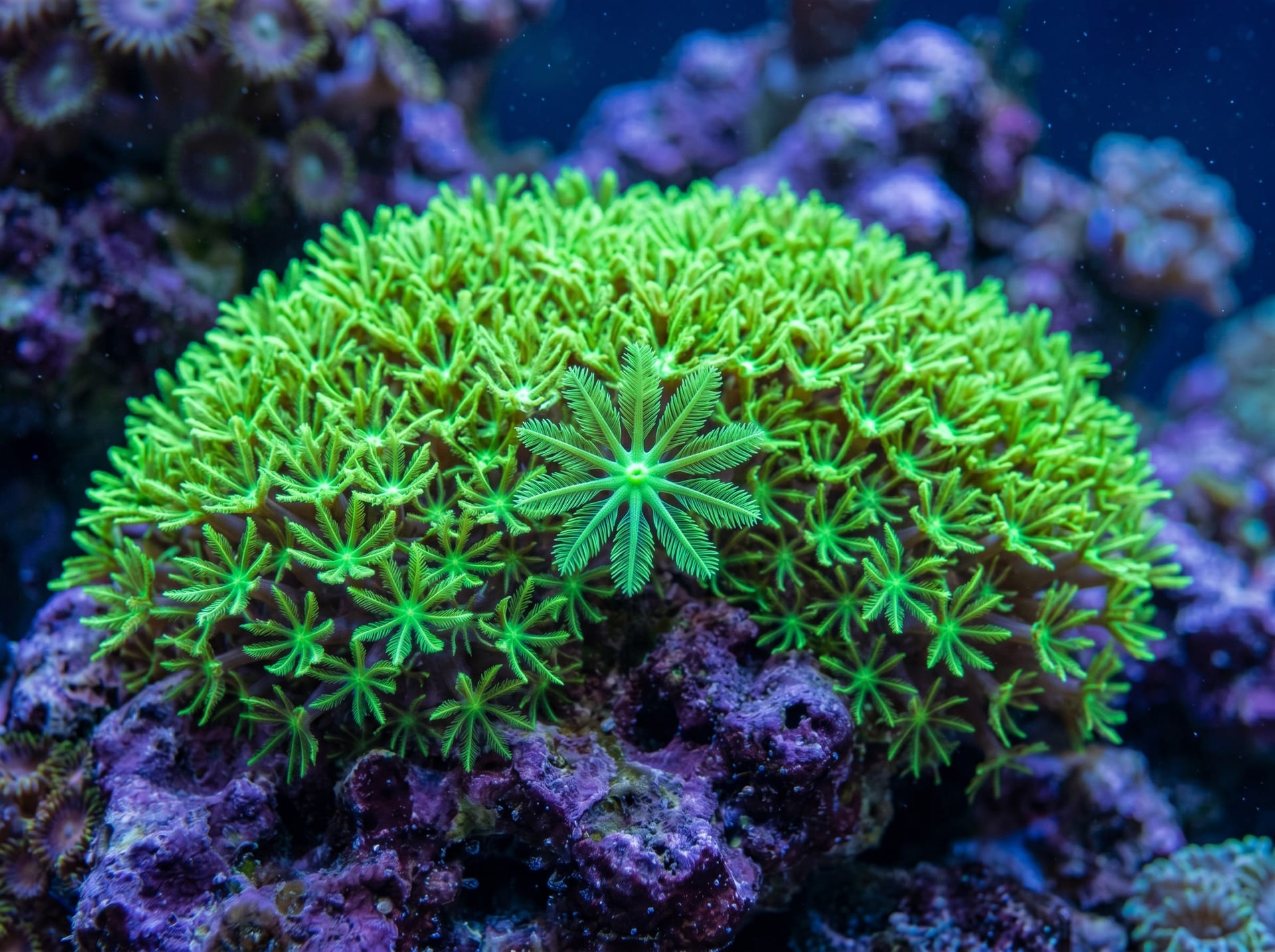
Briareum (Green Star Polyp Relative)
Briareum sp.
Soft coral related to Green Star Polyps. Green polyps emerge from purple encrusting mat. Extremely hardy and fast-growing, spreading aggressively over rock and walls.
 © Oceanamazon / CC0
Bubble Coral
Plerogyra sinuosa
LPS coral with distinctive bubble-shaped tissue. Inflates by day, deflates at night. Responds well to feeding.
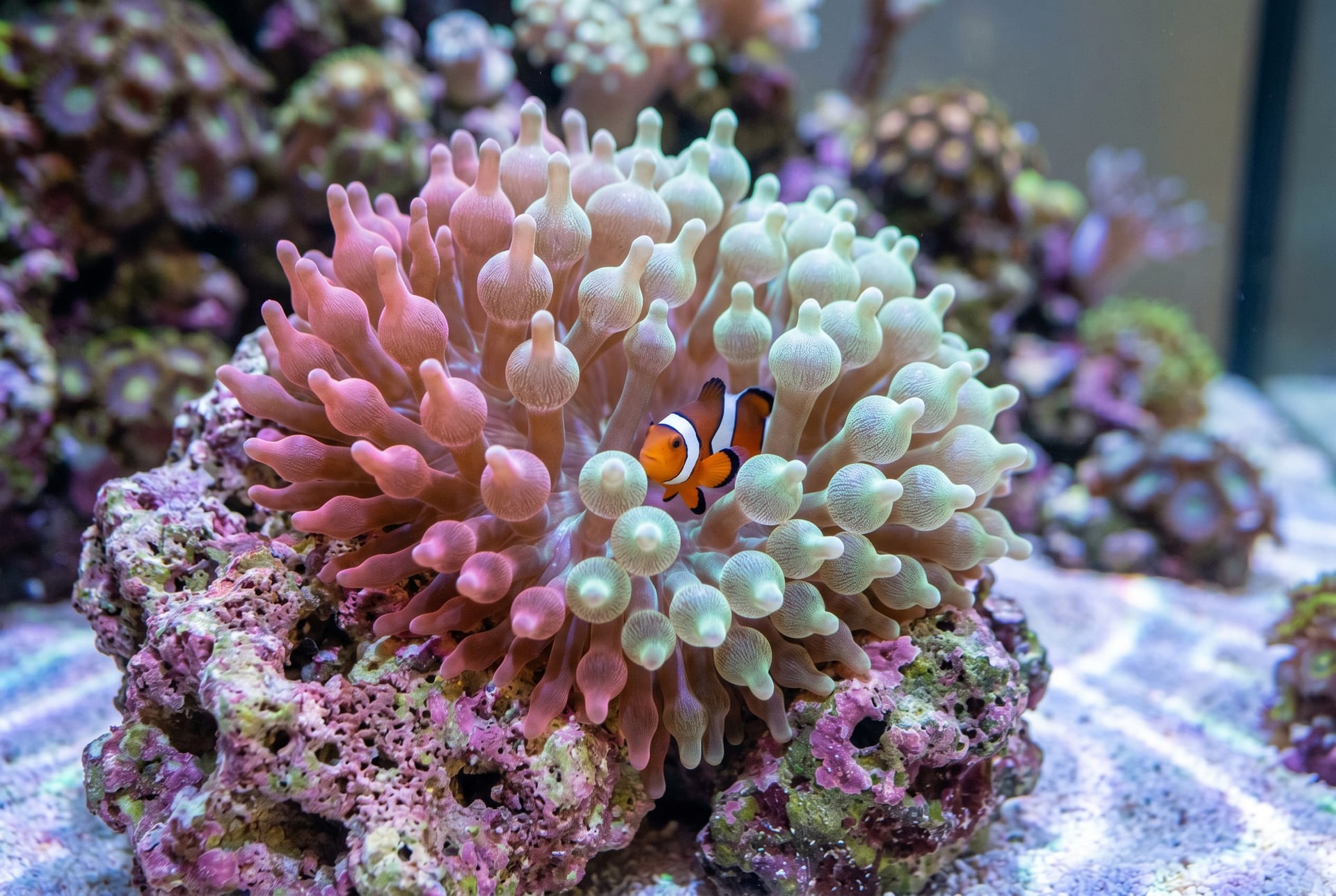
Bubble-Tip Anemone
Entacmaea quadricolor
A popular anemone whose tentacle tips swell into rounded bubbles. A classic clownfish host and, among host anemones, relatively easy to keep.
 © Sean McGrath / CC BY 2.0
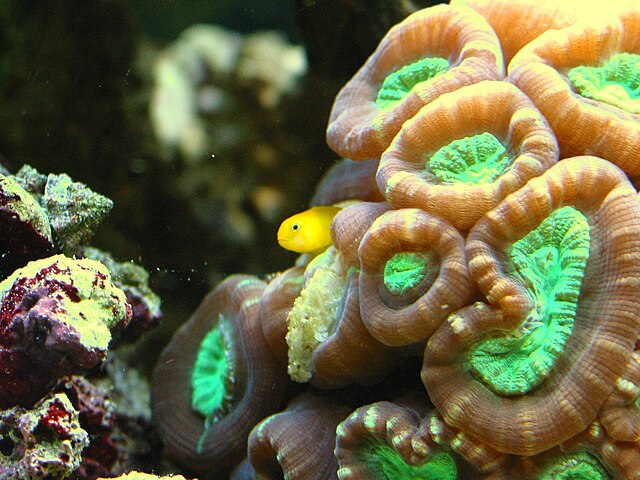
Candy Cane Coral
Caulastrea furcata
LPS with round head-shaped polyps resembling candy canes. Hardy, easy to keep, and colorful. Ideal for LPS beginners.
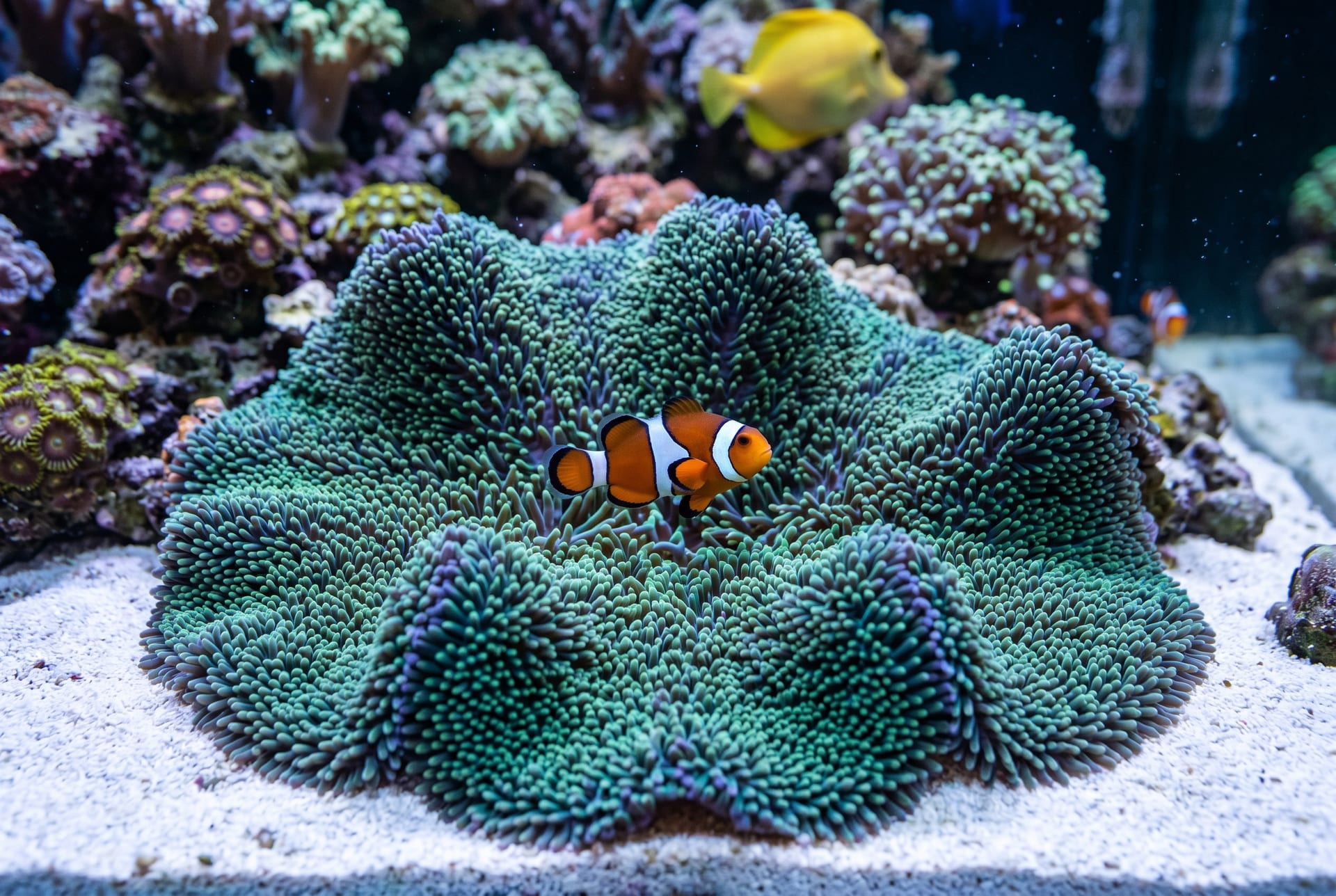
Carpet Anemone
Stichodactyla gigantea
A large anemone with short tentacles packed into a carpet. A powerful host for many clownfish, but its potent sting and demanding water requirements make it advanced.
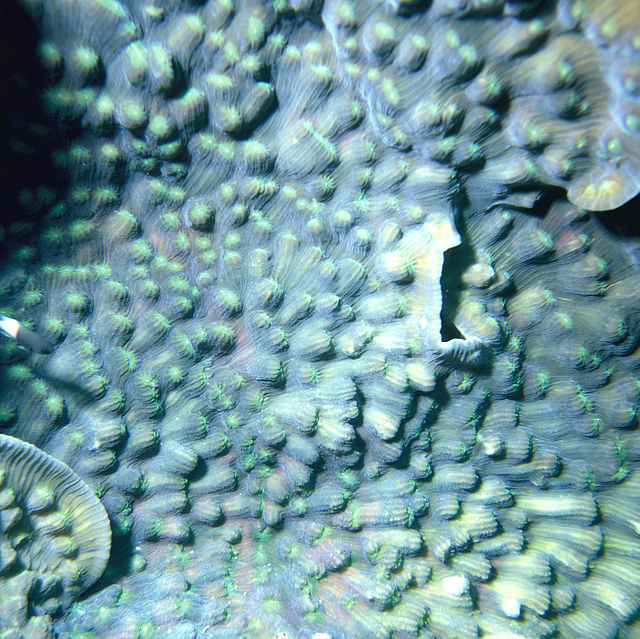 © The original uploader was Albert Kok at Dutch Wikipedia . ( Original text: Albert Kok ) / Public domain
Chalice Coral
Echinophyllia sp.
Plate-shaped LPS coral. Eye-like patterns and fluorescent colors popular with collectors. Many high-value specimens.
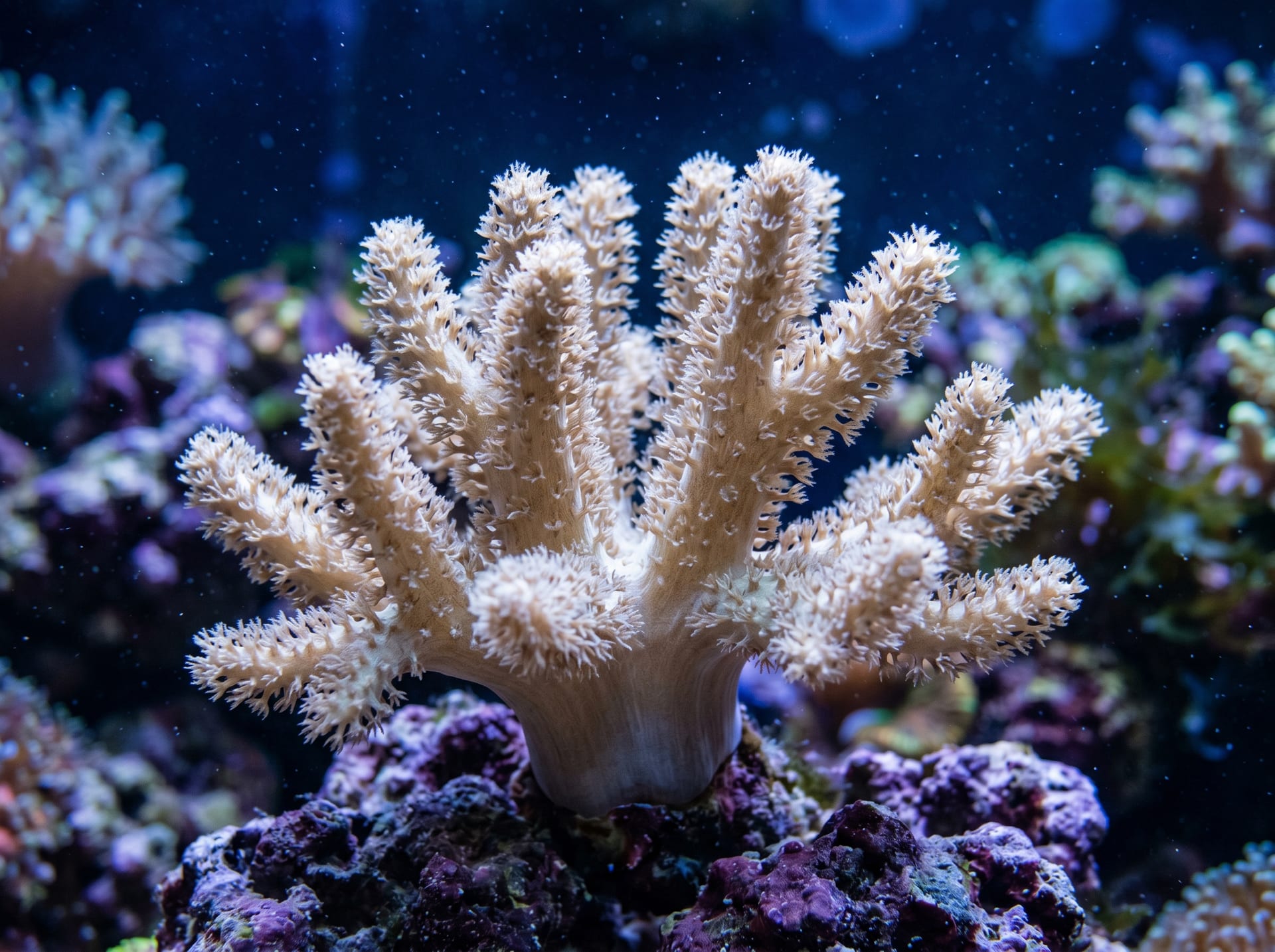
Cladiella (Colt Coral)
Cladiella sp.
Soft coral with soft finger-like branches. Also called Colt Coral. Very hardy and fast-growing. White and cream common. Safe choice for beginners.
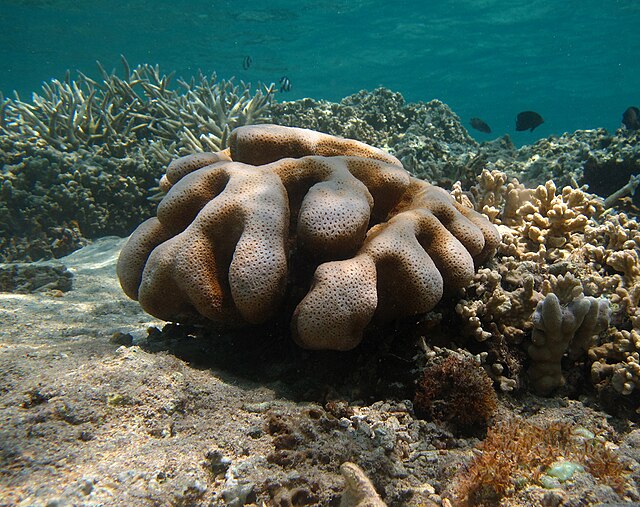 © Dr. Dwayne Meadows, NOAA/NMFS/OPR / Public domain
Cyphastrea
A hardy SPS coral with densely packed small polyps. Grows in low light, recommended for beginners.
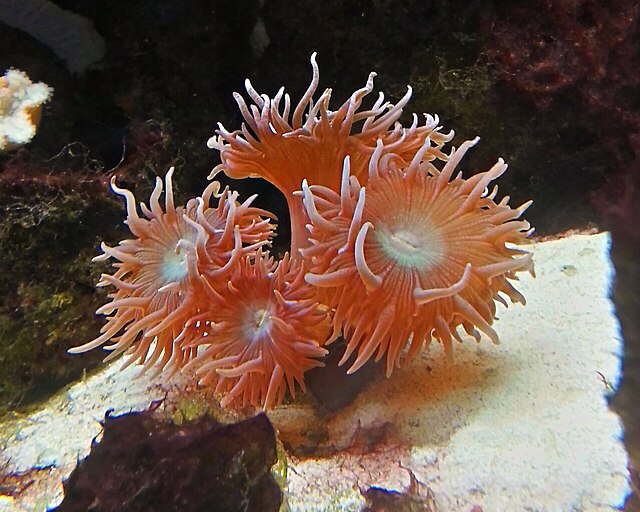 © Kazvorpal / CC BY-SA 3.0
Duncan Coral
Duncanopsammia axifuga
LPS coral with round flower-like polyps. Responds well to feeding — fun to watch eat. Relatively hardy and growing in popularity.
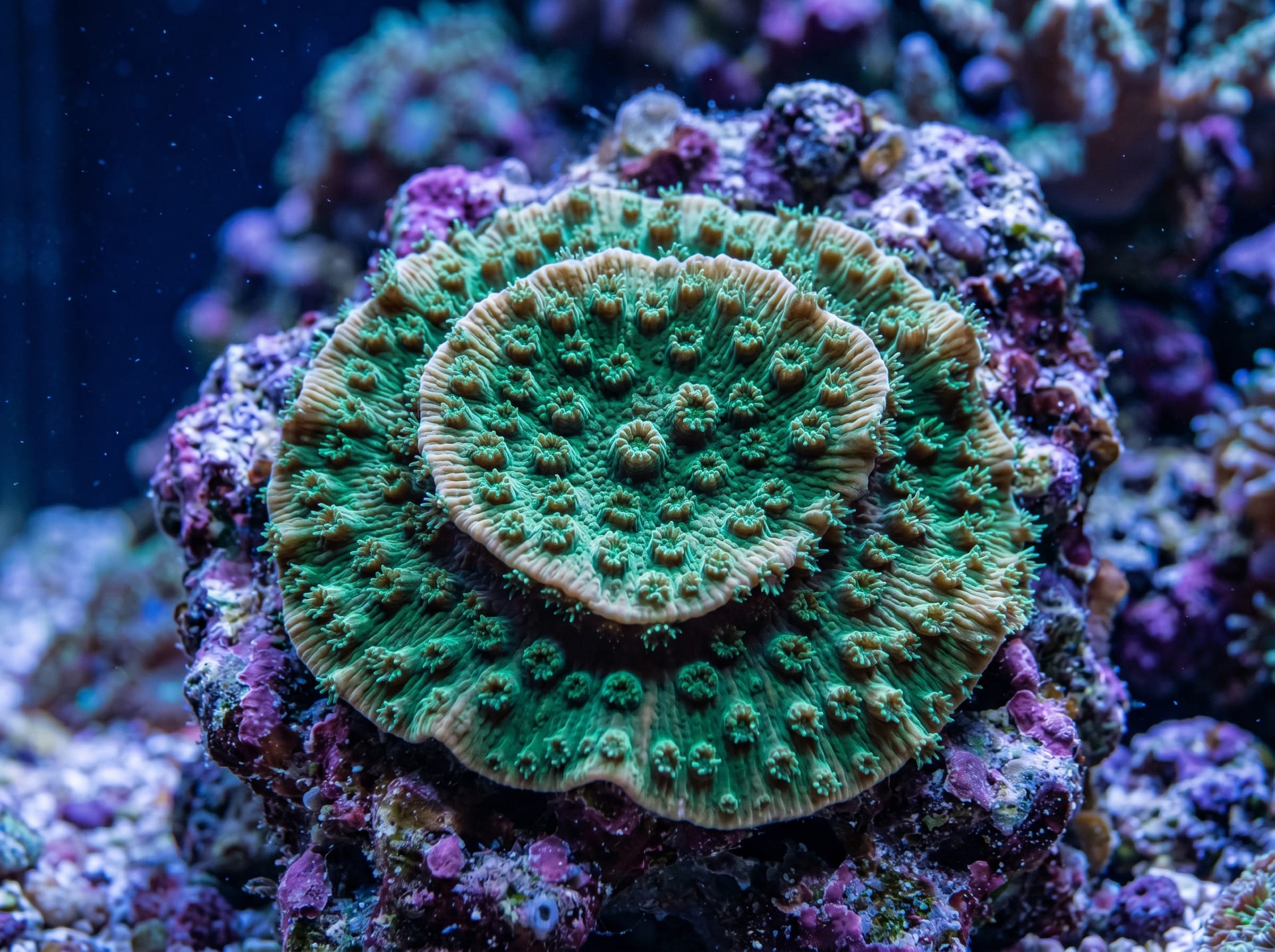
Echinopora Coral
Echinopora sp.
Plating to encrusting coral between LPS and SPS. Beautiful fluorescent greens and oranges. Relatively hardy with moderate growth. Good base for aquascaping.
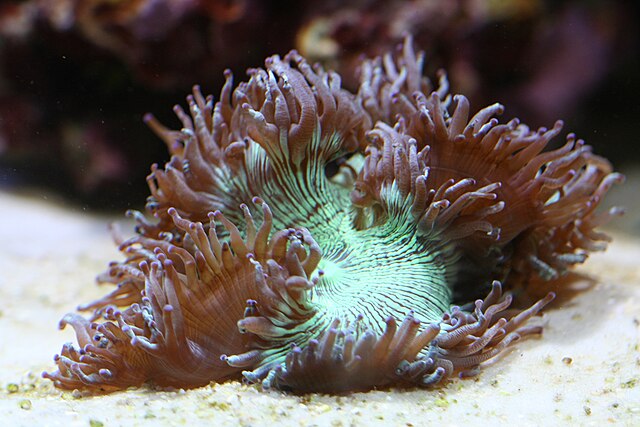 © Tappinen / CC BY-SA 3.0
Elegance Coral
Catalaphyllia jardinei
Beautiful LPS with long tentacles tipped in fluorescent colors. Placed on sand bed. Vivid fluorescence is the main attraction.
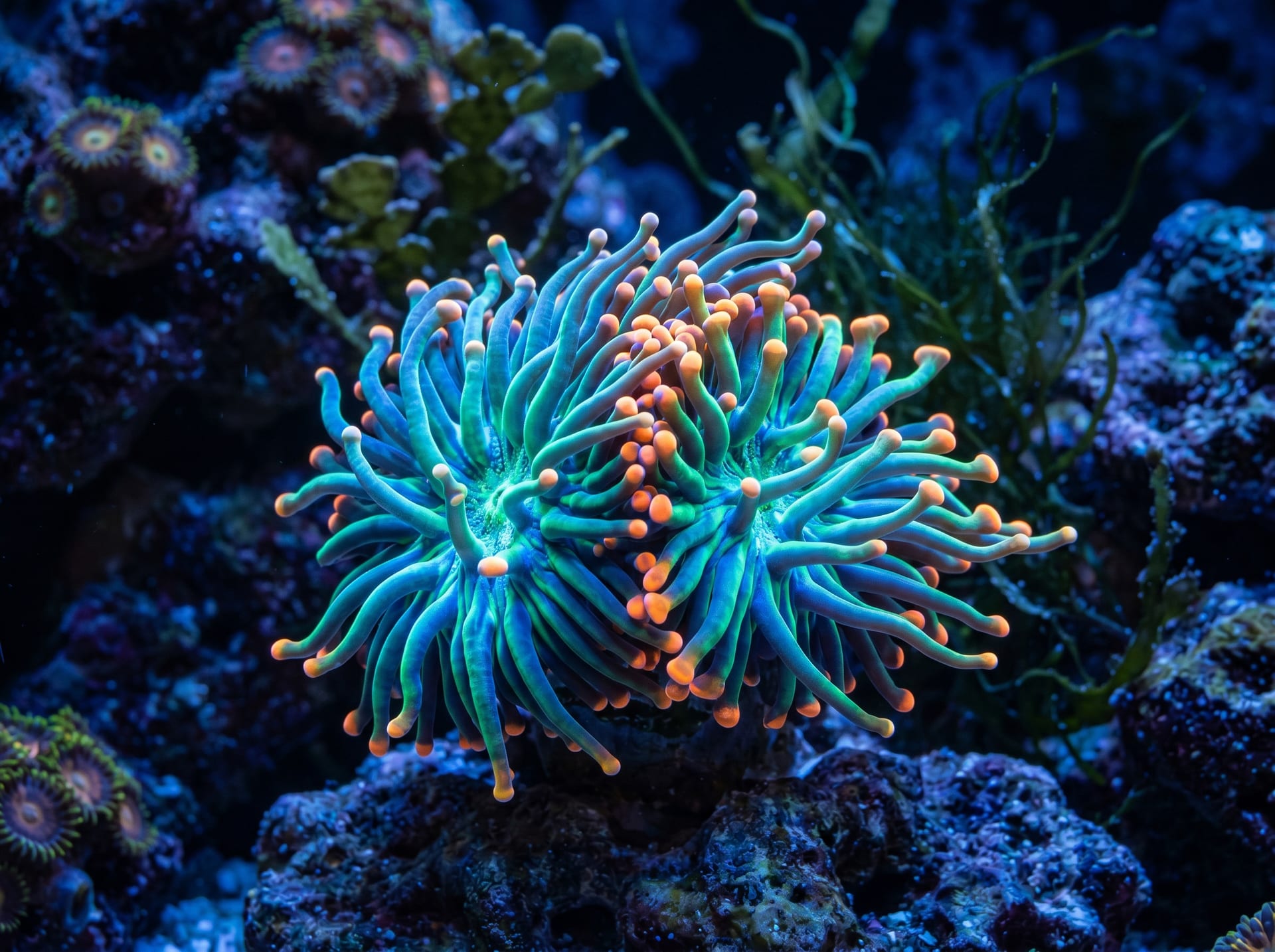
Euphyllia (Hammer / Torch)
Euphyllia spp.
Reef-dwelling corals with extended polyps. Hammer corals feature hammer-shaped tentacles, while torch corals display flame-like polyps. Both responsive to water flow and lighting, making them beginner-friendly for marine aquaria.
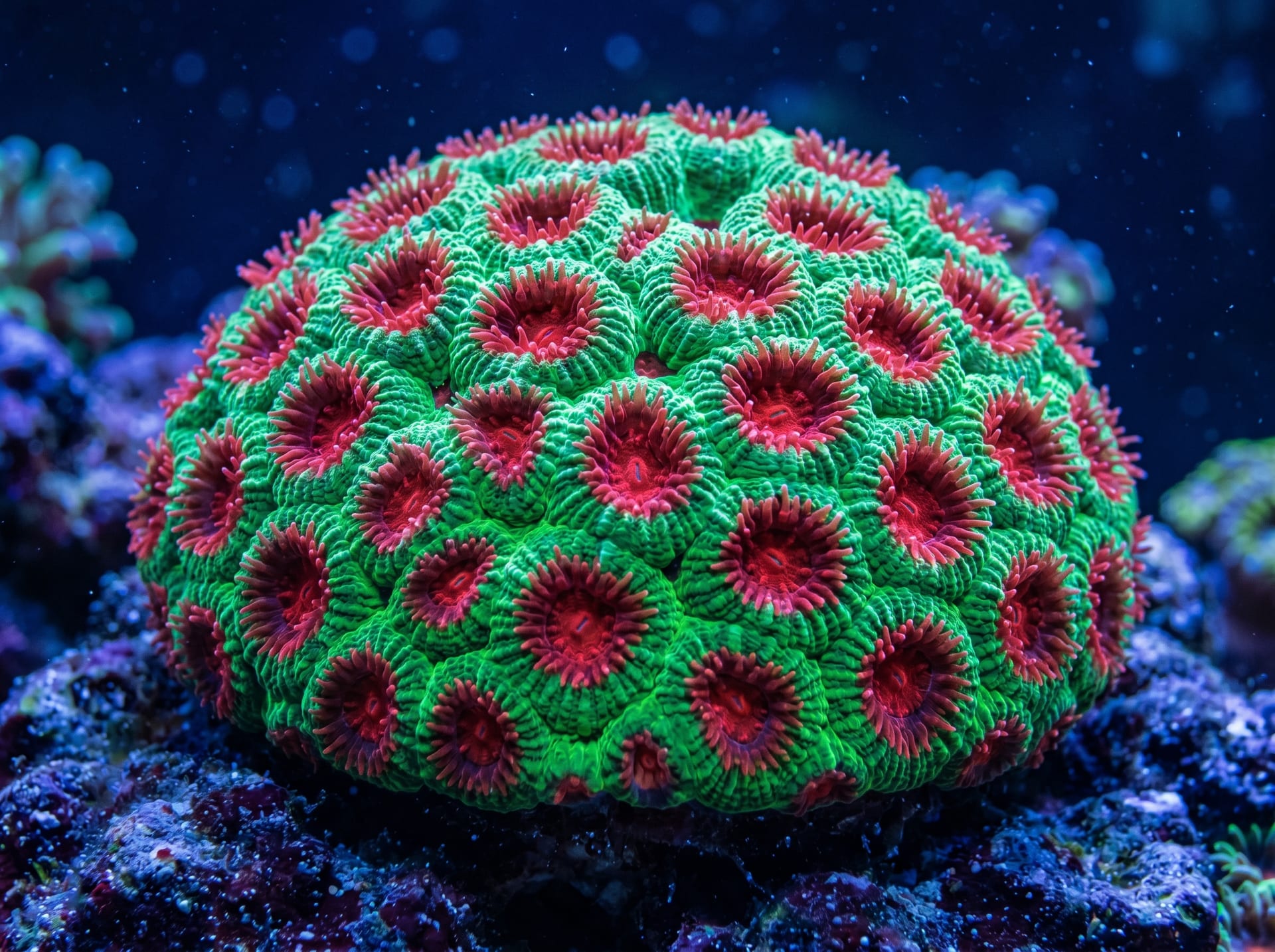
Favia Coral
Favia sp.
Massive LPS coral with round corallites on surface. Similar to Favites but corallites are clearly separated. Hardy and colorful.
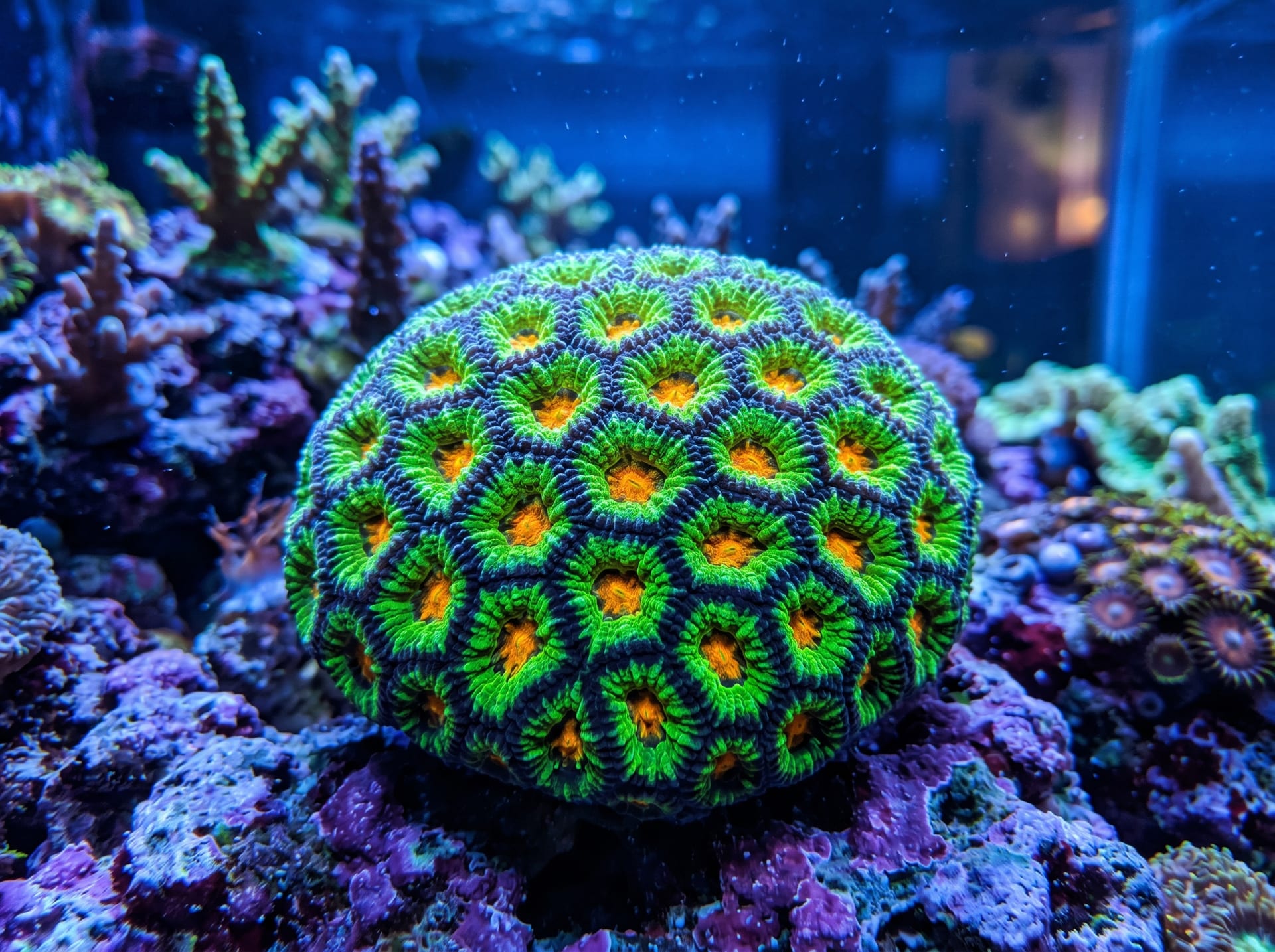
Favites Coral
Favites sp.
LPS coral with densely packed hexagonal corallites. Also called Favites. Various color patterns exist, related to 'War Coral.' Hardy and easy to keep.
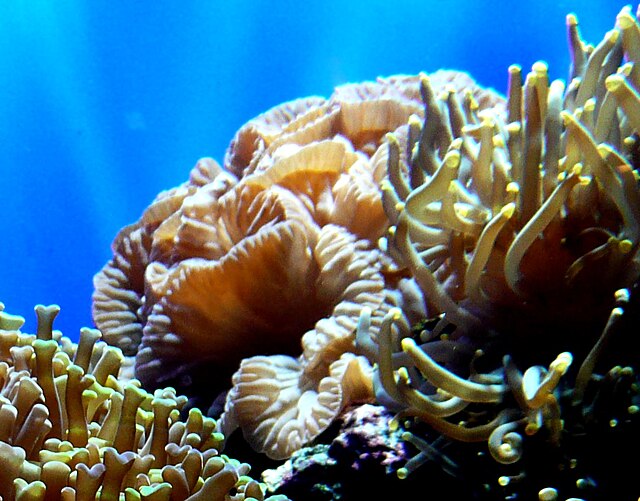 © Ryan McMinds / CC BY 3.0
Fox Coral
Nemenzophyllia turbida
An LPS coral with beautiful fluffy tentacles. Similar to torch but finer, more delicate tentacles.
Related Content
Coral FAQ
- Can beginners keep corals?
- Soft corals like zoanthids and star polyps are hardy and beginner-friendly. Start with resilient species and gradually work your way up to LPS and SPS corals.
- How much do corals cost?
- Zoanthid frags range from around 1,000-3,000 yen, LPS from 3,000-10,000 yen, and SPS Acropora species from 5,000-30,000+ yen depending on species and coloration.
- What equipment is needed for coral keeping?
- Basic equipment includes a tank, LED lighting, protein skimmer, circulation pump, heater, and refractometer. For SPS corals, you'll also need a calcium reactor and high-performance lighting.
- What should I check when buying corals?
- Ensure the coral has vivid coloration without bleaching, polyps are fully extended, and the base is firmly attached. Also watch for shipping damage.
- How long do corals live?
- With proper care, corals can live for decades. In the wild, some colonies survive for hundreds of years. Water quality management and proper lighting and flow are key to longevity.