Breeder Direct Marketplace
Purchase Exotic Invertebrates directly from certified Breeder breeders. All listings clearly specify growth stage and breeding units (pair/trio/colony).
0% commission on your first sales!Register by September 30, 2026 and your first 2 sales are commission-free!
Breeder Wanted!
List on BreederDirect and sell directly to customers nationwide!
When listing Exotic Invertebrates, Breeders disclose the following. We guarantee transparency on growth stage and breeding unit.
Price
Region
Attributes
Breeders are signing up now ahead of launch. Subscribe to be notified when new listings go live.
Getting alerts is free with a member account. When new listings match your saved search, we'll notify you by email and in-app.
Are you raising exotic invertebrates?
Register as a breeder and connect with buyers directly.
Can't find the one you're looking for?
Post your wishes for free and breeders with matching animals will contact you with introductions.
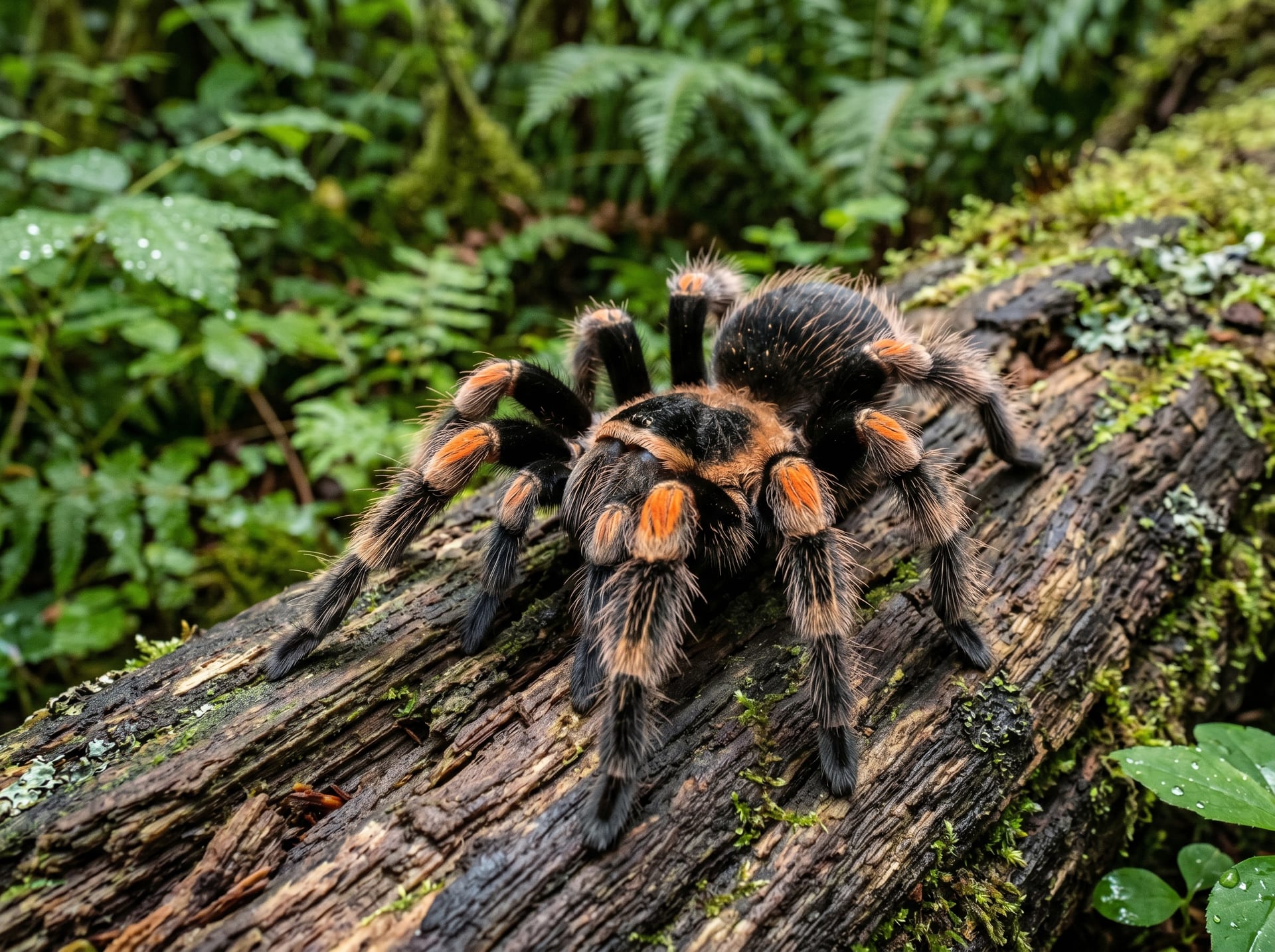
The exotic invertebrate category on BreederDirect lets you welcome tarantulas, scorpions, centipedes, millipedes, and isopods — arthropods other than insects — directly from their breeders. They grow by repeated moulting, and females of some species live more than ten years, so keeping them differs greatly from keeping insects. Care is not demanding once humidity and temperature match the animal's origin, but it is important to choose an individual after understanding the traits of each species.
1Do not touch or feed during a moult
Exotic invertebrates grow by moulting, and the period around it is the most delicate. Once signs of a moult appear, leave the enclosure undisturbed, and do not offer food until the fangs and exoskeleton have hardened afterwards. Refusing food for weeks or even months before a moult is usually normal, not a problem.
2House them one to an enclosure
Most exotic invertebrates are cannibalistic, so solitary housing is the rule. Keeping several together not only reduces their number but also leads to freshly moulted animals being attacked. If you welcome more than one, prepare an enclosure for each. Species that can be kept communally are the exception, so check with the breeder.
3Set humidity from the animal's origin
Humidity is where keepers most often go wrong. A desert scorpion and a rainforest tarantula need opposite conditions, and keeping a dry-habitat species too damp invites mould and mites. Research where your species comes from, then decide the substrate and how often to add moisture.
4Solve escape-proofing before the animal arrives
Exotic invertebrates pass through narrower gaps than expected, and many species climb walls. Check the lid fastening, the mesh size of ventilation, and gaps around cabling before the animal arrives. For strong species such as centipedes, a lid held closed only by its own weight is not enough.
5Know how to handle venomous species
Scorpions, centipedes, and some tarantulas are venomous. Risk varies widely by species: many tarantula venoms are compared to a wasp sting, while some Asian arboreal species can cause severe symptoms. Avoid handling with bare hands and settle on a maintenance routine in advance. Many tarantulas also flick urticating hairs, so protecting your eyes and airway is worthwhile.
6Check that you can supply live food
Most exotic invertebrates eat live food such as crickets or dubia roaches. Before adopting, confirm that you can obtain feeder insects continuously, or maintain a colony yourself. Food must be sized to the animal, and prey that is too large is dangerous to a freshly moulted individual.
7Lifespan differs greatly between males and females
In tarantulas, females often live more than ten years while males typically die within one to two years after their final moult. The sex you should choose depends on whether you want a long-lived pet or want to try breeding. Check the sex stated in the listing, and ask the breeder whether the animal has already had its final moult.
Dubia & Madagascar Hissing Cockroach Care Guide | How to Keep Feeder Insects and Pet Cockroaches
A comprehensive guide to caring for Dubia roaches (Blaptica dubia) and Madagascar Hissing Cockroaches (Gromphadorhina portentosa), popular as feeder insects for reptiles and amphibians and as ornamental pets. Covers essentials from container selection and temperature management to feeding, home breeding, feeder colony maintenance, and proper disposal methods—a practical guide for successfully keeping and breeding cockroach species.
The Complete Guide to Tarantula Molting Management | Pre-Molt Signs, Environmental Setup, Prevention and Treatment of Molting Failure
Tarantula molting is one of the most stressful events for keepers. This guide provides practical explanations of pre-molt signs, what not to do, humidity and substrate management, and how to handle stuck molts.
Beginner's Guide to Exotic Spider & Tarantula Care | Species, Equipment & Safe Handling
A beginner's guide to caring for exotic spiders, including tarantulas. This guide covers recommended species for beginners, selecting enclosures and substrate, feeding methods, molt care, safe handling, and regulatory compliance—all the essential knowledge needed for exotic spider care.
Introduction to Tarantula Care | A Beginner's Guide to Enclosures, Humidity, Molting, and Feeding
For first-time tarantula keepers. We provide a detailed explanation of basic knowledge from choosing an enclosure, managing humidity and temperature, substrate, how to feed them (crickets and dubia roaches), molting care, and handling precautions.
Tarantula and Scorpion Pre-Purchase Toxicity Risk Assessment Guide | Complete List of Safe and Dangerous Species
Explains the toxicity risks you must confirm before purchasing tarantulas or scorpions. This guide covers the definition of medical significance, safe species for beginners (such as Emperor Scorpions), a complete list of dangerous species you should never keep, and the response protocol if stung or bitten.