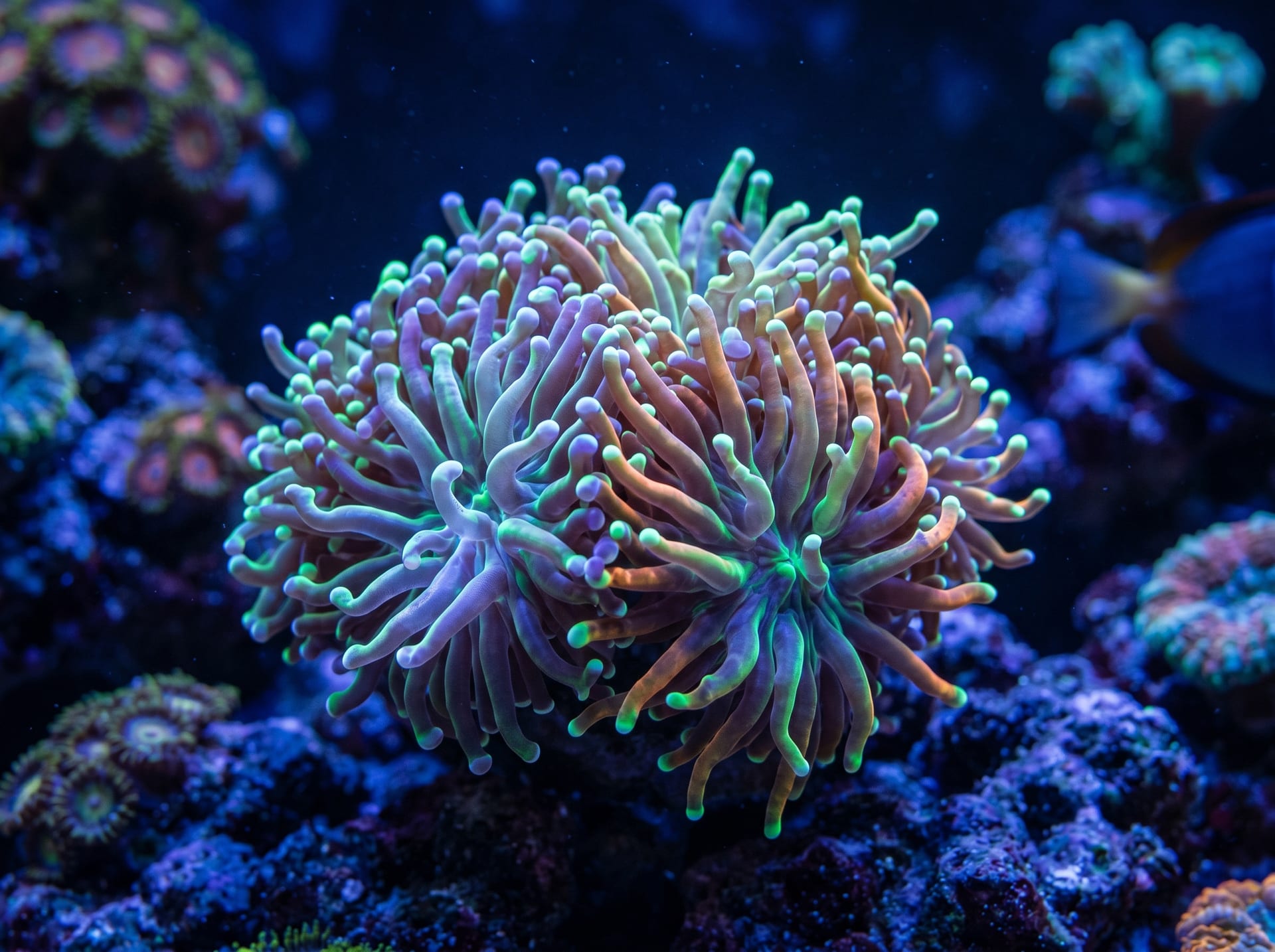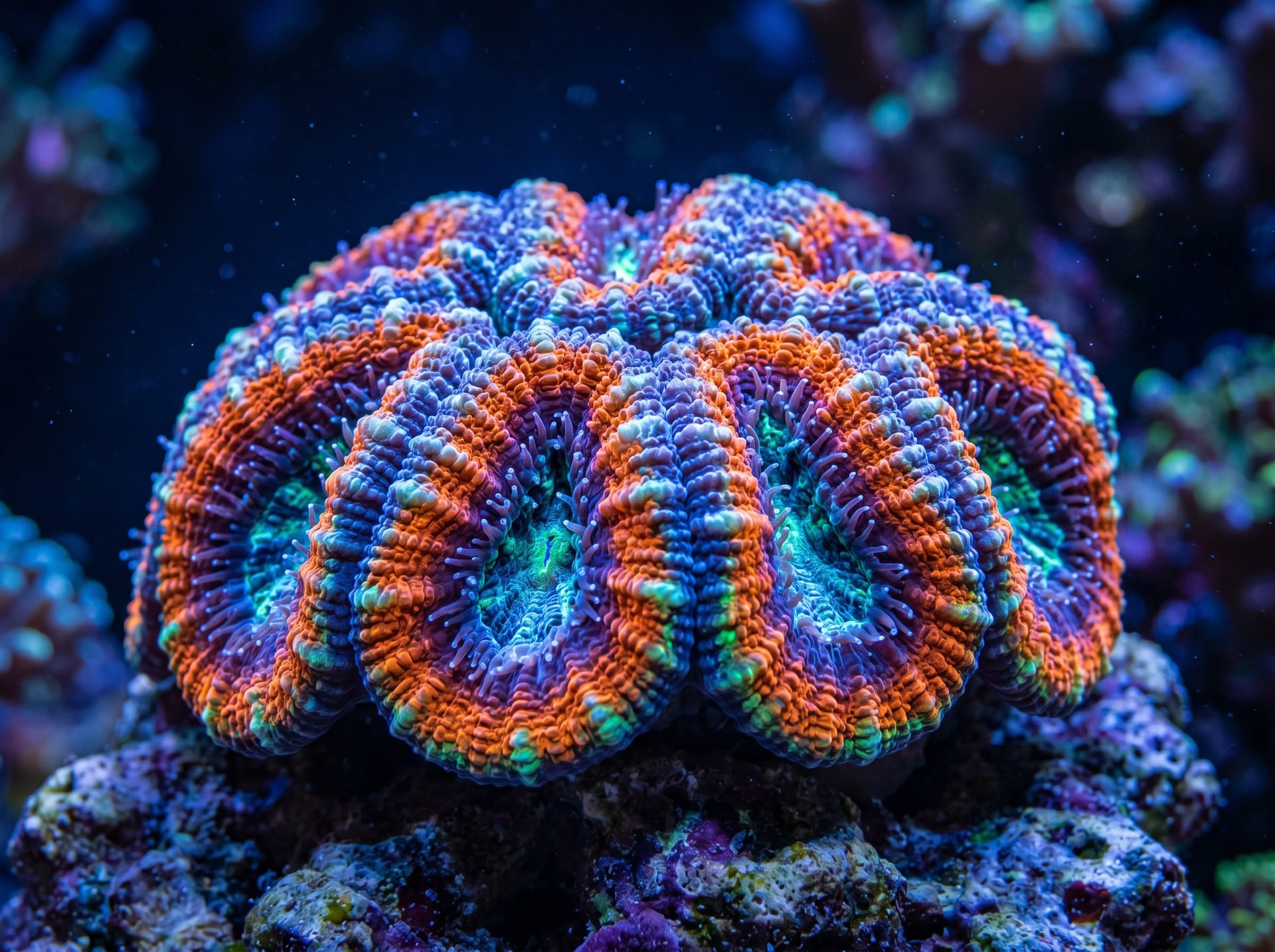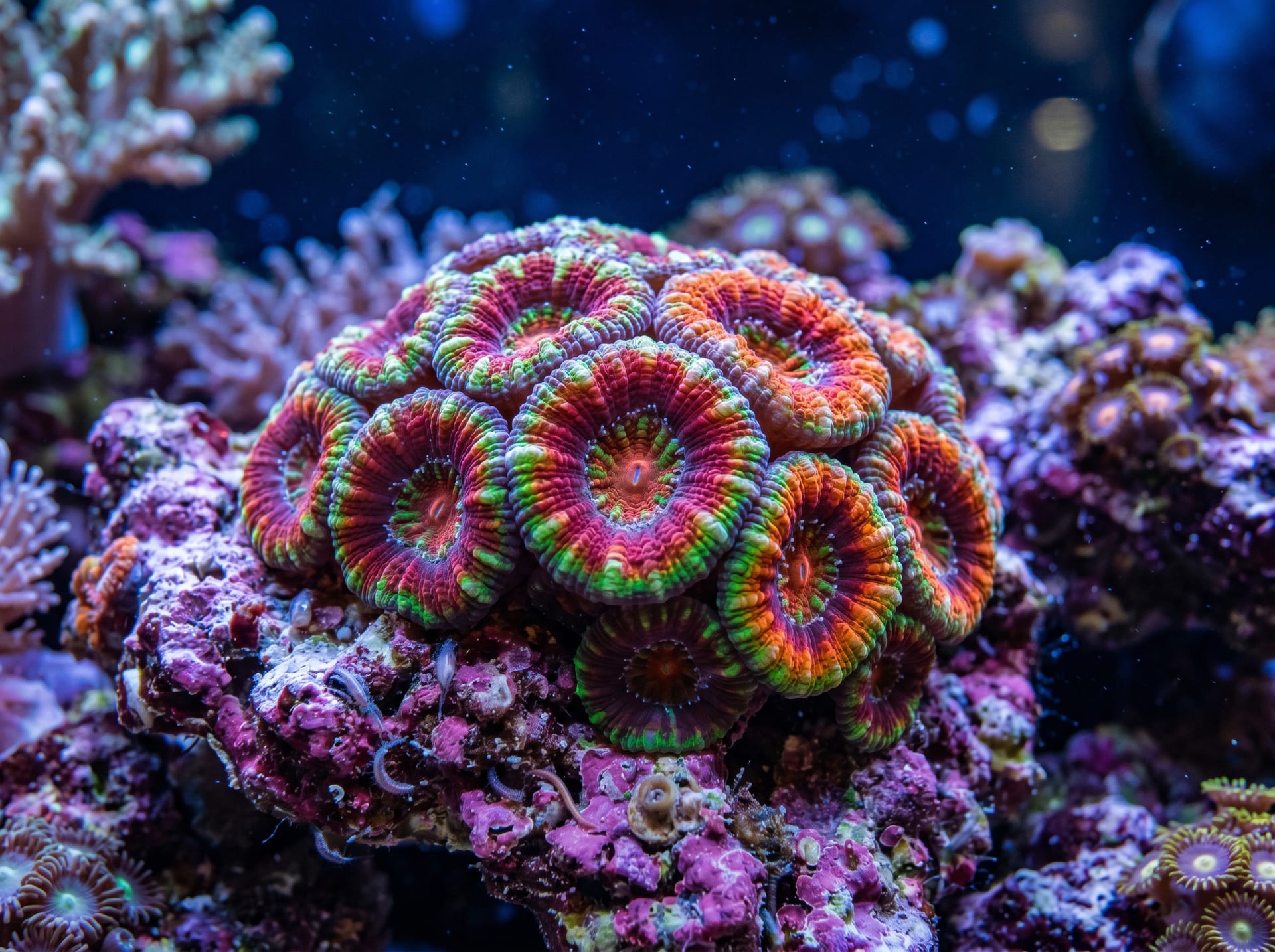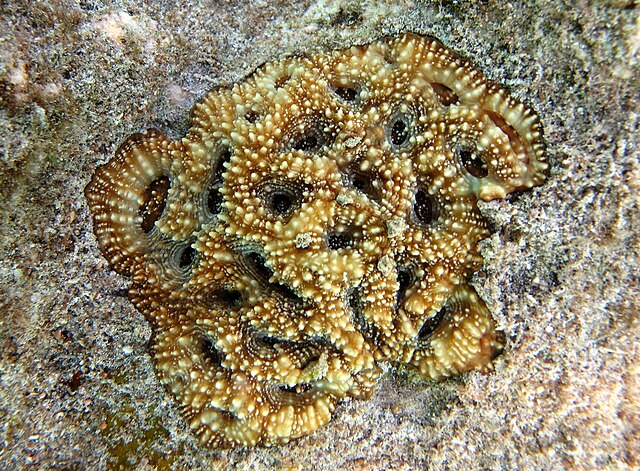
Source: Wikimedia Commons
Brain Coral
IntermediateTrachyphyllia geoffroyi
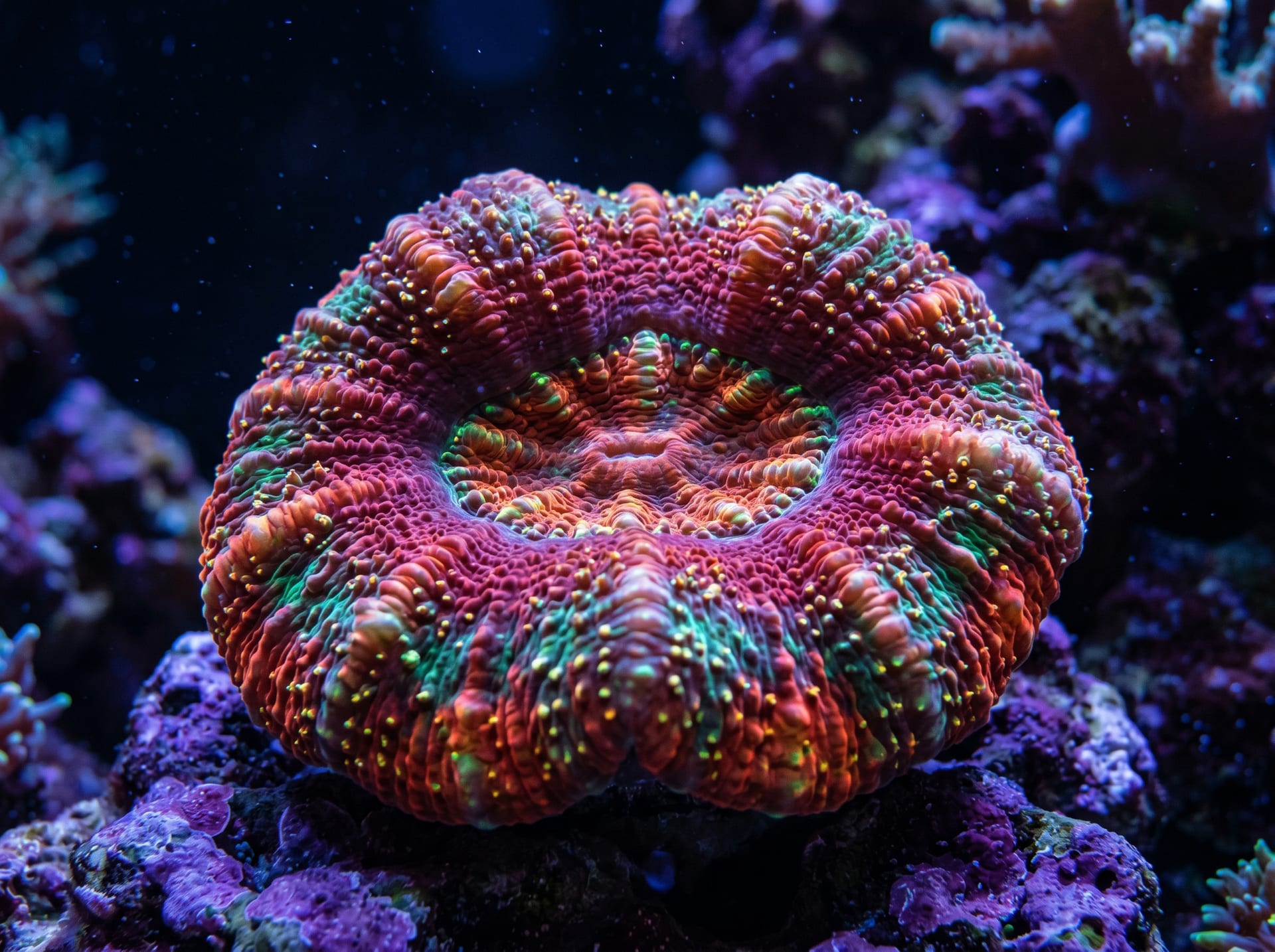
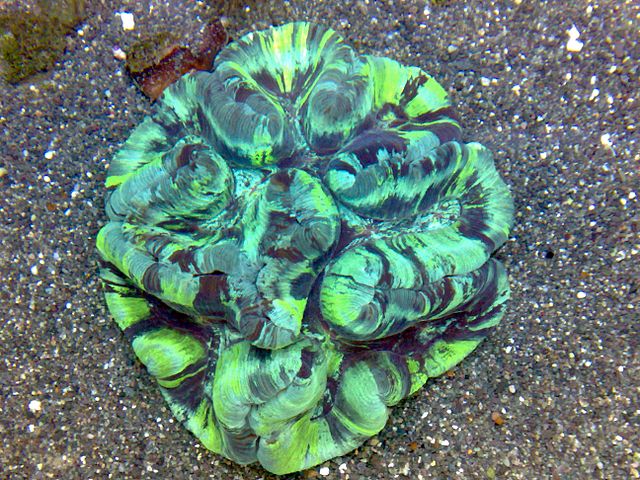
LPS coral with brain-like skeletal ridges. Vivid reds, greens, and purples. Relatively easy to keep. Extends large feeding tentacles at night.
Difficulty
Intermediate
Temperature
24〜27℃
Lifespan
10+ years
Diet
Photosynthesis + carnivorous (frozen brine/mysis shrimp)
About
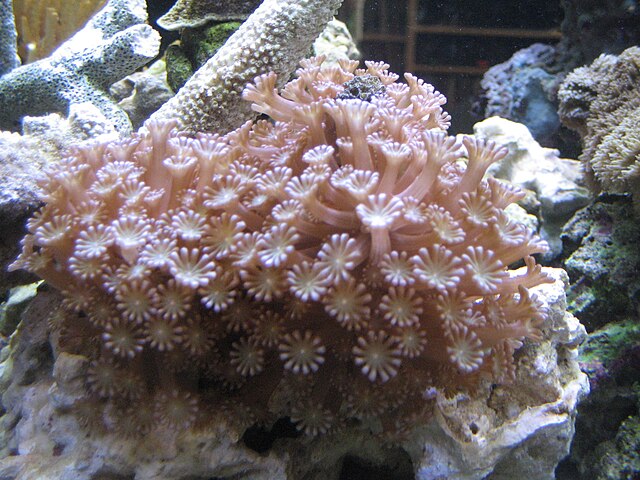
Brain corals are large-polyped stony corals whose surfaces bear intricate maze-like ridges and valleys resembling a human brain, belonging primarily to the families Faviidae and Merulinidae. Distributed across Indo-Pacific and Atlantic reefs, individual colonies grow extremely slowly and can live for centuries. Coloration is typically brown, green, or yellow, with fluorescent green specimens being particularly prized. In aquaria, they thrive under moderate lighting (150–250 PAR) with gentle indirect flow; strong direct light or current causes bleaching. They extend sweeper tentacles to sting neighboring corals, so adequate spacing within the tank is essential.
Source: Wikipedia (CC BY-SA 4.0)
Lifespan of the Brain Coral
The Brain Coral lives 10+ years.
Temperature & humidity for the Brain Coral
The ideal temperature for the Brain Coral is 24〜27℃.
Basic Info
Origin
tropical coral reefs of the Indo-Pacific and Atlantic
Lifespan
10+ years
Temperature
24〜27℃
Diet
Photosynthesis + carnivorous (frozen brine/mysis shrimp)
Care Guide
Care Specifications
- Carbonate (KH)
- 8–12 dKH
- Water Temp.
- 24–27℃
- Specific Gravity
- 1.023–1.025
- Salinity
- 33–35 ppt
- Calcium (Ca)
- 400–450 ppm
- Magnesium (Mg)
- 1280–1350 ppm
LPSLight: Medium (PAR 50-150)Flow: LowPlacement: Bottom
Sources: AlgaeBarn: SPS/LPS care (PAR/flow) / AlgaeBarn: Water Parameters 101
References & Sources
Edited & verified by: BreederDirect editorial team
The taxonomic, regulatory, and husbandry data on this page are compiled and verified against the authoritative primary sources below.
Taxonomy & Authority
Regulations & Conservation Status
CITES Appendix II
Stone coral order (Trachyphyllia geoffroyi, Merulinidae). CITES Appendix II.
Sources: DOC NZ / CITES-listed corals (Scleractinia spp. = App. II)
Regulations may change. Always verify the latest information with the relevant authorities.
Brain Coral Listings
Loading latest listingsFind listings for this species