Coral Frags: Essential Knowledge for Fragment Trading | ブリちょく
Coral| ✍️ BreederDirect Editorial
Coral Frags: Essential Knowledge for Fragment Trading
What coral frags are, how to cut them, purchasing considerations, and cultivation methods from fragments. A comprehensive guide to frag trading—popular even among breeders—from the basics.
Key Takeaways
What coral frags are, how to cut them, purchasing considerations, and cultivation methods from fragments. A comprehensive guide to frag trading—popular even among breeders—from the basics.
What Are Coral Frags (Fragments)?
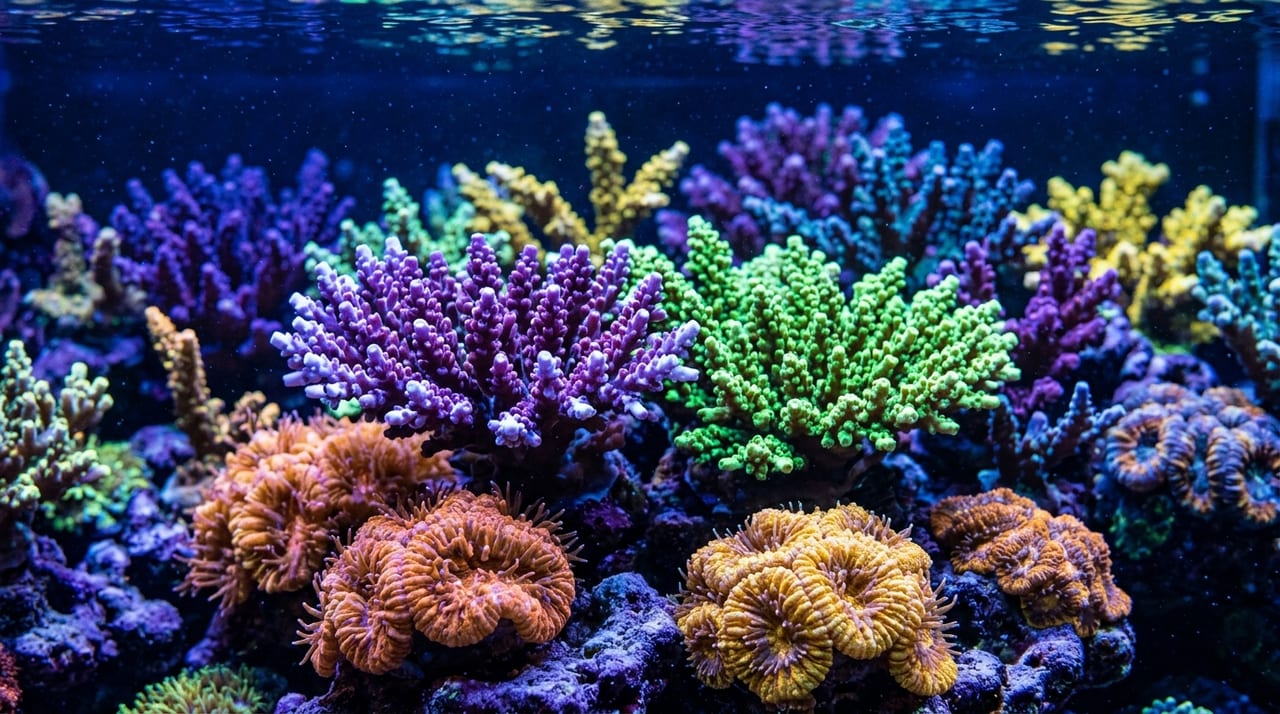
A "frag" is a small fragment cut from a larger coral colony. The term comes from the English word "fragment" and has become standard terminology among coral enthusiasts and breeders.
In nature, corals fragment during storms or rock collapses, and these fragments can settle and develop into new colonies elsewhere. Frag trading leverages this regenerative ability. Properly cut frags have their cut surfaces heal within weeks to months and develop into independent individuals.
Frag trading has become increasingly popular over the past decade and is now one of the primary distribution methods in coral communities worldwide. It is highly valued from a conservation perspective because it allows rare species to be widely distributed while reducing dependence on wild collection.
---
Benefits of Frag Trading
Frag trading is supported by many coral enthusiasts because it offers benefits to both buyers and sellers.
Benefits for Buyers
Lower cost of entry — Significantly cheaper than purchasing an entire mother colony; many species are available for ¥1,000–¥5,000
Build diverse collections on a budget — Acquire multiple color variations and species within a limited budget
Easier adaptation to tank conditions — Acclimating small frags to your home's water parameters and lighting from the start minimizes environmental stress
Enjoy the growth process — Watching a small frag develop into a large colony is one of the hobby's great pleasures
Benefits for Sellers (Breeders)
Propagate without damaging the mother colony — Cutting from appropriate locations allows the mother to continue growing
Distribute multiple individuals from one specimen — Share the genetics of exceptional individuals with many aquarists
Support species conservation — Expand species through captive propagation rather than relying on wild collection
✍️
BreederDirect Editorial
The BreederDirect editorial team specializes in care information for animals, covering veterinary care and breeding to deliver beginner-friendly guides.
Find Coral on BreederDirect
Buy directly from verified breeders
Browse Related Listings
Find Coral listings related to this article on BreederDirect. Buy directly from verified breeders.
Related Tools
Related Articles
Browse by Category
🪸Coral
🐠Marine Fish
🐟Tropical Fish
🐡Goldfish
🐟Medaka
🦎Reptiles
Share
---
How Frags Are Made and the Conditioning Process
Frag creation is performed by experienced breeders and specialists familiar with coral handling. Since improper technique damages both mother and frag, beginners are not recommended to cut their own frags initially. The basic process is as follows:
1. Cutting
Using coral-specific nippers (bone cutters) or band saws, fragments are carefully removed from the mother colony. Cuts near nodes or branch points accelerate mother colony recovery. After cutting, work quickly and avoid prolonged air exposure.
2. Mounting on a Plug
Cut frags are secured to a frag plug (small base) using coral-specific gel instant adhesive. After allowing the adhesive to set properly, the mounted frag is returned to the tank where it attaches securely to the plug.
3. Conditioning
Immediately after cutting, the frag's cut surface is wounded. Strong water flow and high lighting cause stress, so for 2–4 weeks the frag should be kept in low-light, gentle-flow conditions (tank bottom or corners). During this period, the cut surface heals and the frag becomes firmly anchored to the plug.
4. Shipping and Sale
Once polyps regularly extend and the frag is securely attached to the plug, it is ready for shipment and sale. Reputable breeders document cutting dates and conditioning duration, helping buyers assess the frag's condition.
---
Essential Checklist for Purchasing Frags
Frag quality directly affects success. With online purchases relying on photos and descriptions, verify these key points:
Polyp extension — Check for photos showing fully extended polyps. Closed polyps may indicate shipping stress or health issues
Plug attachment — Verify secure attachment to the plug. Freshly cut frags carry higher risk
Bleaching or zooxanthellae loss — Confirm there is no pale coloration or unnatural white areas
Size — Frags smaller than 1 cm are harder to raise; beginners should aim for 2–3 cm or larger
Mother colony photos/video — Choose breeders who provide images or video of the mother colony to reference its mature coloration and form
Time since cutting — Frags conditioned for several weeks or more tolerate shipping better than freshly cut ones
---
Tips for Raising and Keeping Frags
The first 1–2 weeks after purchase is a "acclimation period." Avoiding sudden environmental changes is critical.
Immediately After Tank Introduction
Perform careful water acclimation using the purchased water (drip method is ideal)
Initially place the frag in a shaded area near the tank bottom, gradually moving it to its target position over 1–2 weeks
Choose a location where strong water flow does not directly hit it
After Stabilization
Once water parameters stabilize, visible growth typically appears within weeks to months. Since different species require different light, flow, and nutrient levels, consulting with the breeder about your tank conditions before purchase prevents problems. Note that care difficulty varies significantly among LPS (large polyp stony), SPS (small polyp stony), and soft corals.
---
Purchasing Checklist for Frags
When buying coral frags, confirm several important factors. First, check whether the frag is firmly attached to the plug. A frag merely glued temporarily risks detaching during shipping. Next, verify that the cut surface has fully healed. Exposed cut surfaces carry infection risk. Ideally, at least two weeks have passed since cutting and tissue has begun covering the cut surface. If unclear from photos, ask the breeder for the cut date.
Br-Choku's Safe and Secure System
Br-Choku is a platform connecting breeders and buyers directly. For coral frag trading, our system provides the following safeguards:
Detailed breeder profiles — Review care history and sales records to easily find trustworthy breeders
Messaging function — Ask breeders directly about mother colony condition, time since cutting, and shipping methods before purchasing
Photo and video documentation — Confirm actual coloration and polyp extension with multiple photos and videos
Rating and review system — Choose sellers based on past transaction history for confidence
Performance-based fee structure — Fees apply only upon successful transaction, making it easier for breeders to offer competitive pricing
Frag trading is ideal whether you're starting in coral keeping or expanding a collection. Whether this is your first experience, feel free to consult with Br-Choku breeders to find your ideal specimen.