Source: Wikimedia Commons
Bubble Coral
IntermediatePlerogyra sinuosa
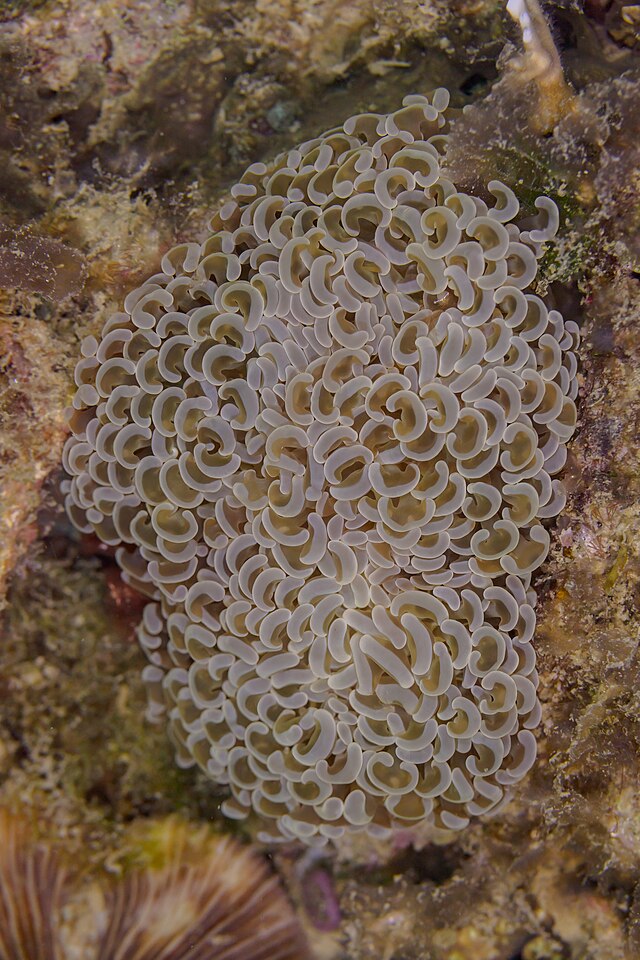
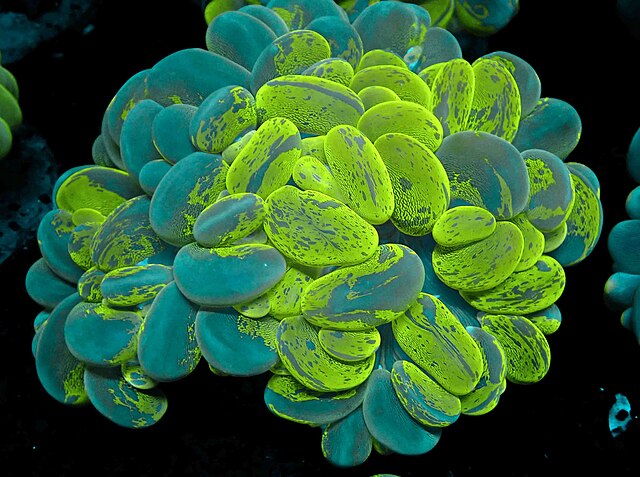
LPS coral with distinctive bubble-shaped tissue. Inflates by day, deflates at night. Responds well to feeding.
Difficulty
Intermediate
Temperature
24〜27℃
Lifespan
10+ years with proper care
Diet
Photosynthesis + brine shrimp feeding
About
Bubble coral (Plerogyra sinuosa) maximizes photosynthetic surface area by inflating grape-sized vesicles during the day, then deflates them at night to extend long sweeper tentacles for prey capture. Distributed from the Red Sea and Madagascar to Okinawa and the Line Islands, it requires low to moderate lighting (100–200 PAR) and gentle flow that does not strike the bubbles directly—deflated or shriveled bubbles indicate excess flow or insufficient light. Stable temperature (24–27°C) and alkalinity, combined with weekly target feeding of small meaty foods, ensure long-term health in the aquarium.
Source: Wikipedia (CC BY-SA 4.0)
Lifespan of the Bubble Coral
The Bubble Coral lives 10+ years with proper care.
Basic Info
Origin
Red Sea and Madagascar through the Pacific to Okinawa and the Line Islands
Lifespan
10+ years with proper care
Temperature
24〜27℃
Diet
Photosynthesis + brine shrimp feeding
Care Guide
Lighting
Moderate
Care Specifications
- Carbonate (KH)
- 8–12 dKH
- Water Temp.
- 24–27℃
- Specific Gravity
- 1.023–1.025
- Salinity
- 33–35 ppt
- Calcium (Ca)
- 400–450 ppm
- Magnesium (Mg)
- 1280–1350 ppm
LPSLight: Medium (PAR 50-150)Flow: LowPlacement: Bottom
Sources: AlgaeBarn: SPS/LPS care (PAR/flow) / AlgaeBarn: Water Parameters 101
References & Sources
Edited & verified by: BreederDirect editorial team
The taxonomic, regulatory, and husbandry data on this page are compiled and verified against the authoritative primary sources below.
Taxonomy & Authority
Regulations & Conservation Status
CITES Appendix II
Stone coral order (Plerogyra sinuosa, Euphylliidae). CITES Appendix II.
Sources: DOC NZ / CITES-listed corals (Scleractinia spp. = App. II)
Regulations may change. Always verify the latest information with the relevant authorities.
Bubble Coral Listings
Loading latest listingsFind listings for this species