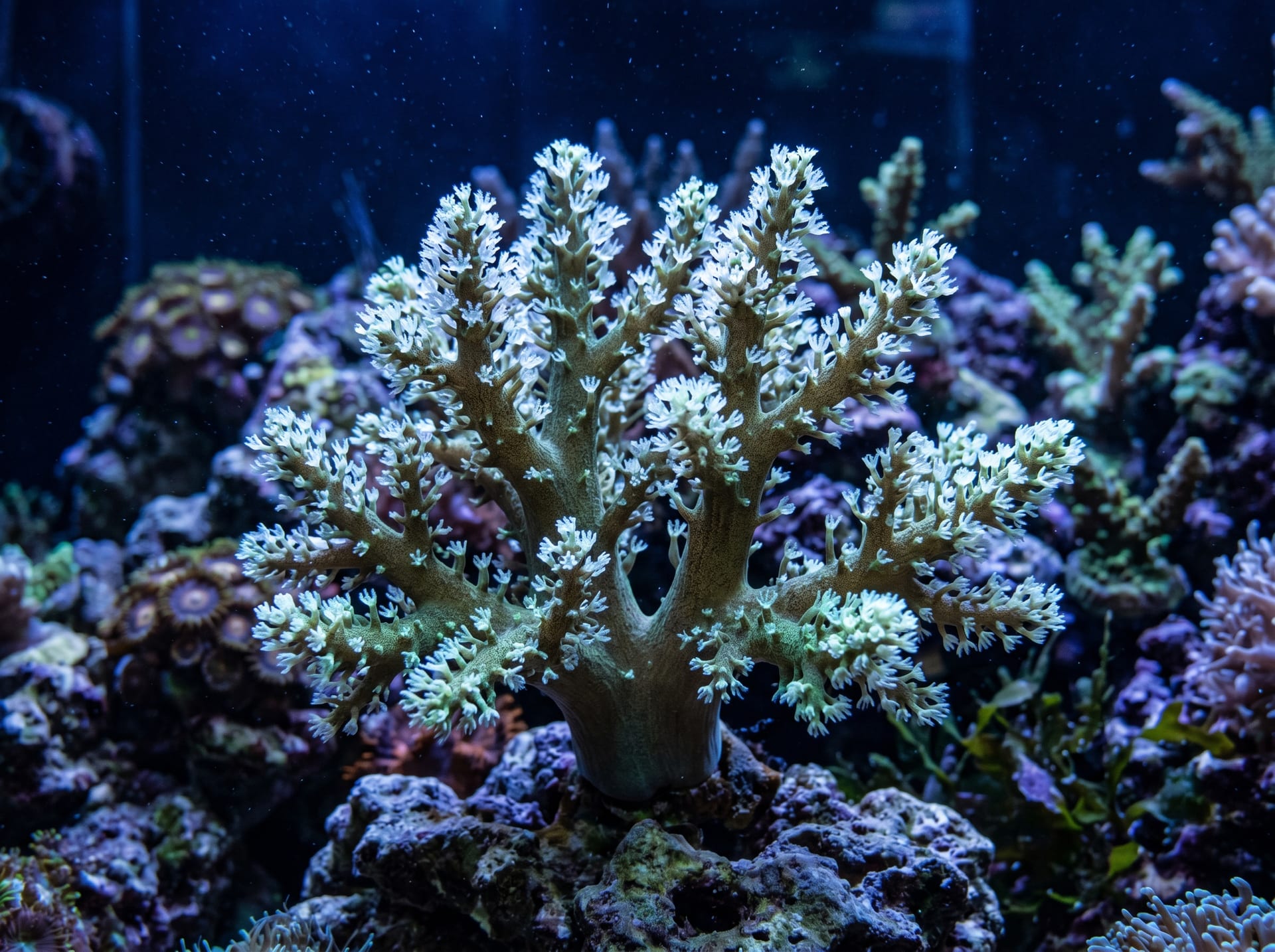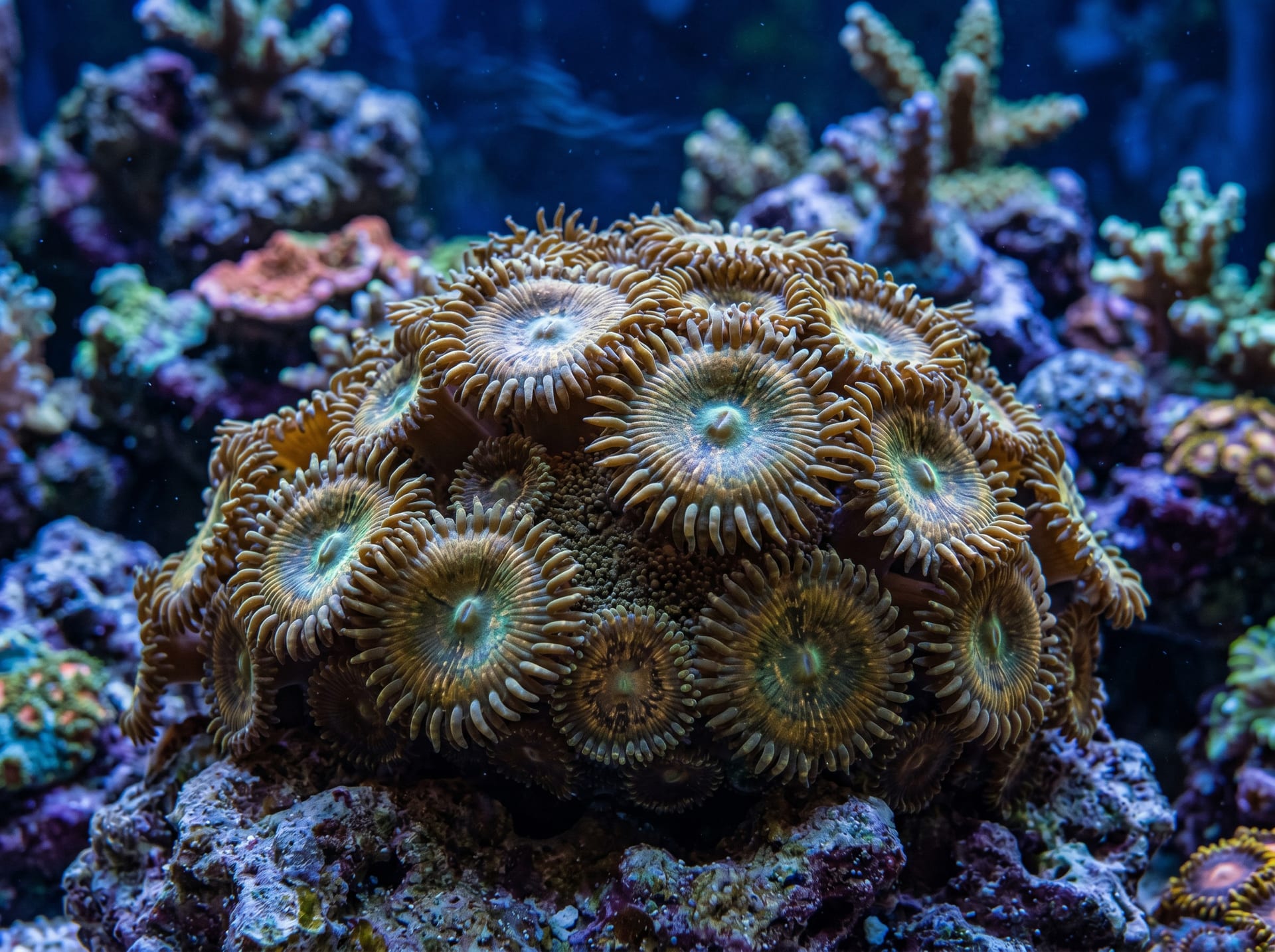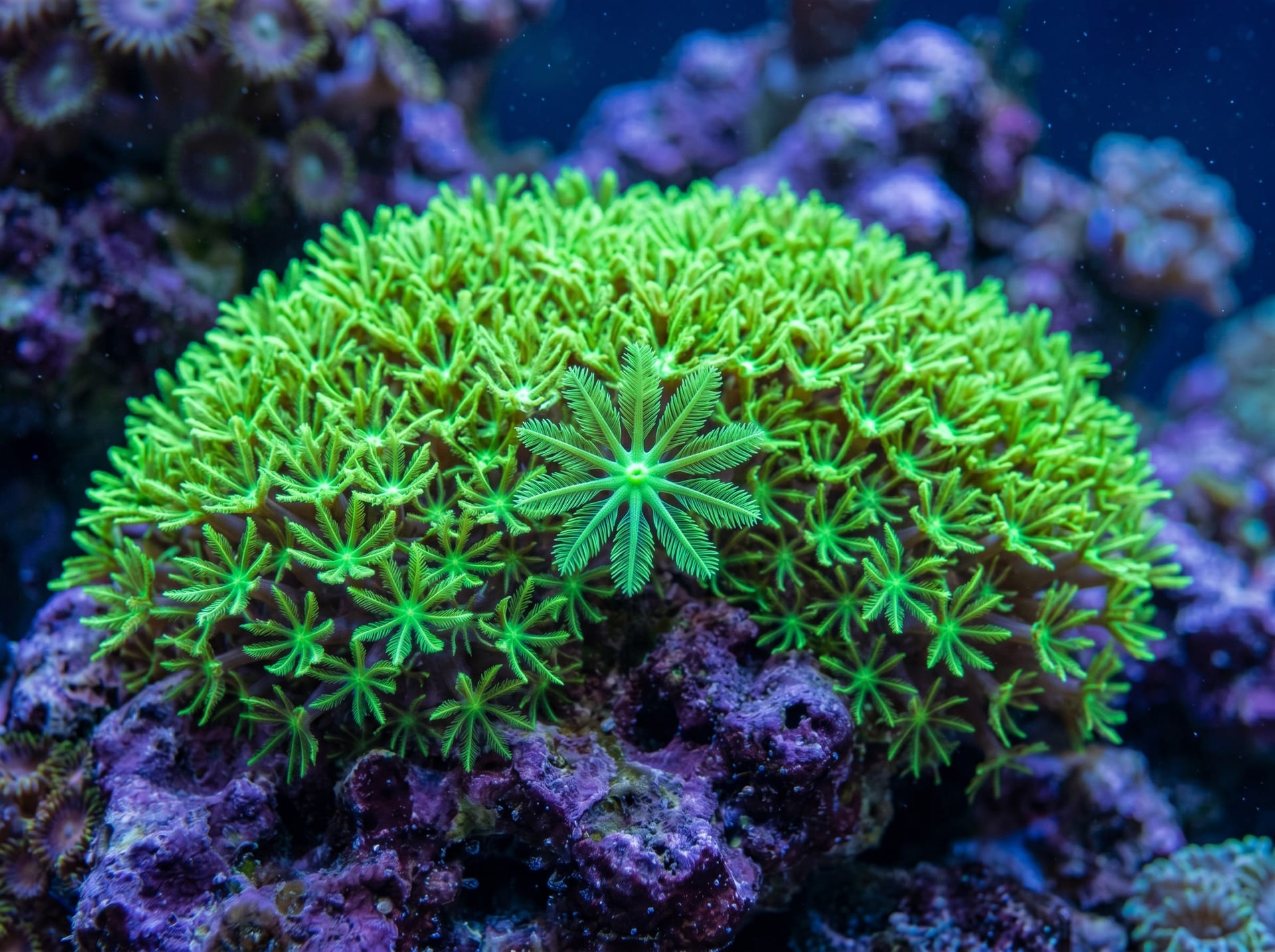
AI-generated image
Briareum (Green Star Polyp Relative)
BeginnerBriareum sp.
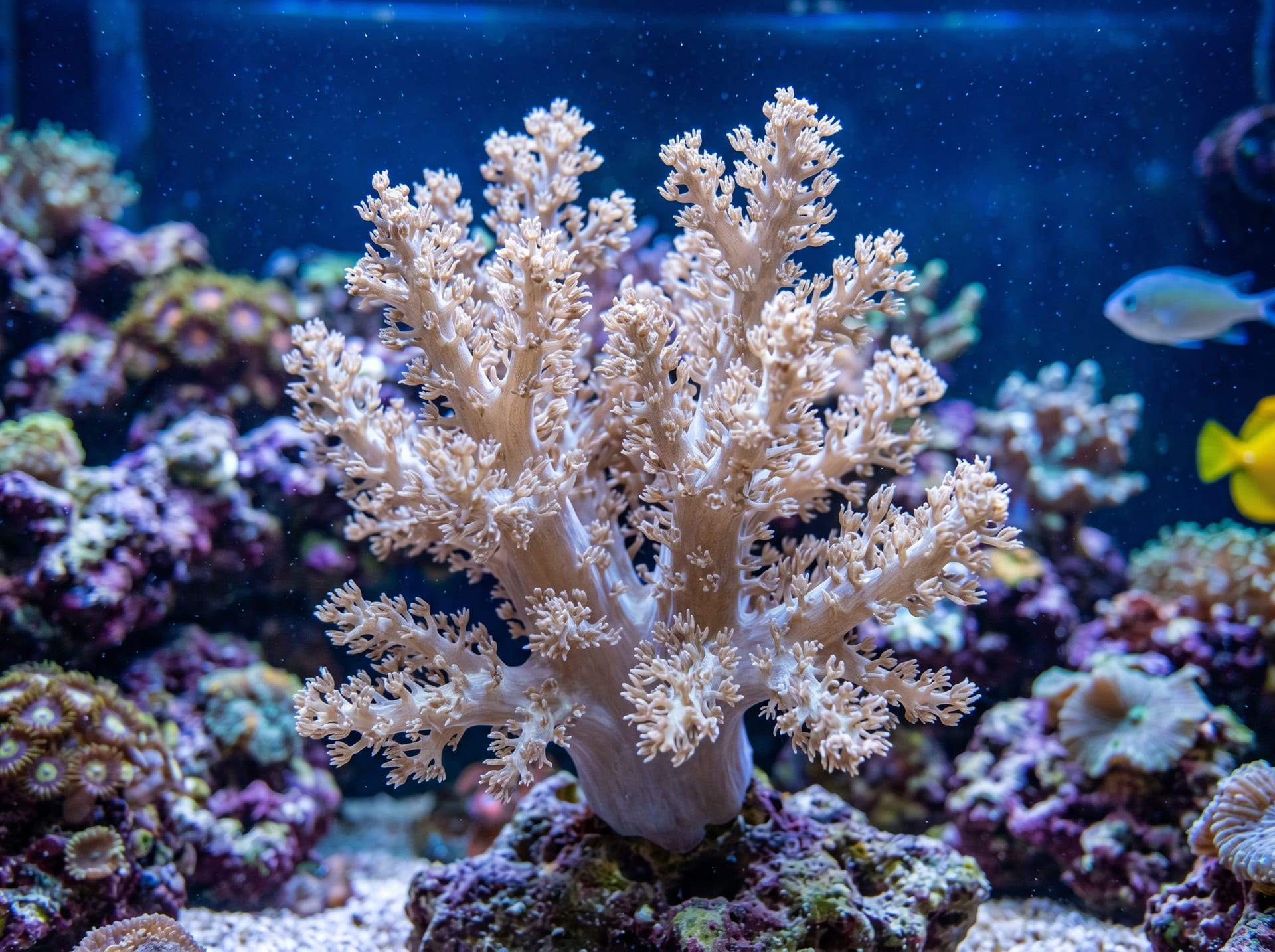
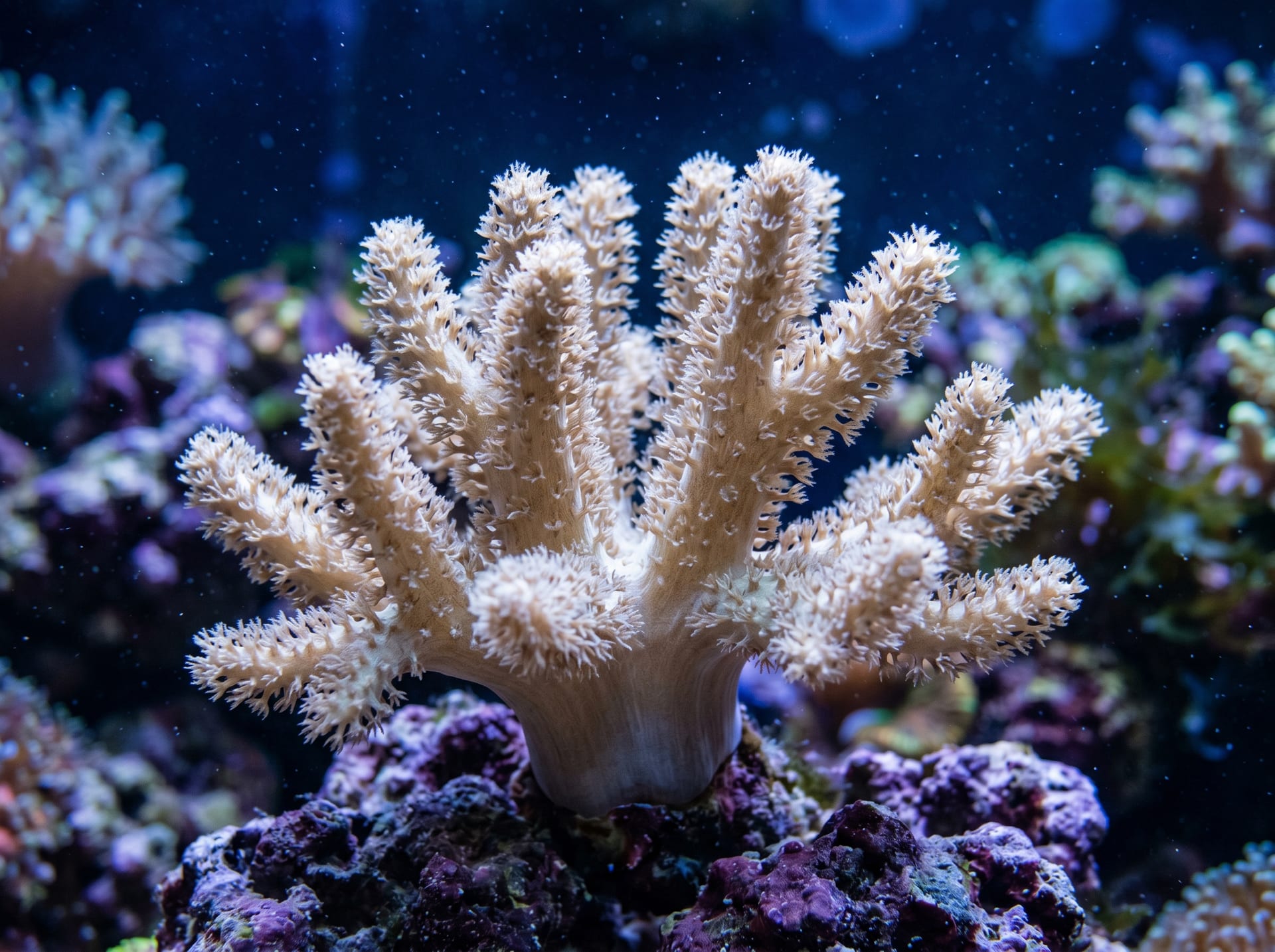
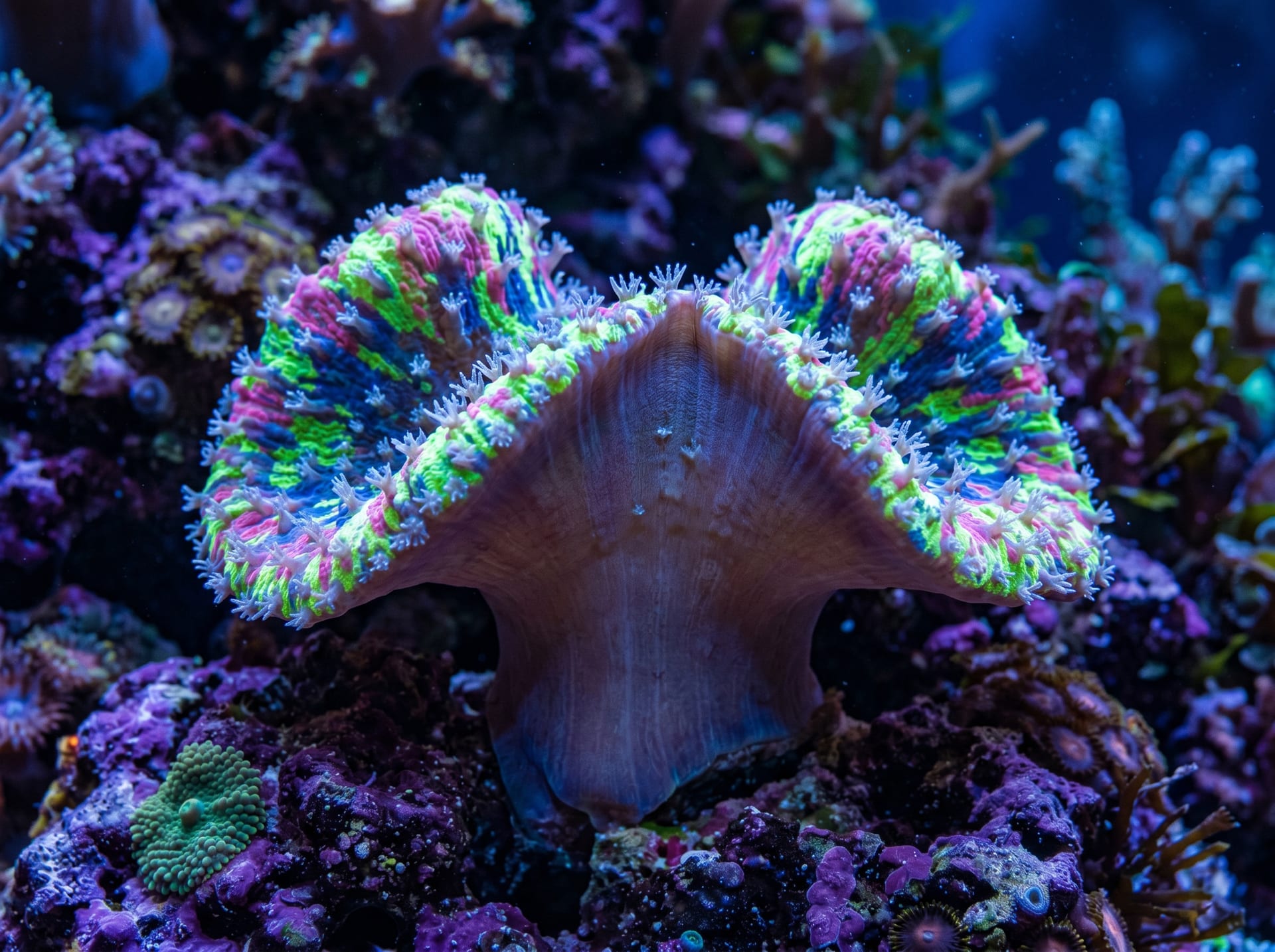
Soft coral related to Green Star Polyps. Green polyps emerge from purple encrusting mat. Extremely hardy and fast-growing, spreading aggressively over rock and walls.
Difficulty
Beginner
Temperature
24〜28℃
Lifespan
10+ years
Size
Encrusting — spreads indefinitely
Diet
Photosynthesis + liquid food
About
Briareum (family Briareidae) is an octocoral (soft coral) distributed across tropical reefs of the Indo-Pacific and Caribbean, closely related to star polyps. Star-shaped polyps bearing eight feathery tentacles grow densely over a spreading mat of stolons, swaying attractively in the current. Colors include browns, greens, and creams, with some specimens fluorescing under UV light. It is very easy to keep, tolerating a wide range of light and flow as a hardy soft coral. It grows vigorously and will overgrow live rock if left unchecked, so trim periodically to control spread. Fragging is as simple as cutting sections of stolon, making it a popular beginner species. Give it room since it can spread onto and contact neighboring corals.
Source: Wikipedia (CC BY-SA 4.0)
Lifespan of the Briareum (Green Star Polyp Relative)
The Briareum (Green Star Polyp Relative) lives 10+ years.
Temperature & humidity for the Briareum (Green Star Polyp Relative)
The ideal temperature for the Briareum (Green Star Polyp Relative) is 24〜28℃.
Basic Info
Origin
tropical reefs of the Indo-Pacific and Caribbean
Lifespan
10+ years
Size
Encrusting — spreads indefinitely
Temperature
24〜28℃
Care Specifications
- Carbonate (KH)
- 8–12 dKH
- Water Temp.
- 24–28℃
- Specific Gravity
- 1.023–1.025
- Salinity
- 33–35 ppt
Soft coralLight: Medium (PAR 50-150)Flow: MediumPlacement: Flexible
Sources: AlgaeBarn: SPS/LPS/soft care / AlgaeBarn: Water Parameters 101
References & Sources
Edited & verified by: BreederDirect editorial team
The taxonomic, regulatory, and husbandry data on this page are compiled and verified against the authoritative primary sources below.
Taxonomy & Authority
Regulations & Conservation Status
Not CITES-listed
Octocorallia (Briareum, Briareidae = closely related to star polyps). Does not fall under CITES-listed families (Helioporidae/Tubiporidae/Coralliidae) → not listed in Appendices. Japanese law also not applicable.
Sources: DOC NZ / CITES-listed corals (Briareidae family not included)
Regulations may change. Always verify the latest information with the relevant authorities.
Briareum (Green Star Polyp Relative) Listings
Loading latest listingsFind listings for this species