Complete Guide to Microorganisms and Microfauna in Reef Tanks | The Invisible Ecosystem Supporting Corals
Maintaining stability in a coral tank requires the work of invisible microorganisms and microfauna (small benthic organisms). This guide explains how small organisms other than bacteria support corals.
Key Takeaways
Maintaining stability in a coral tank requires the work of invisible microorganisms and microfauna (small benthic organisms). This guide explains how small organisms other than bacteria support corals.
What Is Microfauna?
✍️
BreederDirect Editorial
The BreederDirect editorial team specializes in care information for animals, covering veterinary care and breeding to deliver beginner-friendly guides.
Find Coral on BreederDirect
Buy directly from verified breeders
Browse Related Listings
Find Coral listings related to this article on BreederDirect. Buy directly from verified breeders.
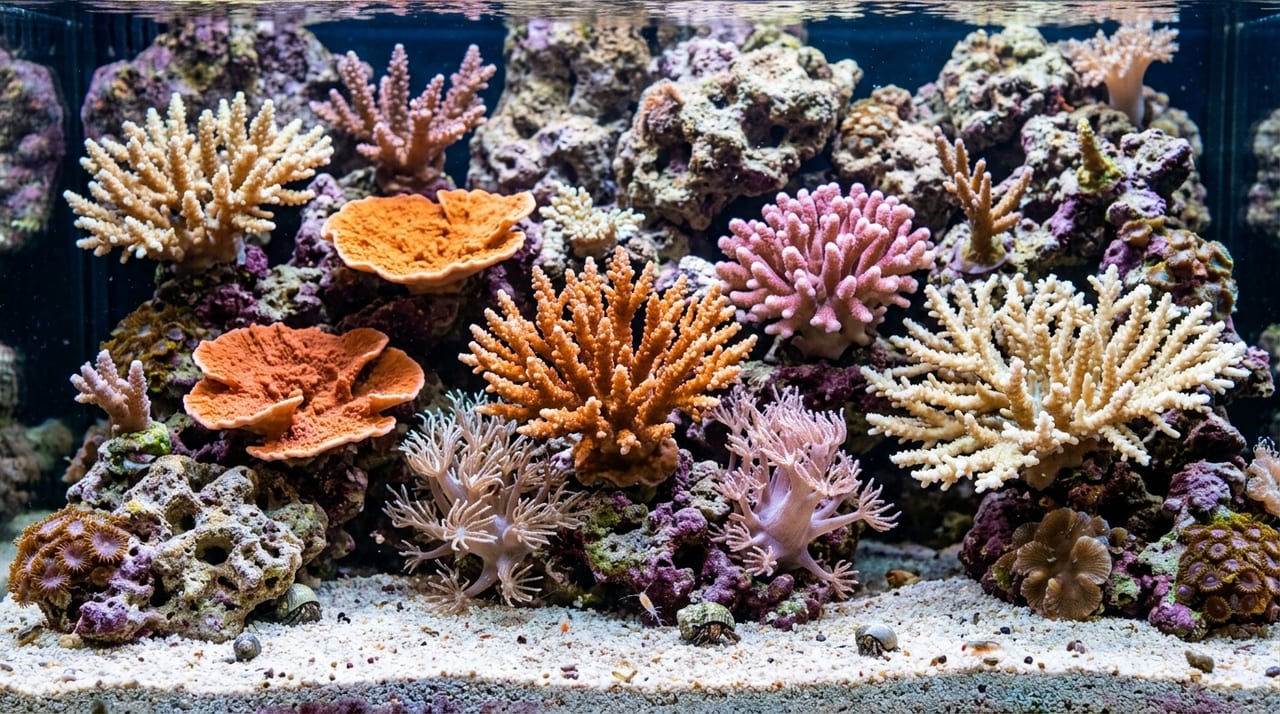
The reef tank ecosystem is supported not only by visible corals and fish. The tank is home to countless creatures that are invisible to the naked eye or extremely small, known as "microfauna (microfaunal community)".
These small organisms play essential roles in the tank's material cycle, including decomposition of detritus (accumulated organic matter), recycling of zooxanthellae, and direct nutrient supply to corals. Unlike large snails and hermit crabs purchased as cleanup crew, most microfauna naturally appear and self-propagate, and once established in a tank, they significantly enhance the tank's natural purification ability.
The Role of Copepods (Copepoda)
Copepods are one of the most important microfauna in reef tanks. These small crustaceans, measuring approximately 0.5–2 mm in body length, multiply while feeding on detritus and algae in the tank, and serve as ideal live food for many marine fish and coral polyps.
In particular, delicate fish such as mandarin fish and firefish have difficulty adapting to artificial foods, making long-term care difficult without a tank rich in copepods. A tank abundant in copepods encourages natural feeding behavior in fish and provides a low-stress environment.
To increase copepods, it is effective to set up a refugium with microalgae planted on live rock or a sand bed. You can also increase their population by adding commercially available copepod packs.
The Function of Amphipods (Amphipoda)
Amphipods are crustaceans slightly larger than copepods (approximately 2–10 mm), inhabiting numerous crevices in live rock and within the sand bed. They function primarily as decomposers, feeding on algae, detritus, and dead organic matter, preventing organic matter accumulation in the substrate.
If you observe small creatures moving around the sand bed at night, they are often amphipods. A tank with many of these is evidence of a healthy substrate environment, and such tanks tend not to become overly enriched with organic matter.
The Ecosystem Role of Nematodes and Small Polychaete Worms
The sand bed is home to nematodes (Nematoda) and small polychaete worms (Polychaeta). These break down organic matter in the sand and convert nutrients into forms that phytoplankton and zooxanthellae can utilize.
By stirring the sand bed and preventing the formation of anaerobic layers, maintaining an environment conducive to the activity of these organisms is important. However, excessive disturbance of the sand bed can cause accumulated organic matter to suddenly become suspended, leading to water quality deterioration. It is ideal to introduce natural stirring agents such as urchins and sand-burrowing sea cucumbers.
Foraminifera and Their Value
Foraminifera are single-celled organisms (protozoans) with shells made of calcium carbonate, microscopic creatures. Foraminifera established in a reef tank, after death, have their shells settle in the sand bed, becoming a source of "aragonite sand." While living, they also serve as food preyed upon by coral polyps and some fish species like surgeonfish.
Some high-end reef tanks have commercially available inoculation kits specifically designed to promote foraminifera colonization, demonstrating their recognized value.
Practical Steps to Enrich Microfauna
Here is a summary of what can be practiced to cultivate a healthy microfauna ecosystem.
Use live rock: Real live rock is rich in copepods, nematodes, and small polychaete worms
Set up a refugium: A sub-tank growing macroalgae (such as Caulerpa and Chaetomorpha) serves as a breeding ground
Avoid excessive use of chemicals: Excessive addition of iodine or ozone kills beneficial microorganisms as well
Maintain appropriate sand bed thickness: A sand bed 3–5 cm thick provides living space for microfauna
Utilize inoculation products: Perform initial inoculation with commercially available copepod packs or beneficial bacteria products
Conclusion
The beauty and stability of a coral tank are supported by the work of small, invisible creatures. Tank management conscious of microfauna reduces the frequency of purchasing cleanup crew, enhances the tank's natural purification ability, and ultimately leads to long-term healthy maintenance of corals.
Cooperation Between Bacteria and Microfauna
The nitrogen cycle by bacteria (ammonia → nitrite → nitrate conversion) is well-known, but microfauna support further efficiency in this nitrogen cycle. By breaking down detritus into finer particles, copepods and nematodes increase the surface area available for bacterial decomposition, raising the rate of organic matter breakdown.
Through this cooperation, organic matter is less likely to accumulate in the tank, suppressing increases in nitrate and phosphate. Relying on mechanical means alone, such as protein skimmers or filters, is not ideal. Enhancing biological purification ability is one characteristic of a mature reef tank.
Tanks rich in microfauna tend to remain stable over the long term. When an aquarist managing such a tank feels that "the tank remains stable even though I'm not doing anything," this is evidence that this invisible ecosystem is functioning.