Source: Wikimedia Commons
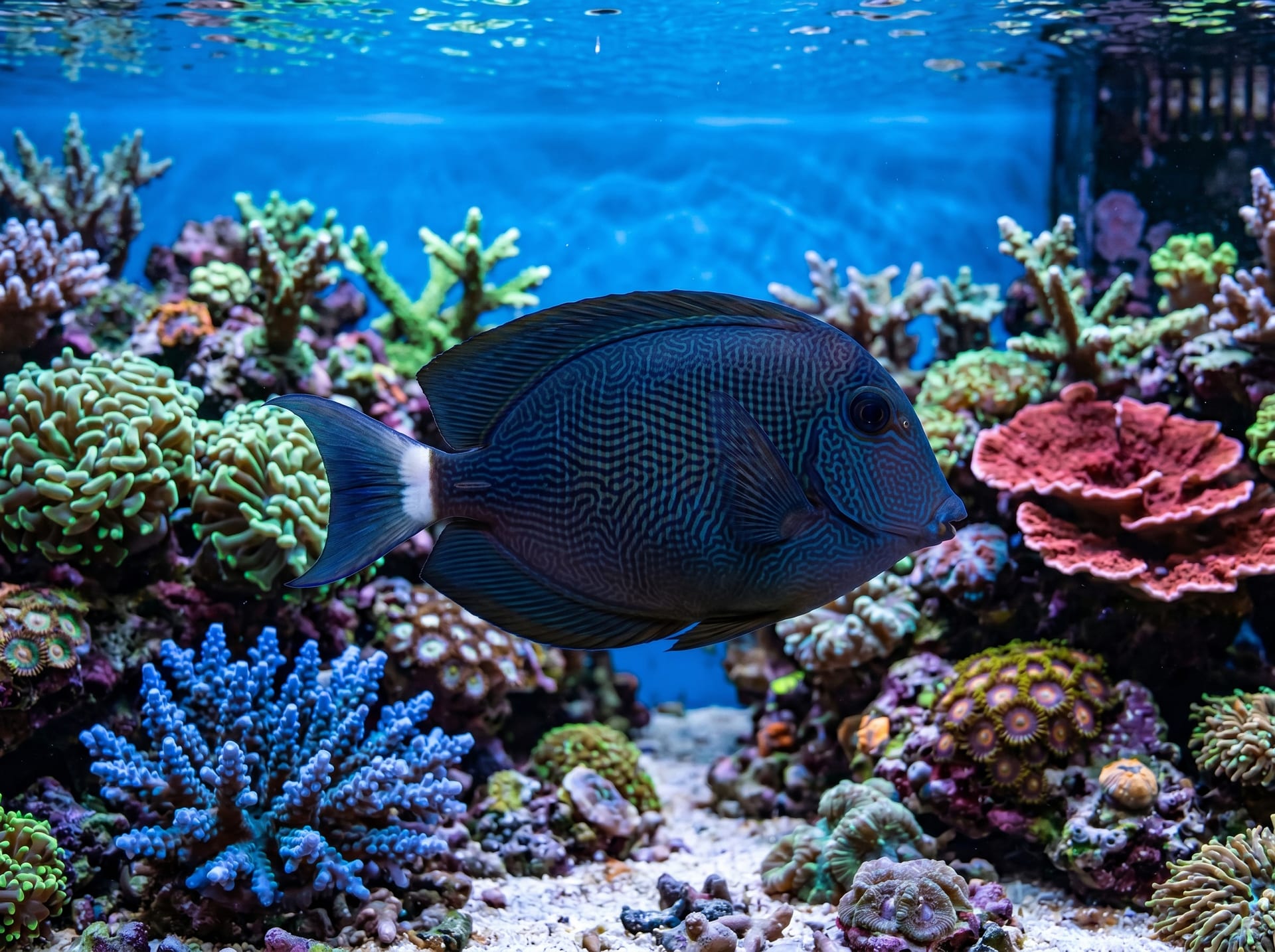
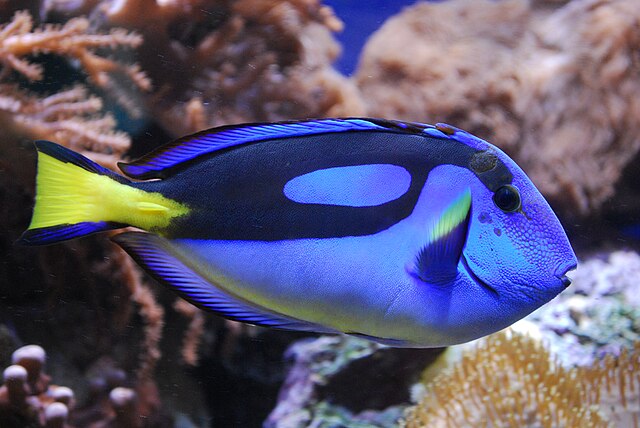
Blue Tang
IntermediateParacanthurus hepatus
Stunning royal blue body with yellow tail. Active swimmer requiring large tanks. Prone to ich — strict water quality is essential. Global popularity boosted by film.
Difficulty
Intermediate
Temperature
24〜27℃
Lifespan
8-20 years
Size
20-30cm
Diet
Omnivore (seaweed, spirulina, frozen food)
About
The Pacific blue tang (Paracanthurus hepatus), made famous by the film 'Finding Dory', is a surgeonfish of the family Acanthuridae found across coral reefs of the Indian and Pacific Oceans. Its brilliant royal blue body, bold black palette marking, and yellow tail fin make it one of the most visually striking species in the marine aquarium hobby. Adults can exceed 30 cm in length, requiring a minimum 90-litre tank, ideally 120 cm or larger. Susceptible to Cryptocaryon (marine ich), it demands stable, high-quality water with specific gravity 1.023–1.025 and pH 8.1–8.4. Ample swimming space is essential for its health and well-being.
Source: Wikipedia (CC BY-SA 4.0)
Lifespan of the Blue Tang
The Blue Tang lives 8-20 years.
Size of the Blue Tang
The Blue Tang grows to 20-30cm.
Temperature & humidity for the Blue Tang
The ideal temperature for the Blue Tang is 24〜27℃.
The ideal water temperature for the Blue Tang is 22〜26℃.
Basic Info
Origin
Coral reefs of the Indian and Pacific Oceans
Lifespan
8-20 years
Size
20-30cm
Care Specifications
- pH
- 8.1–8.4
- Water Temp.
- 22–26℃
- Specific Gravity
- 1.02–1.025
- Salinity
- 33–35 ppt
- Min. Tank
- 681 L
Semi-aggressiveReef safe
Sources: LiveAquaria
References & Sources
Edited & verified by: BreederDirect editorial team
The taxonomic, regulatory, and husbandry data on this page are compiled and verified against the authoritative primary sources below.
Taxonomy & Authority
Regulations & Conservation Status
Not CITES-listedIUCN LC · Least Concern
Aquarium collection pressure exists, but population is stable; IUCN category is Least Concern (LC).
Sources: CITES Appendices (species not listed) / IUCN Red List / Ministry of the Environment Specified Animal List / Ministry of the Environment: List of Designated Invasive Species
Regulations may change. Always verify the latest information with the relevant authorities.
Blue Tang Listings
Loading latest listingsFind listings for this species