Complete Tang Care Guide | Raising Blue Tangs and Yellow Tangs
Explaining care methods for tangs, a popular group of saltwater fish. Introducing white spot disease prevention, food selection, and tankmate compatibility considerations.
Key Takeaways
Explaining care methods for tangs, a popular group of saltwater fish. Introducing white spot disease prevention, food selection, and tankmate compatibility considerations.
Related Species
Tangs bring vibrant colors and dynamic movement to saltwater aquariums, and remain a beloved species among aquarists worldwide. Belonging to the family Acanthuridae, tangs reign as centerpieces of the aquarium with their brilliant coloration and active swimming behavior. However, they have unique care requirements, including susceptibility to Cryptocaryon (white spot disease) and strong territorial aggression within their species. This article explains everything from the characteristics of representative tang species, how to set up the proper tank environment, white spot disease prevention, to food selection—all explained in beginner-friendly language.
Characteristics and Difficulty Levels of Popular Tang Species
While tangs might seem like one group, they actually encompass many different species. Let's start by learning about three representative types.
Blue Tang (Paracanthurus hepatus)
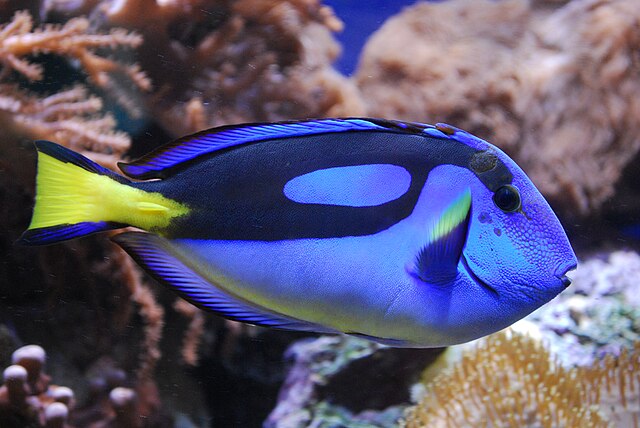
Famous from a popular movie, this species features a striking contrast between a royal blue body and yellow tail fin. As adults reach nearly 30cm in length, long-term care requires a minimum of 90cm, preferably 120cm or larger tank.
While friendly and easy to acclimate to prepared foods, they have low resistance to white spot disease and are sometimes called "white spot regulars." They are sensitive to water quality and temperature fluctuations, making early acclimation management especially critical. This species is considered intermediate to advanced level difficulty.
Yellow Tang (Zebrasoma flavescens)
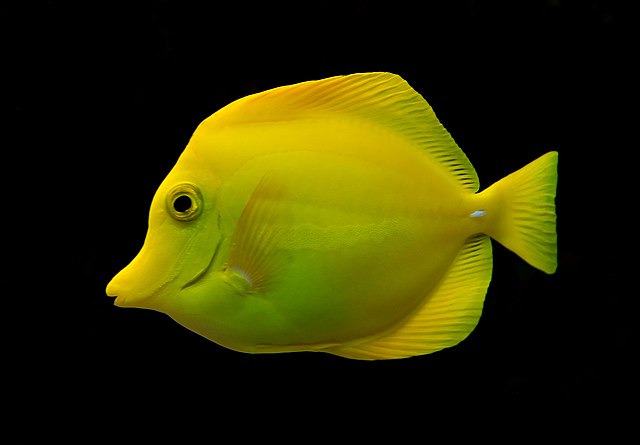
Entirely lemon-yellow in color, this species has tremendous visual impact. Among tangs, it is relatively easy to care for and is well-known as a beginner-friendly starter species. However, it is sensitive to water quality deterioration—in environments where nitrate accumulates, their coloration fades and appetite decreases.
It has a strong herbivorous tendency and readily eats nori seaweed and spirulina. Care is possible in 60-90cm tanks, but wider swimming space promotes both water quality stability and natural behavior.
Powder Blue Tang (Acanthurus leucosternon)
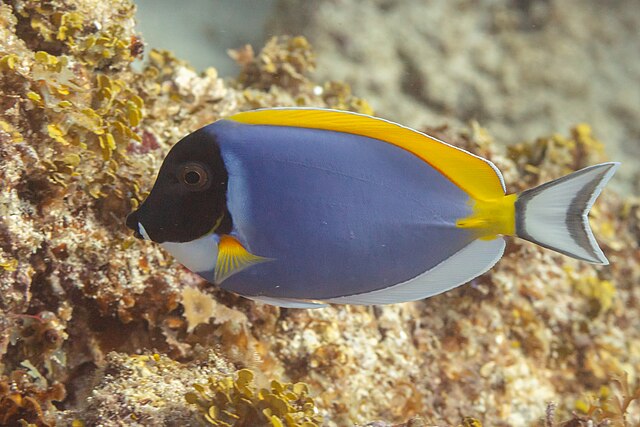
A species highly coveted by advanced aquarists, featuring a powder-blue body with a striking yellow dorsal fin and white throat. While unmatched in beauty, it has the strictest requirements for water quality and temperature and is known among tangs as a difficult species prone to white spot disease. A 90cm+ tank and excellent water quality maintenance ability are essential. It is not recommended as a first-choice fish for beginners.
Setting Up the Proper Tank Environment and Equipment
Tangs prefer spacious swimming areas and high water quality. Compromising on these conditions leads to disease and feeding problems.
Tank Size and Water Flow
- Yellow Tang: 60cm or larger (ideally 90cm)
- Blue Tang & Powder Blue Tang: 90cm or larger (ideally 120cm)
Since tangs swim constantly, small tanks cause stress and lower immunity. Proper water flow is also crucial. Like reef tanks, use multiple powerheads to create water movement without dead spots. Varying flow rates randomly mimics the natural environment.
Water Quality Standards
| Parameter | Target Range |
|---|---|
| Temperature | 25-26°C (daily variation within 1°C) |
| Specific Gravity | 1.023-1.025 |
| pH | 8.1-8.3 |
| Ammonia/Nitrite | 0 |
| Nitrate | 20ppm or less |
Sudden temperature changes directly trigger white spot disease. Use both heaters and coolers to maintain stable temperatures year-round.
UV Sterilization and Protein Skimmers
We strongly recommend installing UV sterilizers for tang care. UV eliminates the free-swimming larval stage of Cryptocaryon irritans (the white spot parasite) circulating in the water, significantly reducing infection risk. Protein skimmers are equally essential for water quality maintenance. For Blue Tangs and Powder Blue Tangs especially, consider them mandatory.
White Spot Disease Prevention and Treatment
White spot disease is an unavoidable topic when discussing tangs. Knowledge of proper prevention and early response is key to long-term care success.
Why Tangs Are So Susceptible to White Spot Disease
Tangs have thin mucus membranes and are prone to immune suppression from stress and temperature changes. When white spot parasites are dormant in the tank, environmental changes can trigger explosive reproduction, covering the fish's entire body with white spots.
Prevention Strategies
- Strict quarantine: Always isolate new fish in a separate tank for 2-4 weeks, confirming no symptoms before transferring to the main tank
- Temperature stability: Use heaters and coolers to maintain daily variations within 1°C
- Continuous UV operation: Physically remove free-swimming stage parasites
- Hiding places: Create refuges with live rock or rock arrangements so stressed fish can hide
- Avoid overstocking: More fish means faster disease spread
Treatment Methods
If infection occurs, immediately isolate the fish in a quarantine/treatment tank—this is the fundamental approach.
Copper ion treatment is one of the most effective methods. Use copper reagent and test kits to maintain the proper concentration (0.15-0.20ppm). However, it is lethal to corals and invertebrates, so always perform this only in an isolation tank.
Hyposalinity (low specific gravity treatment) is a chemical-free method. Gradually lower the specific gravity to 1.009 and maintain it for 2-4 weeks to eliminate the parasite. Since rapid salinity changes damage the fish, adjust slowly at 0.001-0.002 per day.
Selecting and Feeding Appropriate Foods
Tangs have strong herbivorous tendencies, and plant-based foods are the foundation of health. Diet based solely on animal matter causes nutritional imbalance, leading to faded coloration and weakened immunity.
Staple Foods
- Spirulina-based prepared foods: Flake or pellet forms. Ideal for daily staple feeding
- Unseasoned dried nori (seaweed): Attach with a clip in the tank and they eat readily. Excellent cost-effectiveness
Supplemental Foods and Treats
- Frozen brine shrimp: Highly palatable; effective for stimulating appetite in reluctant feeders
- Frozen copepods: Excellent natural nutritional balance for supplemental feeding
- Fresh nori and wakame: Eaten readily when fresh, but uneaten portions degrade water quality, so offer small amounts
Feeding Frequency and Tips
Feed 2-3 times daily in small portions as the basic rule. Dividing portions reduces uneaten food and maintains water quality better than single large feedings. Since tangs have herbivorous habits of constantly grazing, permanently placing nori in the tank promotes natural behavior.
Tankmate Compatibility Considerations
Tang compatibility follows specific rules. Combining multiple individuals without knowledge causes aggressive fighting and injuries.
- One tang per tank (same species rule): Territory aggression is extremely strong; introducing another of the same species causes relentless chasing
- Even different species fight if body shape is similar: Morphologically similar species like Blue Tangs and Powder Blue Tangs may fight even if different species
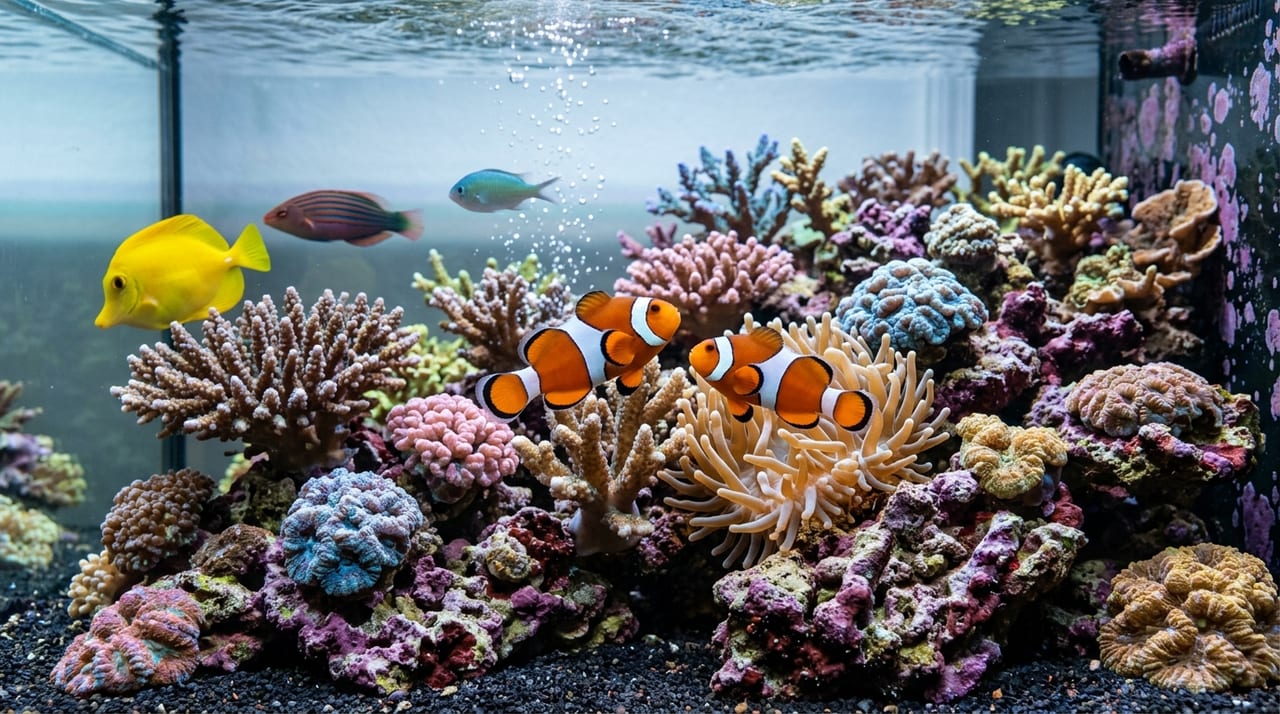
- Generally compatible with other families: Mix easily with clownfish, gobies, wrasses, and similar groups
- Don't add larger tangs later: Introducing same-sized fish after an established tang's territory is formed increases conflict risk
If multiple species must coexist, use a 120cm+ tank with abundant live rock arranged to create visual barriers, reducing aggression.
BreederDirect's Safety and Trust System
One of the most challenging aspects of tang care is sourcing healthy individuals. Many fish flowing through retail channels arrive with compromised immunity from transport stress or already carrying white spot parasites.
With BreederDirect, you purchase directly from breeders who manage and raise the fish themselves. Most individuals are quarantined and already acclimated to prepared foods, and you can directly confirm their white spot disease history and current health status with the breeder. Eliminating middlemen minimizes stress on the fish—a significant advantage.
The ability to communicate with breeders via message before purchase, confirming their care history and management practices, is unique peace-of-mind that BreederDirect offers. Even beginners can confidently start their ideal tang care journey with direct advice from experienced breeders.