Spotted Mandarin (Pictichthys) Complete Care Guide | Differences from Green Species, Feeding Methods, and Tips for Long-term Keeping
A care guide for the beautiful and popular Spotted Mandarin. Explains the differences in appearance and difficulty level from Green Mandarin, feeding methods using copepods, and key points for long-term keeping.
Key Takeaways
A care guide for the beautiful and popular Spotted Mandarin. Explains the differences in appearance and difficulty level from Green Mandarin, feeding methods using copepods, and key points for long-term keeping.
Related Species
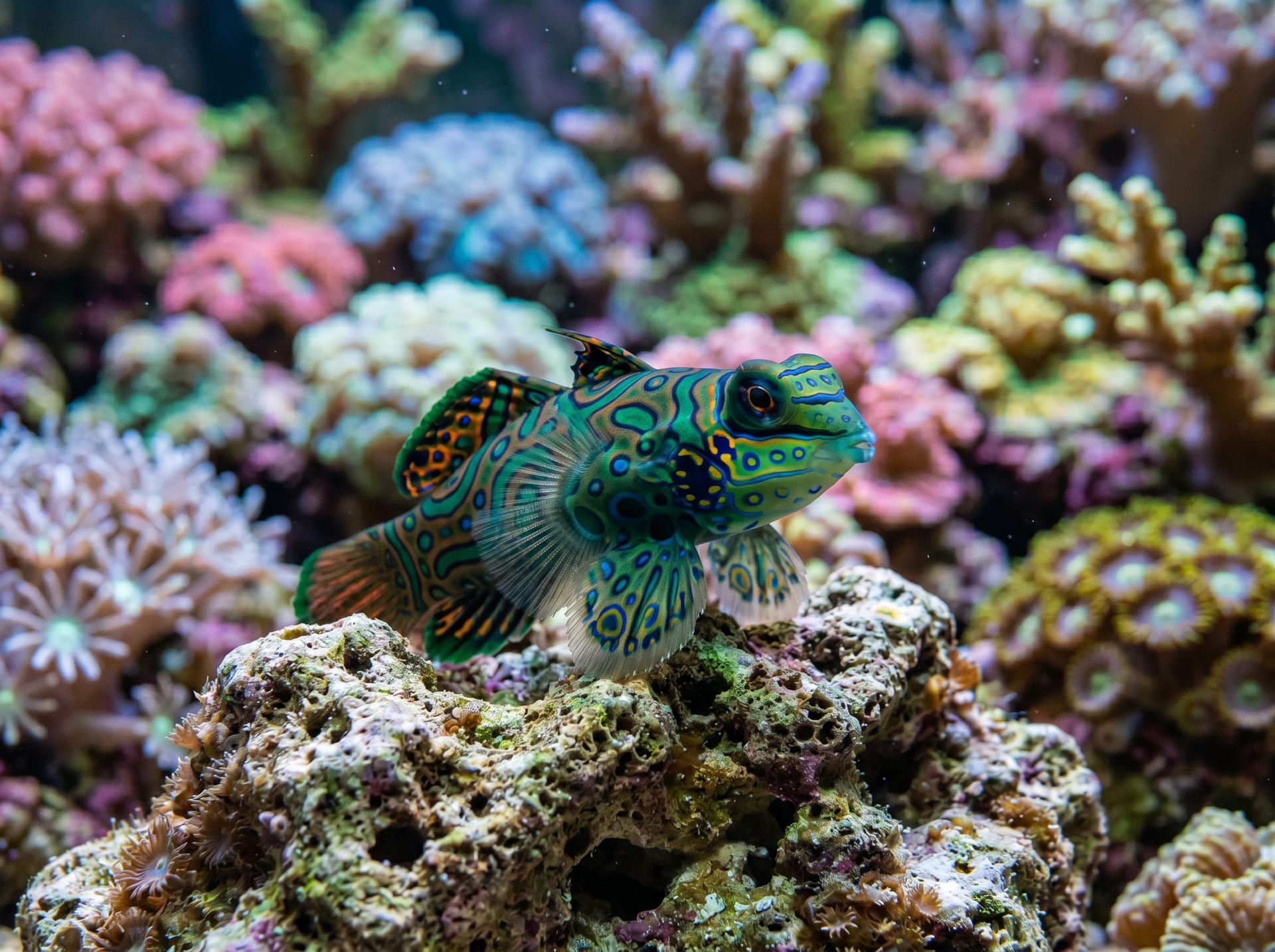
The Spotted Mandarin (scientific name: Synchiropus picturatus) is, along with the Green Mandarin (S. splendidus) from the same Callionymidae family, one of the most beautiful fish in marine aquariums. Its striking orange, blue, and yellow spotted pattern catches the eye, but due to its specialized feeding habits, it is considered "advanced keeper" level. This article explains the characteristics of the Spotted Mandarin and practical methods for successful long-term keeping.
Differences from the Green Mandarin
Spotted Mandarin and Green Mandarin are closely related species, but have clear differences in appearance and behavior.
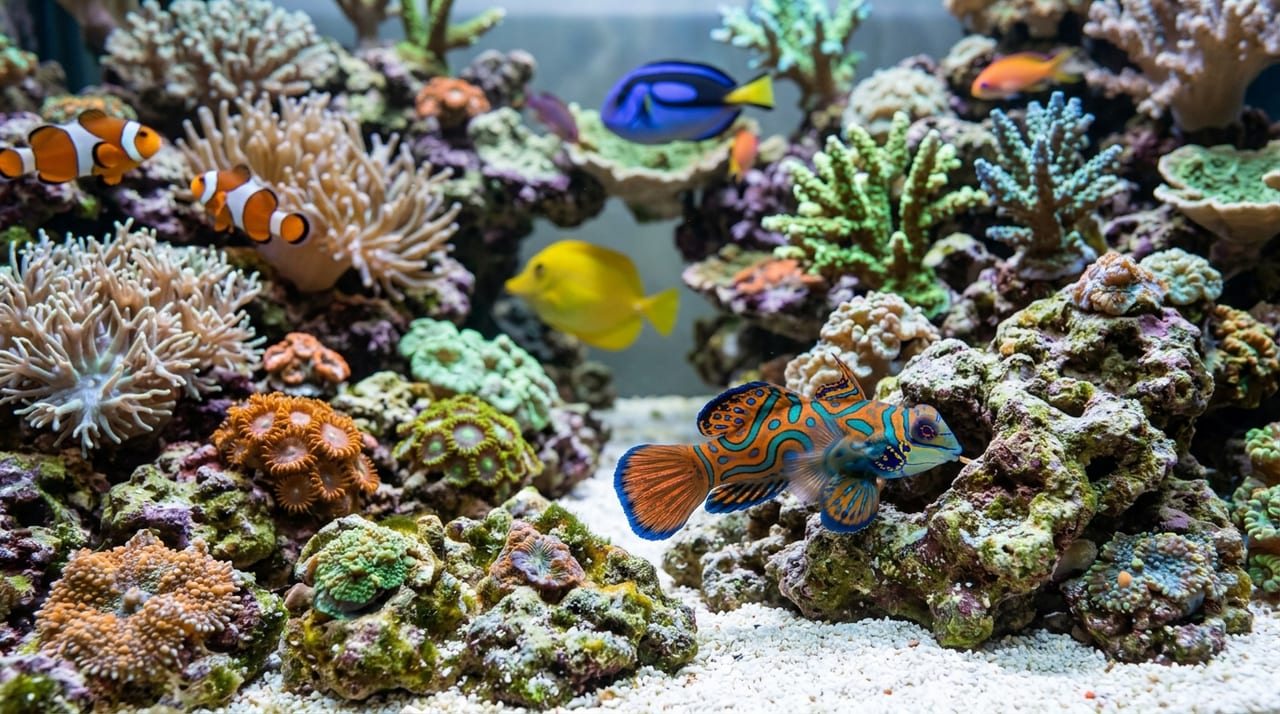
- Body Color and Pattern While the Green Mandarin has a green and blue psychedelic maze-like pattern, the Spotted Mandarin is characterized by an orange base with blue spots scattered throughout. Both possess poison glands and secrete a bitter-tasting mucus on their fins and body surface, sharing a defense mechanism that makes them difficult for predators to eat.
- Size and Swimming Behavior Spotted Mandarins are slightly smaller than Green species, with adults reaching only about 6–7 cm in length. They move in a hopping manner over sand and live rock, and rarely swim in the middle water column.
- Comparison of Care Difficulty Both species are difficult to train to eat artificial foods, and in the wild feed primarily on copepods found in the gaps of live rock and substrate. Spotted species have slightly smaller mouths, and depending on the copepod species, some sizes cannot be eaten, so precise feeding management is required.
Required Tank Environment
- Tank Size We recommend 60 cm or larger for solitary keeping, and 90 cm or larger for pairs. Since Mandarins patrol live rock as territory, a design with greater depth than height is ideal.
- Live Rock Having an abundance of high-quality, porous live rock is the most critical condition for successful keeping. Copepods naturally reproduce on live rock, serving as feeding grounds for Mandarins. Aim to fill at least one-third or more of the entire tank with live rock. With too little live rock, even added copepods will become insufficient.
- Coexistence with Coral Spotted Mandarins do not peck at coral. They are one of the best fish for reef tanks. However, in tanks with powerful skimmers, copepods are easily drawn in, so it is necessary to either attach a mesh cover to the skimmer outlet or establish a copepod breeding chamber in the sump.
- Tankmate Precautions Cannot be kept with large predators such as lionfish groups. Additionally, similarly-sized dottybacks or gobies may steal food. Since Mandarins are weak competitors, it is important to create an environment where they can monopolize feeding grounds.
Feeding Methods: Copepod Cultivation Is Key to Success
Promoting Natural Copepod Reproduction
In the early stages of keeping, feed the copepods attached to the live rock. For 1–2 weeks after introduction, observe whether copepods are being supplied sufficiently and confirm that the Mandarin is picking at the live rock (feeding behavior).
Culturing in a Refugium
If copepod supply is unstable, establish a separate refugium (a secondary tank where macroalgae and the like are grown) to culture copepods in large quantities. It is efficient to add cultured copepods to the main tank in the evening to nighttime. Mandarins feed more actively during dimly lit periods.
Acclimation to Artificial Foods and Frozen Copepods
Some individuals will gradually acclimate to artificial foods. The ultra-small frozen brine shrimp used in feeding systems like those for Apistos, or commercially available frozen copepods delivered via dropper in front of live rock can be effective. The key is to "make them look alive." Creating subtle water flow to make them flutter will make Mandarins more likely to respond.
Once an individual accepts artificial food even once, long-term maintenance becomes significantly easier. Selecting "individuals acclimated to artificial foods" at purchase is also an important option.
Health Management and Diseases to Watch For
- Watch for Weight Loss The leading cause of death in Mandarins is "starvation." Check once a week to see if the body is becoming thin (abdominal narrowing). If narrowing becomes visible, increase the amount of added copepods.
- Ich (White Spot Disease) The mucus coating on the Mandarin's body surface is said to prevent ich parasites from invading, making them relatively resistant to ich, but they can still become infected if water quality deteriorates. The use of copper-based medications is absolutely forbidden (they damage both the mucus and coral). If treatment is needed, the basics are enhanced UV sterilization and water quality improvement.
Pairing and Courtship Behavior
Males are slightly larger than females, and the tip of the dorsal fin (first dorsal fin) tends to be slightly longer. Compatible pairs rise at dusk and display beautiful courtship behavior, swimming together with their bodies in close contact on top of live rock. Breeding is difficult, but simply observing it is an extraordinary experience.
Summary
Success in keeping Spotted Mandarins depends greatly on a stable copepod supply. By establishing the three pillars of adequate live rock quantity, refugium utilization, and regular copepod addition, you can help them reach their full lifespan (3–4 years or more).
- Ensuring adequate live rock quantity
- Utilizing a refugium
- Regular copepod addition
Although they are somewhat less readily available than Green species, if you come across one, please do try keeping them.