AI-generated image
Spotted Mandarin
AdvancedSynchiropus picturatus
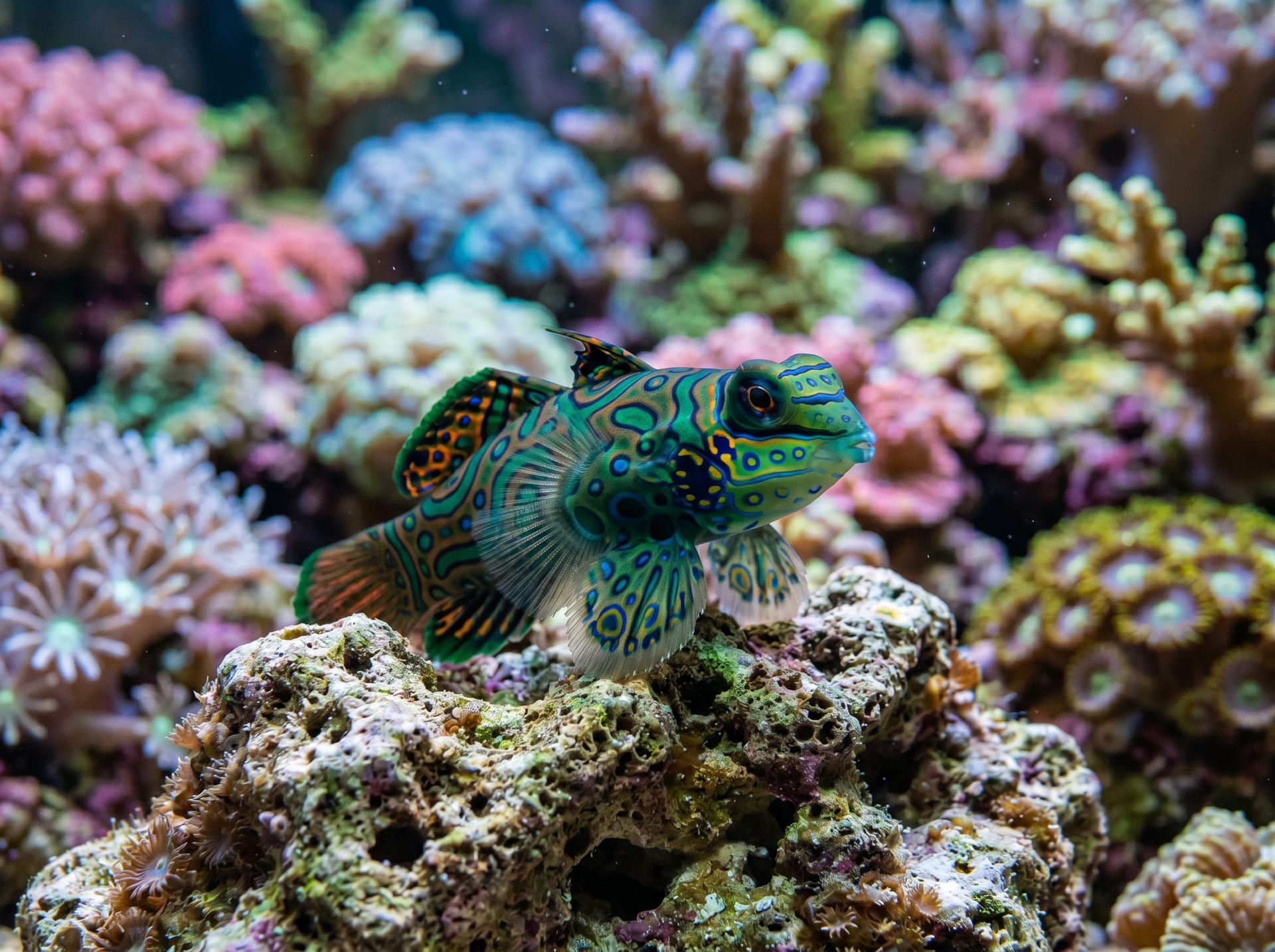
Small goby with psychedelic green body covered in orange spots with black borders. Prefers live copepods, so mature live rock tanks are ideal.
Difficulty
Advanced
Temperature
24〜27℃
Lifespan
5-8 years
Size
5-8cm
Diet
Copepods (live food) as staple. Some accept frozen brine
About
The spotted mandarin (Synchiropus picturatus) is a small dragonet of the family Callionymidae found in the western Pacific. Its psychedelic coloration, a green ground sprinkled with black-ringed orange and blue spots, is its greatest appeal. Lacking scales, it protects itself with body mucus, which makes it relatively resistant to parasites such as ich, though it is vulnerable to injury and medications. It is a specialist feeder that subsists chiefly on tiny live foods such as copepods, so it is ideally kept in a mature aquarium rich in live rock and microfauna. Slow-moving and peaceful, it offers great visual interest as it creeps along the bottom.
Source: Wikipedia (CC BY-SA 4.0)
Basic Info
Origin
Coral reefs of the western Pacific
Lifespan
5-8 years
Size
5-8cm
Temperature
24〜27℃
Diet
Copepods (live food) as staple. Some accept frozen brine
Care Guide
Tank
Mature live rock tank where copepods naturally grow
Tank Mates
Males fight viciously. Keep as pairs or singles
Care Specifications
- pH
- 8.1–8.4
- Water Temp.
- 22–26℃
- Specific Gravity
- 1.02–1.025
- Salinity
- 33–35 ppt
- Min. Tank
- 114 L
PeacefulReef safe
Sources: LiveAquaria
References & Sources
Edited & verified by: br-choku editorial team
The taxonomic, regulatory, and husbandry data on this page are compiled and verified against the authoritative primary sources below.
Taxonomy & Authority
Regulations & Conservation Status
Not CITES-listed
Sources: CITES Appendices (species not listed) / 環境省 特定動物リスト / 環境省 特定外来生物等一覧
Regulations may change. Always verify the latest information with the relevant authorities.
Spotted Mandarin Listings
Loading latest listingsFind listings for this species