Copepods (Copepoda, calanoids) are small crustaceans measuring approximately 0.5–2 mm in body length and are microfauna that support the foundation of coral reef ecosystems. While it is widely known that copepods are necessary for keeping mandarin fish, simply adding copepods to a tank does not provide sustainability, and a breeding and establishment system must be constructed for stable supply. This article systematically explains how to naturally breed copepods within an aquarium.
Why Copepods Are Important
The roles copepods play in saltwater aquariums are diverse. First, as a direct food source, they are essential live food for mandarin fish, spotted mandarin, larvae-stage marine fish fry, and small species that are difficult to feed.
Second, by consuming organic matter, bacteria, and microalgae (detritus) on the sand bed and live rock surfaces, they also function as tank cleaners. Tanks rich in copepods experience slower detritus accumulation and maintain clean sand beds.
Additionally, some copepods (particularly Tisbe species) are benthic and lay eggs on substrates, making them prone to breeding in the shadows of live rocks, sand beds, and rock arrangements, suitable for natural reproduction within tanks. Swimming species such as Tigriopsis drift in the water column and are easily preyed upon by fish, but fast-breeding species have the advantage of being easier to maintain in culture.
Basic Steps for Introducing Copepods
Commercially available copepods are sold as live individuals suspended in liquid (most commonly Tisbe biminiotes and Apocyclops panamensis species). When introduced into an appropriate environment, purchased copepods will begin to reproduce naturally.
As a guideline for initial introduction, introduce 50–100 mL of copepod suspension (approximately 1,000–5,000 individuals) into a 60 cm tank (approximately 65 L) every 1–2 weeks for 2–3 applications. Introducing into a refugium (discussed below) rather than directly into the main tank increases survival and reproduction rates.
Before introduction, acclimate the water temperature using the floating method. Additionally, introduction is best done 1–2 hours before the lights turn off. By introducing copepods when fish are entering sleep, they can move to rock crevices and sand before being preyed upon, increasing establishment rates.
Stable Cultivation System Using a Refugium
The most effective method for continuous supply of copepods to the main tank is to establish a dedicated refugium (cultivation tank).
A refugium is a secondary tank that functions as an isolated space without predators (fish, shrimp, etc.) while sharing water with the main tank. It is typically installed as a section of a sump (filter tank) or as a small side-cabinet tank. The volume should be approximately 10–20% of the main tank.
The following should be prepared inside the refugium. Lay sand (preferably fine live sand or medium-grain granular live rock) about 5–10 cm deep as substrate for copepod establishment. When macroalgae is planted, it functions as a primary producer and increases microalgae and bacteria that serve as copepod food. Chaetomorpha and Caulerpa are readily available and easy-to-grow options.
Lighting should be on a reverse cycle to the main tank (with the refugium lit when the main tank is dark), maintaining algae while compensating for nighttime pH drops. LED grow lights (red and blue blend) are appropriate.
By placing a screen with 3–5 mm mesh in the drainage path from the refugium to the main tank, larger copepods naturally flow into the main tank for feeding. A simple system where releasing water nightly provides continuous automatic supply.
Preparing Main Tank Environment for Copepod Establishment
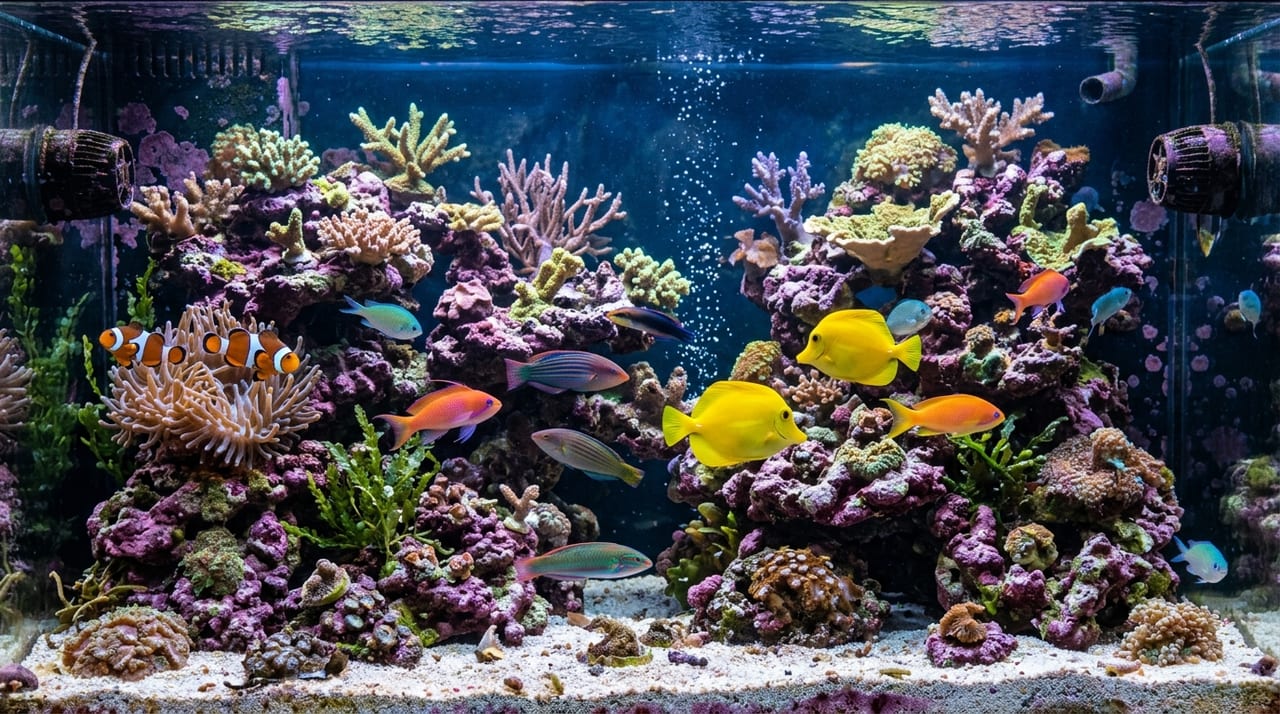
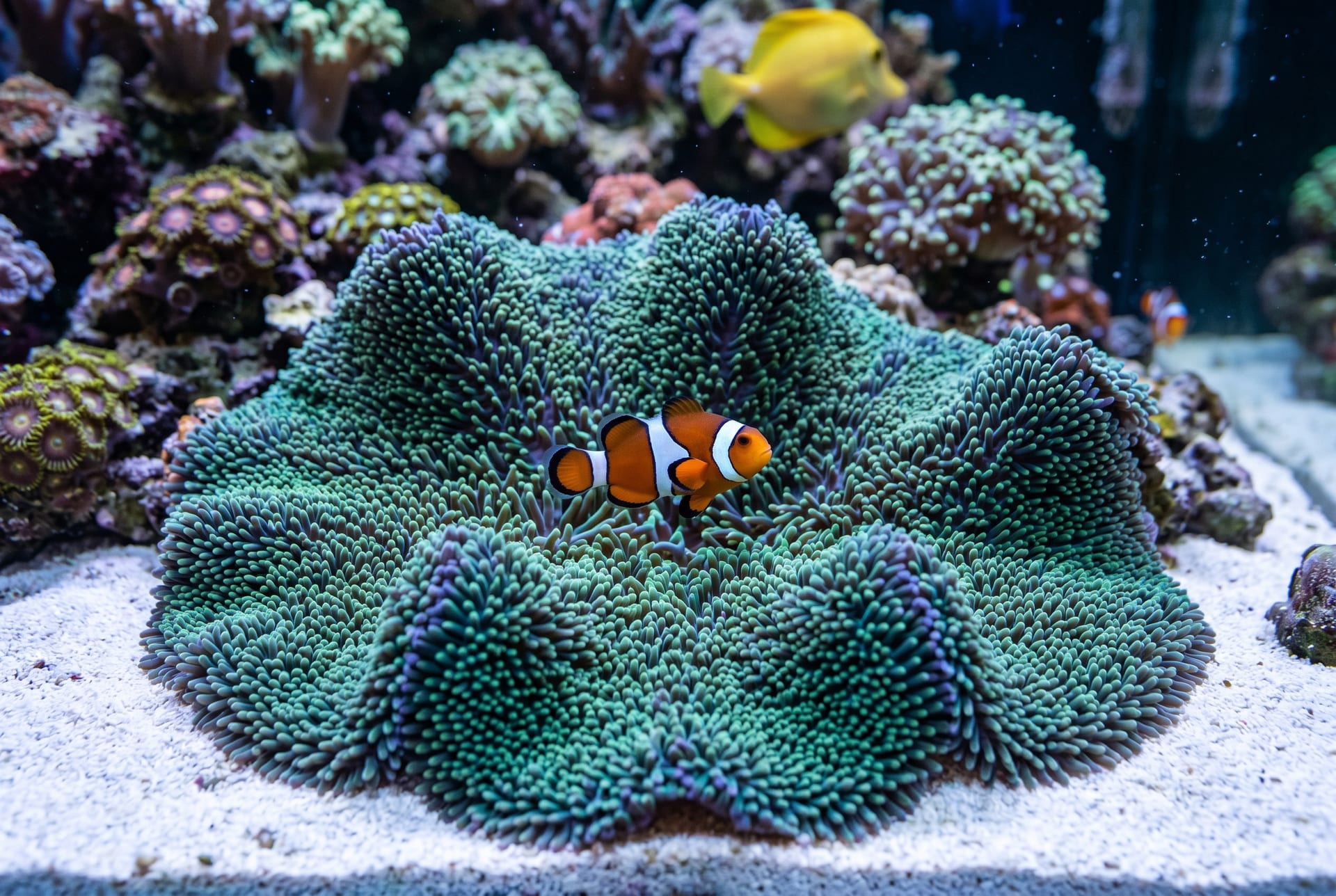
For copepod reproduction within the main tank, securing hiding places with consideration for fish predation is important. Stacking live rocks densely increases cavities where copepods can hide, making them less vulnerable to predation during the day. Particularly around the base of bubble-tip anemones and LPS corals, and at the contact points between rocks and sand, become copepod hot spots.
Sand bed depth also affects establishment. A 2–5 cm sand bed layer promotes benthic copepod reproduction within the sand. However, depths exceeding 5–6 cm require careful management as anaerobic layers can form.
Attaching a fine-mesh screen to the protein skimmer intake prevents copepods from being sucked in. Skimmer suction is a major factor in copepod population decline.
Practical Combination with Mandarin Fish
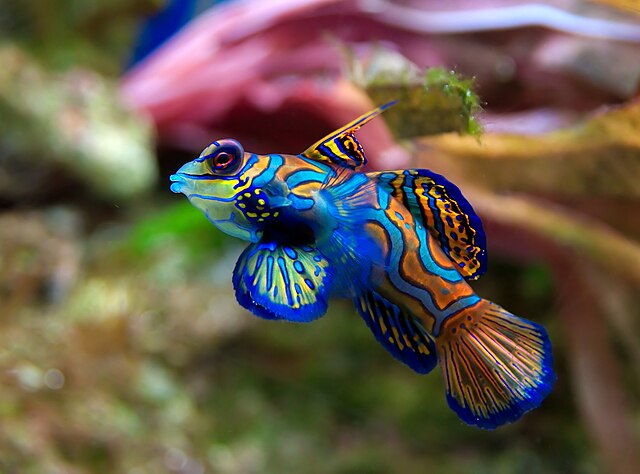
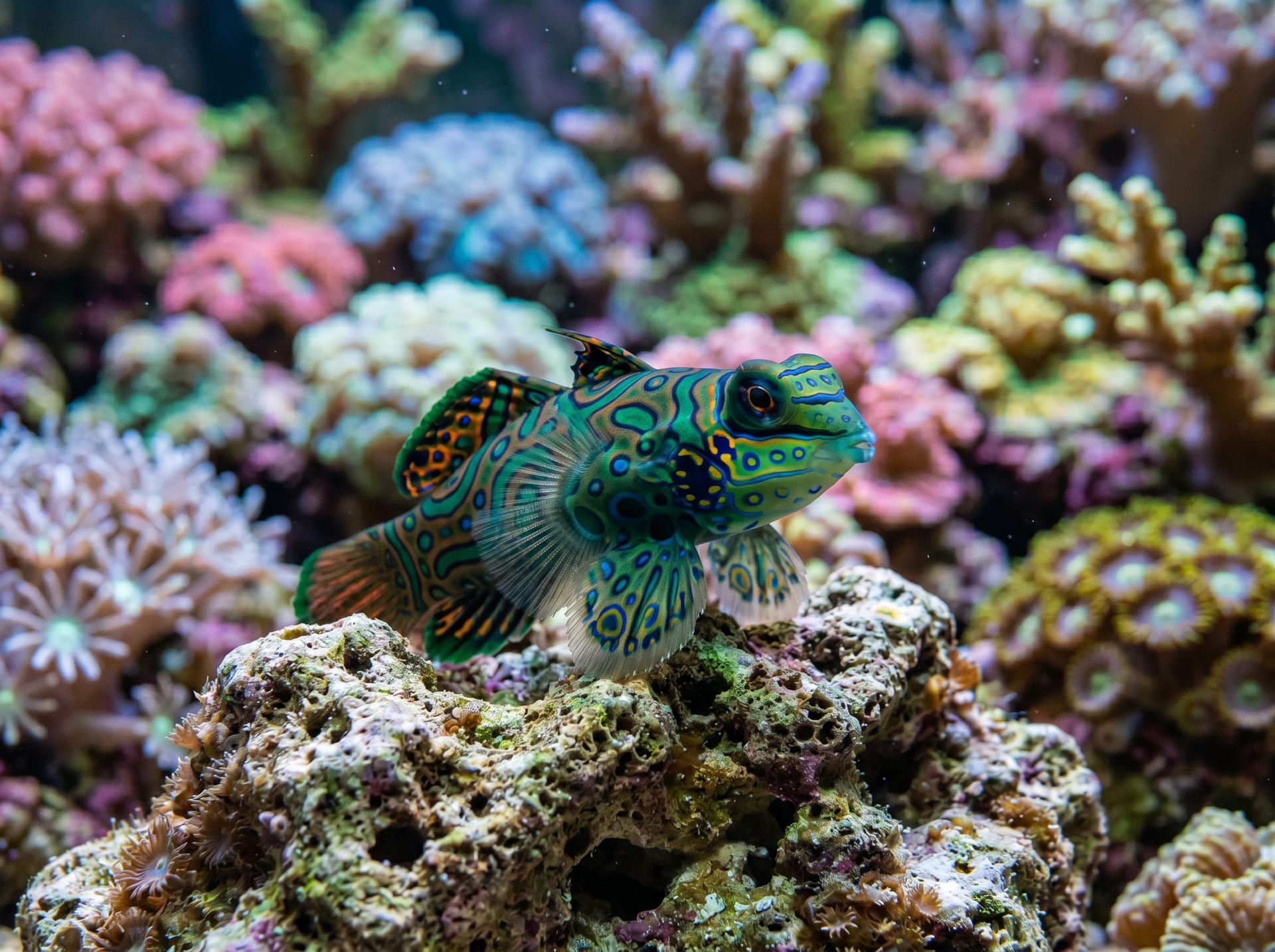
Mandarin fish (Synchiropus) are known for rarely accepting prepared foods, with continuous copepod supply being critical to their survival. A reef tank 45 cm or larger with abundant live rock containing copepod colonies and an active refugium provides an environment suitable for long-term mandarin fish care.
As a guideline for copepod density, if small white specks can be seen swimming when a flashlight illuminates the water surface after the lights turn off at night, sufficient density is present. Maintaining a level where hundreds to thousands of individuals drift in the water column each night is necessary for stable mandarin feeding.
Tips for Regular Replenishment and Long-term Maintenance
Even after a tank is established, copepod populations fluctuate. Density may drop after large water changes, medication treatments, or increases in livestock. In such cases, supplementing the refugium with small amounts of fresh copepods (approximately 10–20 mL) about once monthly maintains genetic diversity and reinforces population numbers.
While freeze-dried copepod products are also commercially available, these are merely emergency supplements, and breeding live copepods within a refugium is the most cost-efficient long-term supply method. Refrigerated live copepods can be purchased regularly, but once a home cultivation system is stable, external purchases can be minimized.
Summary
Stable copepod supply is one of the most critical factors in long-term care of mandarin fish and difficult-to-feed marine fish. By establishing a cultivation system combining a refugium and macroalgae, cost-effective and continuous copepod supply can be achieved. Securing refugium space from the tank design stage and intentionally creating an environment conducive to copepod reproduction is the shortcut to maintaining a tank with a healthy microfauna ecosystem.