Dry Rock vs Natural Live Rock Thorough Comparison | Decision Criteria and Curing Procedures for Saltwater Tank Filtration Base
A thorough comparison of the differences between dry rock (dried rock) and natural live rock. Detailed explanation of optimal selection methods and live rock curing procedures from the perspectives of cost, pest risk, cycling speed, and bacterial colonization.
Key Takeaways
A thorough comparison of the differences between dry rock (dried rock) and natural live rock. Detailed explanation of optimal selection methods and live rock curing procedures from the perspectives of cost, pest risk, cycling speed, and bacterial colonization.
Related Species
One of the first decisions when setting up a saltwater aquarium is "how to source live rock." Previously, natural living live rock was the only option, but today there are abundant choices in dried dry rock (including artificial live rock and cultivated live rock), and whether you choose one or the other affects how the tank establishes itself, long-term maintenance, and cost. This article systematically compares the characteristics of both and provides criteria for making your choice.
What is Natural Live Rock
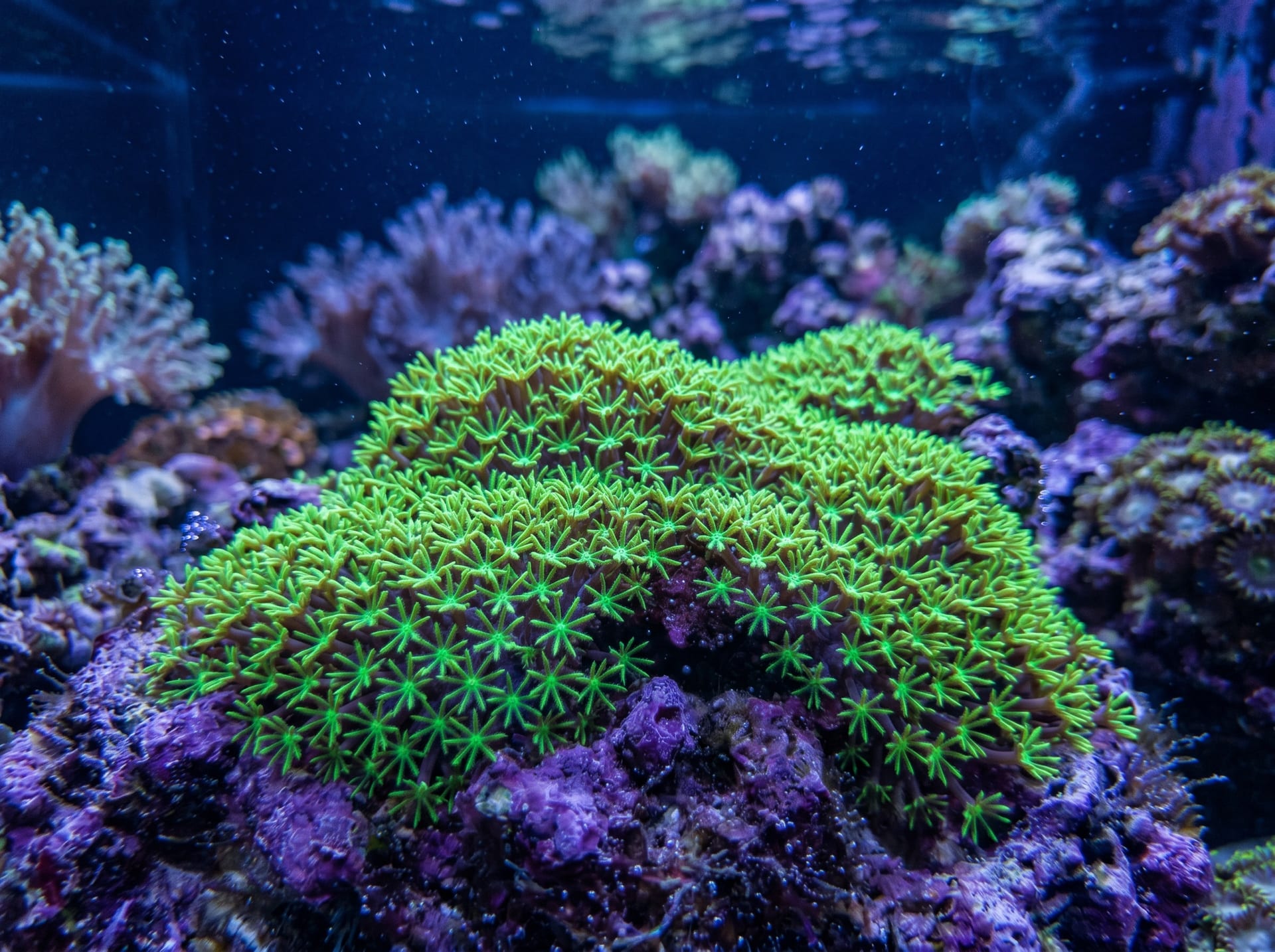
Natural Live Rock is coral reef rock that has been collected and transported while kept submerged in seawater at its source, with abundant biota (bacteria, microcrustaceans, macroalgae such as coralline algae, sponges, feather stars, etc.) attached to its surface and interior.
This biota has the ability to rapidly establish the nitrogen cycle in saltwater aquariums. When properly managed natural live rock is introduced, the seeding effect of bacteria accelerates the tank's establishment, and in some cases ammonia becomes undetectable within 2–3 weeks.
However, natural live rock carries the risk of unintended organisms being introduced. Typical problem organisms include Aiptasia (Curly) anemones, Mantis shrimp, crabs, flatworms, and Montipora coral polyps. Once introduced into an aquarium, these are extremely difficult to remove and can cause serious harm to livestock and other corals.
Additionally, in recent years environmental protection constraints on the collection of natural live rock have increased, and there is a trend of greater quality variation and difficulty in obtaining it.
What is Dry Rock
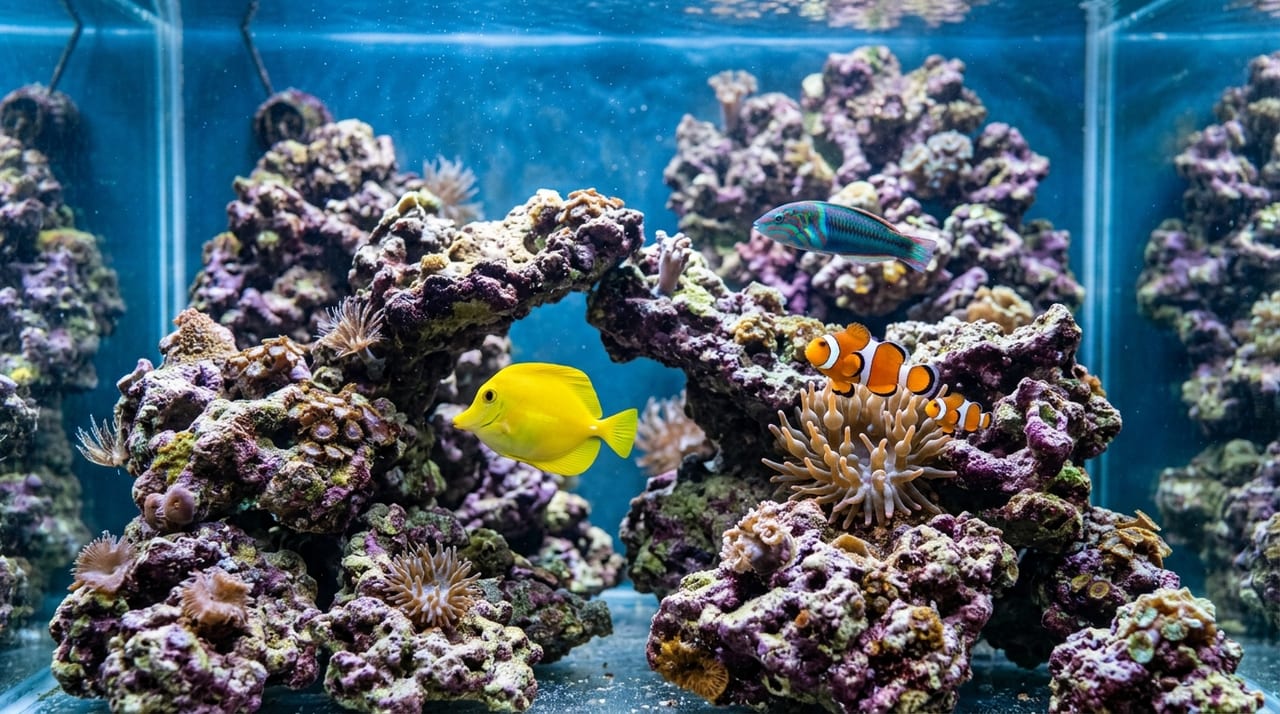
Dry Rock is artificially formed or natural stone that has been completely dried after collection and contains no biota. Representative examples include Marco Rocks, Real Reef Rock (cultivated coral limestone), Pukani (Fiji-sourced dried rock), and artificial cement rock.
The greatest advantage of dry rock is that pest risk is nearly zero. There is no worry of introducing Aiptasia, mantis shrimp, or problem crab species, allowing for a clean startup. Pricing also tends to be more affordable than natural live rock, and availability is more stable.
The drawback is that because bacteria are not present, it takes time for nitrifying bacteria such as Nitrosomonas to naturally establish. When establishing with dry rock alone, it typically takes 4–8 weeks for ammonia to stabilize at zero.
Comparison of Both
Organizing by key perspectives yields the following.
Bacterial colonization speed: Natural live rock is overwhelmingly faster (several weeks). Dry rock is standard at 4–8 weeks, though this can be shortened by combining with bacterial seeding materials (commercially available bacterial products, a handful of natural live rock, etc.).
Pest risk: Natural live rock is high (possibility of Aiptasia, mantis shrimp contamination, etc.). Dry rock is nearly zero.
Cost: Natural live rock is approximately ¥1,500–¥3,000 per kilogram. Dry rock is mostly ¥500–¥1,500.
Long-term filtration capacity: When properly managed, both are roughly equivalent. Surface area and porosity are important, and quality dry rock exhibits filtration capacity comparable to natural rock.
Aesthetic and formation flexibility: Dry rock (especially artificial types) has standardized shapes and colors, making it easier to build layouts according to design. Natural live rock has irregular shapes with a stronger natural aesthetic.
Hybrid Strategy (Most Recommended Method)
Many experienced saltwater fish keepers adopt a combination of 70–80% dry rock + 20–30% natural live rock. This method achieves both the cleanliness of dry rock (reduced pest introduction risk) and the bacterial seeding effect of natural live rock.
Adding a small amount of natural live rock after curing accelerates establishment while composing the bulk with dry rock—this is a practical balance.
Natural Live Rock Curing Procedures
By performing curing (preprocessing) rather than directly placing natural live rock in the tank, you can reduce the introduction of pests, dead tissue, and foul odors.
Items needed: large buckets filled with natural or artificial seawater, a protein skimmer or air pump (for aeration), a brush, and running water.
The procedure is as follows: first, fill a bucket with seawater (specific gravity 1.025, same as the tank) and fully submerge the live rock. Perform light aeration with an air pump. Every 24–48 hours, completely change the seawater while gently removing dead tissue, sediment, and sponge remnants from the rock surface with a brush. Repeat this for 1–2 weeks. The endpoint for curing is when the water no longer becomes cloudy three days after a water change and the rock's odor has significantly diminished.
If pests such as Aiptasia are visually discovered in the curing tank, remove the individual by cutting it with scissors or exclude the affected rock from the main tank.
Summary
Dry rock and natural live rock each have clear advantages and disadvantages. If you prioritize a clean startup and want to avoid pest risk, dry rock is preferable; if you prioritize fast establishment, natural live rock is more suitable. In practice, a hybrid configuration combining both is the most balanced option. Regardless of which you choose, preparing rock with sufficient surface area and porosity at approximately 10–15% of tank volume is the foundation for ensuring filtration capacity.