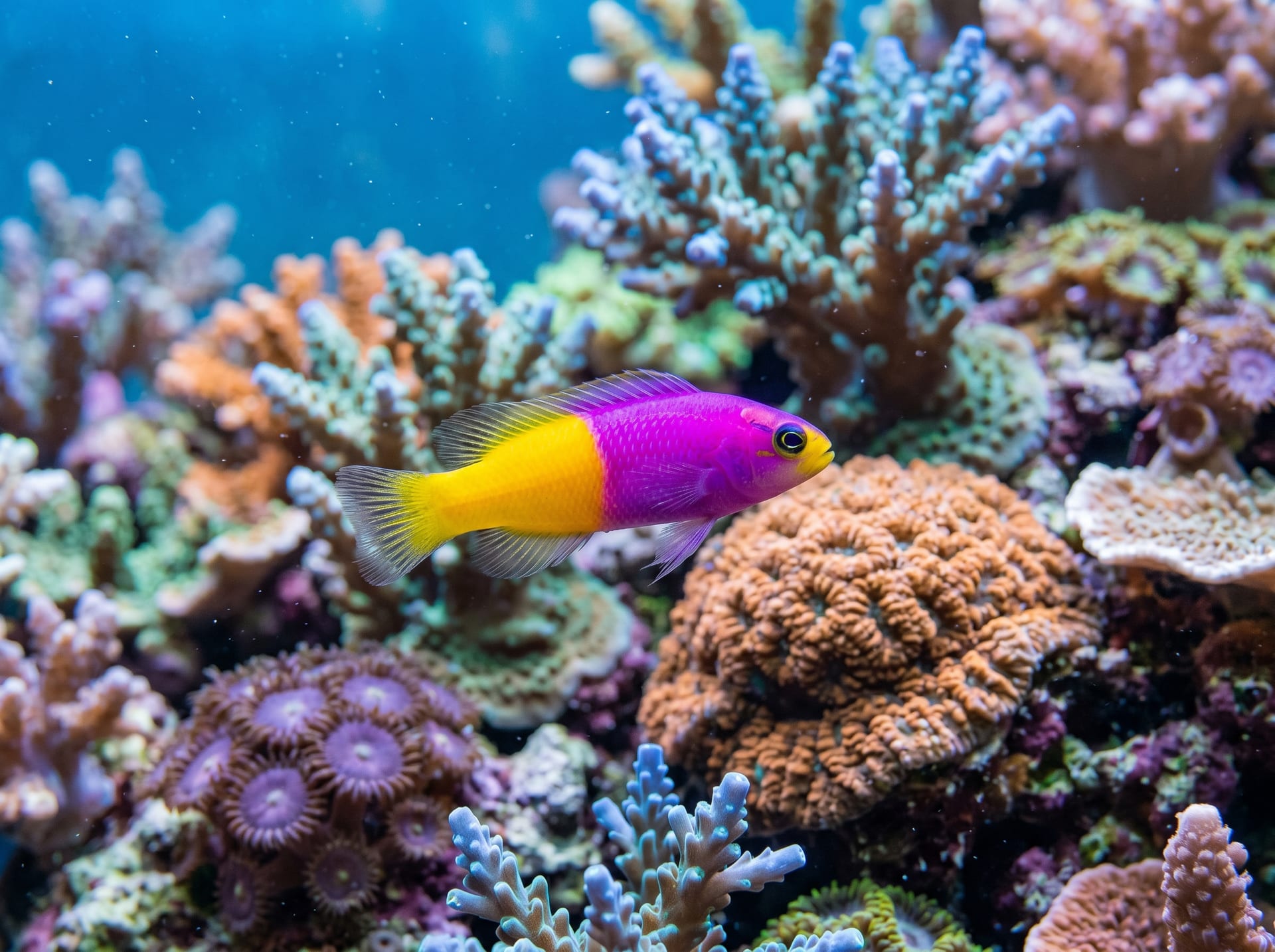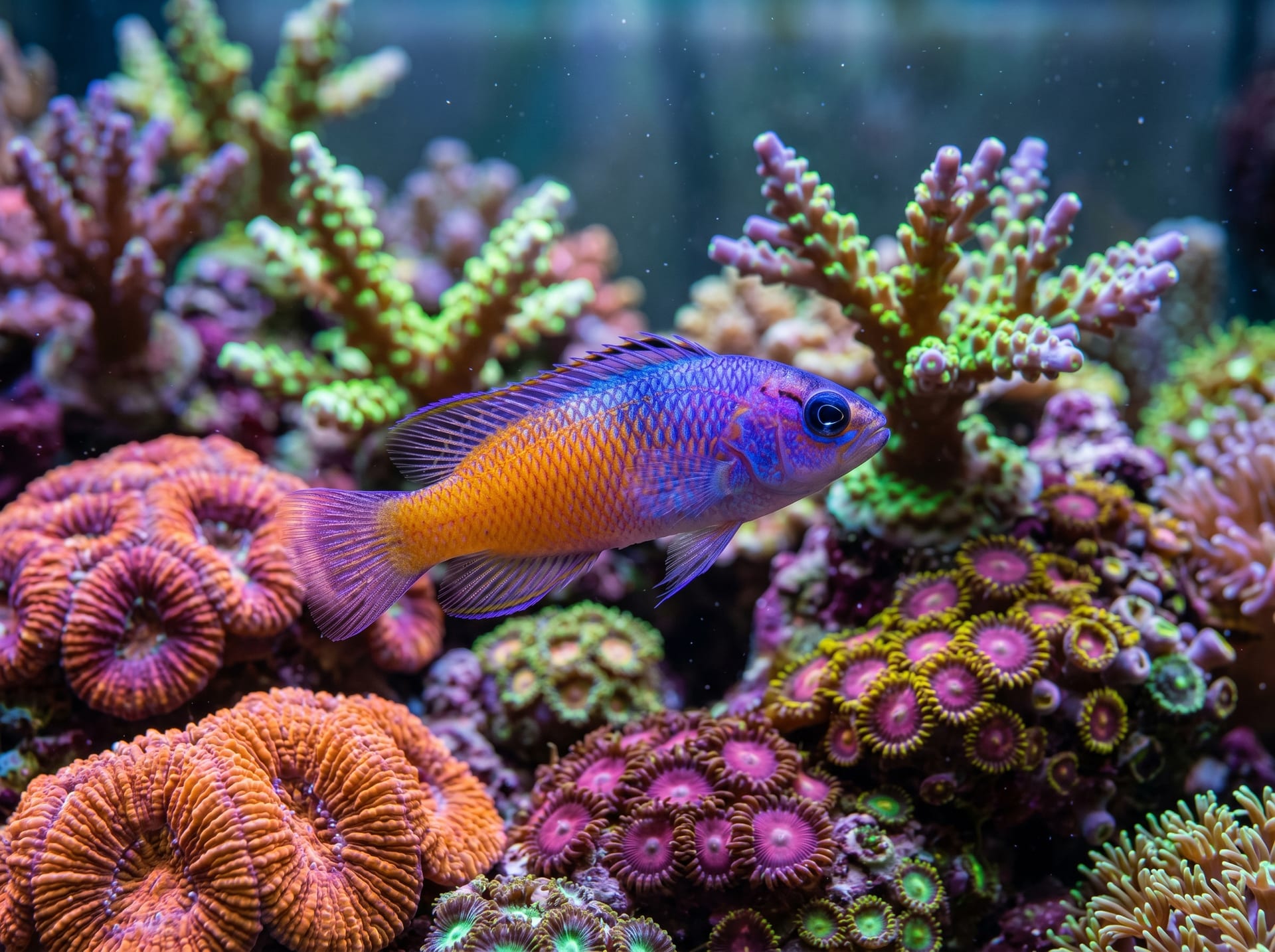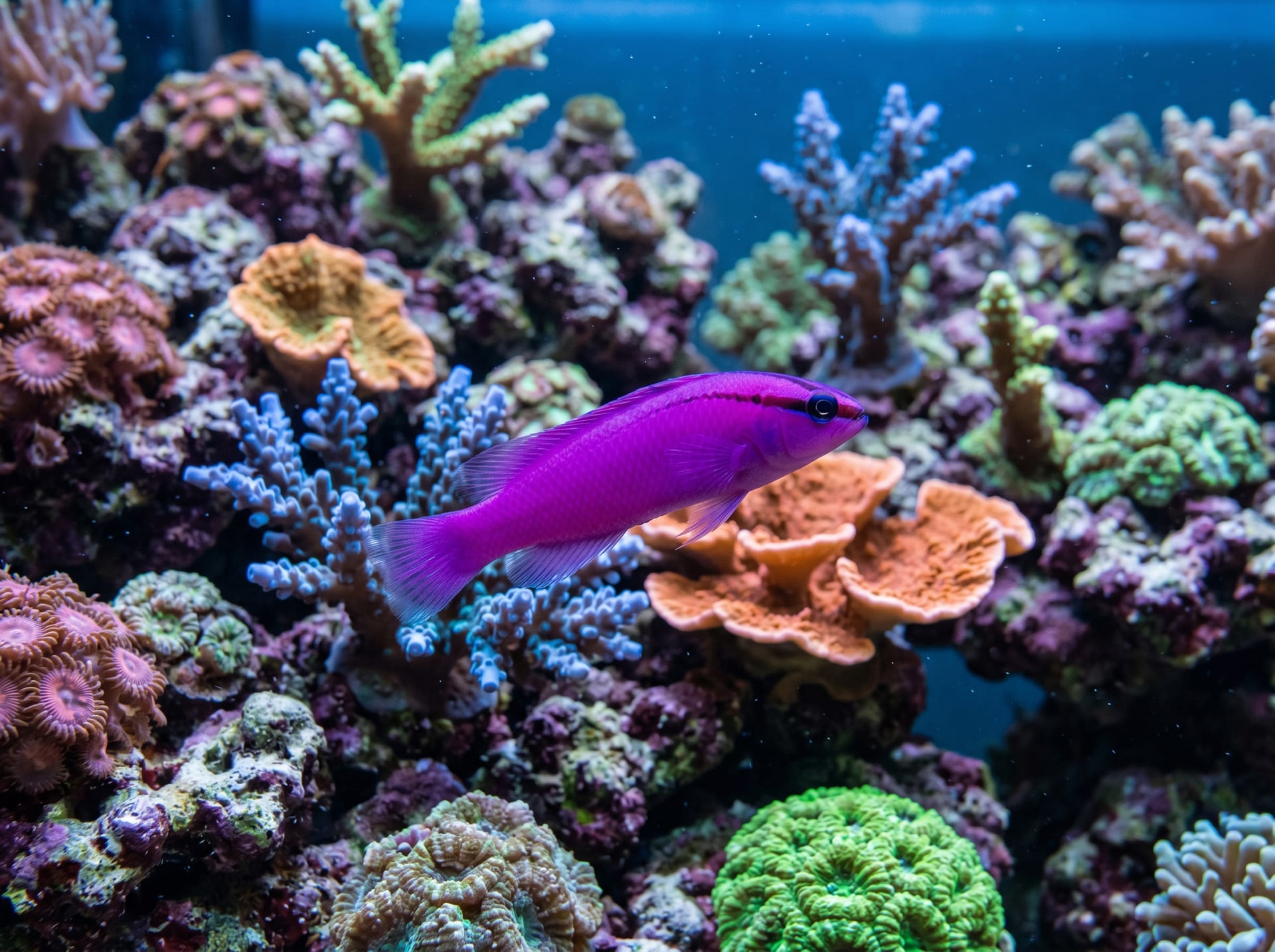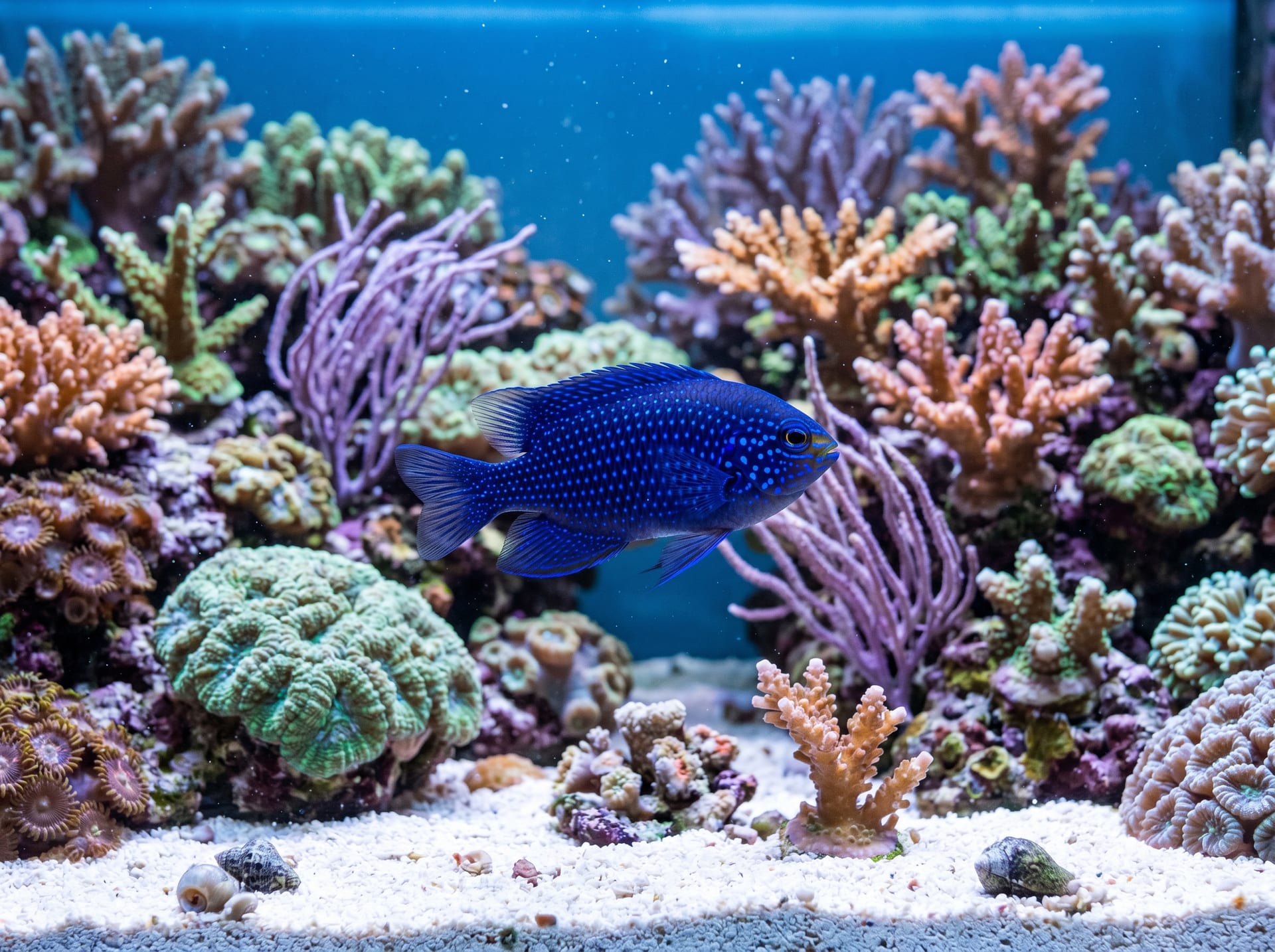
AI-generated image
Springer's Damselfish
BeginnerChrysiptera springeri
A small damselfish with beautiful deep blue-purple color. Peaceful and easy to keep like Green Chromis.
Difficulty
Beginner
Temperature
23〜26℃
Lifespan
5-8 years
Size
5-7cm
Diet
Pellets, Frozen food
About
A small damselfish with beautiful deep blue-purple color. Peaceful and easy to keep like Green Chromis. Diet: Pellets, Frozen food. Lifespan: 5-8 years. Adult size: 5-7cm. Water: Specific gravity 1.023-1.025. Temperature: Maintain 24-26°C.
Basic Info
Lifespan
5-8 years
Size
5-7cm
Temperature
23〜26℃
Diet
Pellets, Frozen food
Care Guide
Water
Specific gravity 1.023-1.025
Temperature
Maintain 24-26°C
Tankmates
Peaceful, suitable for community tank
Notes
Small and hardy beginner saltwater fish
Springer'sBlue-purplePeaceful
References & Sources
Edited & verified by: br-choku editorial team
The taxonomic, regulatory, and husbandry data on this page are compiled and verified against the authoritative primary sources below.
Taxonomy & Authority
Regulations & Conservation Status
Not CITES-listed
Sources: CITES Appendices (species not listed) / 環境省 特定動物リスト / 環境省 特定外来生物等一覧
Regulations may change. Always verify the latest information with the relevant authorities.
Springer's Damselfish Listings
Loading latest listingsFind listings for this species