Coral Sand (Substrate) Selection Guide | Grain Size, Thickness, and Type Comparison
A guide to selecting the type, grain size, and thickness of coral sand (substrate) for coral tanks. Covers the characteristics and proper use of live sand, aragonite, silica sand, and deep sand beds, plus tips for setup and management.
Key Takeaways
A guide to selecting the type, grain size, and thickness of coral sand (substrate) for coral tanks. Covers the characteristics and proper use of live sand, aragonite, silica sand, and deep sand beds, plus tips for setup and management.
Related Species
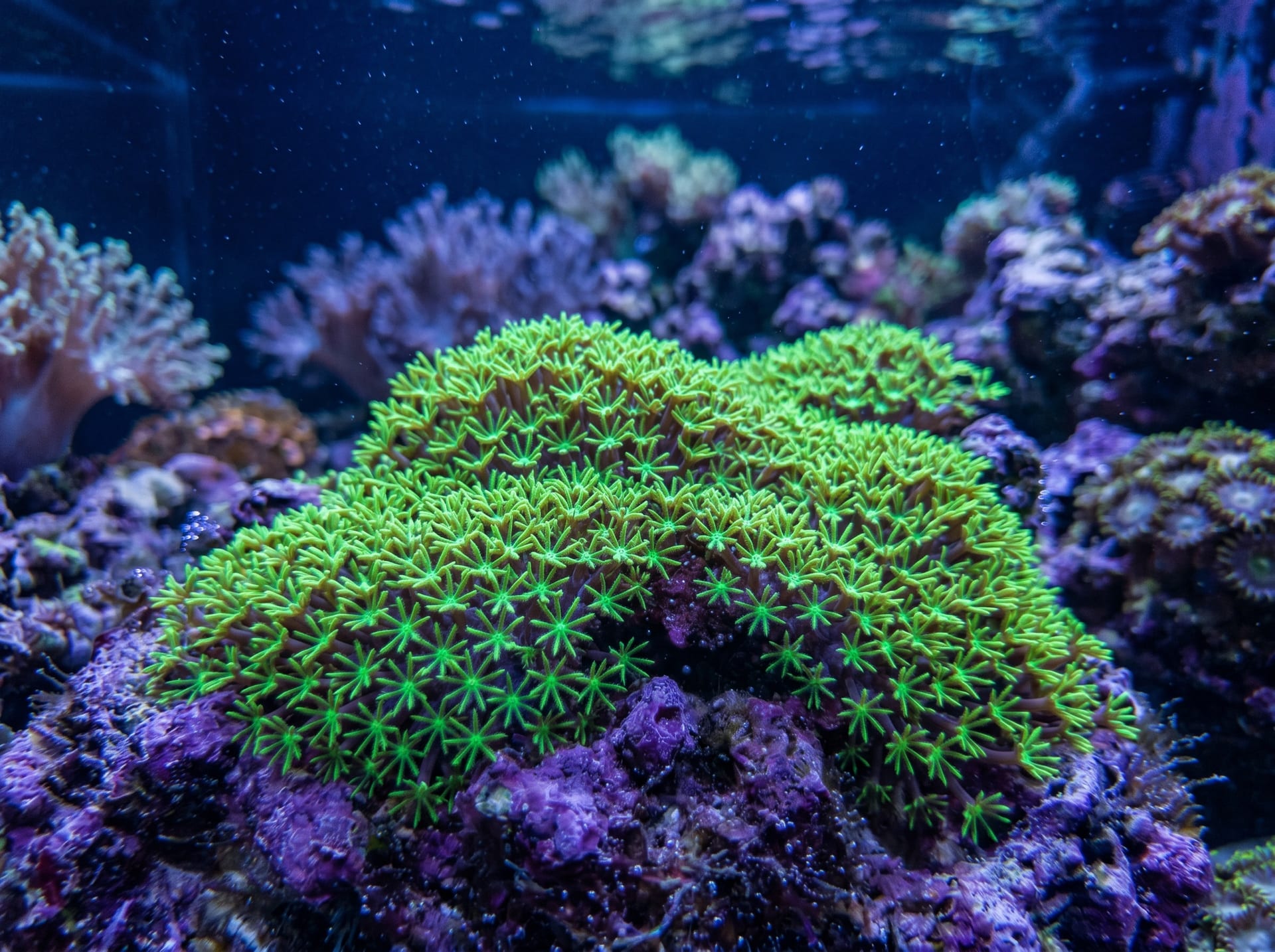
In coral tanks (reef tanks), substrate is not merely a layout material, but an important element deeply involved in biological filtration, water quality stability, tank aesthetics, and organism behavior. If you make mistakes in choosing the type, grain size, or thickness of substrate, the long-term stability of your tank can be compromised, and you may not achieve the desired biological filtration effect. This article provides a systematic explanation of the knowledge necessary for selecting substrate for a coral tank.
Understanding the Role of Substrate
The role of substrate in a coral tank can be divided into three main functions:
- Contributing to biological filtration: Bacteria establish themselves in the substrate, where ammonia is converted to nitrite and nitrite to nitrate (nitrification), and nitrate is converted to nitrogen gas (denitrification). In particular, thick substrates (deep sand beds) form anaerobic zones that promote denitrification.
- Water quality buffering: Coral sand and aragonite, which are primarily composed of calcium carbonate, have a buffering effect that mitigates rapid pH drops. This contributes to maintaining the high pH essential for coral husbandry.
- Providing a living environment for organisms: Gobies with burrowing habits (such as diamond gobies), cuttlefish, and certain sea cucumbers and sea urchins cannot exhibit their natural behavior without substrate.
Types and Characteristics of Substrate
| Type | Characteristics |
|---|---|
| Live Sand | Coral sand that contains living bacteria. It has the advantage of shortening the startup period, but the price is high. Imported products from overseas may have bacteria dying during transport, so it is important to purchase from a trusted shop. Ideally, choose products produced and managed by established domestic marine shops. |
| Aragonite Sand | Substrate composed primarily of calcium carbonate (aragonite), and the most popular option. It has strong pH buffering effects and also provides slow-release of minerals. Since it contributes to maintaining calcium and alkalinity, it is excellent for coral husbandry. Grain size variations are abundant, ranging from fine (0.5–1 mm) to coarse (3–5 mm). |
| Commercial Products (e.g., CaribSea) | Aragonite-based substrate brands that are washed and ready to use, widely distributed. Depending on the type, live sand or standard sand is available. |
| Crushed Coral | Coarse crushed coral with grain size of approximately 2–5 mm. Large gaps make it easy for cleanup organisms to be active, and there is less attachment of star polyps and cyanobacteria. |
| Silica Sand | Has no pH buffering effect and does not release calcium, so it is not highly recommended for coral tanks. |
How to Choose Grain Size
The choice of substrate grain size varies depending on your husbandry goals and organisms.
| Grain Size | Characteristics |
|---|---|
| Fine (Powder Sand, 0.1–1 mm) | Adopted in many reef tanks from the perspective of natural appearance and biological diversity. Small beneficial organisms (copepods, polychaete worms, etc.) easily establish within the substrate, but a drawback is that it easily becomes suspended in strong water flow. |
| Medium (1–3 mm) | A middle ground between fine and coarse, offering good balance. Can be used versatilely in most systems. |
| Coarse (3 mm or larger) | Detritus (organic sludge) accumulates less easily, making it easier for cleanup organisms to be active. Large substrates mimicking sponges or coral fragments are commonly used in Berlin systems. |
Substrate Thickness and Deep Sand Beds (DSB)
Substrate thickness varies greatly depending on your husbandry style.
| Thickness | Characteristics |
|---|---|
| Thin (1–2 cm) | Promotes biological filtration by aerobic bacteria and is easy to clean, but offers little denitrification effect. |
| Medium (3–5 cm) | Both aerobic and anaerobic zones begin to form, but this is sometimes called a "middle-ground thickness" that is difficult to manage. |
| Deep Sand Bed (DSB, 7 cm or more) | Anaerobic zones develop sufficiently, promoting denitrification. It can significantly suppress nitrate accumulation, but the introduction of regular substrate-churning organisms (sea cucumbers, cuttlefish, diamond gobies, etc.) is essential. If churning is insufficient, there is a risk of "substrate crash" caused by methane gas accumulation. |
| Bare Bottom | Easiest to clean with minimal water flow disruption. Particularly used in high-flow reef tanks dominated by SPS corals. |
Setting Up and Managing Substrate
When laying down new substrate, first prepare a sufficient quantity of substrate (as a guideline, for DSB, approximately 2 kg per 1000 cm² for each 1 cm of depth). If using commercially available standard sand, adding live sand or seeding (mixing a small amount of living sand from an existing, established tank) during setup can speed up the establishment process.
For long-term management, dealing with brown algae or cyanobacteria (red, sticky-looking deposits) that appear on the substrate surface can be a challenge. In most cases, it can be addressed through the introduction of cleanup organisms (sea cucumbers, hermit crabs, star polyps, etc.) and proper water flow design. Removing detritus from the substrate surface annually 1–2 times using a gravel vacuum or similar is also effective. Many breeders consider refreshing (replacing) their DSB around the 5–7 year mark.
There is no single correct answer to substrate selection; the optimal choice changes depending on the combination of organisms you keep, your filtration system, and water flow design. Selecting substrate suited to your system and managing it properly form the foundation for long-term stability of your reef tank.