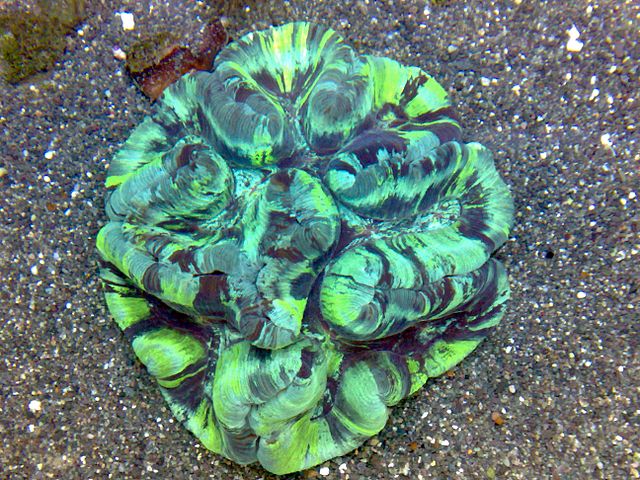
Brain Coral Care Guide | Open Brain / Lobophyllia / Trachyphyllia
Complete guide to raising brain corals. For each type of open brain coral (Trachyphyllia, Lobophyllia, and Scolymia), we introduce beginner-friendly explanations of characteristics, lighting, water flow, placement, and feeding methods.
Key Takeaways
Complete guide to raising brain corals. For each type of open brain coral (Trachyphyllia, Lobophyllia, and Scolymia), we introduce beginner-friendly explanations of characteristics, lighting, water flow, placement, and feeding methods.
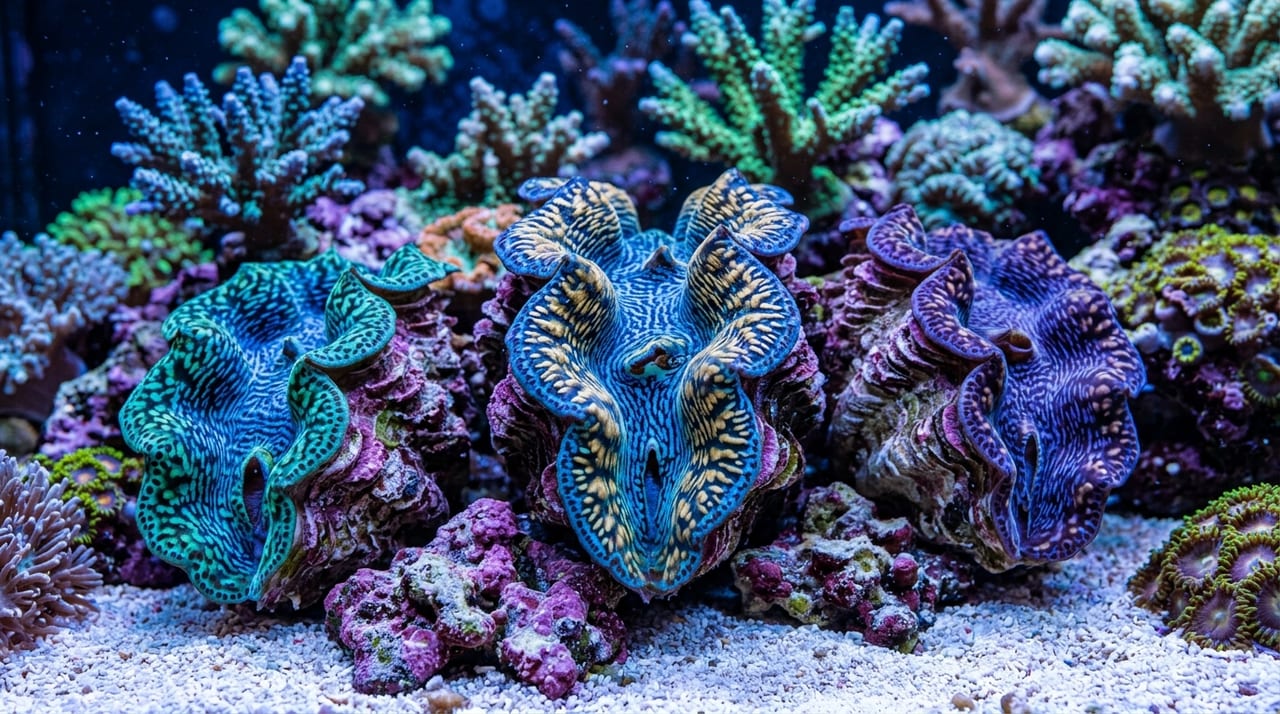
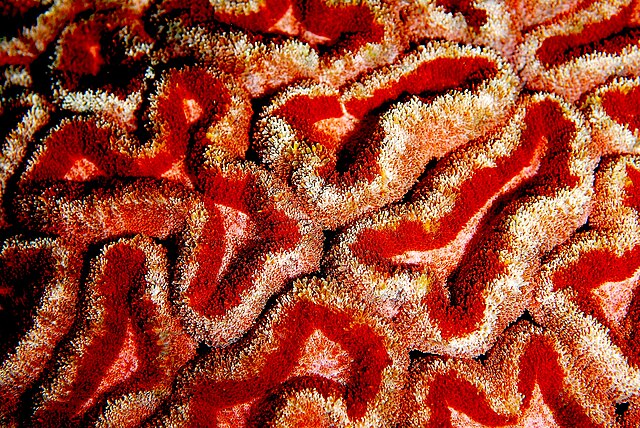
Brain corals are a group of LPS corals named for their surface ridges, which resemble the human brain. Their vibrant coloration and plump, inflated polyps are beautiful and highly popular in reef aquariums. This article focuses on the most commonly available species in Japan—open brain corals (Trachyphyllia and Lobophyllia) and Scolymia—and explains their care methods.
✍️
BreederDirect Editorial
The BreederDirect editorial team specializes in care information for animals, covering veterinary care and breeding to deliver beginner-friendly guides.
Find Coral on BreederDirect
Buy directly from verified breeders
Browse Related Listings
Find Coral listings related to this article on BreederDirect. Buy directly from verified breeders.
Open Brain Coral (Trachyphyllia / Trachyphyllia geoffroyi)
The most popular brain coral, kept on sand substrate. Its large, gracefully swaying polyps are beautiful, with abundant color variations including green, red, purple, and multicolor. This is a sand-placement species (Placement: sand), so it is not fixed to liverock.
Lobophyllia (Lobophyllia spp.)
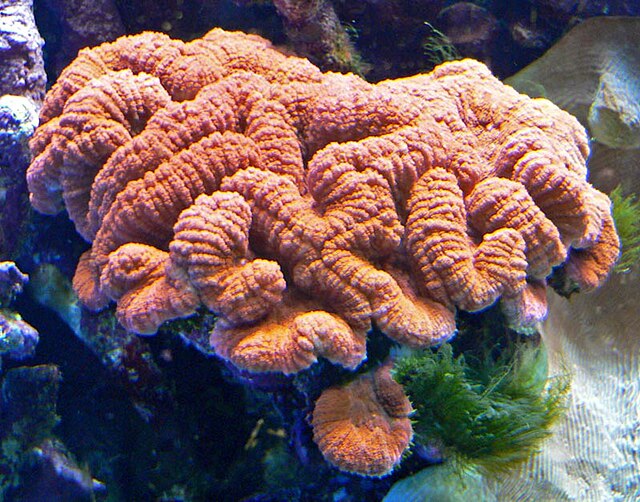
A brain coral that attaches and grows on rock faces. With thicker polyps than Trachyphyllia, they have a characteristically round, plump appearance. Also available in many color variations, including fluorescent green, orange, and purple. They are fixed to liverock or rock faces and positioned in the mid-level to bottom zone.
Scolymia (Scolymia spp.)
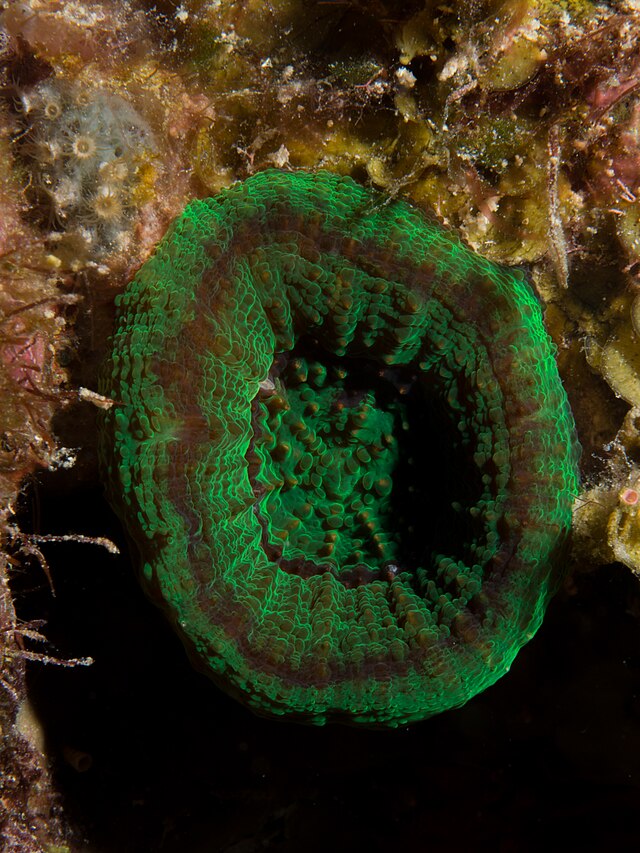
Also called "the football of the coral world," these are round, single-polyp brain corals. With their unique form of one skeleton per polyp, exceptionally vibrant coloration, and high rarity, they are often treated as "premium LPS." They respond well to lighting and feeding, making them a favorite among collectors.
Wellsophyllia (Symphyllia / Symphyllia spp.)
Closely related to Lobophyllia, these corals are characterized by multiple heads fused together. Many species grow large and have high aesthetic value. Care methods are similar to Lobophyllia.
Basic Care Conditions
Water Quality Parameters
Parameter
Target Value
Temperature
25–26°C
Specific Gravity (Salinity)
1.025–1.026
pH
8.1–8.3
Alkalinity (KH)
8–10 dKH
Calcium
400–450 mg/L
Magnesium
1280–1350 mg/L
Nitrate
5–25 mg/L (avoid zero levels)
Phosphate
0.05–0.15 mg/L
Brain corals don't have requirements as strict as SPS corals, but they are sensitive to sudden water quality changes, so stable management is important. Particularly, in ultra-low nitrate (ULNS) environments, they tend to become nutrient-starved, so maintaining appropriate nutrient levels is key.
Lighting: Moderate PAR, Not Too Strong
Brain corals don't require intense light and PAR 50–150 µmol/m²/s of moderate lighting is optimal.
Lighting Guide by Species
Species
PAR Range
Position
Trachyphyllia
50–100
Sand substrate (lower position)
Lobophyllia
80–150
Mid-level to bottom
Scolymia
80–150
Mid-level
When using LED lights, since Trachyphyllia placed at the top of the tank will be far from the light, it is recommended to measure actual PAR values using a PAR meter.
Browning: If lighting is too weak, zooxanthellae will proliferate and the coral will appear brownish. In this case, gradually increase light intensity.
Fluorescent coloration: Strong light is needed, but increasing intensity too quickly can cause bleaching, so increase gradually.
Water Flow: Weak to Moderate Indirect Flow
Because brain coral polyps are thick and large, direct, strong water flow is not suitable.
Trachyphyllia: Since it rests on sand, water flow should come gently from the surrounding area as indirect flow. Avoid strong bottom substrate flows that would stir up sand.
Lobophyllia & Scolymia: Weak to moderate indirect flow. The ideal state is for the polyps to sway gently. Strong water flow will cause the polyps to remain contracted instead of inflated. Judge whether conditions are appropriate by observing polyp extension.
Placement Considerations
Trachyphyllia (Sand Placement) Notes
Place the skeleton's base completely flat on the sand substrate. If tilted, one side may not inflate properly.
If the sand is too deep, the skeleton will become buried, so aim for a sand depth of 2–3 cm or less.
Maintain at least 15 cm distance from adjacent corals. Trachyphyllia may extend their tentacles widely at night and sting surrounding corals.
Lobophyllia & Scolymia Placement
Attach to tilted surfaces or crevices on liverock and adjust the orientation to face water flow.
Plan spacing with the fully inflated polyp size in mind to ensure adequate distance from adjacent corals.
Feeding: Regular Target Feeding for Growth and Color
Brain corals obtain nutrition not only from zooxanthellae photosynthesis but also through heterotrophy (predation). Regular target feeding can greatly enhance growth and coloration.
Feeding Method
Stop the wave pump 30 minutes before feeding to weaken water flow and allow the polyps to extend.
Using a dropper or tweezers, place frozen copepods, frozen brine shrimp, or micro-particle food directly into the polyp's mouth (the central opening).
After 10–15 minutes, remove any uneaten food and restart the pump.
Feeding Frequency
Weekly to bi-weekly feeding supports growth and color maintenance. If nitrate levels are high, reduce feeding amount or frequency.
Common Problems and Solutions
Polyps Not Inflating
Check if water flow is directly hitting the coral
Verify water quality, especially KH and nitrate levels
Confirm lighting duration and intensity (photoperiod longer than 12 hours can stress the coral)
Browning or Poor Coloration
Lighting may be too weak → gradually increase light intensity
Nutrient deficiency → increase feeding frequency
Tissue Recession (edges bleaching or thinning)
Water flow is too strong or lighting is too intense
Adjacent corals with nematocysts may be in contact → isolate or increase distance
Summary
Brain corals are relatively hardy and easy to keep even for beginners. By providing proper lighting, moderate water flow, and regular target feeding, you can grow them to large, beautiful sizes. Consider acquiring healthy specimens directly from domestic breeders and adding them to your reef tank.