Lobophyllia (Lobo Coral) Care Guide | Low Light, Feeding, Digestive Filament Management and Long-Term Maintenance Tips
Comprehensive guide to caring for Lobophyllia (Lobophyllia spp.). Covers water quality parameters for this meaty LPS coral, low to mid-light illumination settings, gentle water flow environment, weekly target feeding (1–3 times per week) and nighttime polyp feeding, placement strategies to prevent digestive filament attacks on neighboring corals, and procedures for creating frags.
Key Takeaways
Comprehensive guide to caring for Lobophyllia (Lobophyllia spp.). Covers water quality parameters for this meaty LPS coral, low to mid-light illumination settings, gentle water flow environment, weekly target feeding (1–3 times per week) and nighttime polyp feeding, placement strategies to prevent digestive filament attacks on neighboring corals, and procedures for creating frags.
Related Species
What is Lobophyllia (Lobophyllia Coral)?
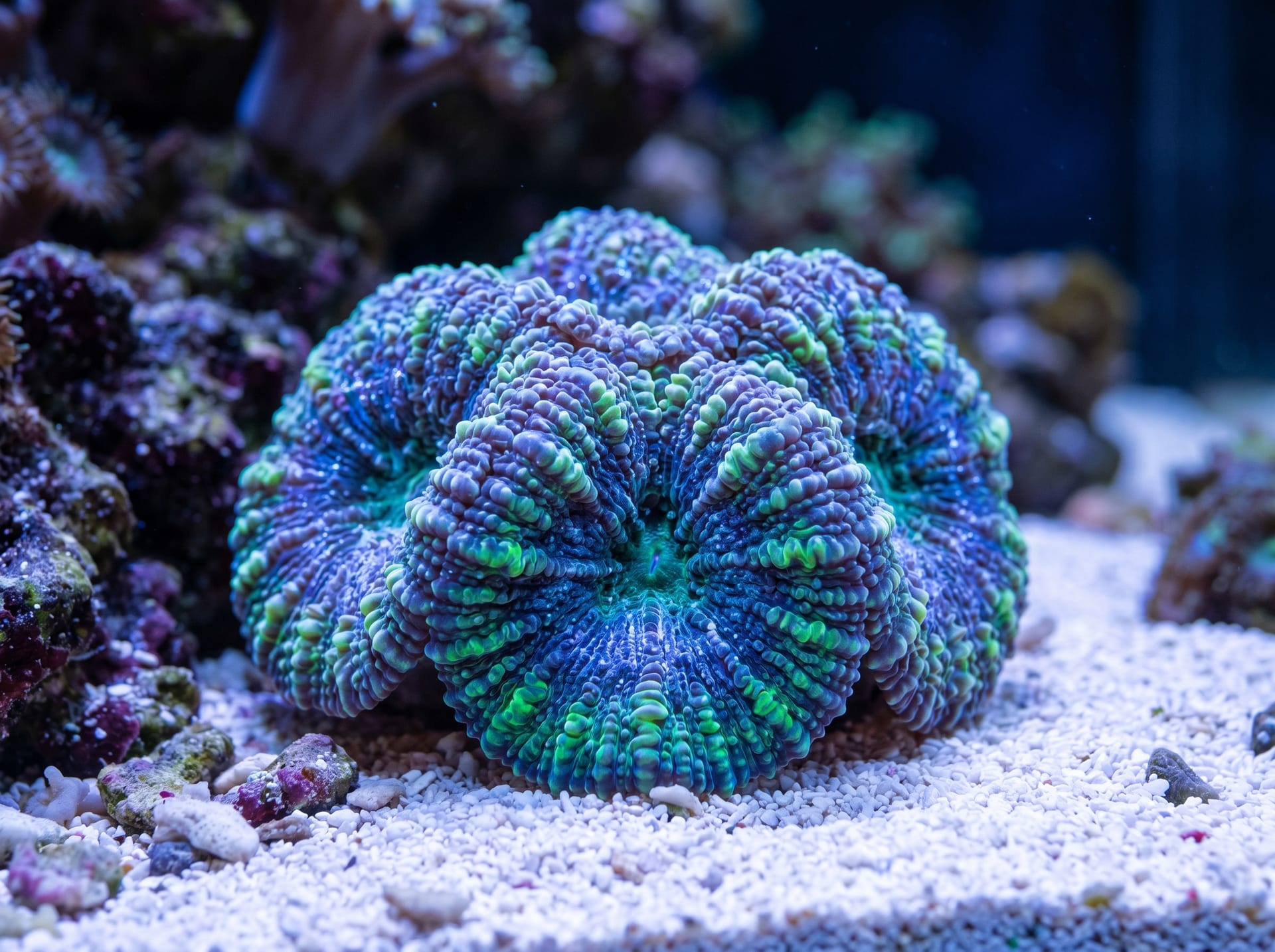
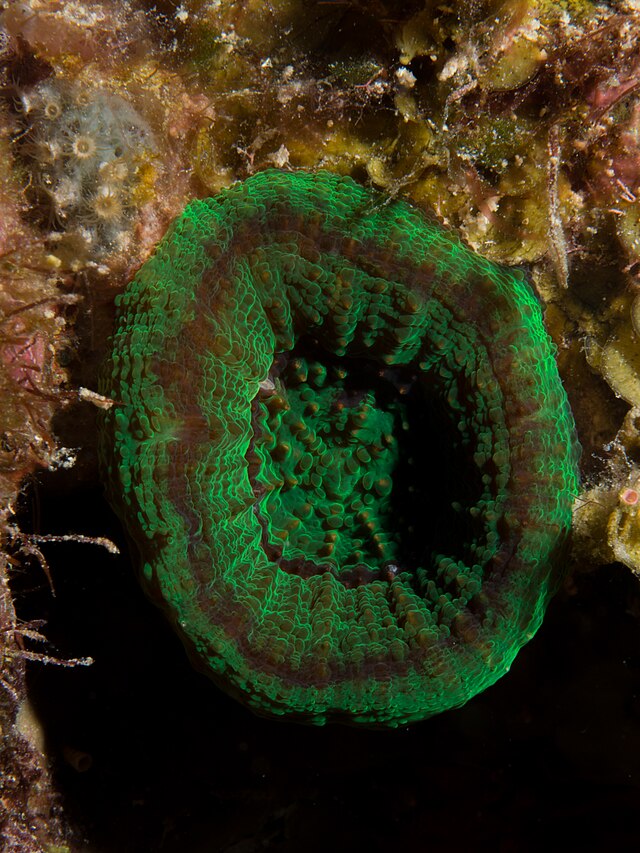
Lobophyllia (Lobophyllia spp.) is a type of LPS (Large Polyp Stony) coral widely distributed across Indo-Pacific reef environments, known in Japan as "Lobophyllia Coral." While sometimes confused with Scolymia, Scolymia forms single-polyp colonies, whereas Lobophyllia develops colonies of multiple polyps joined together (though recent taxonomic revisions have moved Scolymia into the Lobophyllia genus).
Characteristics
- Polyp size: Large (5–20 cm diameter), thick fleshy texture
- Color variations: Green, red, orange, pink, multicolor
- Colony form: Multiple polyps fused into flat to wave-like colonies
- Care difficulty: Beginner to intermediate (relatively hardy among LPS corals)
With their thick, commanding appearance and rich color varieties, they are popular as the "centerpiece" in reef tanks and numerous morphs circulate through breeders' markets.
Recommended Water Parameters
| Parameter | Target |
|---|---|
| Salinity (specific gravity) | 1.025–1.026 |
| Temperature | 24–27°C |
| pH | 8.1–8.3 |
| Alkalinity (KH) | 8–11 dKH |
| Calcium (Ca) | 400–450 mg/L |
| Magnesium (Mg) | 1250–1380 mg/L |
| Nitrate (NO₃) | 5–15 ppm |
| Phosphate (PO₄) | 0.05–0.1 ppm |
Lobophyllia is particularly sensitive to rapid water quality fluctuations, especially sudden spikes or drops in KH. If using supplements, use a dosing pump for continuous small additions, or with manual dosing keep daily changes to 0.5 dKH or less.
Lighting
Lobophyllia prefers low to mid-light conditions and is susceptible to excessive illumination.
Recommended PAR: 50–150 PAR
- Upon introduction: Place in a low-light zone of 30–50 PAR for two weeks
- After acclimation: Gradually move to 80–150 PAR
- 150 PAR and above generally increases bleaching risk
To maximize coloration, lighting with abundant blue to violet (420–450 nm) channels is effective. Programming LED blue channels at higher intensity enhances fluorescent greens and reds.
Water Flow
Gentle, indirect water flow is optimal for Lobophyllia.
- Strong direct flow closes polyps and causes long-term stress
- Weak random flow naturally sways polyps and improves photosynthetic efficiency
- Recommended flow rate: 3–8 cm/s
- If polyps remain constantly closed, check if flow is too strong first
Placement and Cohabitation with Other Corals
Lobophyllia is a relatively peaceful LPS, but attention to the following points is necessary.
Mesenteric Filaments (Digestive Filaments)
Nocturnal digestive filaments extend out to attack and digest surrounding tissue. With a range of 3–8 cm, maintain at least 10 cm of space around the coral.
Placement Tips
- Place on horizontal rock surfaces or low rock shelves
- Avoid placing directly on sand substrate (sand intrusion can damage tissue)
- Position on flat sections of frag plugs or live rock
- Maintain minimum 10–15 cm distance from other corals
Compatible and Incompatible Corals
| Can Cohabitate (with spacing) | Requires Caution |
|---|---|
| Zoanthus (with distance) | Euphyllia (long sweeper tentacles) |
| Disc corals (with distance) | Other Lobophyllia (same species requires caution) |
| Soft corals in general (with distance) | Acanthophyllia (powerful digestive filaments) |
Feeding
Lobophyllia has strong predatory ability and responds exceptionally well to target feeding. Weekly feeding (1–3 times) produces noticeable growth and color enhancement.
Feeding Materials (by size)
- Small to medium colonies: Frozen copepods, daphnia, adult brine shrimp
- Medium to large colonies: Finely minced frozen krill, silversides (small fish), mussel meat
- Specialized foods: Coral Frenzy, Reef Roids (powder mixed with water)
Feeding Procedure
- Stop skimmer 30 minutes before feeding (allows food to remain in water)
- Pause circulation pump
- Deposit food directly to each polyp's mouth using a dropper
- Wait 15–30 minutes for polyps to consume (large Lobophyllia open their "mouth" to swallow large food items)
- Remove uneaten food and restart pump and skimmer
Nighttime Feeding Benefits
Lobophyllia exhibits pronounced nocturnal predatory behavior. Feeding 1–2 hours after lights out produces better responses and greater food consumption compared to daytime feeding.
Common Problems and Solutions
Polyps remain shrunken and won't open
- Check water flow first (reduce if necessary)
- Check water parameters (KH fluctuations, nitrite, ammonia)
- Verify lighting isn't too intense
- Check for allelopathy from nearby corals (temporary activated carbon addition may help)
Browning (loss of color)
- Reduce light intensity appropriately
- Maintain nutrients (nitrate and phosphate) within proper ranges
- Provide nutritional support through target feeding
Tissue bleaching or sloughing
- Move immediately to isolation tank
- Monitor in low-stress, low-light environment
- If RTN (Rapid Tissue Necrosis) occurs, progression is fast—secure unaffected frag material quickly
Fragging (Propagation)
Lobophyllia colonies can be cut relatively easily with coral band saws or diamond saws.
- Cut so each polyp (or polyp group) is independent
- Sterilize cut surfaces with iodine solution
- Secure frag to plug with epoxy
- Maintain in recovery tank with low light and flow for 2–4 weeks
- After recovery (polyps opening regularly), move to main tank
Summary
Lobophyllia (Lobophyllia Coral) is an LPS coral prized for its vibrant colors and thick, meaty texture. With beginner-to-intermediate care difficulty, beautiful long-term conditions can be maintained through proper low-to-mid lighting, gentle water flow, and regular target feeding. The key to successful husbandry is avoiding rapid water parameter changes and maintaining adequate distance from other corals while allowing the coral to acclimate gradually.