Favites (Scale Coral / Moon Coral) Care Guide | Water Quality, Lighting, Feeding, and Digestive Filament Management
Detailed care methods for Favites (Favites spp.). A practical guide for long-term maintenance of scale coral, including color maintenance in medium-light conditions with moderate random flow and appropriate nutrient levels; placement techniques to prevent attacks from digestive filaments on neighboring corals at night; target feeding procedures; and frag creation methods.
Key Takeaways
Detailed care methods for Favites (Favites spp.). A practical guide for long-term maintenance of scale coral, including color maintenance in medium-light conditions with moderate random flow and appropriate nutrient levels; placement techniques to prevent attacks from digestive filaments on neighboring corals at night; target feeding procedures; and frag creation methods.
Related Species
Favites (Scale Coral) Overview
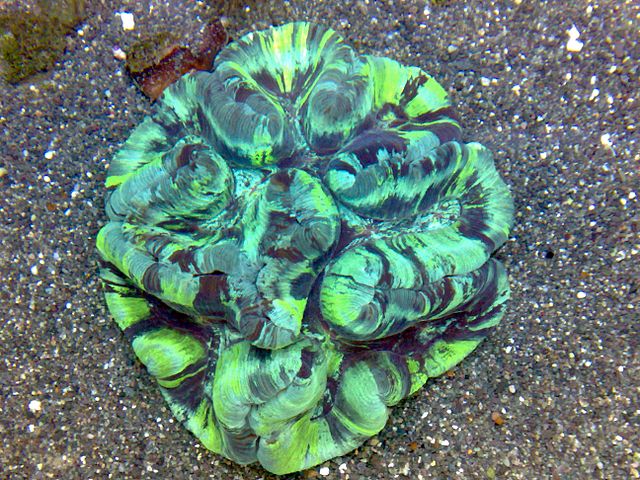
Favites (Favites spp.) are LPS (large polyp stony) corals widely distributed in tropical and subtropical reef zones. In English, they're called "Moon Coral," "Pineapple Coral," or "Brain Coral." In Japan, the common name "Scale Coral" is widely used. They are multicellular colony corals closely related to Goniastrea and Montastraea, with individual polyps surrounded by septa, characterized by honeycomb or mosaic skeletal structures.
Color variations are abundant, with green, red, orange, purple, and multicolor morphs available in the trade. Prices range from several thousand to tens of thousands of yen depending on origin and color morph, with rare red and purple morphs commanding premium prices.
Basic Care Environment
Favites are "intermediate difficulty" among LPS corals. They dislike sudden water quality changes, but in stable environments they are very hardy and well-suited for long-term keeping.
Recommended Water Quality Parameters
| Parameter | Target Value |
|---|---|
| Salinity (Specific Gravity) | 1.025–1.026 |
| Water Temperature | 24–26°C |
| pH | 8.1–8.3 |
| Alkalinity (KH) | 8–11 dKH |
| Calcium (Ca) | 400–450 mg/L |
| Magnesium (Mg) | 1250–1350 mg/L |
| Nitrate (NO₃) | 2–10 ppm |
| Phosphate (PO₄) | 0.03–0.1 ppm |
Favites obtain energy primarily from photosynthesis through symbiosis with zooxanthellae, so in completely low-nutrient (ULNS) environments, color may fade. Maintaining moderate nutrient levels is key to color enhancement.
Lighting Setup
Favites have flexibility in adapting to medium to high light conditions. However, they are sensitive to abrupt light changes, so newly introduced specimens should be gradually acclimated from low light.
Recommended PAR Value: 100–250 PAR
- Lower level (sand bed / low rock): 100–150 PAR → Soft colors display well
- Mid-level: 150–250 PAR → Green and orange hues fluoresce more brightly
- High light (250 PAR or above) poses bleaching risk—avoid or acclimate carefully
LED lighting can bring out Favites' distinctive fluorescent greens and oranges by utilizing blue to purple channels effectively.
Water Flow
Favites prefer moderate water flow. Excessively strong direct flow will close polyps, but insufficient flow allows organic matter to accumulate and easily soil the surface.
- Recommended: Moderate random flow (approximately 5–15 cm/s)
- Don't fix the flow pump in one direction. Set wave controllers to random mode
- If polyps are completely closed, reduce flow by half and observe
Placement and Precautions
Favites have thin skeletons and break easily if struck, so careful handling is essential.
Basic Placement
- Place stably on rock surfaces, shelves, or horizontal areas
- Don't place directly on sand bed, as sand will lodge in skeletal grooves and cause tissue damage; place on frag plugs or live rock
- Maintain at least 10 cm spacing from adjacent corals
Aggression
Favites extend "mesentarial filaments" (digestive filaments) at night and digest/attack surrounding coral tissue. This often combines with allelopathy (chemical competition), and cases of neighboring corals suddenly dying have been reported.
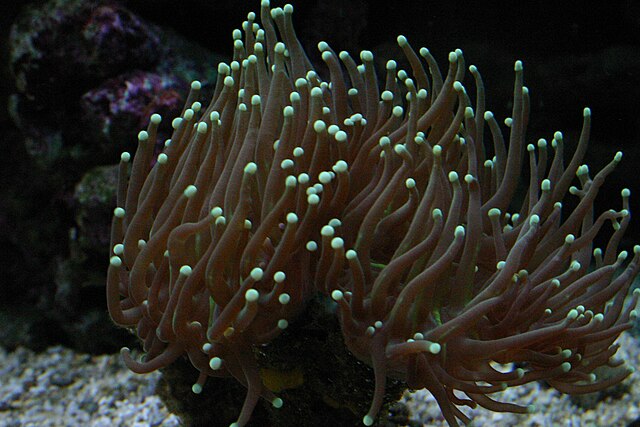
Digestive filament range is approximately 2–5 cm, so maintain a minimum safety distance of at least 10 cm. Special attention to spacing from torch corals and Euphyllia species is required.
Feeding
Favites obtain nutrition not only from photosynthesis but also from feeding on organic matter and plankton. Target feeding once or twice weekly significantly improves growth and color enhancement.
Appropriate Foods
- Frozen copepods / frozen daphnia (dilute in water and inject with dropper)
- Finely chopped frozen krill / small shrimp
- Coral-specific foods (Reef Roids, Coral Frenzy, etc.)
- Liquid coral food (PhytoPlankton, etc.)
Feeding Procedure
- Temporarily stop the water flow pump (approximately 10 minutes)
- Slowly release food toward the polyp mouth (central oral disc) using a dropper
- Observe the polyp consuming the food (15–30 minutes)
- Remove leftover food with dropper before resuming water flow
Common Troubleshooting
Polyps Don't Open for Extended Periods
The cause is often water flow, water quality, or allelopathy.
- Test water quality (KH, Ca, Mg, nitrate, ammonia)
- Check distance to adjacent corals
- Adjust water flow at placement location (toward weaker indirect flow)
- If newly introduced, allow 1–2 weeks of "acclimation period"
Browning / Color Fading
Often caused by stress-induced zooxanthellae increase from high light or declining water quality.
- Reduce light intensity
- Improve water quality with water changes
- Replace activated carbon to remove allelopathic substances
RTN (Rapid Tissue Necrosis)
White skeletal exposure beginning to appear is an early sign of RTN.
- Move quickly to a quarantine tank
- Place in clean water (water immediately after water change)
- If progression stops, wait for recovery
- If necrosis continues, cut away affected portions to protect healthy tissue
Frag Creation
Favites colonies are relatively easy to fragment among LPS corals.
Basic Procedure
- Divide the colony to appropriate size using a coral diamond saw
- Cut so each frag includes a minimum of 2–3 polyps
- Lightly apply iodine solution to cut surfaces for sterilization
- Secure frags to plugs with adhesive (epoxy)
- Manage in recovery tank with low light and weak water flow for 2–4 weeks
During recovery, especially increase target feeding to promote skeletal regeneration and tissue recovery.
Summary
Favites (Scale Coral) are vibrant and hardy LPS corals. By maintaining medium light intensity, moderate water flow, and appropriate nutrient levels, and providing regular target feeding, you can enjoy their distinctive fluorescent colors for extended periods. Careful consideration of adjacent coral aggression (digestive filaments) and cautious photoacclimation at introduction are keys to success. By avoiding sudden water quality changes and slowly acclimating to the environment, stable long-term care becomes possible.