Xenia (Pulsing Coral) Care Guide | Complete Guide to Pulsing Behavior, Water Quality, Water Flow, and Trimming
Learn how to care for Xenia (Xenia sp.), a soft coral famous for its distinctive pulsing behavior. This practical guide covers recommended water parameters and compatibility with nutrient-rich environments, lighting and water flow settings, allelopathy management with other corals, troubleshooting pulsing cessation and tissue necrosis, and fragging procedures—everything you need to maintain this ideal beginner reef tank coral long-term.
Key Takeaways
Learn how to care for Xenia (Xenia sp.), a soft coral famous for its distinctive pulsing behavior. This practical guide covers recommended water parameters and compatibility with nutrient-rich environments, lighting and water flow settings, allelopathy management with other corals, troubleshooting pulsing cessation and tissue necrosis, and fragging procedures—everything you need to maintain this ideal beginner reef tank coral long-term.
Related Species
Xenia (Pulsing Coral) Overview
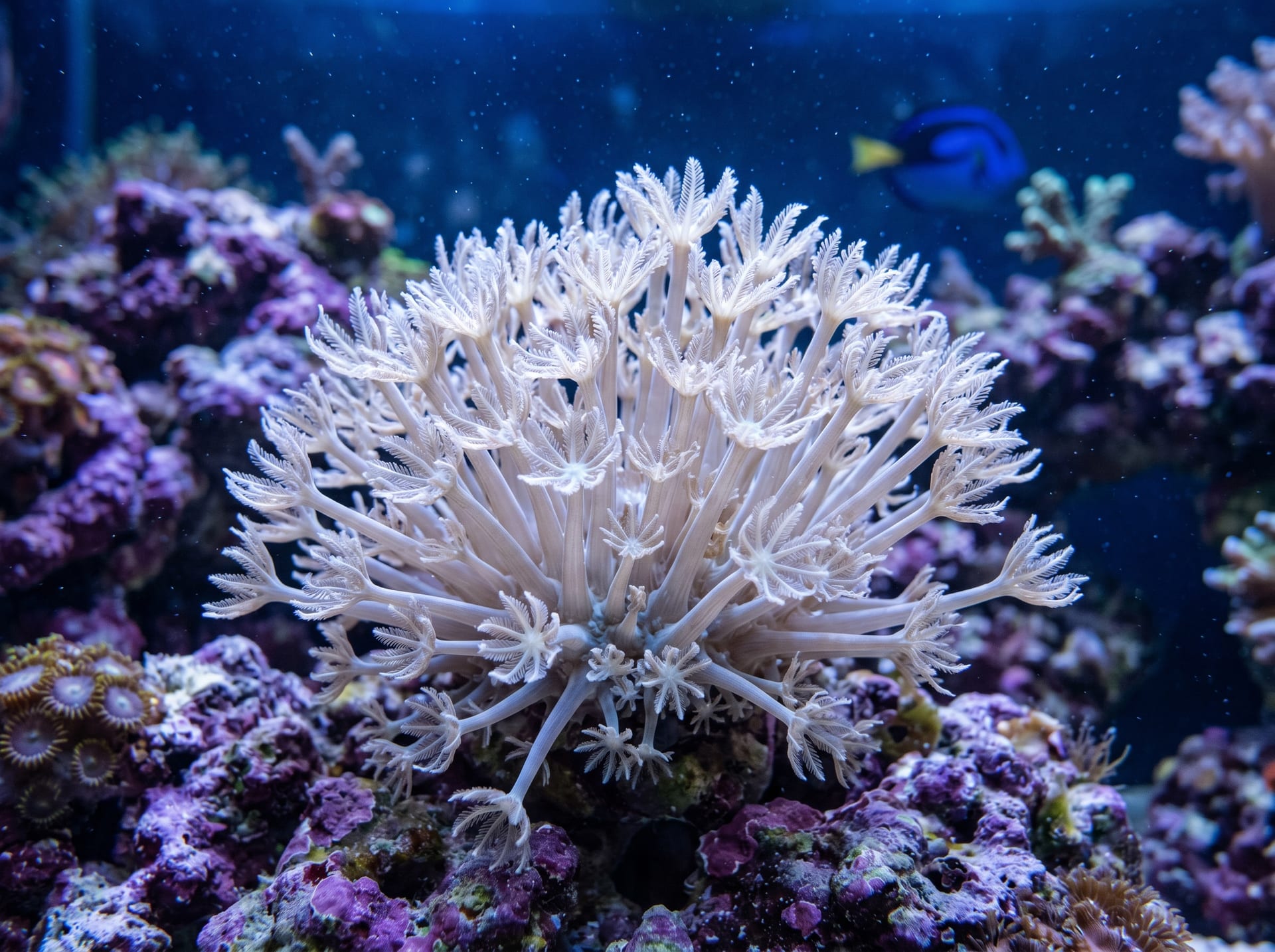
Xenia (Xenia sp.) is a soft coral renowned for its distinctive "pulsation" behavior. The rhythmic opening and closing of its polyps is mesmerizing and adds a unique rhythm and sense of life to the aquarium.
Known in English as "Pulsing Xenia" or "Pulse Coral," it is popular both as an ideal beginner reef coral and as a focal point specimen.
Key Characteristics of Xenia
- Rhythmic opening and closing polyp "pulsing" behavior
- Extremely rapid growth—colonies can multiply several times within 1–2 months in ideal conditions
- Photosynthetic (zooxanthellae-dependent); no supplemental feeding required
- Relatively high water quality adaptability
- Easy to keep as a beginner soft coral
However, due to rapid growth, care must be taken to prevent allelopathic overgrowth that can smother neighboring corals and rocks. Space management and regular trimming (fragging) are essential.
Water Quality Requirements
Basic Water Parameters
| Parameter | Recommended Value |
|---|---|
| Water Temperature | 24–27°C |
| Specific Gravity | 1.023–1.026 |
| pH | 8.1–8.4 |
| Alkalinity (dKH) | 8–12 dKH |
| Calcium | 380–450 mg/L |
| Magnesium | 1250–1350 mg/L |
| Nitrate (NO₃) | 1–20 mg/L (moderate levels promote better growth) |
| Phosphate (PO₄) | 0.03–0.1 mg/L |
Note: Unlike SPS corals, Xenia can actually decline in ultra-low nutrient systems. It tends to display better coloration and growth in moderately nutrient-rich environments with nitrate levels around 1–20 mg/L.
Role of Iodine and Strontium
Iodine is believed to play a role in Xenia's pulsation behavior. Cases have been reported where depleted iodine levels cause pulsing to cease. Using trace amounts of iodine-containing supplements or maintaining iodine through regular water changes can be effective.
Lighting and Light Intensity
Recommended Lighting
Xenia adapts well to a relatively broad range of light intensities, whether using LED, T5, or metal halide lamps.
| Lighting Type | Recommended Position |
|---|---|
| Low–moderate light (PAR 50–150) | Lower to middle section of tank |
| Moderate to high light (PAR 150–300) | Middle to upper section |
Excessive light intensity risks bleaching. After purchase, place the specimen in a low-light area of the tank and perform "light acclimation" by gradually moving it to brighter locations over 1–2 weeks.
Light Color Temperature
Xenia appears particularly vibrant under blue-spectrum (420–470 nm) LEDs. White-blue mixed lighting at 14,000K–20,000K brings out the most natural coloration.
Water Flow
Xenia thrives with gentle to moderate water flow.
- Direct, strong unidirectional flow can damage polyps
- Chaotic flow (random wave patterns) brings out the most natural pulsing motion
- If pulsing has ceased, changing the direction or intensity of water flow may restart it
Placement and Installation
Attachment to Substrate and Live Rock
Xenia grows by attaching its base to a solid substrate.
- Often sold attached to frags or live rock fragments
- Secure it with coral glue or rubber bands before placement
- Avoid placing directly on substrate, as it tends to become buried; instead, place it on rocks or in an elevated position
Distance from Other Corals
Xenia is a soft coral with relatively strong allelopathic capabilities.
- Maintain at least 5 cm spacing between neighboring corals
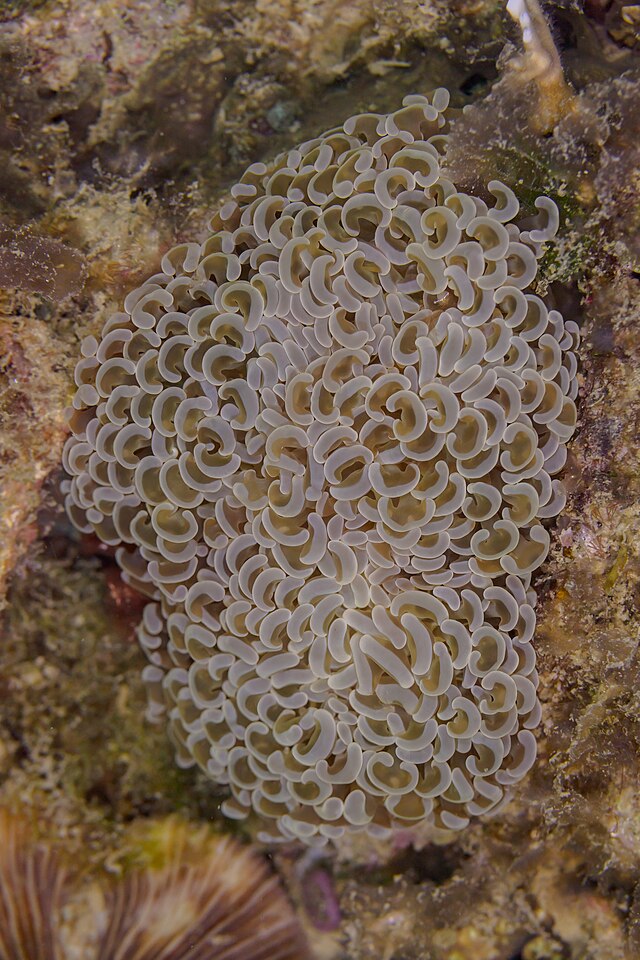
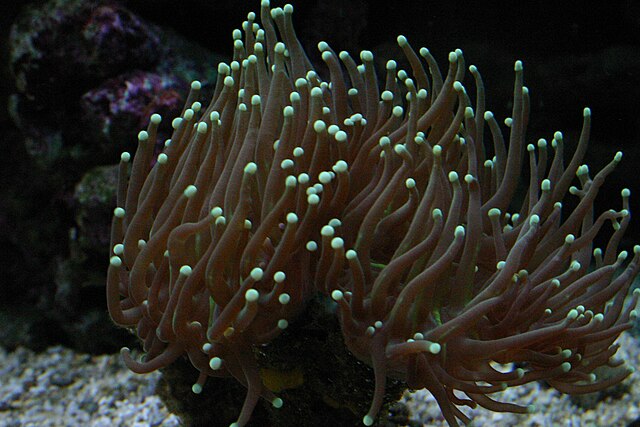
- Avoid contact with LPS corals (hammer coral, torch coral)
- Control expansion through trimming approximately once per month
Common Troubleshooting
Pulsing Has Stopped
Common Causes and Solutions
| Cause | Solution |
|---|---|
| Iodine deficiency | Administer trace iodine supplements (use sparingly; excess is toxic) |
| Improper water flow | Adjust flow direction or intensity |
| Sudden water quality change | Observe for 1–2 days; exercise caution especially after water changes |
| Abnormal water temperature | Stabilize to 25–27°C |
| Sudden light intensity change | Lower light intensity if acclimation was insufficient |
Even if pulsing remains stopped, if polyps are not retracted, recovery often occurs within several days. Hastily relocating the coral can have a counterproductive effect.
Tissue Necrosis (Melting)
Xenia can suddenly begin "melting" (tissue loss) due to sudden water quality changes, elevated temperatures, or bacterial infection.
- Immediately remove the affected specimen (organic matter released into the water will cause foam buildup in the skimmer)
- Add activated carbon to absorb cloudiness
- Perform a water change (20–30%) to stabilize water quality
Trimming and Fragging
Xenia is easy to frag, and creating frags for trading with other hobbyists is part of the enjoyment.
- Cut branches (stems + polyps) at least 5 cm long from the colony using scissors or a cutter
- Attach them to frags using coral glue
- Allow them to heal for 1–2 weeks in a frag tank with gentle flow and moderate lighting
- Once polyps begin to open, the frag is established
Xenia is a soft coral that combines beautiful motion with hardiness. Once pulsing begins, it brings a rhythm of life to the entire aquarium and becomes a captivating, meditative presence. With proper space management, it is a coral that even beginners can thoroughly enjoy.