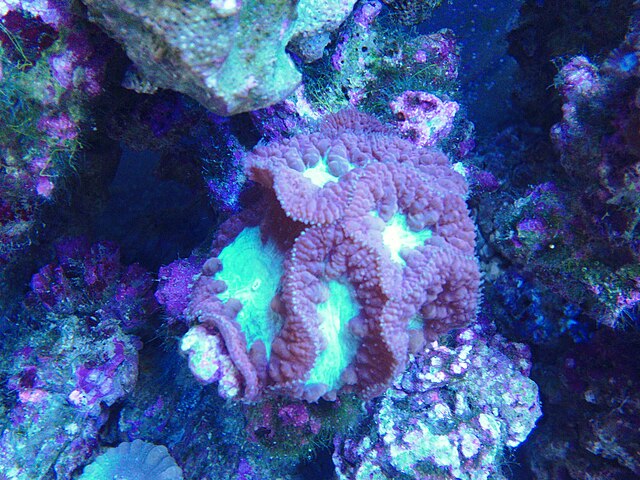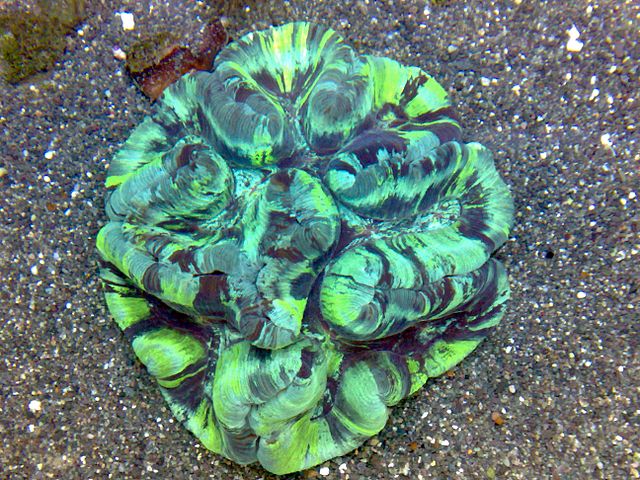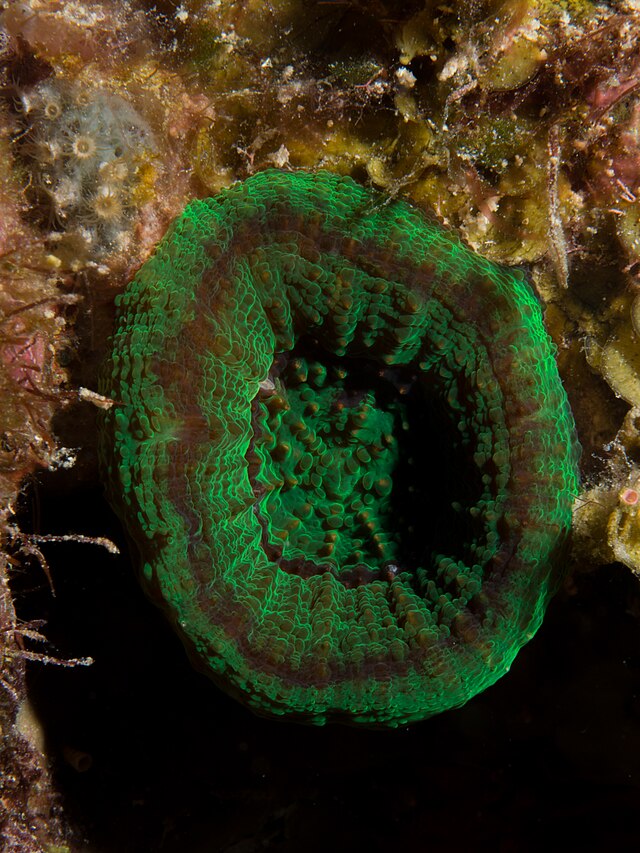
Source: Wikimedia Commons
Scolymia
IntermediateA premium LPS coral characterized by single large polyp. Rainbow coloration popular among collectors.
Difficulty
Intermediate
Temperature
24〜27℃
Lifespan
10+ years
Size
5-15cm
Diet
Photosynthesis, Liquid food
About
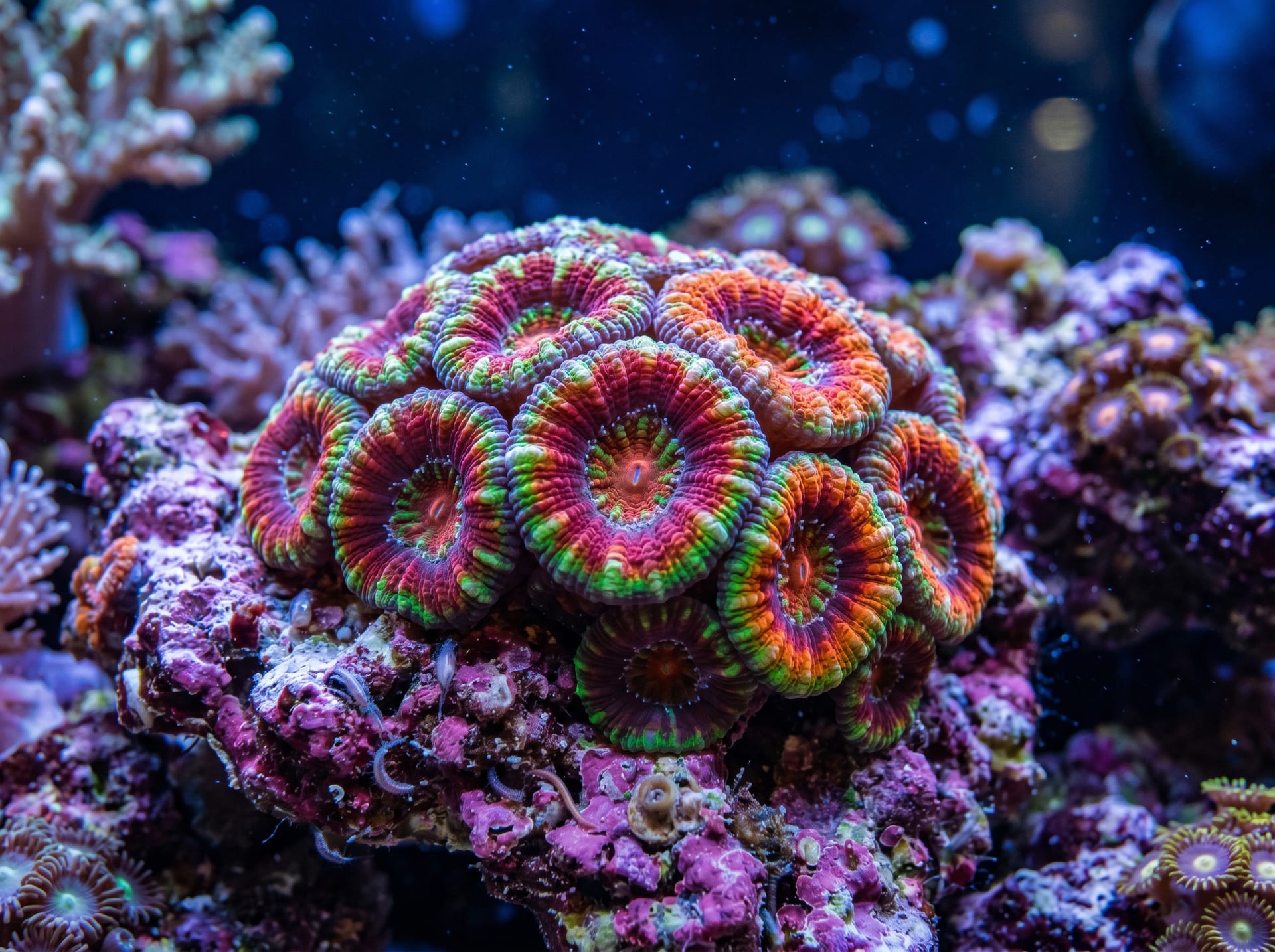
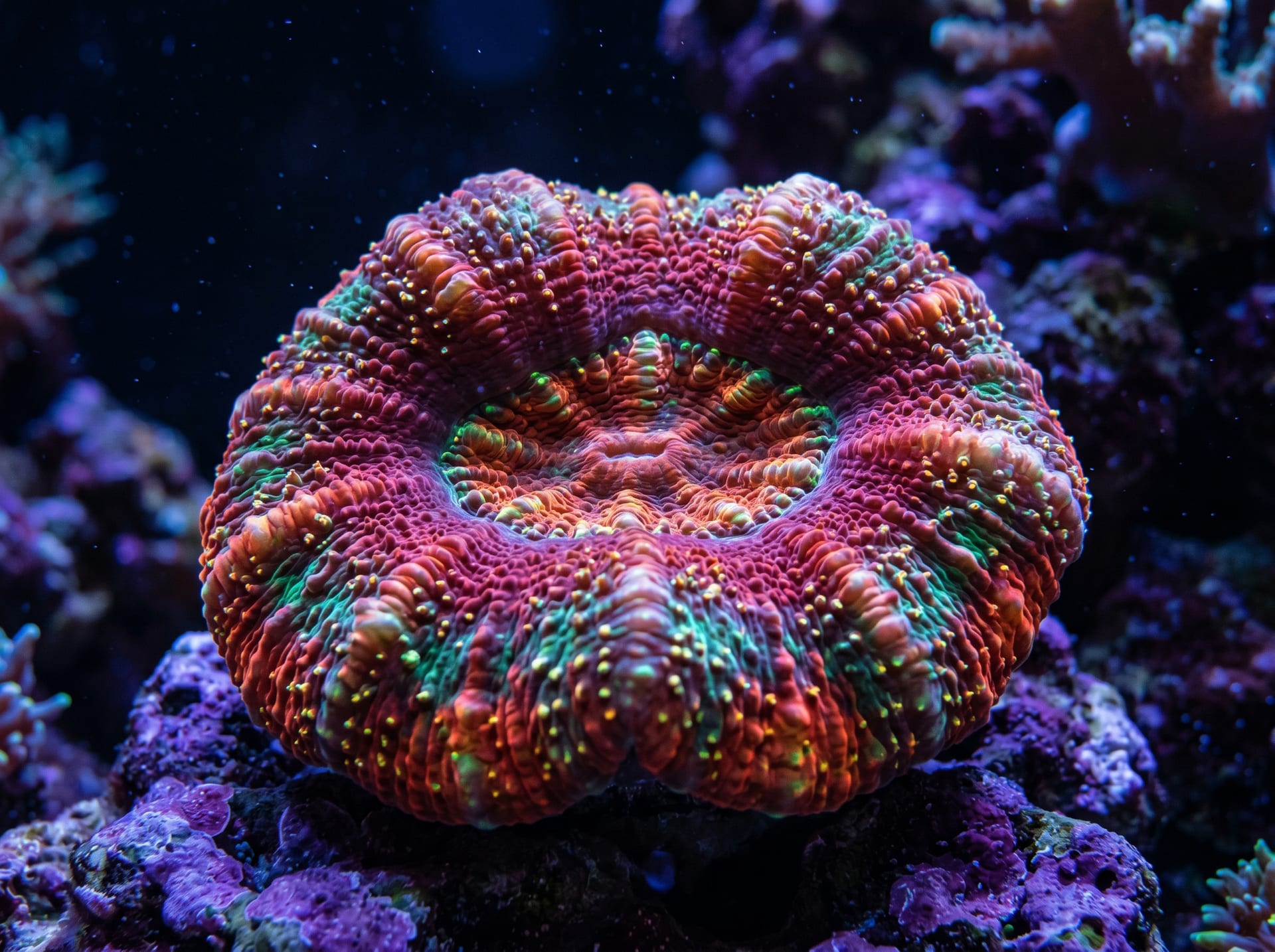
Scolymia (family Mussidae) is a genus of solitary large-polyp stony corals found on reef slopes of the Caribbean and Pacific. A single large polyp—5–20 cm in diameter—develops concentric septa that give the skeleton an ornate, mandala-like cross-section. The color repertoire is extraordinary: fluorescent green, red, orange, purple, and multicolored morphs appear, with rare patterns commanding extraordinary prices in the collector market. Low to moderate lighting (50–150 PAR) is appropriate; high intensity causes bleaching. Aggressive target feeding 1–2 times weekly—meaty foods such as shrimp, fish, or pellets—is rewarded with expanded polyp volume and intensified coloration. Growth is extremely slow, but Scolymia's unmatched visual impact as a centerpiece specimen makes it one of the most coveted corals in the reef hobby.
Source: Wikipedia (CC BY-SA 4.0)
Lifespan of the Scolymia
The Scolymia lives 10+ years.
Size of the Scolymia
The Scolymia grows to 5-15cm.
Temperature & humidity for the Scolymia
The ideal water temperature for the Scolymia is 24〜27℃.
Gentle indirect flow and stable parameters (24–27°C, KH 8–10, Ca 400–420 ppm) are standard requirements.
Basic Info
Origin
reef slopes of the Caribbean and Pacific
Lifespan
10+ years
Care Specifications
- Carbonate (KH)
- 8–12 dKH
- Water Temp.
- 24–27℃
- Specific Gravity
- 1.023–1.025
- Salinity
- 33–35 ppt
- Calcium (Ca)
- 400–450 ppm
- Magnesium (Mg)
- 1280–1350 ppm
LPSLight: Low (PAR 30-50)Flow: LowPlacement: Bottom
Sources: AlgaeBarn: SPS/LPS care (PAR/flow) / AlgaeBarn: Water Parameters 101
References & Sources
Edited & verified by: BreederDirect editorial team
The taxonomic, regulatory, and husbandry data on this page are compiled and verified against the authoritative primary sources below.
Regulations & Conservation Status
CITES Appendix II
Stone Coral Order (Scolymia, Lobophylliidae/Mussidae). CITES Appendix II.
Sources: DOC NZ / CITES-listed corals (Scleractinia spp. = App. II)
Regulations may change. Always verify the latest information with the relevant authorities.
Scolymia Listings
Loading latest listingsFind listings for this species