Scleromia (Lobophyllia) Care Guide | Lighting, Water Flow, Target Feeding, and Frag Propagation
A comprehensive guide to Scleromia (Scolymia) care. Covers proper water chemistry parameters (KH, Ca, Mg, nutrients), photoacclimation with low-to-moderate lighting, gentle indirect water flow settings, target feeding techniques (1-2 times per week), frag propagation methods, and troubleshooting for closed polyps, RTN (Rapid Tissue Necrosis), and other common issues. A practical intermediate-level guide.
Key Takeaways
A comprehensive guide to Scleromia (Scolymia) care. Covers proper water chemistry parameters (KH, Ca, Mg, nutrients), photoacclimation with low-to-moderate lighting, gentle indirect water flow settings, target feeding techniques (1-2 times per week), frag propagation methods, and troubleshooting for closed polyps, RTN (Rapid Tissue Necrosis), and other common issues. A practical intermediate-level guide.
Related Species
About Scleromia
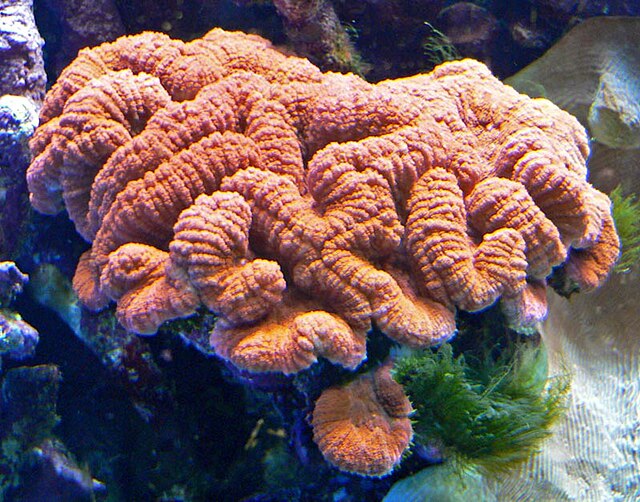
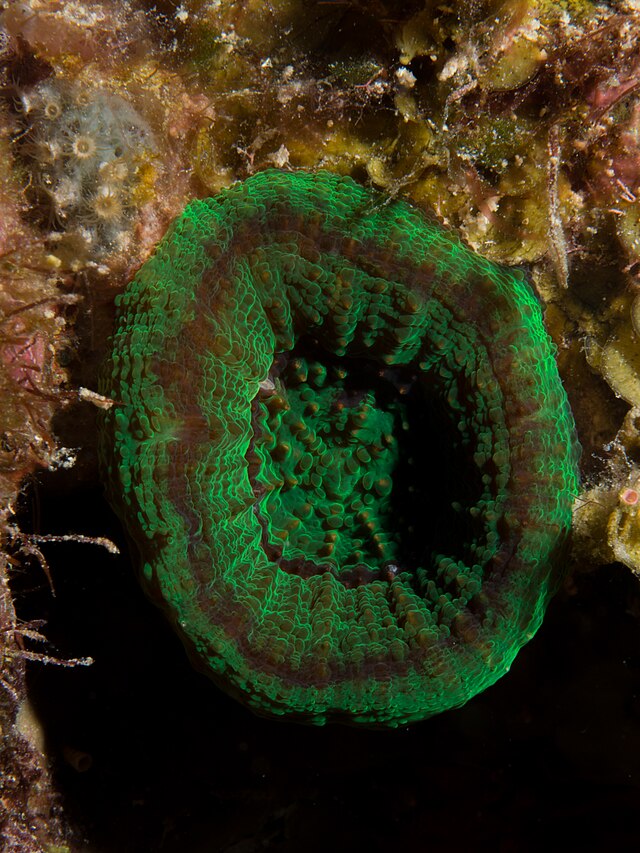
Scleromia (Scolymia australis, Scolymia lacera) is a large polyp stony coral (LPS) from Australian and Caribbean waters that grows as a solitary polyp, forming a circular, fleshy coral head. It was historically confused with the genus Lobophyllia and is commonly called "Scleromia" or "Scolly" in aquaculture. Color variations range from solid colors to striking multicolor morphs with vibrant color bands, with many specimens commanding premium prices in the collector market.
Polyps typically grow to 5-15 cm in diameter and are positioned on the substrate or mid-level rock shelves while attached to the rockwork. A distinctive feeding behavior can be observed where thick tentacles extend during evening hours and feeding times to capture food.
Care Difficulty and Required Water Parameters
Scleromia care is considered intermediate. While sensitive to rapid water parameter swings, they can thrive long-term in stable conditions. However, poor water quality leads to rapid tissue retraction (shrinking), bleaching, and potential Rapid Tissue Necrosis (RTN).
Recommended Water Parameters
| Parameter | Target Value |
|---|---|
| Salinity (Specific Gravity) | 1.025–1.026 |
| Temperature | 24–26°C |
| pH | 8.1–8.3 |
| Alkalinity (KH) | 8–10 dKH |
| Calcium (Ca) | 400–450 mg/L |
| Magnesium (Mg) | 1250–1350 mg/L |
| Nitrate (NO₃) | 5–10 ppm (avoid zero) |
| Phosphate (PO₄) | 0.03–0.08 ppm |
Scleromia in ULNS (Ultra-Low Nutrient System) environments tends to fade in color and retract polyps. Maintaining moderate nutrient levels (nitrate 5-10 ppm, phosphate 0.03-0.08 ppm) is key to preserving vibrant coloration.
Lighting
Scleromia is an LPS that prefers relatively low-to-moderate light intensity. High light (high PAR) exposure risks bleaching, making photoacclimation—a gradual adjustment to light intensity after introduction—essential.
Recommended PAR: 50–150 PAR
- First 2 weeks: Place in shaded areas below rocks with ≤50 PAR
- Weeks 2–4: Gradually move to mid-level areas with 70–100 PAR
- After stabilization: 100–150 PAR provides optimal coloration
With LED lighting, blue-violet wavelengths (420nm, 450nm) activate zooxanthellae photosynthesis and enhance fluorescent coloration. A high blue channel setting (approximately B60%/W40%) is effective for color enhancement.
Water Flow
Scleromia struggle with strong direct water flow. Strong flow causes polyp closure, so consider the following guidelines:
- Recommended: Indirect/random flow (direct pump output toward rocks or walls to create deflected flow)
- Recommended flow speed: Gentle flow around 1–5 cm/s
- Wavemakers: Using a wavemaker controller on random patterns creates more natural flow variations
Excessive flow is the leading cause of closed polyps. If polyps remain closed after relocation, suspect flow issues first.
Placement
Scleromia are typically placed on the sand bed or in depressions on low-level rocks. However, direct contact with sand can cause abrasion; placing them on frag plugs with rubber feet or frag racks is safer.
Placement Considerations
- Avoid contact with other corals (allelopathic toxins and mesenterial filaments can damage neighbors)
- Maintain 10–15 cm clearance around the coral
- Do not place Scleromia adjacent to each other
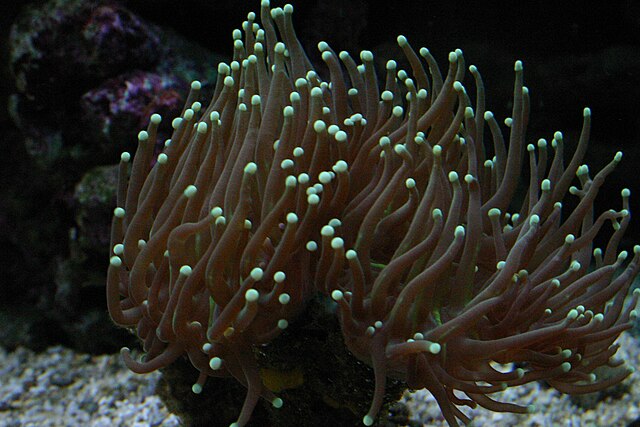
- Place outside the range of "sweeper tentacles" from Euphyllia species (hammer corals, torch corals)
Feeding
Scleromia respond very well to target feeding (spot feeding). Feeding 1–2 times per week noticeably improves growth and coloration.
Suitable Foods
- Mysis food (frozen copepods, brine shrimp)
- Frozen krill (cut into small pieces)
- Coral-specific pellets (Marine Snow, Coral Frenzy, etc.)
- Live copepods introduced when the water flow pump is off
Feeding Procedure
- Turn off water circulation pump (10–15 minutes)
- Inject food directly into the polyp center with a dropper
- Observe the polyp slowly ingesting food over 15–20 minutes
- Siphon out any uneaten food before resuming water circulation
Feed carefully as water can foul quickly; ensure your protein skimmer is running.
Common Problems and Solutions
Closed Polyps
This is the most common issue. Check causes in this order:
- Check water chemistry: Test KH, Ca, Mg, nitrite, and ammonia
- Reduce flow: Relocate if direct flow is hitting the coral
- Lower light intensity: Start with low PAR, especially for newly introduced specimens
- Check spacing from neighbors: Confirm no physical contact or allelopathic stress
Brown Discoloration / Color Fading
- Possible zooxanthellae bloom due to stress (poor water quality or excessive light)
- Confirm alkalinity (KH) is stable
- In mild cases, increasing nutrient levels (nitrate and phosphate) slightly may help
Bleaching and RTN (Rapid Tissue Necrosis)
If bleaching starts in one area and spreads rapidly, RTN may be occurring.
- Immediately move to a quarantine tank
- Reduce flow and lighting to create a low-stress recovery environment
- If possible, frag off healthy tissue to preserve the colony
Fragmentation (Fragging)
Fragging Scleromia is relatively straightforward but requires more skill than fragging Acropora or Euphyllia.
Required Tools
- Diamond saw for corals (rotary tool with diamond blade or bandsaw)
- Frag plugs (ceramic or plastic)
- Underwater epoxy or cyanoacrylate adhesive for corals
- Iodine solution (for sterilizing cut surfaces)
Procedure
- Remove the coral from the tank and quickly cut it in half or into wedge-shaped pieces with the saw
- Lightly sterilize cut surfaces with iodine solution (approximately 0.1%)
- Attach to frag plugs using coral-safe adhesive
- Place in a recovery tank with low light and gentle flow for 2–4 weeks to allow healing
Frags typically take 2–6 weeks to recover. Active feeding during recovery promotes healing.
Summary
Scleromia is a captivating LPS coral prized for its vibrant colors and unique morphologies. Maintaining moderate nutrient levels, low-to-moderate light, gentle flow, and regular target feeding ensures long-term health and beauty. Stable water chemistry and adequate spacing from other corals are keys to success. When introducing new specimens, acclimate them slowly in low-stress conditions before gradually moving them to their final placement.