Micromussa Care Guide | Lighting, Water Flow, Feeding, and Fragmentation
A comprehensive guide to caring for colorful LPS coral "Micromussa." Covers tank placement (mid-level recommended), lighting (75–200 PAR), gentle indirect water flow methods, water quality parameters including calcium, alkalinity, and phosphate, target feeding techniques using a pipette, fragmentation procedures, and troubleshooting for polyp retraction and bleaching—an intermediate-level practical guide covering all essentials.
Key Takeaways
A comprehensive guide to caring for colorful LPS coral "Micromussa." Covers tank placement (mid-level recommended), lighting (75–200 PAR), gentle indirect water flow methods, water quality parameters including calcium, alkalinity, and phosphate, target feeding techniques using a pipette, fragmentation procedures, and troubleshooting for polyp retraction and bleaching—an intermediate-level practical guide covering all essentials.
Related Species
What is Micromussa?
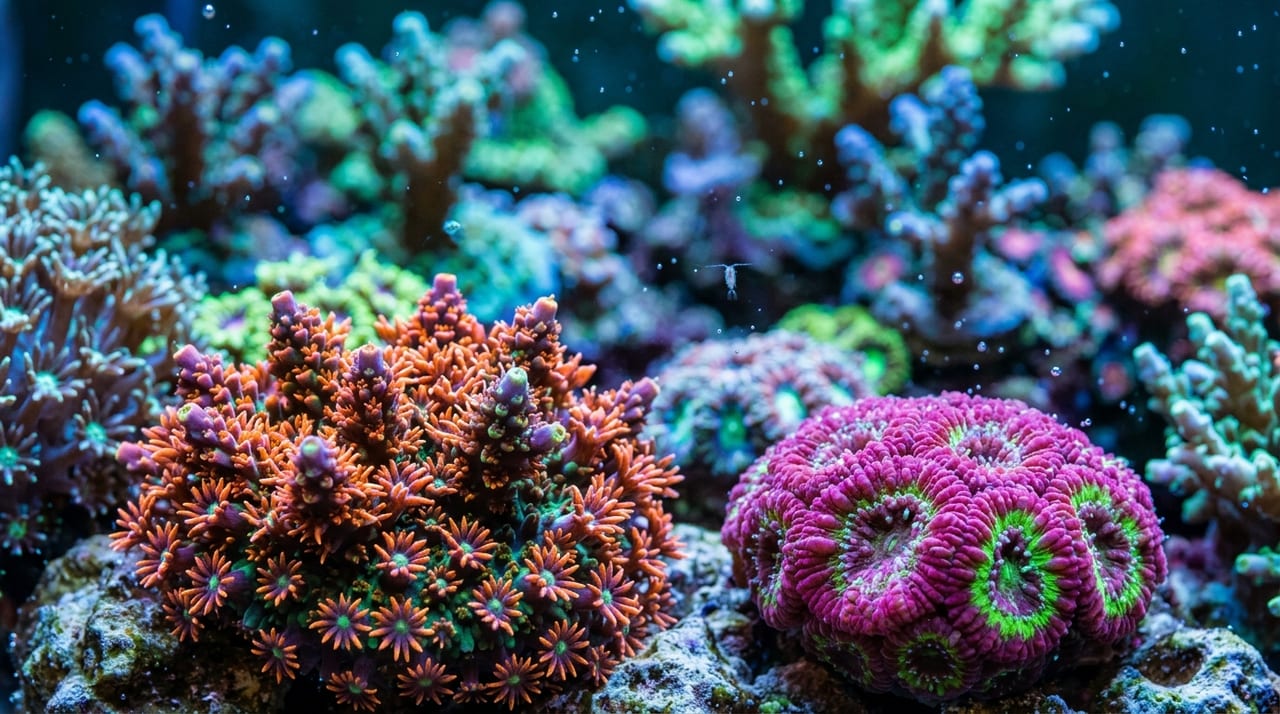
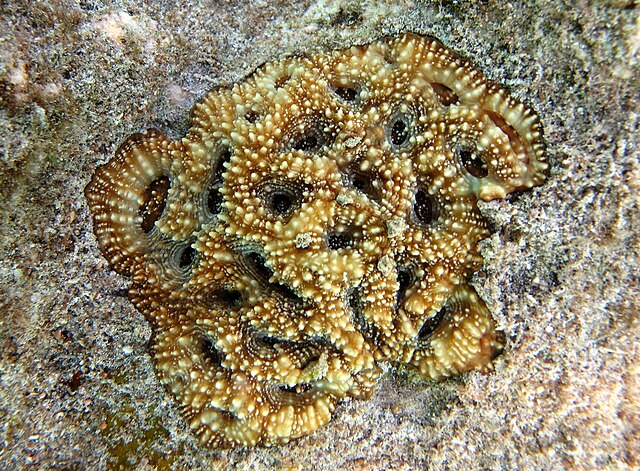
Micromussa (genus Micromussa) is an LPS (Large Polyp Stony coral) that was reclassified after previously being grouped with Acropora. In recent years, it has been sold under trade names such as "Rhode Island Beach," "Flash," and "Ultra," and hobbyists greatly admire its vibrant red, orange, green, violet, and other color morphs.
Key characteristics of Micromussa
- Polyp size: Dense polyps approximately 1–3 cm in diameter forming colonies
- Color diversity: Fluorescent green, red, orange, purple, two-tone patterns, and more
- Difficulty level: Moderate (less delicate than SPS but more demanding than soft corals)
- Growth rate: Medium (under proper water quality, nutrition, and lighting, colonies can expand 1–2 cm monthly)
Setting up the care environment
Tank placement and layout
Micromussa is relatively flexible regarding lighting and water flow, but proper placement is important to achieve maximum coloration.
Recommended placement locations
| Tank Position | Characteristics |
|---|---|
| Mid-level (20–40 cm from substrate) | Stable care with moderate light and gentle water flow |
| Low position (on substrate) | Viable with weaker light; polyp extension may improve |
| High position (directly under lighting) | Strong coloration possible, but watch for bleaching risk |
When placing directly on substrate, avoid burying polyps under sand. Ideal spots are recesses in live rock or shelf-like surfaces.
Lighting setup
Micromussa does not require as much light as SPS corals, but adequate light is necessary to bring out fluorescent coloration.
Recommended PAR (photosynthetically active radiation) range: 75–200 PAR
| Light Level | PAR Value | Color Tendency |
|---|---|---|
| Low light | <75 PAR | Brownish, muted coloration |
| Medium light | 75–200 PAR | Stable color; appropriate for acclimation |
| High light | 200–350 PAR | Fluorescent colors stand out; acclimation required |
Spectrum: Increasing the ratio of 420–450 nm (violet to blue) excites fluorescent proteins for beautiful fluorescent coloration.
Important: After introduction, start in a dimmer environment (PAR 50–75) than the store conditions, gradually ramping to the target over 2–3 weeks. Sudden light changes cause bleaching.
Water flow management
Micromussa prefers gentle indirect water flow.
- Avoid direct strong current (causes polyp retraction and tissue damage)
- Gentle whole-tank flow at approximately 10–20 times the tank volume per hour
- Ideal is a soft, circulating flow around polyps with enough current to carry food particles
Weak flow risks detritus accumulation and tissue decay. Micromussa has relatively thick tissue and benefits from adequate flow to keep surfaces clean.
Water quality parameters
Recommended values
| Parameter | Target | Measurement Frequency |
|---|---|---|
| Temperature | 25–26°C (±0.5°C variance) | Continuous monitoring |
| Specific gravity (salinity) | 1.025–1.026 | Weekly |
| pH | 8.1–8.3 | Weekly to bi-weekly |
| Calcium (Ca) | 400–430 mg/L | Weekly |
| Alkalinity (Alk) | 8–10 dKH | Weekly to bi-weekly |
| Magnesium (Mg) | 1280–1350 mg/L | Bi-weekly |
| Nitrate (NO₃) | 5–15 mg/L | Weekly |
| Phosphate (PO₄) | 0.05–0.10 mg/L | Weekly |
As an LPS coral, Micromussa does not require the ultra-low nutrient environment needed for SPS. Moderate nitrate (5–15 mg/L) and phosphate (0.05–0.10 mg/L) are necessary for healthy zooxanthellae and tissue maintenance. Extremely low nutrient levels can cause polyp retraction.
Feeding
Micromussa is an active-feeding LPS coral; proper feeding significantly improves growth rate and coloration.
Recommended feeding methods
Target feeding (most effective): Use a pipette or syringe to feed each polyp directly at the mouth. Pausing the circulation pump for 10–15 minutes enhances effectiveness.
Food types
| Food Type | Particle Size | Feeding Frequency |
|---|---|---|
| Frozen copepods | Small (0.1–0.5 mm) | 1–2 times weekly |
| Frozen rotifers | Smallest (<0.1 mm) | 2 times weekly |
| Specialized LPS liquid (Reef Roids, etc.) | Powder to fine particles | 1–2 times weekly |
| Finely chopped Daphnia or brine shrimp | Medium (0.3–1 mm) | Once weekly |
Feeding amount: Avoid overfeeding as it degrades water quality. Feed only until polyps retract and digest; confirm before adding more.
Handling closed polyps
If Micromussa polyps remain closed for extended periods (2+ days), check the following:
- Is water flow hitting directly?: Adjust flow direction
- Recent water quality swings?: Test Alk, Ca, and pH
- Predators present?: Starfish, crabs, and some gobies eat polyps
- Lighting schedule changes?: Avoid sudden photoperiod or intensity shifts
Propagation (fragmentation)
Micromussa can be efficiently propagated through fragmentation.
How to create fragments
- Cut 2–3 polyps with their calcified skeleton from the parent colony using a diamond saw or coral nippers
- Rinse the cut surface with water; sanitize if needed with CoralReef Iodine or similar
- Attach to a frag plug (1–2 cm ceramic) using cyanoacrylate gel
- Place in a frag tank or area with medium-to-low light and gentle flow
- Skeleton reformation begins in 1–2 weeks; polyps stabilize in 3–4 weeks
Cutting precautions: Always wear gloves and avoid touching cut surfaces with bare hands. Micromussa tissue releases minor mucus, but toxicity is low and poses minimal risk.
Common issues and solutions
| Symptom | Cause | Solution |
|---|---|---|
| Polyp discoloration (brownish) | Insufficient light, high nutrients | Increase PAR, strengthen skimmer |
| Polyp retraction, closed polyps | Direct water flow, water fluctuations | Reassess flow, test water parameters |
| Tissue breakdown (RTN symptoms) | Sudden water changes, parasites | Move to isolation tank, improve water quality |
| Bleaching | High light stress, elevated temperature | Reduce light, manage temperature |
| Growth stagnation | Ca/Alk deficiency, low nutrition | Feed regularly, correct water parameters |
Micromussa combines beautiful coloration with relatively straightforward care requirements. By maintaining medium light, gentle water flow, stable skeletal formation parameters, and performing target feeding 1–2 times weekly, colonies grow steadily and display vibrant colors for years to come.