Hammer Coral & Torch Coral Care Guide | Water Flow, Lighting & Placement for Euphyllia LPS
Complete guide to caring for hammer corals and torch corals (Euphyllia genus). Detailed coverage of proper water flow, lighting, water quality, and spacing—essential tips for LPS beginners to avoid common mistakes.
Key Takeaways
Complete guide to caring for hammer corals and torch corals (Euphyllia genus). Detailed coverage of proper water flow, lighting, water quality, and spacing—essential tips for LPS beginners to avoid common mistakes.
Related Species
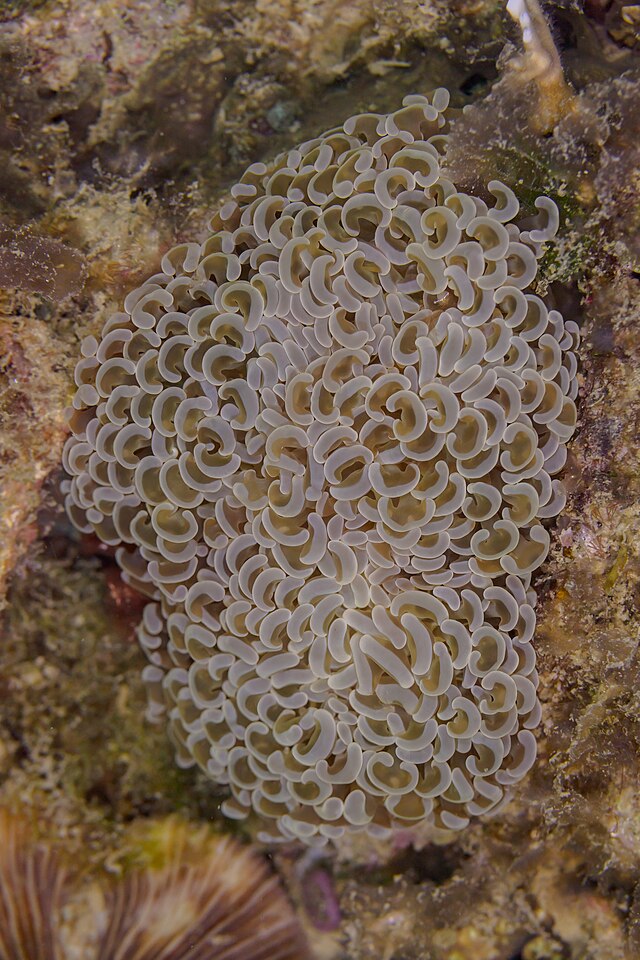
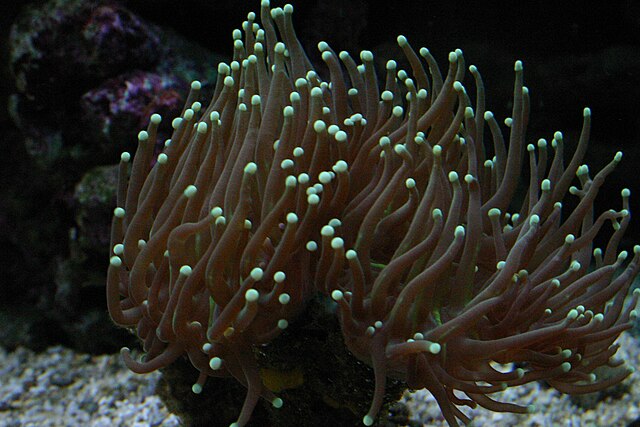
The genus Euphyllia (Euphyllia spp.) comprises a popular group of LPS corals including hammer corals (anchor corals), torch corals, and frogspawn corals. They are popular with saltwater aquarium beginners thanks to their beautiful polyp movement and relative hardiness, but they also have a delicate side and are prone to decline without proper conditions. This article provides a detailed explanation of the water flow, lighting, water quality, and placement considerations necessary for successful Euphyllia care.
Differences Between Hammer Corals and Torch Corals
Among Euphyllia species, hammer corals (E. ancora) and torch corals (E. glabrescens) are by far the most commonly available.
- Hammer Coral (Anchor Coral): Characterized by polyps that expand into a T-shaped or anchor-shaped form. Available in diverse color variations including green, gold, and purple-tipped individuals. Growth is relatively slow, with a broad tolerance for water flow and lighting conditions.
- Torch Coral: Polyps extend into long, slender tentacle-like forms that sway beautifully in the current—highly prized for aesthetics. More potent nematocyst toxins than hammer corals require greater spacing from neighboring corals.
- Frogspawn Coral (E. divisa): Another species in the genus characterized by polyps arranged in grape-like clusters. Also popular as an entry-level LPS coral.
All three species develop a calcareous skeleton separate from the polyps, with polyps fully extended during the day. At night they retract as the skeleton becomes exposed—this is normal behavior, though first-time keepers sometimes worry it indicates poor health.
Appropriate Water Flow: Not Too Strong, Not Too Weak
Euphyllia prefers gentle, turbulent water flow. Direct, forceful linear currents cause polyps to retract and fail to extend.
Water Flow Guidelines
- Prioritize indirect flow: Position the coral so wavemaker output reflects off liverock or tank walls to create dispersed, chaotic flow rather than hitting directly.
- Target flow speed: Aim for 5–15 cm/second. If using a powerful pump intended for SPS, adjust its direction to generate gentler current.
- Mid-lower tank placement: Positioning corals in the lower to mid-water column naturally results in slower flow compared to the upper region.
- Monitor polyp response: Polyps should sway gently and relaxed. Constant retraction indicates flow is too strong.
Lighting: Stabilize with Moderate PAR
Euphyllia can thrive even in high-light SPS-dominated systems, but moderate PAR (50–200 µmol/m²/s) produces optimal results.
Lighting Considerations
- Avoid excessive light: High PAR (300+) exposure causes bleaching, discoloration, or excessive zooxanthellae proliferation. If placing directly under LED fixtures, adjust height to reduce PAR.
- Spectrum: Spectra including blue wavelengths (420–460 nm) enhance fluorescent coloration. Warmer white light may dull color intensity.
- Light acclimation: When introducing new individuals, start at a low-PAR location and gradually move toward target placement over 1–2 weeks to allow adaptation.
Water Quality Parameters: Stability is Paramount
Like all LPS corals, Euphyllia is sensitive to rapid water quality fluctuations. Maintaining stable parameters below is essential for long-term success.
| Parameter | Target Range |
|---|---|
| Temperature | 25–26°C |
| Specific Gravity (Salinity) | 1.025–1.026 |
| pH | 8.1–8.3 |
| Alkalinity (dKH) | 8–10 dKH |
| Calcium | 400–450 mg/L |
| Magnesium | 1280–1350 mg/L |
| Nitrate | 5–20 mg/L (avoid too low) |
| Phosphate | 0.05–0.1 mg/L |
Rapid dKH swings are especially problematic and often trigger brown jelly disease (tissue necrosis). Using a dosing pump or calcium reactor to maintain stable supplementation is highly recommended.
Placement and Spacing: Respect Nematocyst Toxins
Euphyllia species, particularly torch corals, possess potent toxins that can damage neighboring corals.
Placement Rules
- Space Euphyllia at least 10–15 cm apart: Account for full polyp extension when determining spacing. Even same-genus corals cause damage if polyps touch.
- Maintain 15+ cm from other LPS: Distance requirements vary by species, but 15 cm is a safe baseline from brain corals, Porites, and similar stony corals.
- Soft coral considerations: Zoanthids may consume torch coral polyps, so avoid placement within polyp reach.
- Height and orientation: Hammer corals extend polyps laterally as well as vertically. Placing too close to walls creates dead zones without flow and restricts polyp expansion to one direction.
Brown Jelly Disease: Prevention and Treatment
Brown jelly disease (tissue necrosis) is the most common problem affecting Euphyllia.
Causes
- Rapid water quality changes (especially dKH fluctuations)
- Excessive water flow causing physical stress
- Bacterial infection
- Transportation damage
Treatment Steps
- Immediately isolate the affected coral from the main tank.
- Gently rinse the affected area with fresh seawater and remove necrotic tissue.
- Maintain stable water conditions (stable dKH, low-nitrate) in the quarantine tank while recovery occurs.
- Early detection and isolation are critical; delaying allows tissue death to spread across the entire coral.
Summary: Stability is the Key to Euphyllia Success
The three most important factors for long-term Euphyllia care are stable water quality, appropriate water flow, and adequate spacing. Adhering to these principles ensures a stunning display of swaying polyps. Euphyllia flag specimens from domestic breeders are widely available, making Breeder's Direct an excellent source for healthy individuals and a reliable path to success.