Complete Care Guide for Euphyllia Corals (Hammer Coral, Torch Coral, Frogspawn): Characteristics and Management
A species-by-species guide to caring for the most popular LPS corals: Euphyllia species (Hammer Coral, Torch Coral, Frogspawn). Practical tips on water flow, lighting, feeding, and propagation, plus management of common diseases like Brown Jelly.
Key Takeaways
A species-by-species guide to caring for the most popular LPS corals: Euphyllia species (Hammer Coral, Torch Coral, Frogspawn). Practical tips on water flow, lighting, feeding, and propagation, plus management of common diseases like Brown Jelly.
Related Species
Euphyllia species, including the popular Euphyllia corals, are among the most beloved groups within LPS (Large Polyp Stony) corals. The graceful sight of their elongated polyps swaying in the current creates a unique beauty appreciated by everyone from intermediate hobbyists to veteran reefers. This article focuses on three species—Hammer Coral, Torch Coral, and Frogspawn—and provides a detailed explanation of their care requirements.
How to Identify and Distinguish the Three Euphyllia Species
The representative species of Euphyllia look similar but can be distinguished by the shape of their polyp tips.
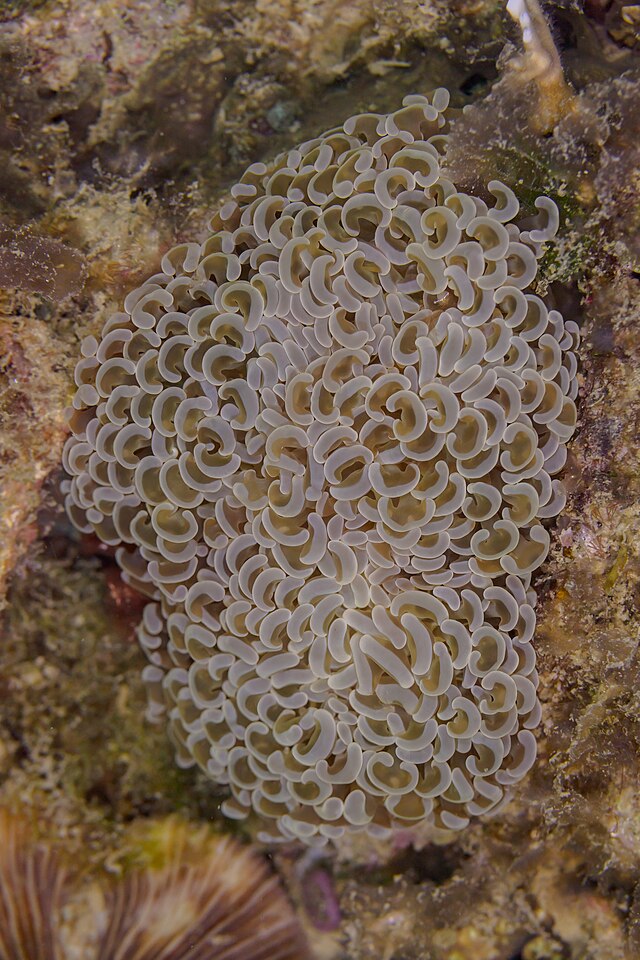
Hammer Coral (Euphyllia ancora) is characterized by polyp tips that branch into an anchor or T-shape. Color variations are abundant, with numerous morphs including green, tan, and purple-tipped varieties available in the hobby. It is prone to bipartition and is generally considered the easiest of the three species to propagate.
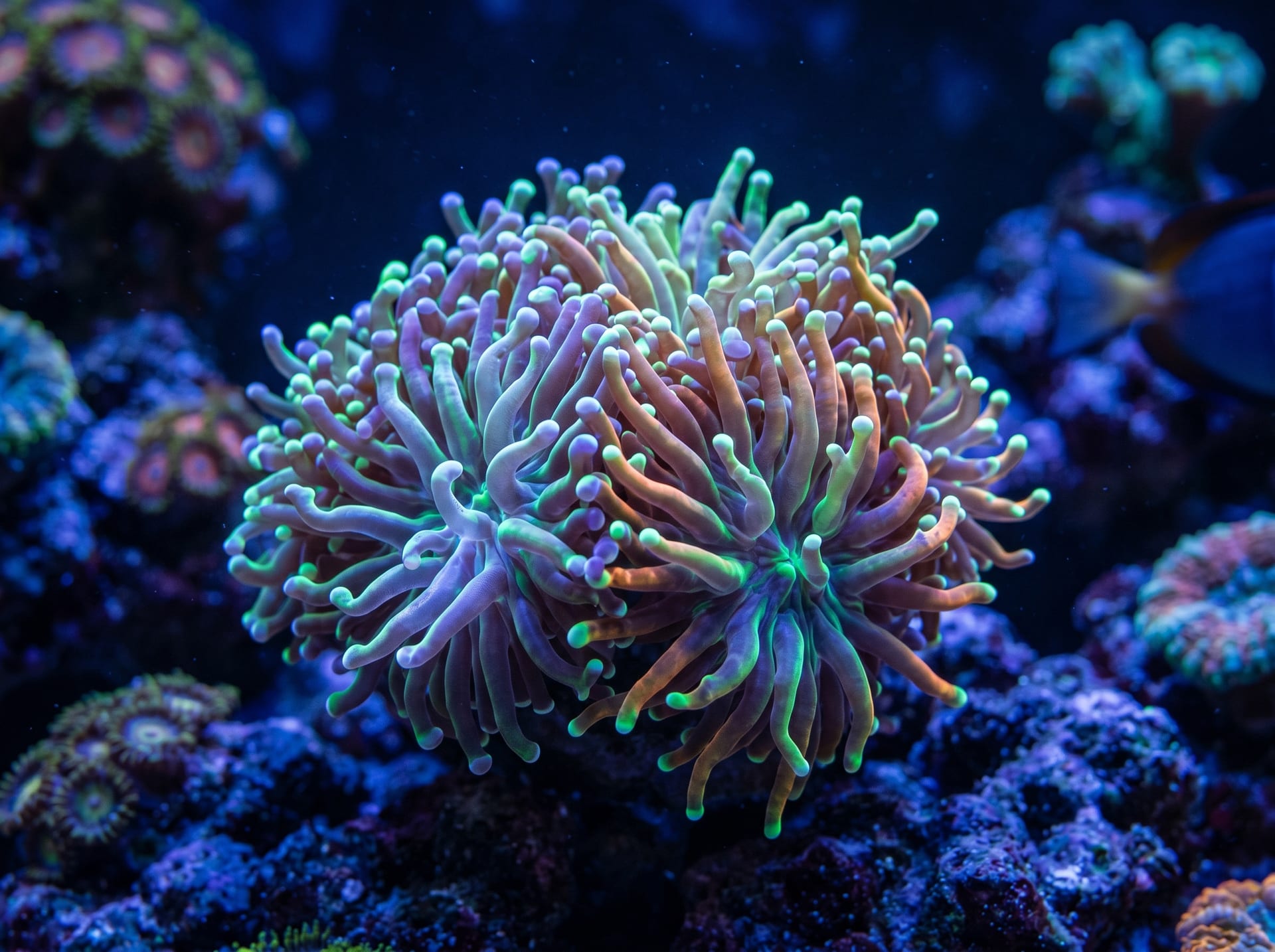
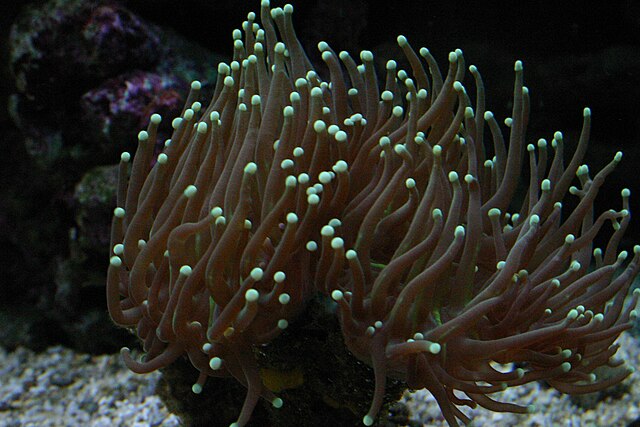
Torch Coral (Euphyllia glabrescens) has slender, rod-shaped (tube-like) polyp tips with small spherical tips at the ends. Many specimens display vibrant colors such as gold, green, and purple, with striking fluorescent coloration under UV light. Of the three species, it is the most delicate and tends to be sensitive to rapid water parameter changes and strong water flow.
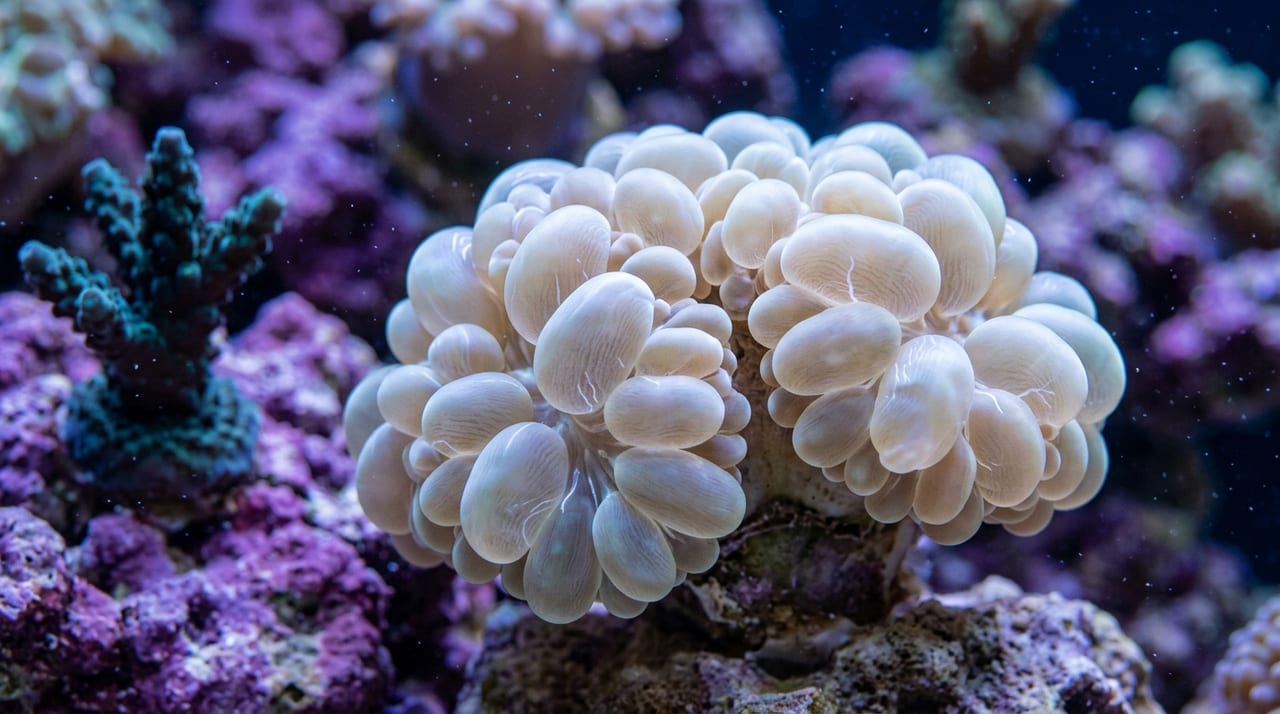
Frogspawn Coral (Euphyllia divisa) has multiple-branched polyps that resemble a frog's egg mass, which is how it got its name. It possesses a calm, natural beauty and is said to be as hardy or hardier than Hammer Coral.
Optimal Water Parameters
Euphyllia species have some tolerance for water parameter fluctuations, but maintaining a stable environment is key to long-term success. The recommended parameters are as follows:
| Parameter | Target Range |
|---|---|
| Temperature | 25–27°C |
| Specific Gravity | 1.025–1.026 |
| pH | 8.1–8.3 |
| KH (Alkalinity) | 8–11 dKH |
| Calcium (Ca) | 400–450 mg/L |
| Magnesium (Mg) | 1250–1350 mg/L |
| Nitrate (NO3) | 5–20 mg/L |
| Phosphate (PO4) | 0.05–0.10 mg/L |
A key caution is not to pursue an ultra-low nutrient (ULN) system too aggressively. If NO3 and PO4 are reduced too much, polyps will retract and the coral may lose its zooxanthellae. Euphyllia species tend to prefer an environment with moderate nutrient levels.
Since rapid KH fluctuations directly cause polyp retraction, aim to keep daily changes within 0.5 dKH. Use two-part dosing or kalkwasser to maintain stability.
Lighting and Water Flow Setup
Lighting: Euphyllia species prefer PAR ranges of 50–150. In high-PAR SPS tanks, position them carefully to avoid excessive light. Newly acquired specimens must always start in lower light and undergo gradual "light acclimation" over 2–4 weeks. Sudden exposure to high light intensity causes bleaching.
Under blue-dominant (450–480nm) LED lighting, colors appear vibrant, but mixing in white spectrum helps maintain polyp health.
Water Flow: Euphyllia species prefer indirect, gentle water flow. Aim for soft polyp movement and avoid strong, direct flow. Excessive flow causes polyp retraction and can trigger Brown Jelly Disease. Using a wavemaker to create randomized, gentle flow is ideal.
Feeding Methods
Euphyllia species have large polyps and actively capture food. Target feeding 1–2 times per week is recommended.
Suitable foods include frozen copepods, mysis shrimp, krill, live brine shrimp, and commercial LPS-specific pellets. Feed when polyps are fully extended (at night or when lighting is dimmed) by gently dispensing small amounts directly onto the polyps with a pipette. Avoid overfeeding, which degrades water quality; feed only what the polyps can readily consume.
Stopping water flow during feeding increases feeding efficiency. A strong feeding response is also a good indicator of overall health and activity.
Propagation (Fragging) Techniques
Euphyllia species are relatively easy to frag. Hammer Coral in particular readily undergoes natural bipartition, sometimes resulting in colony growth without intervention.
Manual fragging involves cutting the coral with a bandsaw or bone cutter. Cut through the entire skeleton including polyps and attach directly to a frag plug with adhesive. Torch Coral is the most delicate, so work in a sterile environment to minimize the risk of bacterial infection at the cut site.
After fragging, allow 2–4 weeks for recovery in an isolated area with low flow and moderate lighting. Once polyps resume normal extension, the frag can be moved to the main tank.
Early Detection and Management of Brown Jelly Disease
The most common disease affecting Euphyllia species is Brown Jelly Disease. Polyp tissue dissolves and becomes a brown, jelly-like mucus. Left untreated, an entire colony can be destroyed within days.
Cause: Stress from strong water flow, physical damage, or rapid water parameter changes triggers the disease, with secondary bacterial infection (often Vibrio species) leading to onset.
Early Signs: Partial polyp retraction with inability to extend, brown mucoid material on the tissue, and blurred tissue boundaries.
Treatment Protocol:
- Immediately isolate the affected specimen
- Physically remove Brown Jelly material with a pipette or soft brush
- Perform a 5–10 minute iodine dip (e.g., diluted Lugol's solution) in the quarantine tank
- Rinse in clean water and return to low-flow isolation
- With early detection, tissue regeneration is possible
To prevent spread, thoroughly disinfect all tools that contacted the main tank water.
Aggression Between Euphyllia Species
Euphyllia species can be aggressive toward each other. Each specimen may extend sweeper tentacles to sting adjacent corals, so maintain adequate spacing—at least 10 cm between individuals.
Torch Coral is particularly aggressive and may damage Hammer or Frogspawn tissue if placed nearby. When mixing different species, plan placement carefully during layout design.
That said, same species (e.g., Hammer to Hammer) may tolerate closer proximity, but individual variation exists—never assume they are compatible without close monitoring.