Green Chromis Overview
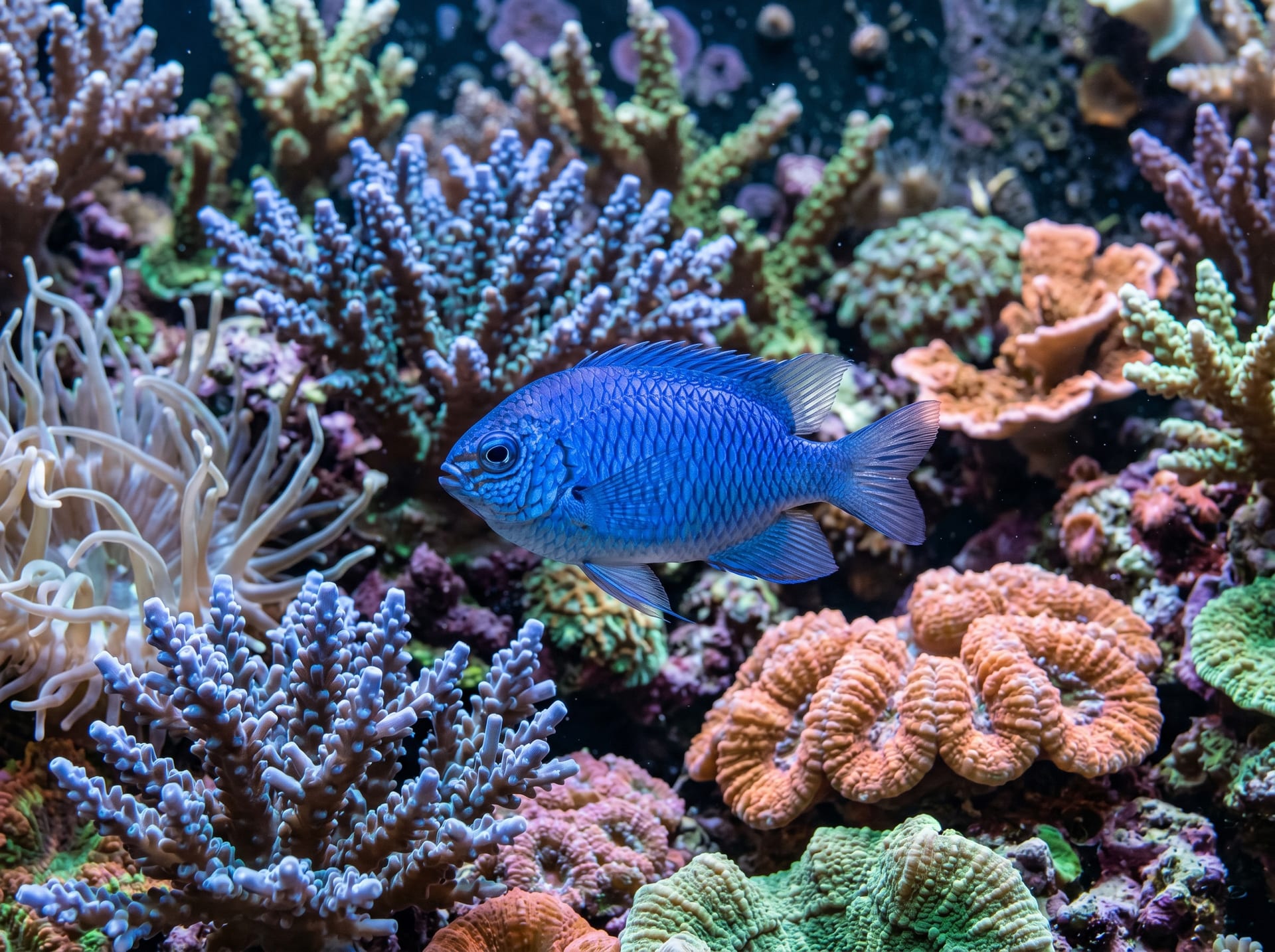
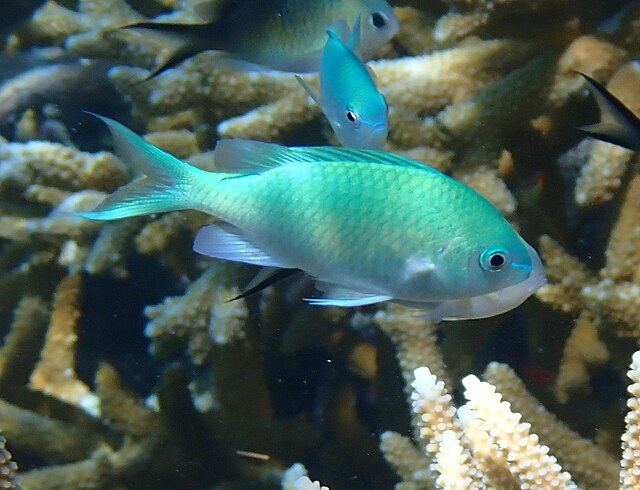
The Green Chromis (Chromis viridis) is a small saltwater fish of the Pomacentridae (damselfish) family, widely distributed in tropical coral reefs from the Indian Ocean to the Pacific Ocean. Even as adults, they reach only about 5-7 cm in body length, and their defining feature is their beautiful coloration that shifts from soft green to blue to silver depending on how light strikes them.
Due to their docile nature and schooling behavior, they have long been cherished as a "quintessential saltwater fish for beginners," kept by enthusiasts ranging from novices to advanced aquarists. This article provides detailed explanations of Green Chromis characteristics, group swimming care fundamentals, health management, and breeding.
Basic Specifications and Characteristics
| Item | Details |
|---|
| Scientific name | Chromis viridis |
| Classification | Pomacentridae, Chromis genus |
| Maximum length | 7 cm (approximately 5-6 cm in captivity) |
| Lifespan | 5-10 years (depends on rearing environment) |
| Distribution | Red Sea, Indian Ocean, Western Pacific, Australia |
| Temperament | Gentle (hierarchical disputes among conspecifics) |
| Difficulty level | Beginner to intermediate |
Their greatest appeal is their "group swimming." When 10 or more swim together simultaneously, the aquarium creates a spectacular landscape resembling an actual coral reef. While most damselfish are aggressive, this species is relatively gentle and ideal as a tank mate in reef tanks.
Required Care Equipment
Tank Size
| Stocking level | Recommended tank size |
|---|
| 3-5 fish | 60 cm (60 L or more) |
| 5-10 fish | 90 cm (120 L or more) |
| 10-20 fish | 120 cm or larger |
For enjoying group swimming, 90 cm or larger is ideal. With insufficient water volume, hierarchical disputes intensify, causing weaker individuals to be cornered.
Water Parameters
| Parameter | Target |
|---|
| Water temperature | 24-27°C |
| Specific gravity (salinity) | 1.023-1.026 |
| pH | 8.1-8.3 |
| Ammonia/Nitrite | 0 mg/L |
| Nitrate | 20 ppm or below |
| KH (Alkalinity) | 8-11 dKH |
While a hardy species, they are sensitive to sudden temperature fluctuations (changes of 2°C or more) and salinity shifts, so it is important to maintain stable water temperature with heaters and coolers.
Filtration
- Protein skimmer: Essential for removing nitrates and organic matter
- Live rock: The core of biological filtration. Since Green Chromis have a habit of hiding in crevices of live rock, adequate cavities are necessary
- Flow rate: 10-20 times the total water volume per hour is the guideline (gentle flow is sufficient)
Tips for Group Swimming Care
Introduction Considerations
While Green Chromis are schooling fish, attention to tank capacity is necessary even when introducing multiple fish at once.
Recommended introduction method:
- Introduce 6 or more fish simultaneously (odd or even numbers): With too few fish (3 or fewer), hierarchical disputes concentrate and weaker individuals are prone to death. Introducing 6 or more at once distributes stress.
- Always perform quarantine (QT): Observe in a saltwater isolation tank for 2-4 weeks, confirm the absence of white spot disease and velvet disease, then transfer to the main tank.
- Use drip acclimation: Gradually adjust water temperature, specific gravity, and water quality over 30-60 minutes.
Hierarchy and Social Structure
A clear hierarchy forms within the school. The highest-ranking individual (alpha) functions as a male, and protogyny (female-first hermaphroditism) where sex change occurs as the school shrinks has also been reported.
After the hierarchy stabilizes, they school stably; however, adding new individuals later causes hierarchical disputes to resurface. Introduce all fish at once if possible, and avoid adding individuals later.
Managing Aggression
Among conspecifics, territorial disputes can occur over crevices in live rock and spawning sites. The following measures are effective:
- Provide adequate hiding places (live rock cavities, shelters)
- Maintain large schools in spacious tanks (120 cm or larger)
- Increase feeding frequency (2-3 times daily in small amounts): Reduce disputes during hunger
Feeding
They are omnivorous and eat readily. A balanced diet is important for maintaining health and coloration.
| Feedstuff | Frequency | Notes |
|---|
| Marine fish flakes/pellets | Daily, twice | Primary food |
| Frozen brine shrimp | 3x per week | Protein source |
| Frozen copepods | 2x per week | Small particles readily eaten |
| Frozen daphnia (chlorella-added) | 1-2x per week | Maintains coloration |
Note: Feed only the amount that will be consumed in 2-3 minutes at a time. Uneaten food leads to water quality deterioration and increased nitrate levels.
Tank Mate Compatibility
While gentle Green Chromis can coexist with many fish species, some require careful consideration for compatibility.
| Compatible species | Caution or incompatible species |
|---|
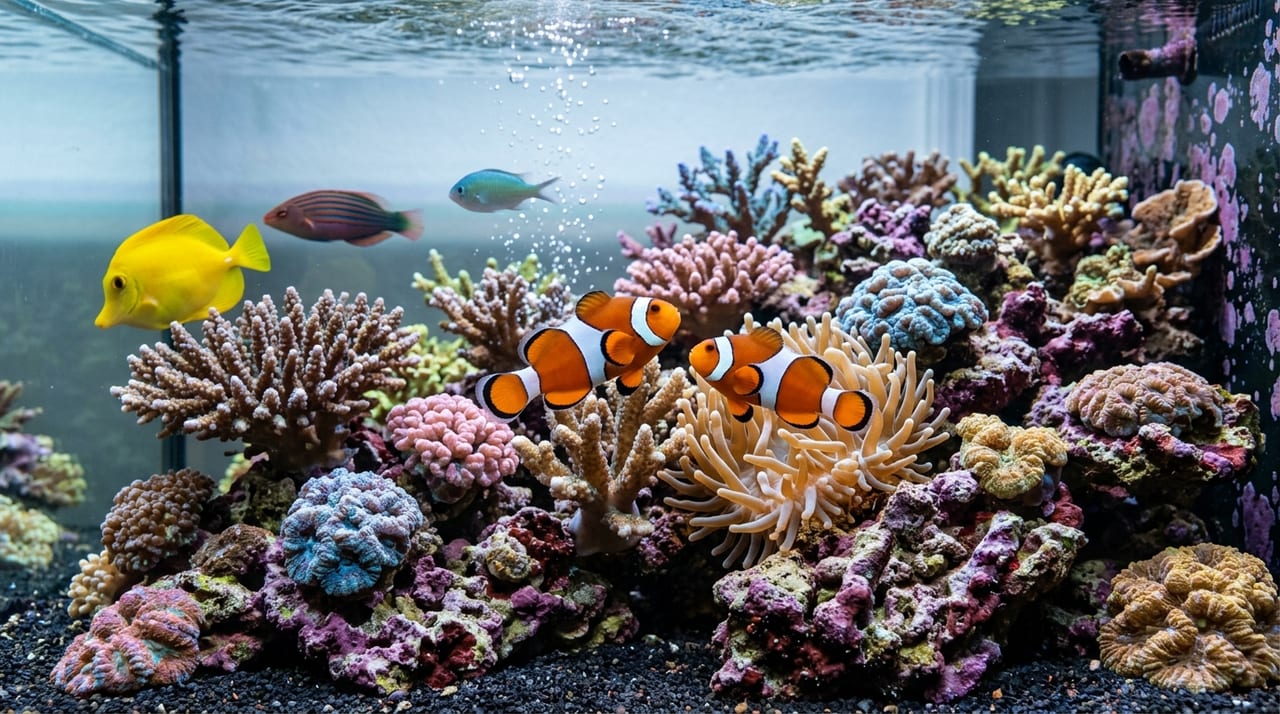
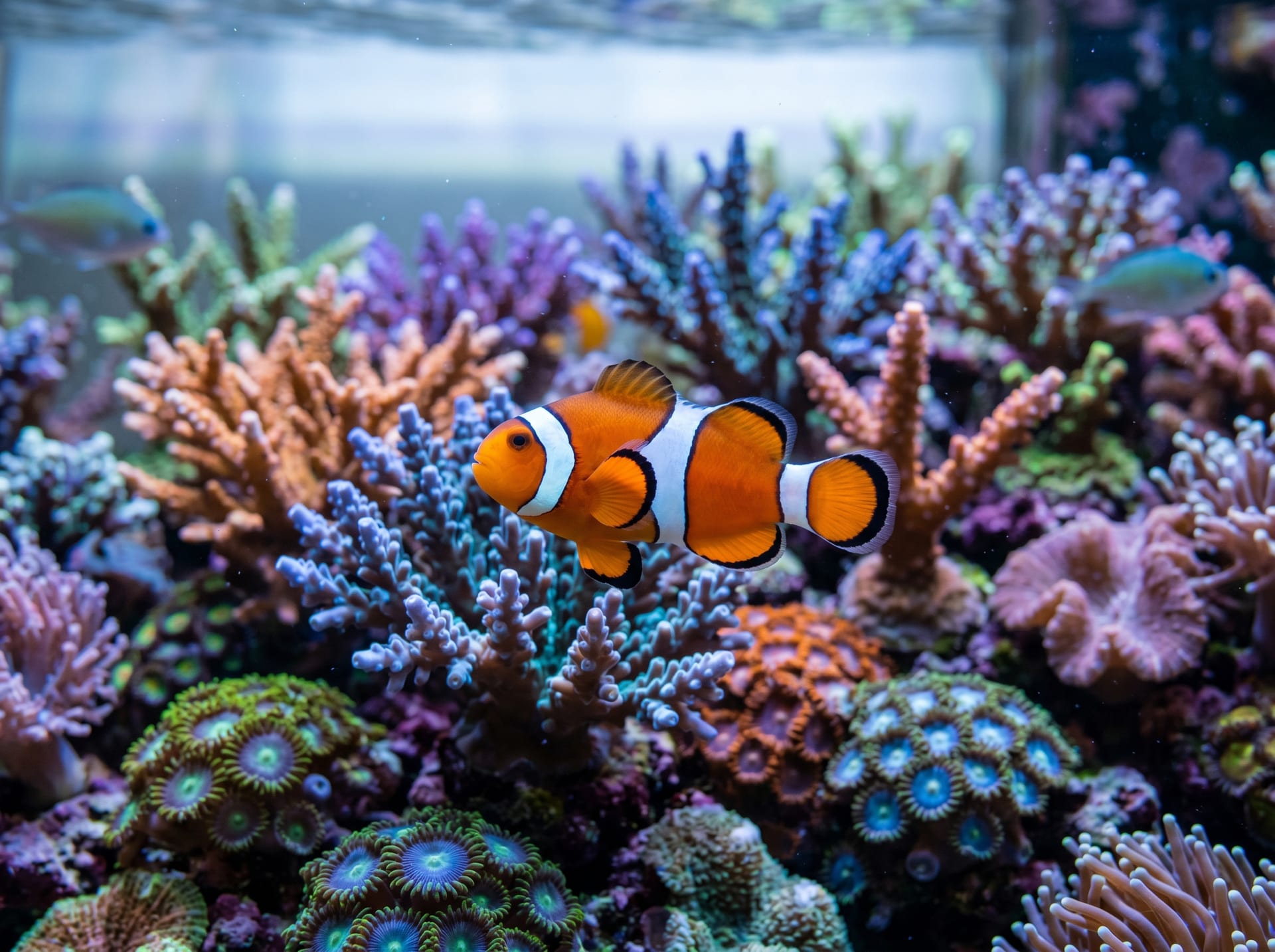
| Clownfish (Clownfish, Ocellaris clownfish) | Scorpionfish, lionfish (predated upon) |
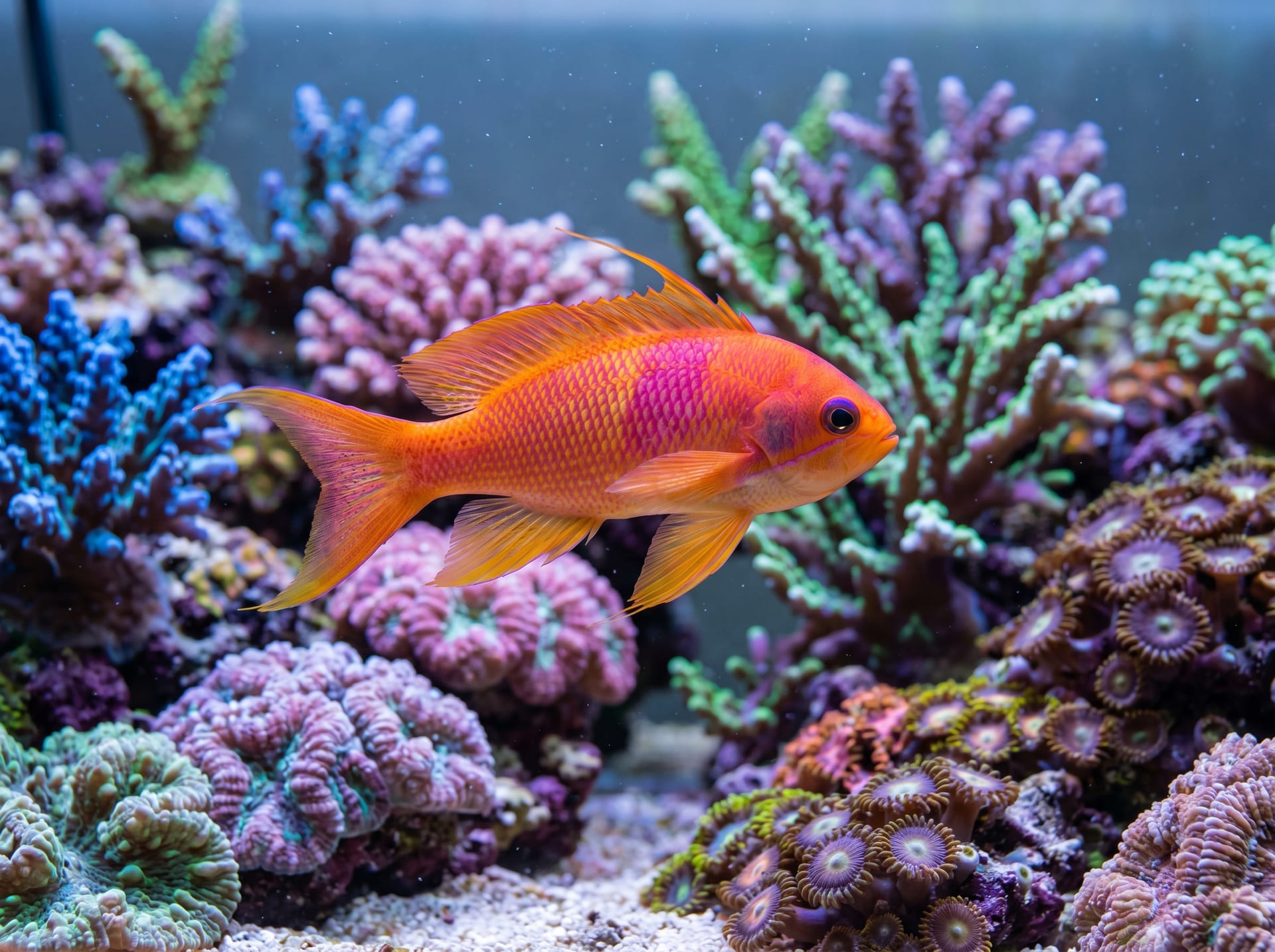
| Anthias, fairy basslets | Large angelfish (may attack Green Chromis) |
| Gobies (whitesocksgobby, etc.) | Conspecific damselfish (territorial disputes) |
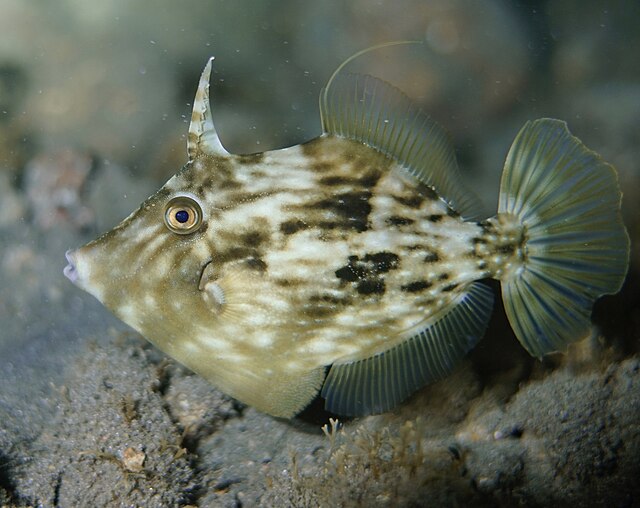
| Tangs (yellow tang, etc.) | Pufferfish, filefish (fin nipping) |
| Blennies | — |
Their compatibility with reef tanks is excellent, and there are no issues with cohabiting with soft corals and LPS corals. However, while they do not predate on sea cucumbers, urchins, shrimp and other invertebrates, their active swimming can irritate corals.
Health Management and Disease Prevention
Common Diseases
- White spot disease (Cryptocaryoniasis): White spots on the body surface. Treat with medicated baths (copper treatment) or hyposalinity (specific gravity 1.009).
- Velvet disease (Oodiniosis): Golden powdery substance on body surface. More severe than white spot disease with faster progression. Copper treatment is effective.
- Lymphocystis: Wartlike white growths. Viral in nature and may resolve naturally.
The basis of prevention is quarantine. Always observe newly purchased individuals in an isolation tank for 2-4 weeks, confirm the absence of disease, then transfer to the main tank.
About Breeding
Green Chromis have been reported to breed in aquariums and are attracting attention as "small saltwater fish that breeders can attempt."
Breeding Behavior
- Spawning site: Males clean the surface of live rock or hard substrate with their mouth, then coax females to spawn.
- Spawning season: Most common in spring and summer when water temperature rises, though spawning may occur year-round in stable environments.
- Egg care: Males protect eggs by fanning with their fins to supply oxygen.
- Hatching: Hatch approximately 2-3 days later at 25-27°C. Larvae undergo a planktonic feeding stage before settling.
Difficulty of Raising Fry
Rearing fry (larvae) is difficult; after hatching, they are extremely small planktivores, so they die easily on commercial foods. Success requires mass culture of rotifers (S-type) and proper water flow management—a challenge for advanced aquarists.
Summary
Green Chromis are an ideal saltwater fish for beginners, combining beautiful group swimming, gentle temperament, and hardiness.
- Exhibit maximum beauty in group schools of 10 or more
- Introduce 6 or more simultaneously to distribute hierarchical disputes
- Practice thorough quarantine (QT) to prevent introduction of white spot disease
- Ideally enjoy group swimming in tanks of 90 cm or larger
Enjoy Green Chromis for years to come through stable group swimming care, whether as a main or supporting fish in your reef tank.