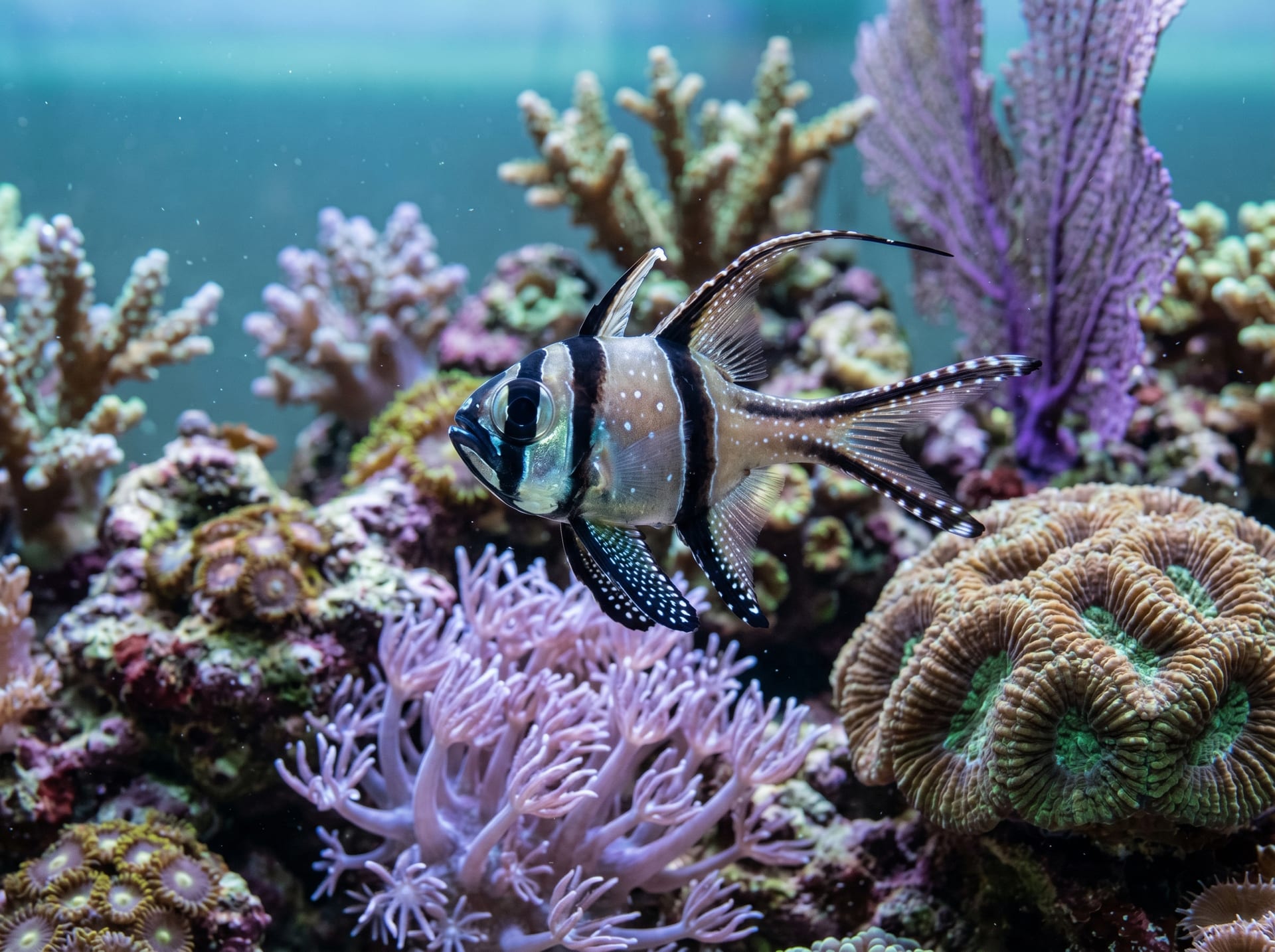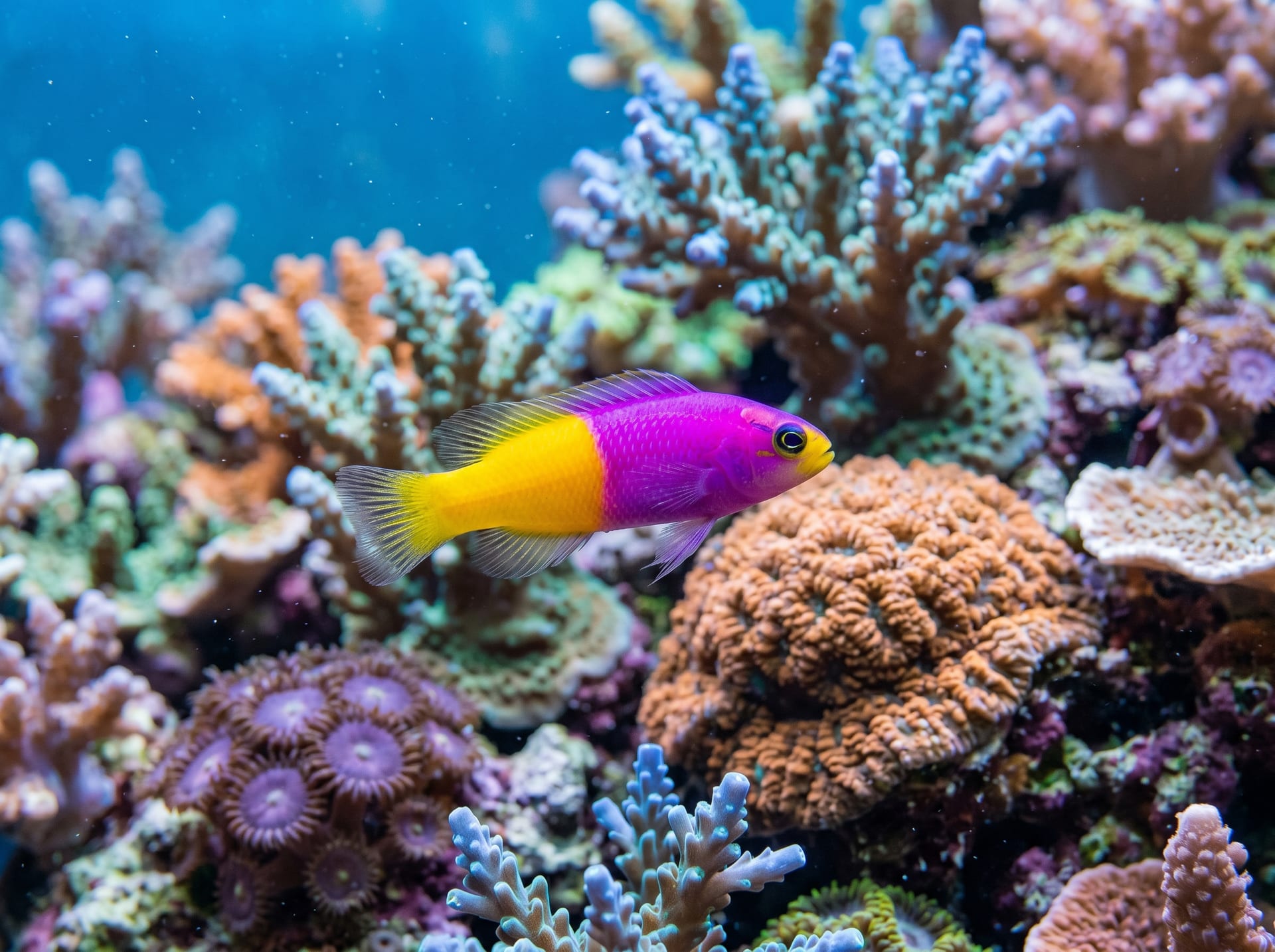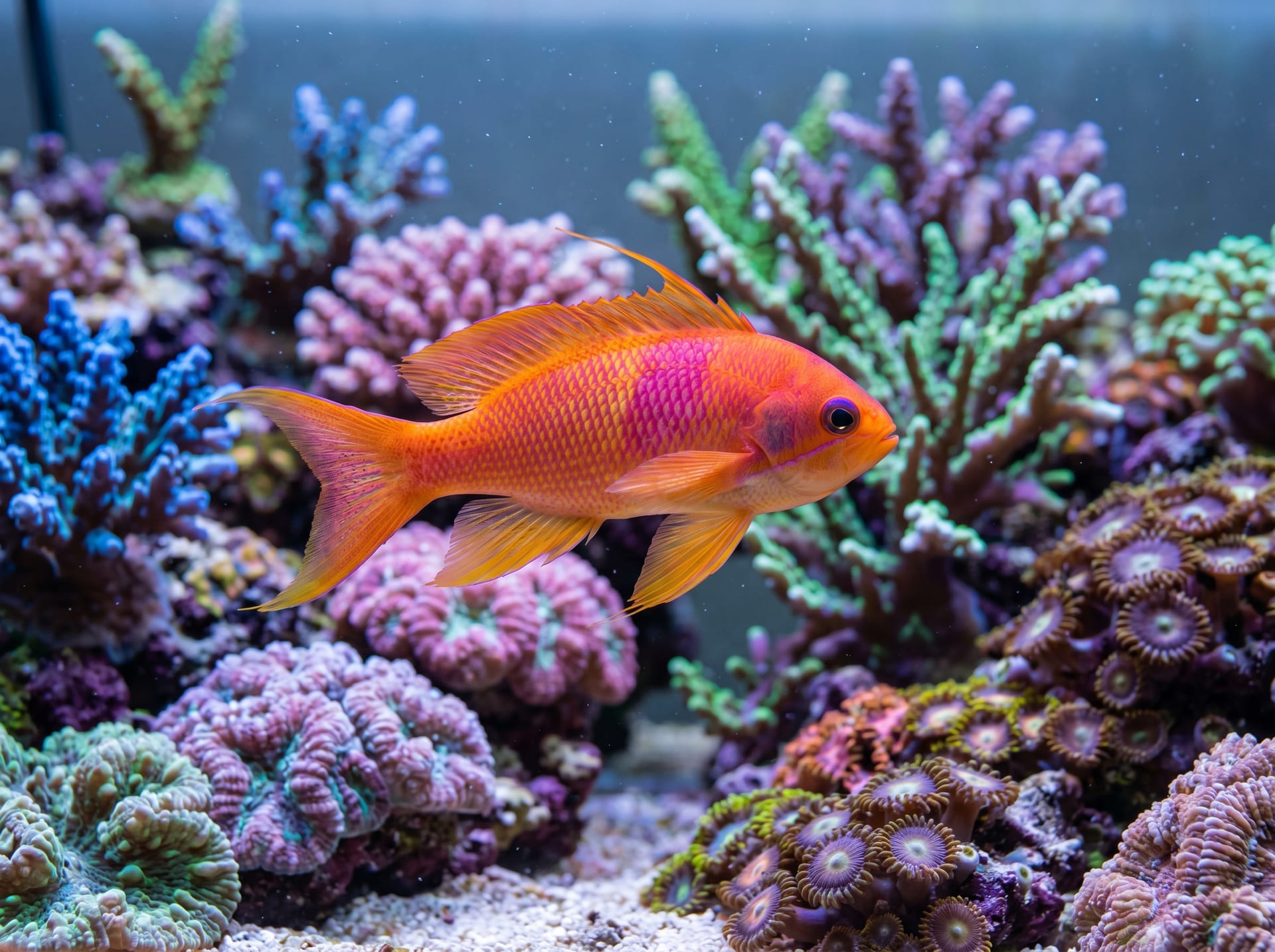
AI-generated image
Anthias
IntermediateA beautiful schooling fish in vivid pink or orange. Spectacular when kept in groups.
Difficulty
Intermediate
Temperature
23〜26℃
Lifespan
3-7 years
Size
8-15cm
Diet
Frozen food, Artificial feed
About
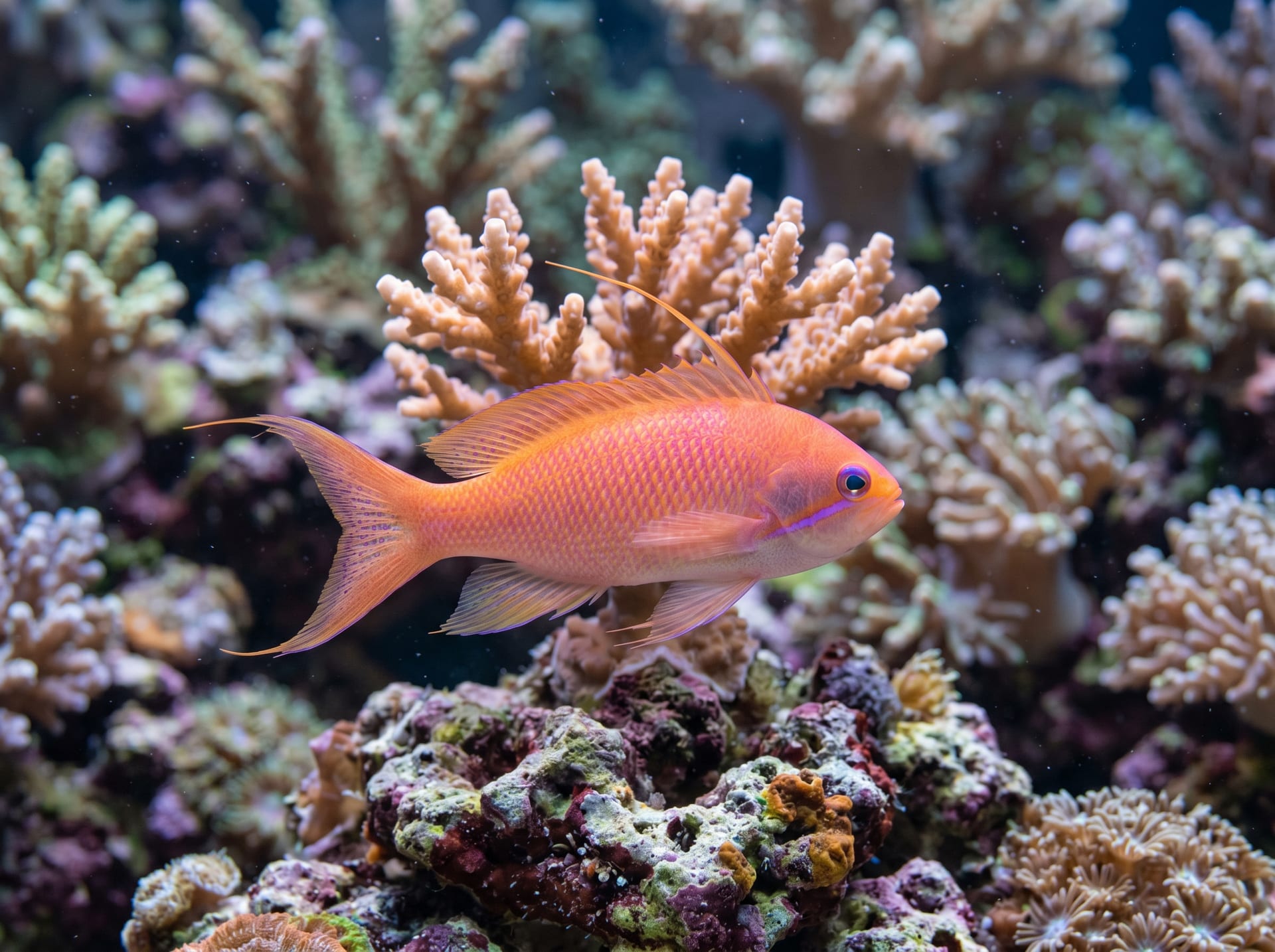
Anthias (family Anthiadidae) are a group of vibrant, schooling marine fishes found on coral reefs throughout the Indian and Pacific Oceans. Forming large, shimmering aggregations on reef drop-offs, they provide some of the most spectacular natural displays in the marine world. The lyretail anthias (Pseudanthias squamipinnis), the most commonly kept species, exhibits sexual dichromatism — females are orange while males sport purple longitudinal stripes — and a harem social structure in which dominant females can sex-change to male if the dominant male is lost. In aquariums, groups of five or more are ideal for natural schooling behavior. Their high metabolic rate demands three to five small feedings daily, the main challenge of their husbandry. A combination of frozen brine shrimp, mysis, and fine-grained pellets is the standard dietary approach.
Source: Wikipedia (CC BY-SA 4.0)
Lifespan of the Anthias
The Anthias lives 3-7 years.
Size of the Anthias
The Anthias grows to 8-15cm.
Basic Info
Origin
Coral reefs of the Indian and Pacific Oceans
Lifespan
3-7 years
Size
8-15cm
Temperature
23〜26℃
Diet
References & Sources
Edited & verified by: BreederDirect editorial team
The taxonomic, regulatory, and husbandry data on this page are compiled and verified against the authoritative primary sources below.
Primary sources
Anthias Listings
Loading latest listingsFind listings for this species