Fairy Basslet School Tank Care Guide | Harem Management and Feeding Optimization
Guide to successfully maintaining school tanks for anthias and fairy basslets. This article covers harem structure, sex change mechanisms, multi-daily feeding management, tank compatibility, and ideal tank sizing.
Key Takeaways
Guide to successfully maintaining school tanks for anthias and fairy basslets. This article covers harem structure, sex change mechanisms, multi-daily feeding management, tank compatibility, and ideal tank sizing.
Related Species
Vibrant anthias schooling over coral reefs is one of the most beautiful sights in marine aquariums. Purple Queen, Lyretail Anthias, and rare fairy basslets from the western Pacific captivate enthusiasts with their delicate coloration and schooling beauty. However, to keep these fish healthy over the long term requires specialized knowledge that goes beyond basic saltwater fish care. This article explains the essentials of anthias and fairy basslet husbandry in detail.
Anthias and Fairy Basslets: Overview
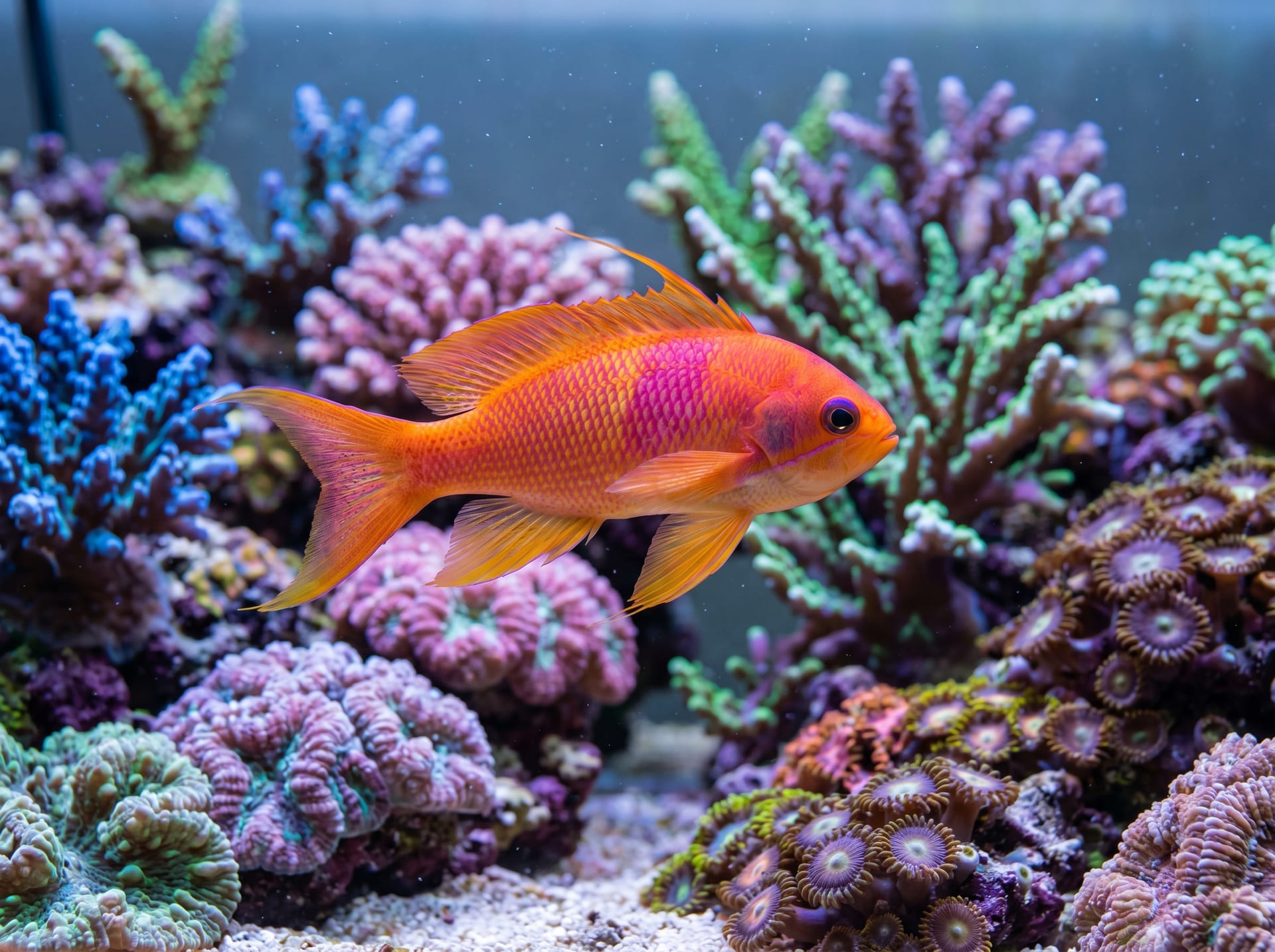
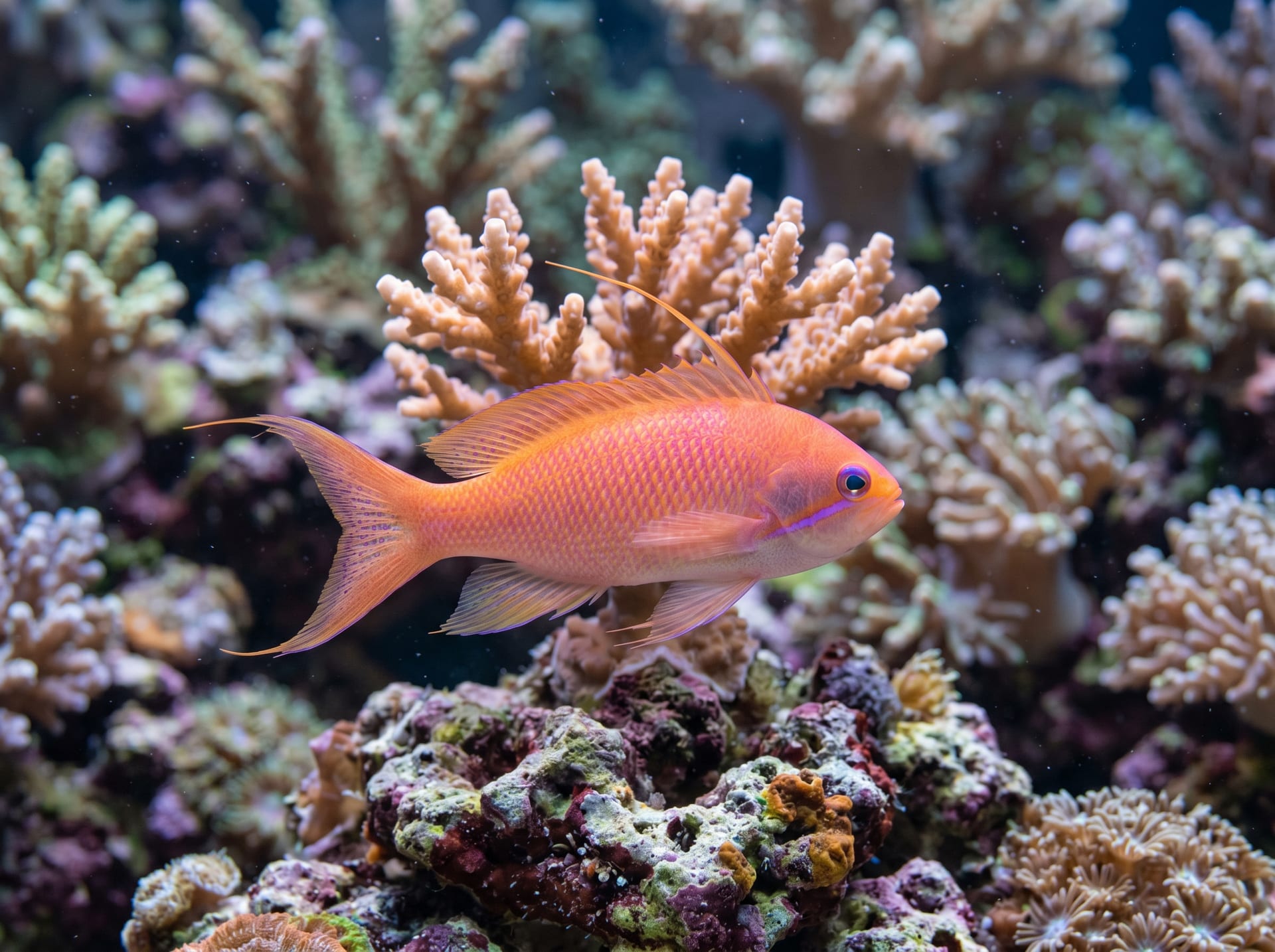
Fish called "Anthias" and "Fairy Basslet" in aquariums are small to medium-sized marine fish belonging to the family Serranidae (or subfamily Anthiadinae) within the order Perciformes.
Common species in the hobby
Japanese Name
English Name
Characteristics
キンギョハナダイ
Lyretail Anthias
Most common. Females are orange; males turn red-purple.
ハナゴイ
Purple Queen
Entirely purple with beautiful schooling.
ディスパーアンシアス
Dispar Anthias
White to orange contrast.
スクワミピンニスアンシアス
Squamipinnis Anthias
Closely related to the Lyretail Anthias.
✍️
BreederDirect Editorial
The BreederDirect editorial team specializes in care information for animals, covering veterinary care and breeding to deliver beginner-friendly guides.
Find Marine Fish on BreederDirect
Buy directly from verified breeders
Browse Related Listings
Find Marine Fish listings related to this article on BreederDirect. Buy directly from verified breeders.
The most distinctive feature of anthias is their sex-change ability, known as "protogyny."
The largest and most dominant individual in a group functions as a male (or as the sole dominant individual).
When the male dies or is removed, the most dominant female in the group undergoes sex change into a male over a period of days to weeks.
In the wild, a "harem" consisting of multiple females and one male is the basic social unit.
Harem Management in Tank Environments
Understanding and managing this behavior is key to maintaining schooling over the long term.
One-to-Multiple Structure Is Ideal
A stable setup typically includes one male with three to five or more females.
When only one or two females are present, courtship stress from the male concentrates on those individual fish.
Keep Only One Male
Multiple males of the same species will engage in intense territorial conflicts.
Even males of different species can be attacked if their coloration is similar.
Balancing School Size and Tank Size
A 90-cm tank (approximately 200 liters) is the practical minimum for one male with three to five females.
Larger tanks allow for larger groups.
Tank Size and Stocking Density
Anthias are midwater swimmers that spend most of their time in open water (middle to upper portions of the tank).
Minimum tank size: 90 cm (for one school)
Ideal tank size: 120 cm or larger
Rock crevices (live rock) are important as refuges for females. Ensure sufficient live rock volume.
Feeding Management: The Critical Priority
The most challenging aspect of keeping anthias and fairy basslets is feeding management. These fish have very high metabolisms, and once-daily feeding results in nutritional deficiency.
Feeding Frequency
Twice to Thrice Daily Feeding Is Ideal
In nature, they constantly forage for plankton in the water column. With once-daily feeding, while problems may not appear immediately, fish often become thin over time, and chronic malnutrition frequently becomes the cause of death.
Recommended Food Types
Frozen brine shrimp: Easy to digest with high palatability. Powdered varieties also work well.
Frozen daphnia: Appropriate particle size for smaller species.
Frozen copepods (Copepoda): The most natural food source; particularly effective for wild-caught fairy basslets.
Small pellet food: High-quality marine pellets. A stable nutritional source when feeding multiple times daily.
Freeze-dried brine shrimp: Rehydrate in water before feeding.
Feeding Techniques
Keep water circulation pumps running while feeding so food remains suspended in the water (mimicking natural foraging behavior).
Use automatic feeders to achieve consistent twice to thrice daily feeding schedules.
If other fish (tangs, wrasses, etc.) consume all the food, arrange feeding so anthias get to the food first.
Managing Weight Loss
By the time weight loss becomes visible in anthias, they may already be severely malnourished.
Preventive Measures
Monitor the belly line daily; increase feeding frequency if it begins to thin.
Watch for increased body transparency or decreased activity levels—these are warning signs.
Recovery Methods
Feed frozen brine shrimp three to four times daily.
Reduce competition from other fish (consider moving anthias to a separate tank).
Remove sources of stress (flickering lights, aggression from other fish).
Introduction Considerations
Simultaneous Introduction Is Essential
Adding fish later often results in the existing fish (especially the male) attacking newcomers aggressively. Introducing the entire group simultaneously minimizes territorial conflict.
Quarantine
Anthias are susceptible to parasites like Amyloodinium (velvet) and Cryptocaryon (white spot disease). Quarantine in a separate tank for about four weeks with observation and treatment if necessary is recommended.
Selecting Fairy Basslet Species
Rare fairy basslet species (Lori's Anthias, Bartlett's Anthias, etc.) are typically wild-caught and face high transport stress and parasitic risk. When captive-bred individuals are available, they are strongly recommended.
Coexistence with Reef Tanks
Anthias and fairy basslets are known as "reef-safe" fish that do not harm corals. They are highly compatible with coral tanks.
However, they may consume small filter-feeding shrimp and tiny ornamental shrimp, so caution is needed when keeping them with crustaceans.
Finding Anthias and Fairy Basslets on BreederDirect
BreederDirect sometimes features anthias from marine fish breeders that are already acclimated to feeding. Fish accustomed to long-term tank care are far easier to manage than wild-caught shop specimens and have lower initial feeding refusal rates.
Before purchase, confirm the current feeding regimen and frequency, and whether the school is being sold together or individually. This makes setup after bringing them home much smoother. To enjoy beautiful schooling for years to come, look for trustworthy specimens on BreederDirect.