Care Guide for Anthias Fish | Techniques to Enhance Schooling Beauty
Explains care methods for popular Anthias fish in marine aquariums. Introduces species-specific characteristics, feeding tips, schooling requirements, sex transformation mechanisms, and tankmate compatibility precautions.
Key Takeaways
Explains care methods for popular Anthias fish in marine aquariums. Introduces species-specific characteristics, feeding tips, schooling requirements, sex transformation mechanisms, and tankmate compatibility precautions.
Related Species
The Anthias family are stunning marine fish that swim in vivid schools through coral reef midwaters. Pink, orange, purple, yellow and gemstone-like body colors, along with gracefully flowing fins, add brilliance to your aquarium. However, Anthias are somewhat challenging among marine fish to keep, requiring techniques in feeding and maintaining schools. This article covers everything from species selection for Anthias fish to tank environment, feeding methods, and school management.
Popular Species and Characteristics of Anthias Fish
Over 200 species of Anthias are known worldwide, but only a limited number are available in the aquarium trade.
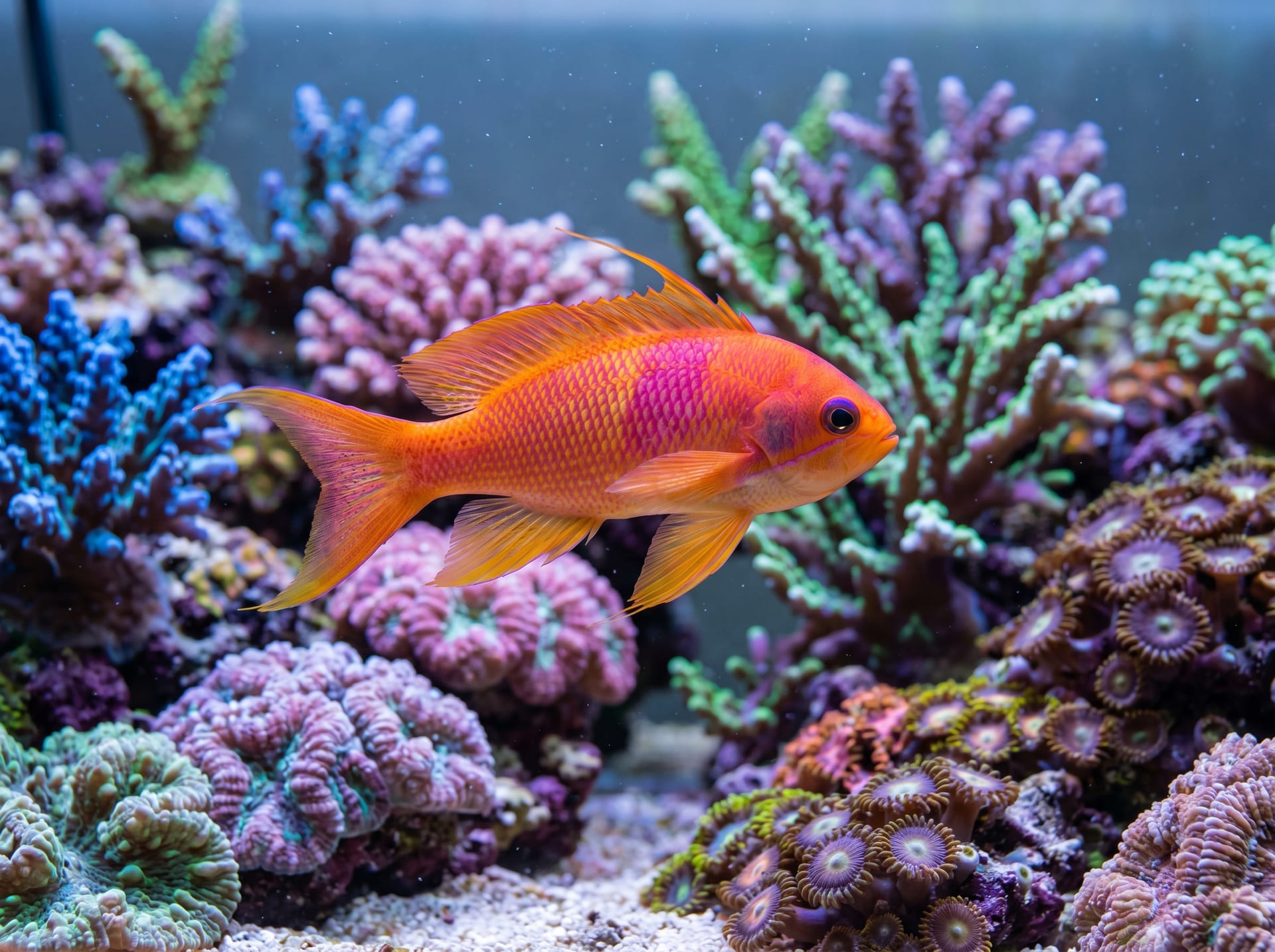
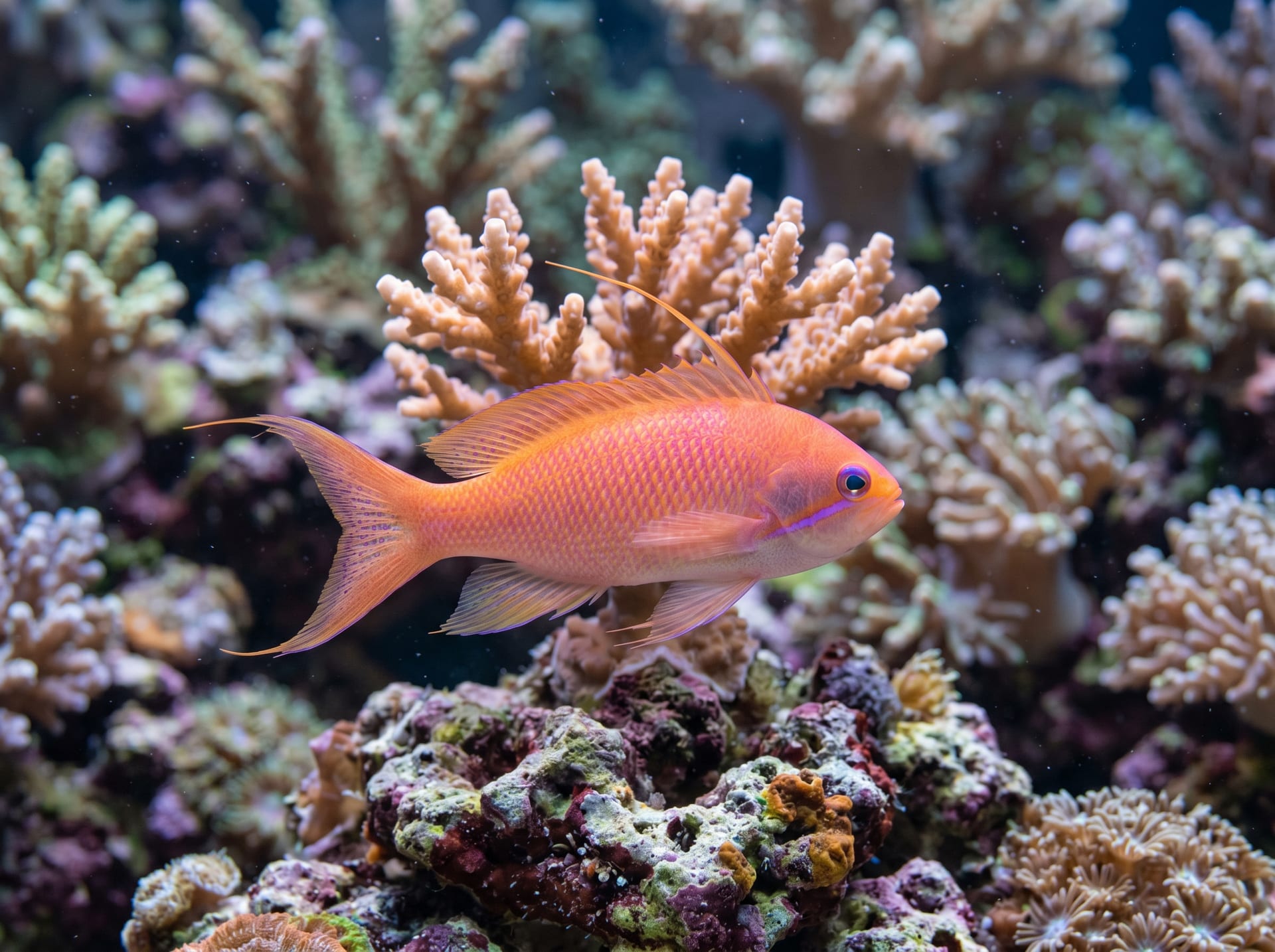
Squarespot Anthias (Pseudanthias squamipinnis): The most popular species, with males displaying reddish-purple and females orange in a beautiful two-color display. Relatively hardy and feeding well, it's ideal for Anthias beginners.
Purple Queen Anthias (Pseudanthias pleurotaenia): Characterized by a square purple patch on the male's side, recommended for intermediate to advanced keepers.
Dispar Anthias (Pseudanthias dispar): Males display vibrant red-orange; being small-sized, they can be kept in smaller aquariums.
Bartlett's Anthias (Pseudanthias bartlettorum): A beautiful two-tone of yellow and pink, known for good feeding habits.
Flame Anthias (Pseudanthias pascalus): The entire body is a pale purple to pink color, with schooling beauty unmatched among Anthias. However, feeding is difficult and newly imported individuals are susceptible to stress, making them suited for advanced keepers.
Tank Environment and Care Conditions
Anthias require sufficient swimming space.
Tank size: For enjoying schooling, a 90cm aquarium (150L) or larger is recommended, with 5-7 individuals ideal for group keeping.
Water temperature: 24-26°C; special attention is needed for high summer temperatures. Above 28°C stress increases and disease risk rises.
✍️
BreederDirect Editorial
The BreederDirect editorial team specializes in care information for animals, covering veterinary care and breeding to deliver beginner-friendly guides.
Find Marine Fish on BreederDirect
Buy directly from verified breeders
Browse Related Listings
Find Marine Fish listings related to this article on BreederDirect. Buy directly from verified breeders.
Water flow: They prefer moderately strong current; gentle circulation in the tank allows for naturally close swimming behavior.
Layout: Create arches or cave-like structures with live rock, ensuring hiding spaces for Anthias. However, to preserve swimming space, concentrate live rock at the walls or bottom, leaving the center open.
Lighting: Standard LED lighting for coral tanks works, though lighting that's too bright may cause them to hide frequently; dimmable fixtures are convenient.
Water quality: Ammonia and nitrite at zero, nitrate below 10ppm is ideal; many species are sensitive to water quality deterioration.
Feeding Tips and Methods
The greatest challenge with Anthias is feeding. In nature they feed on plankton (zooplankton), and many individuals take time to transition to artificial diets.
The first step in feeding is offering frozen copepods (copepoda) or frozen brine shrimp. These closely resemble natural food and almost all individuals will eat them.
Once acclimated to frozen food, gradually mix in granular artificial feed, eventually transitioning entirely to artificial pellets. This transition typically takes 2-4 weeks.
Anthias don't eat large amounts at once; they use a "frequent small feeding" style, consuming small amounts repeatedly. Therefore, 3-5 feedings daily in small portions is ideal. If work makes daytime feeding difficult, use an automatic feeder.
Insufficient food intake causes some individuals to become thin and weakened, so check body roundness daily; if individuals are thinning, increase feeding amounts.
Sex Transformation Mechanism and Group Management
The most fascinating aspect of Anthias biology is "protogyny"—all individuals are born female, and the most dominant female in the group transforms into a male. If the male dies or is removed, the next most dominant female changes sex. This sex transformation occurs naturally in captivity, and you can observe the process where a female at purchase transforms into male coloration. The key point in group management is limiting the number of males. Typically, one male per group is appropriate; multiple males cause intense fighting. When adding new individuals, adding female individuals is safer. A group size of 5-7 is manageable, while 3 or fewer risks weaker individuals being chased constantly during hierarchy disputes. When purchasing, forming groups from individuals bought simultaneously at the same shop speeds acclimation.
Tankmate Compatibility and Important Combinations to Avoid
Anthias are generally peaceful fish and can be kept with many marine fish species.
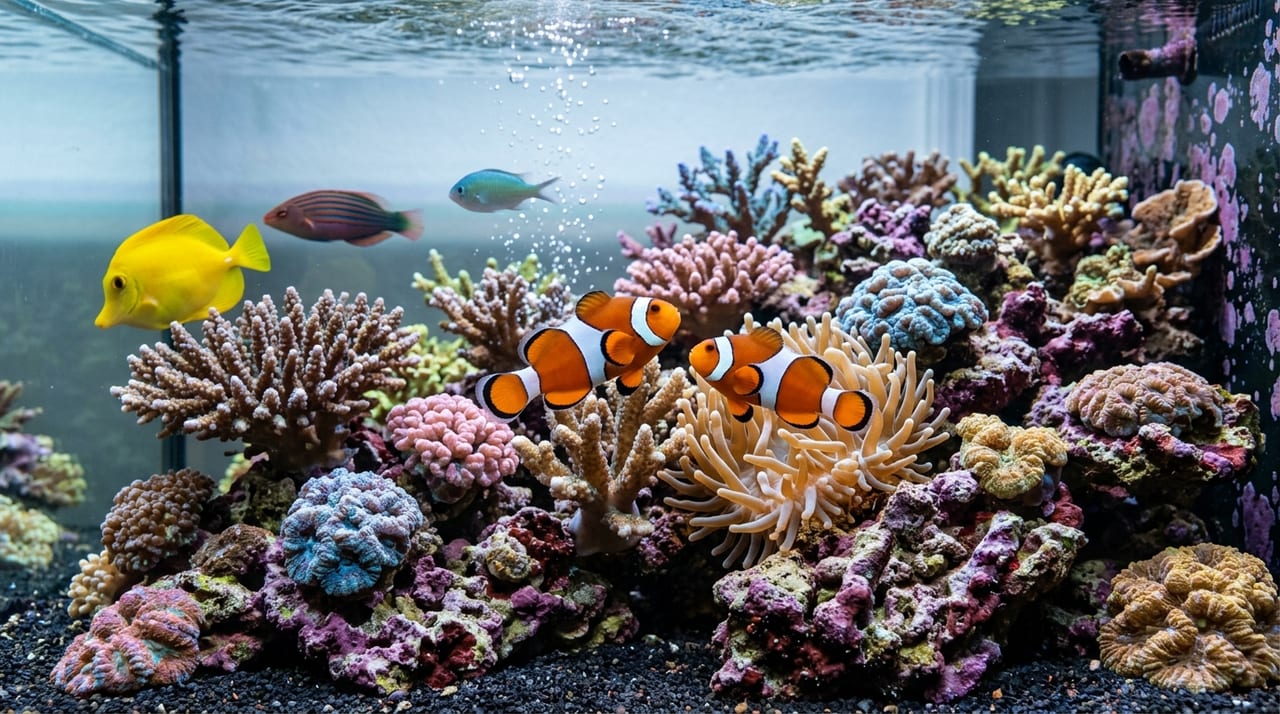
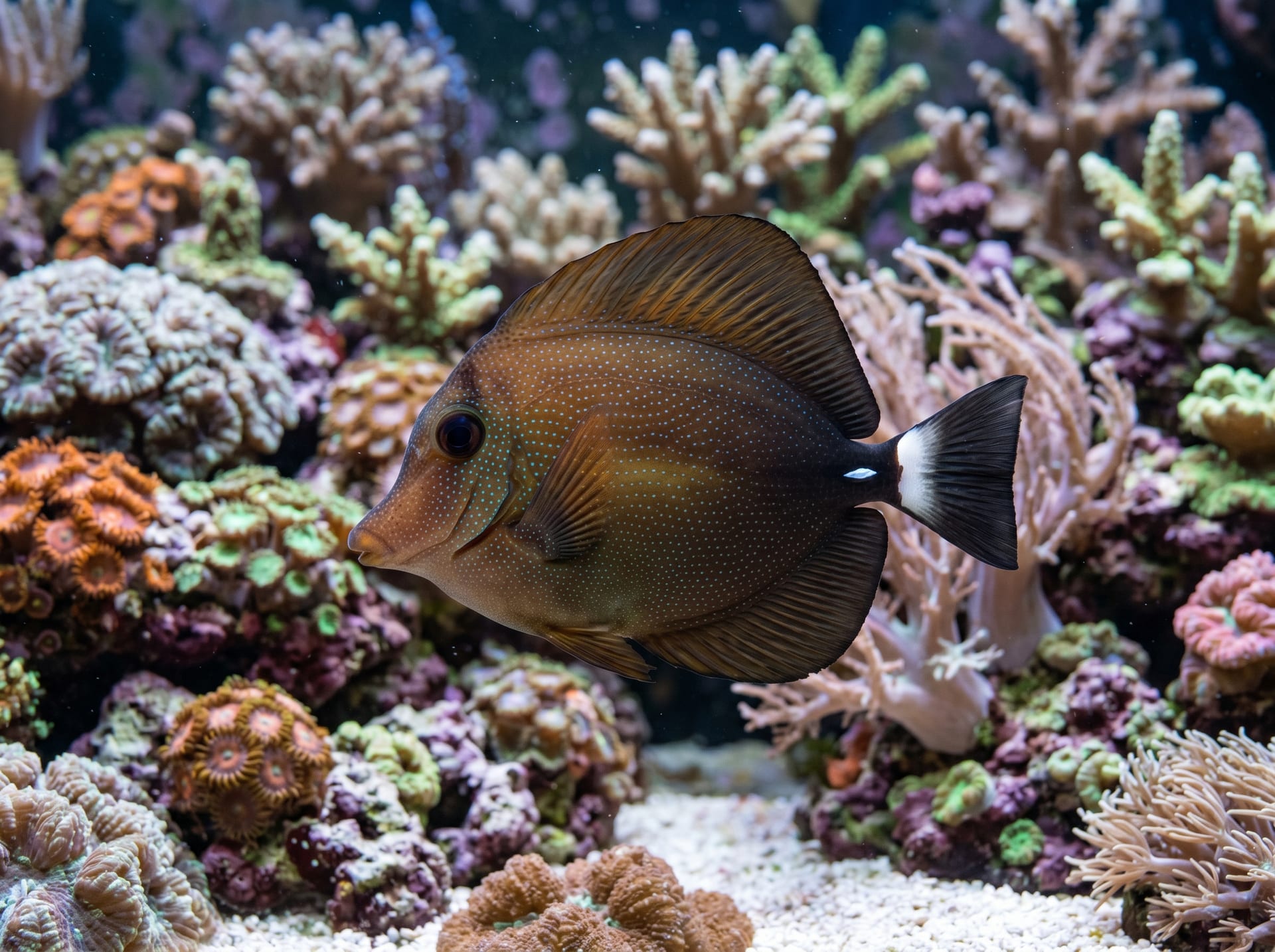
Compatible tankmates: Clownfish, gobies, small angelfish (Centropyge species), tangs, and wrasses can be kept without issues.
Different species of Anthias can be kept together, but species with similar size and coloration tend to fight; caution is needed. For example, Squarespot Anthias and Purple Queen Anthias differ in body size and can be kept together relatively safely.
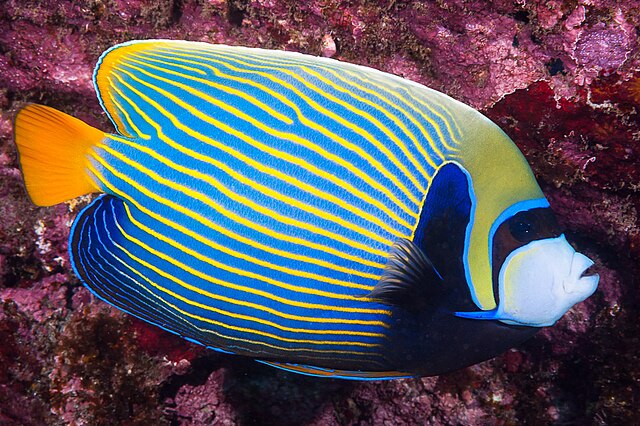
Tankmates to avoid: Large angelfish (such as Regal Angelfish) may chase Anthias. Aggressive dottybacks are also a threat to Anthias. Among tangs, Yellow Tang is peaceful, but highly territorial species like Scopas Tang may attack Anthias.
Anthias tend to flee into rock crevices when startled, so a layout with escape routes is important. Additionally, Anthias frequently jump out without a tank cover, so a cover is essential.
Group Keeping of Anthias
Anthias form large schools in nature and group keeping is recommended in aquariums. Representative species include Squarespot Anthias (Pseudanthias squamipinnis), Purple Queen Anthias (P. tuka), and Bartlett's Anthias (P. bartlettorum).
Key points for group keeping include a basic "harem" composition of one male with 3-5 females. Anthias are protogynous fish (transforming from female to male), and when a male is absent, the most dominant female transforms into a male.
In nature, Anthias constantly feed on plankton, so in aquariums, 3-4 feedings daily in small portions is ideal. Use of automatic feeders is also effective. Additionally, they have a habit of schooling in high-flow areas, so ensure adequate current and swimming space. Aquariums of 90cm or larger are recommended.
Welcome Anthias to BreederDirect
Schooling Anthias are the jewels of coral aquariums, recreating natural coral reef scenery in your tank. At BreederDirect, you can purchase carefully quarantined individuals directly from breeders, and you may even find pre-fed individuals. To safely navigate the most challenging acclimation period of Anthias keeping, take advantage of breeder support.