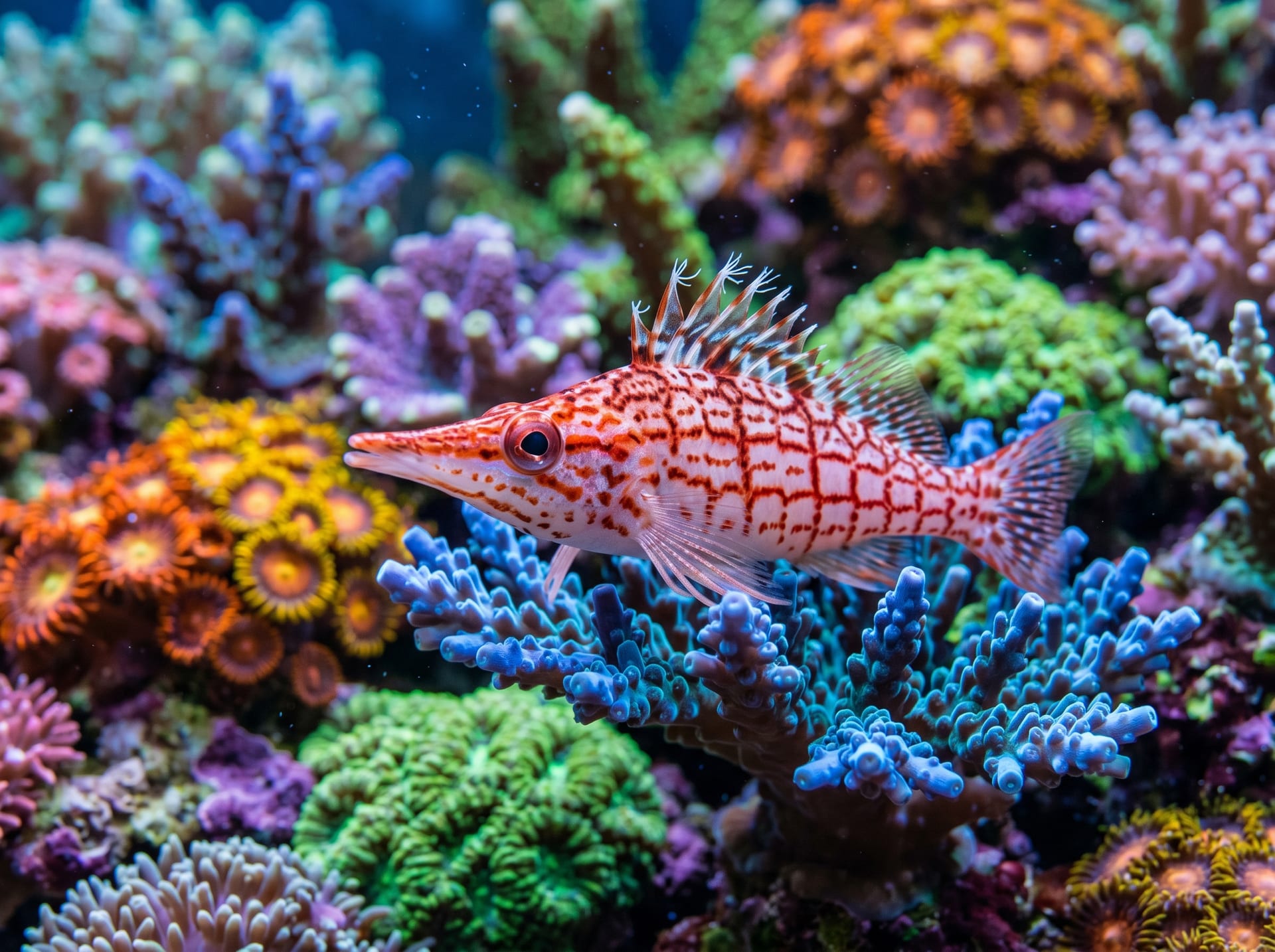
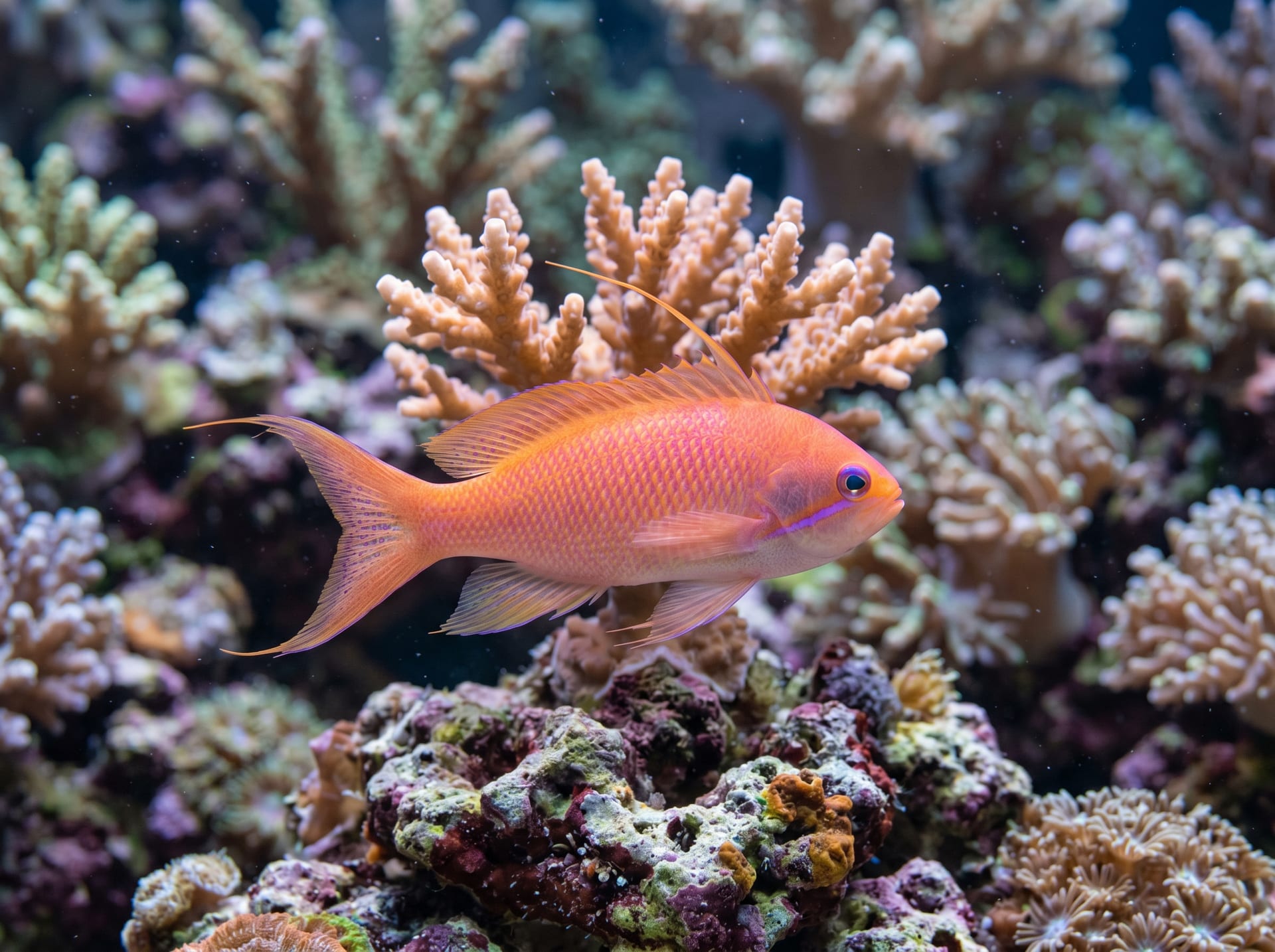
Anthias Species Care Comparison Guide | Characteristics of Indonesian & Philippine Strains and Tank Management
Detailed breakdown of popular Anthias species (Purple Queen, Kashiwae, and Hawkfish varieties) by type. This guide covers water quality requirements, feeding challenges, harem maintenance, and sequential hermaphroditism—the core aspects of Anthias husbandry for Indonesian and Philippine specimens.
Key Takeaways
Detailed breakdown of popular Anthias species (Purple Queen, Kashiwae, and Hawkfish varieties) by type. This guide covers water quality requirements, feeding challenges, harem maintenance, and sequential hermaphroditism—the core aspects of Anthias husbandry for Indonesian and Philippine specimens.
What Are Anthias?
Anthias (Anthias spp.) are a collective term for a small to medium-sized group of marine fish belonging to the order Perciformes and the family Serranidae (formerly Anthiidae). Known for their vibrant orange, pink, red, and purple coloration and graceful schooling behavior, they are popular reef tank inhabitants that add striking visual appeal.
In Japan, the fish commonly called "ハナダイ" include many species centered around the genus Pseudanthias. In the wild, they inhabit the mid to upper zones of rocky and coral reef edges, where they swim in large schools feeding on plankton.
---
Major Species Comparison
1. Purple Queen Anthias (*Pseudanthias tuka*)
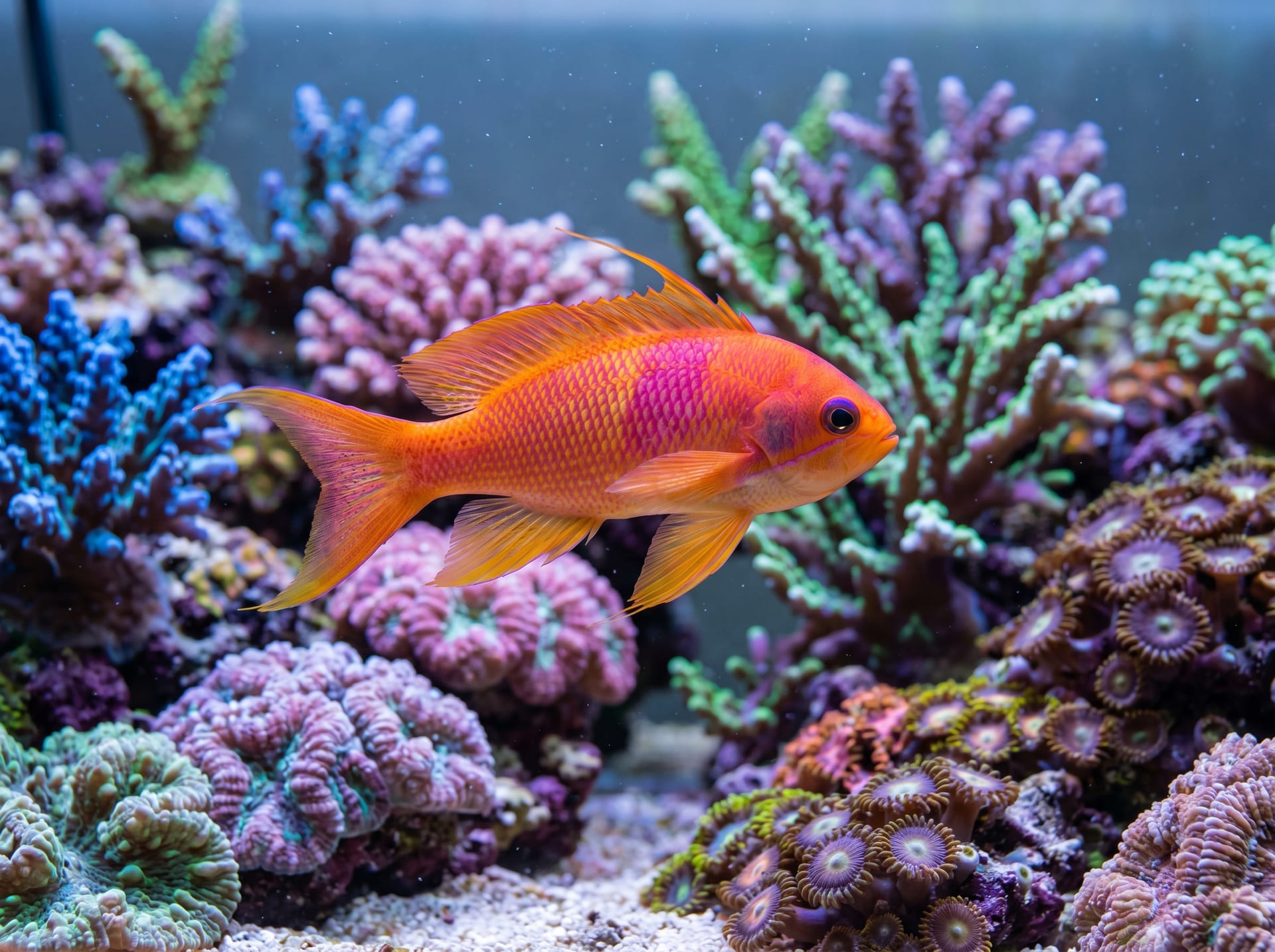
Common Name: Purple Queen Anthias Size: 7–10 cm Origin: Indonesia, Philippines, southern Japan Coloration: Females yellow to orange; males purple to magenta with yellow stripes
One of the most popular anthias species. The male's purple coloration lives up to its "Purple Queen" name in vibrancy. While intermediate in difficulty compared to other anthias, they require frequent feeding and demanding conditions, making them challenging for beginners.
2. Kashiwae's Anthias (*Pseudanthias kashiwae*)
Common Name: Kashi's Anthias Size: 8–12 cm Origin: Southern Japan, Philippines Coloration: Red to orange; males display white filaments on tail fin
Native to Japanese waters, this species adapts well to lower temperatures (22–25°C) and is relatively easy to source domestically.
3. Lyretail Anthias (*Pseudanthias squamipinnis*)
Common Name: Lyretail Anthias / Sea Goldie Size: 7–12 cm Origin: Indian Ocean to Pacific (wide distribution) Coloration: Females orange; males purple to pink
The most readily available species in the hobby. Among anthias, it is relatively hardy and ideal for beginners.