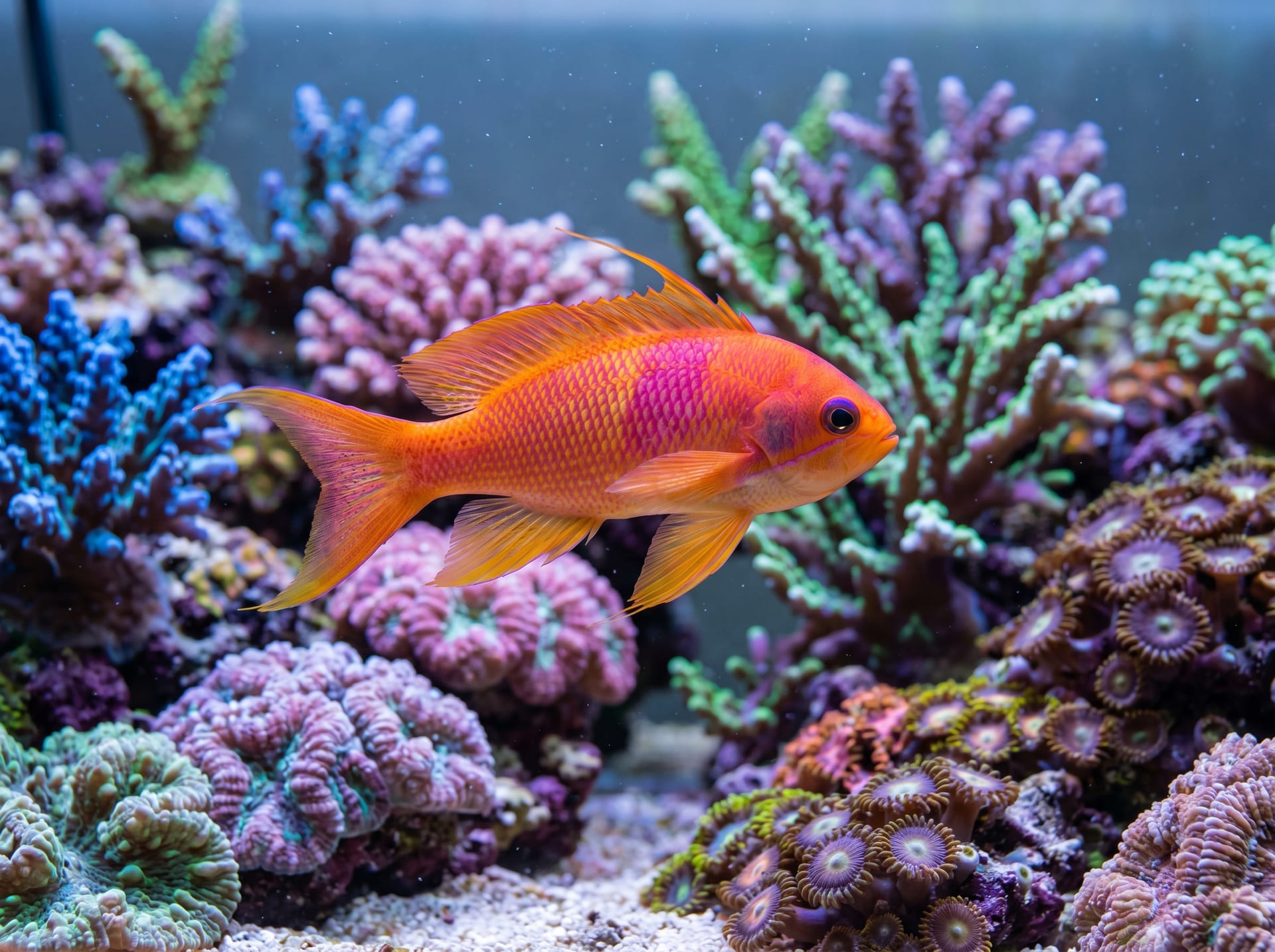
Anthias
Anthias are stunning saltwater fish prized for their vibrant pink and orange hues, gracefully swimming through the middle water column of reef tanks. Their generally peaceful temperament makes them suitable for community setups, even for beginners. Keeping them in groups lets you enjoy their natural schooling behavior.
View Anthias encyclopedia →0% commission on your first sales!Register by September 30, 2026 and your first 2 sales are commission-free!
Breeder Wanted!
List on BreederDirect and sell directly to customers nationwide!
BreederDirect's 6 Transparency Promises
Every Marine Fish & Coral listing shows Breeder's full disclosure. No wild-caught. Captive-bred priority, tank size guidance, temperament details—transparent aquaculture.
- Captive-bred
- WYSIWYG
- Reef-safe
- Care Info Included
- Origin Disclosed
- Temperament Listed
Browse all 42 breeds
Care Difficulty
Reef-safe
Temperament
Verified breeders wanted for Marine Fish & Coral
Breeders are signing up now ahead of launch. Subscribe to be notified when new listings go live.
Getting alerts is free with a member account. When new listings match your saved search, we'll notify you by email and in-app.
Browse other categories
Verified breeders (preview)
Are you raising marine fish & coral?
Register as a breeder and connect with buyers directly.
Apply as a breederAbout Anthias
Anthias are a group of saltwater fish belonging to the family Serranidae, widely distributed across the coral reefs of the Indian and Pacific Oceans. Several species inhabit Japanese coastal waters, with favorites like the Lyretail Anthias and the Threadfin Anthias long established in the hobby. Coloration varies by species—spanning pink, orange, and purple—and many exhibit striking differences between males and females, lending brilliant color to reef aquariums. Their habit of schooling gracefully through the mid-water column creates a breathtaking sense of a living reef in your own home. While generally peaceful and compatible with other non-aggressive fish, successful long-term care depends on consistent high-frequency feeding and diligent water quality management.
7 things to know before welcoming a Anthias
1Keep Them in Groups
Anthias are naturally schooling fish and tend to become stressed when kept alone. A stable group typically consists of one male with several females, and introducing 3–5 individuals is recommended. Avoid overcrowding in small tanks, as this can trigger territorial aggression.
2Sequential Hermaphrodites
Most anthias species are born female, with the dominant female transitioning to male when the group's male dies. This means the sex at purchase is not permanent. Observing this natural transformation can be one of the fascinating aspects of keeping anthias.
3Frequent Feeding Required
Anthias have a high metabolism and benefit from being fed 2–3 times daily. A varied diet of frozen copepods, mysis shrimp, and quality pellets helps maintain their health. Insufficient feeding can quickly lead to weight loss and increased susceptibility to disease.
4Stable Water Conditions
Anthias are somewhat sensitive, so maintaining stable water conditions—temperature 24–26°C, specific gravity 1.023–1.025, pH 8.1–8.3—is essential. Sudden changes can trigger illness including marine ich. Ensure proper filtration with a protein skimmer before introducing them.
5Tank Size Considerations
Even small species require at least 120 liters when kept in groups to provide adequate swimming space. Cramped conditions increase stress and inter-fish aggression. For larger species such as the Lyretail Anthias, many shops recommend 200 liters or more.
6Choosing Compatible Tankmates
Peaceful fish of similar size, such as gobies or clownfish, make good tankmates. Avoid large wrasses or groupers, which may prey on anthias. Even within the same or related species, overcrowding can lead to male-on-male aggression.
7Quarantine Before Introduction
Anthias are prone to immune suppression from transport stress, increasing the risk of introducing parasites such as marine ich. Quarantining new arrivals in a separate tank for about two weeks before adding them to the main display protects existing livestock. Pay close attention to feeding behavior during the acclimation period.
Frequently asked questions about Anthias
- Q.Are anthias suitable for beginners?
- A.Due to their frequent feeding requirements and water quality sensitivity, anthias are often considered more suitable for intermediate hobbyists who have mastered the basics of marine fishkeeping. That said, beginners with proper equipment and preparation can successfully keep them.
- Q.How many anthias should I start with?
- A.Starting with at least 3, ideally around 5 individuals, tends to produce a stable group. A natural composition of one male with multiple females encourages settled schooling behavior. Keeping only one or two often leads to isolation stress.
- Q.Can anthias be trained to eat prepared foods?
- A.Most individuals can be trained to accept high-quality pellets or flakes with patience. A common approach is to gradually mix prepared foods with frozen offerings. Individual variation exists, so continuing to offer frozen food alongside prepared diets remains a safe practice.
- Q.How do anthias interact with live rock and corals?
- A.Anthias rarely nip at corals or invertebrates, making them excellent candidates for reef tanks. They use live rock as shelter and resting spots, so providing ample crevices in your aquascape will help them feel secure.
- Q.What are the typical costs of keeping anthias?
- A.Individual prices vary by species, but common varieties typically range from around 2,000 to 8,000 yen per fish. Since group keeping is essential, initial stock costs multiply accordingly. Budget additionally for a 120L+ tank, protein skimmer, heater, and ongoing expenses for frozen foods.
Useful tools for Anthias care
Learn more about Anthias in the encyclopedia
View Anthias encyclopedia entry →
Care difficulty, lifespan, size and diet — all basics covered.
Anthias related articles
Yellowstripe Anthias (Sea Goldie) Care Guide | Harem Structure, Feeding, and Tankmate Compatibility
An explanation of Yellowstripe Anthias (Sea Goldie) care methods. This article covers how to establish a harem structure (1 male + multiple females), the mechanism of sex change from female to male, practical high-frequency feeding protocols (2-3 times daily), a list of compatible and incompatible tankmates, and detailed prevention strategies for white spot disease and velvet disease.
Anthias Species Care Comparison Guide | Characteristics of Indonesian & Philippine Strains and Tank Management
Detailed breakdown of popular Anthias species (Purple Queen, Kashiwae, and Hawkfish varieties) by type. This guide covers water quality requirements, feeding challenges, harem maintenance, and sequential hermaphroditism—the core aspects of Anthias husbandry for Indonesian and Philippine specimens.
Anthias Group-Breeding Care Guide — Sex Change, Feeding Frequency & Tank Selection Guide
Complete care guide for the Anthias (Fairy Basslets), popular for their beautiful schooling behavior. Learn about male/female roles, sex change mechanisms, frequent feeding requirements, and tank sizing to maintain stable groups.
Care Guide for Anthias Fish | Techniques to Enhance Schooling Beauty
Explains care methods for popular Anthias fish in marine aquariums. Introduces species-specific characteristics, feeding tips, schooling requirements, sex transformation mechanisms, and tankmate compatibility precautions.
More in this category
Can't find the one you're looking for?
Post your wishes for free and breeders with matching animals will contact you with introductions.