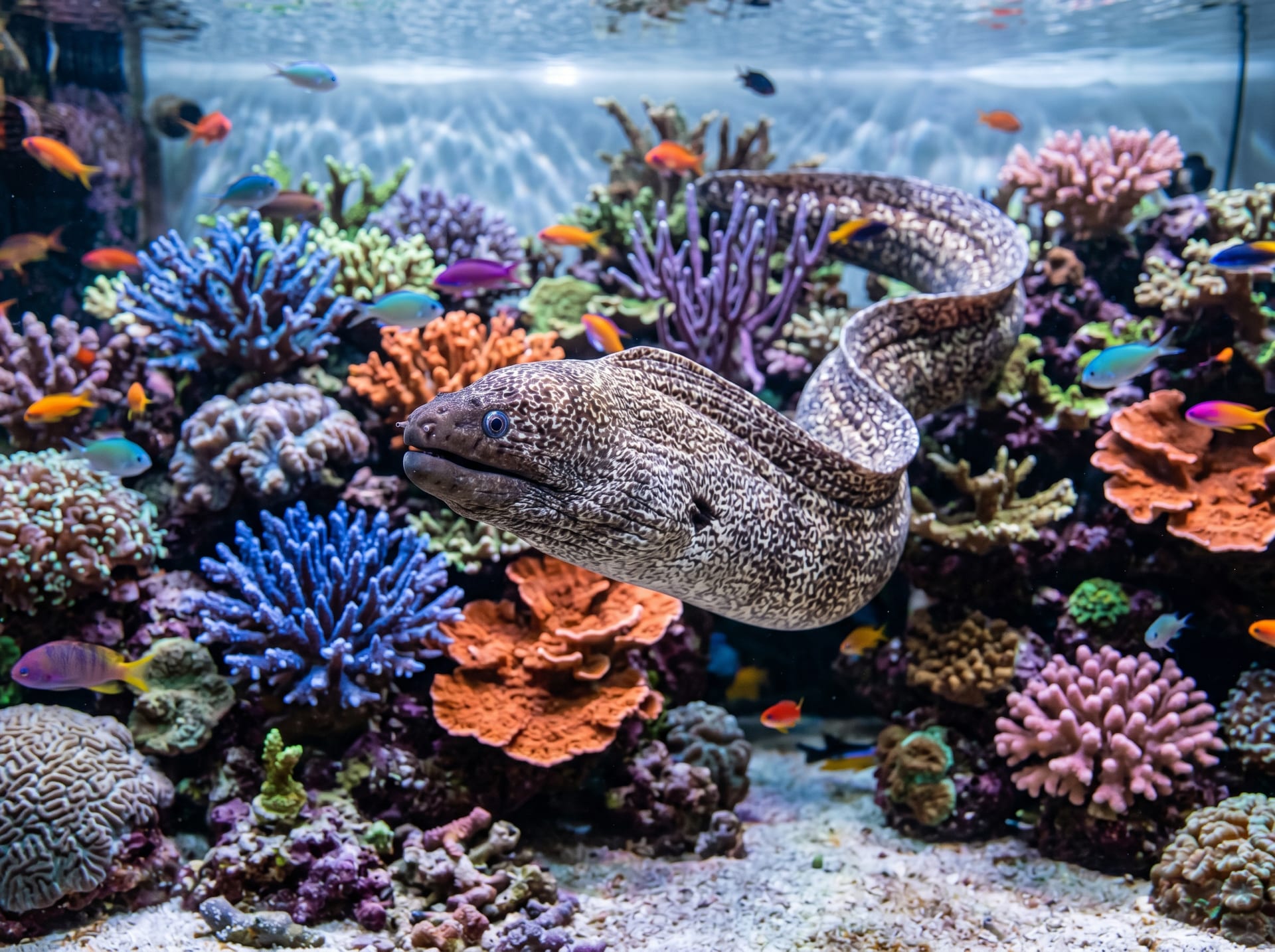
Moray Eel
Moray eels are striking saltwater fish known for their elongated bodies and vivid patterns, and many individuals become surprisingly friendly with their keepers over time. Their bold presence makes them a popular centerpiece species in marine aquariums.
View Moray Eel encyclopedia →0% commission on your first sales!Register by September 30, 2026 and your first 2 sales are commission-free!
Breeder Wanted!
List on BreederDirect and sell directly to customers nationwide!
BreederDirect's 6 Transparency Promises
Every Marine Fish & Coral listing shows Breeder's full disclosure. No wild-caught. Captive-bred priority, tank size guidance, temperament details—transparent aquaculture.
- Captive-bred
- WYSIWYG
- Reef-safe
- Care Info Included
- Origin Disclosed
- Temperament Listed
Browse all 42 breeds
Care Difficulty
Reef-safe
Temperament
Verified breeders wanted for Marine Fish & Coral
Breeders are signing up now ahead of launch. Subscribe to be notified when new listings go live.
Getting alerts is free with a member account. When new listings match your saved search, we'll notify you by email and in-app.
Browse other categories
Verified breeders (preview)
Are you raising marine fish & coral?
Register as a breeder and connect with buyers directly.
Apply as a breederMoray Eel key facts
- Care level
- Intermediate
- Diet
- Carnivorous: chunks of fish and shrimp
About Moray Eel
Moray eels belong to the family Muraenidae within the order Anguilliformes, with over 200 species distributed across tropical and subtropical seas worldwide. Their elongated, serpentine bodies and diverse coloration—ranging from vivid yellow to intricate spotted patterns—make them visually captivating aquarium residents. The constant opening and closing of their mouths is not aggression but simply the way they circulate water over their gills to breathe. In captivity, most individuals can be transitioned to frozen foods, and well-acclimated eels often respond to their keeper's presence, developing a noticeable personality. Their preference for hiding among rockwork encourages creative aquascape design, offering an engaging challenge for intermediate to advanced marine hobbyists who want a truly distinctive centerpiece fish.
7 things to know before welcoming a Moray Eel
1Large Tank Required
Many moray eels grow to 60 cm or longer, requiring tanks of at least 150–200 liters. They prefer hiding over open swimming, so provide caves or PVC pipes where they can retreat comfortably.
2Escape Artists
Moray eels are notorious escape artists and can squeeze through surprisingly small gaps. Always use a tight-fitting, weighted, or lockable lid to prevent escapes.
3Choose Tankmates Carefully
Moray eels will eat fish, shrimp, and crabs small enough to swallow. Limit tankmates to similarly sized or larger species, and note that size differences between eels can also lead to predation.
4Bites Can Be Serious
Moray eels have sharp, backward-curving teeth that cause deep lacerations. Always confirm the eel's location before putting your hand in the tank, and avoid hand-feeding directly to reduce bite risk.
5Carnivore Diet
Moray eels are carnivores; frozen shrimp, squid, and smelt are common staples. Many wild-caught individuals are used to live prey but can be transitioned to frozen food with patience. Feeding 2–3 times per week is generally sufficient.
6Water Quality Matters
As heavy-feeding carnivores, moray eels produce significant waste that elevates nitrate levels quickly. A powerful protein skimmer and regular water changes of 10–20% weekly help maintain stable water quality.
7Temperament Varies by Species
Temperament varies widely by species—some, like the Hawaiian dragon moray, are relatively docile, while others such as the giant moray can be more aggressive. Research the specific species before purchasing to match it to your experience level and tank size.
Frequently asked questions about Moray Eel
- Q.Can beginners keep a moray eel?
- A.Moray eels are best suited for hobbyists with some saltwater experience, particularly in water quality management and protein skimmer maintenance. They are not ideal as a first marine fish; gaining experience with less demanding species first is recommended.
- Q.Can moray eels be kept with other fish?
- A.Any fish or invertebrate small enough to swallow will likely be eaten. Larger, similarly-sized fish such as groupers can sometimes coexist, but individual temperament varies and close observation is always necessary.
- Q.How long do moray eels live?
- A.Lifespan varies by species, but captive moray eels have been reported to live 10–20 years. Their longevity means a serious long-term commitment, so thorough preparation before acquiring one is important.
- Q.What should I do if my eel won't eat?
- A.Newly introduced eels often refuse food due to stress and may not eat for one to two weeks—this is usually normal. If the refusal continues, check specific gravity, ammonia, and nitrite levels, as poor water quality or illness may be the cause.
- Q.What kind of lid is needed for a moray eel tank?
- A.A solid glass or acrylic lid with no gaps is ideal, secured with weights or dedicated clips. Mesh lids should be used with caution, as slender juveniles may be able to squeeze through the openings.
Useful tools for Moray Eel care
Learn more about Moray Eel in the encyclopedia
View Moray Eel encyclopedia entry →
Care difficulty, lifespan, size and diet — all basics covered.
Moray Eel related articles
Moray Eel Tankmate Compatibility Guide | Fish You Can Keep Together, Species to Avoid, and Risk Management Practices
A comprehensive guide to tankmate compatibility between striking moray eels suitable for saltwater aquariums and other fish species. Covers breed-specific compatibility (Snowflake Moray, Spotted Moray, etc.), concrete examples of mid to large fish that can coexist (Tangs, Foxface, large wrasses), species to absolutely avoid, and practical risk reduction through feeding management and cave layouts.
Complete Moray Eel Care Guide|Species, Tank Size, Feeding, and Tankmates Explained
A comprehensive guide to caring for moray eels (Moray Eel), popular in saltwater aquariums. Learn the characteristics of popular species like Ribbon Eel, Whitemouth Moray, and Spotted Moray, appropriate tank sizes, feeding methods, and escape prevention measures.
More in this category
Can't find the one you're looking for?
Post your wishes for free and breeders with matching animals will contact you with introductions.