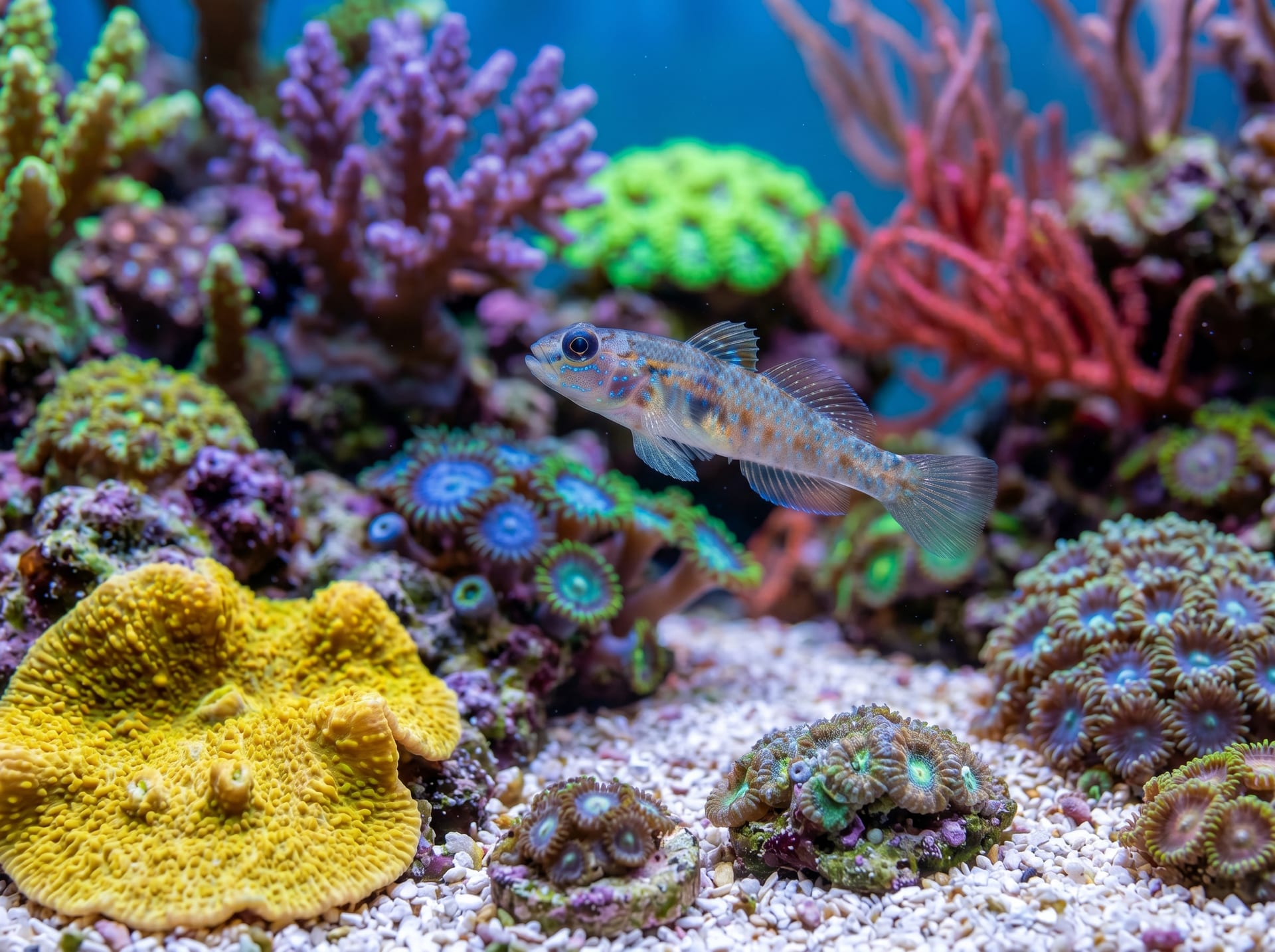
Goby
Gobies are one of the most diverse groups in marine fishkeeping, delighting aquarists with their burrowing behavior and charming personalities. Many species inhabit sandy reef flats or rocky substrates and display natural behaviors readily in the aquarium, making them a popular choice for beginners. With the right setup, numerous goby species are hardy enough for long-term care.
0% commission on your first sales!Register by September 30, 2026 and your first 2 sales are commission-free!
Breeder Wanted!
List on BreederDirect and sell directly to customers nationwide!
BreederDirect's 6 Transparency Promises
Every Marine Fish & Coral listing shows Breeder's full disclosure. No wild-caught. Captive-bred priority, tank size guidance, temperament details—transparent aquaculture.
- Captive-bred
- WYSIWYG
- Reef-safe
- Care Info Included
- Origin Disclosed
- Temperament Listed
Browse all 42 breeds
Care Difficulty
Reef-safe
Temperament
Verified breeders wanted for Marine Fish & Coral
Breeders are signing up now ahead of launch. Subscribe to be notified when new listings go live.
Getting alerts is free with a member account. When new listings match your saved search, we'll notify you by email and in-app.
Browse other categories
Verified breeders (preview)
Are you raising marine fish & coral?
Register as a breeder and connect with buyers directly.
Apply as a breederAbout Goby
Gobies, belonging primarily to the family Gobiidae within the order Perciformes, comprise over 2,000 species distributed across tropical and subtropical seas worldwide. Most inhabit the sandy flats and rocky crevices of coral reefs, where they are well known for burrowing into the substrate for shelter. Size varies dramatically across species, from diminutive 3 cm miniatures to specimens reaching several dozen centimeters. Their visual diversity is equally striking — from the vivid red-to-orange gradients of the Firefish goby to the intricate spotted patterns of Randall's pistol goby. Temperamentally, gobies are generally peaceful and curious, often approaching the front glass to observe their keeper, a charm that endears them to hobbyists. Among the most celebrated behaviors in marine fishkeeping is their symbiotic partnership with pistol shrimp, in which the shrimp builds and maintains a shared burrow while the goby serves as sentry. Hardy and adaptable, many species are well-suited to beginners, while the sheer breadth of available varieties ensures that even seasoned reef keepers can find their ideal specimen.
7 things to know before welcoming a Goby
1Provide a Sand Substrate
Many gobies instinctively burrow into sand and may become stressed without a substrate. Providing 5 cm or more of fine coral sand allows them to exhibit natural digging behavior. The sand bed also supports beneficial bacteria and helps stabilize water quality.
2Mind Pairing and Tank Mates
Gobies can be territorial toward their own species, and males in particular may fight if kept together without enough space. Providing hiding spots and adequate tank volume is essential for keeping multiple individuals. They generally coexist well with other peaceful marine fish.
3Prevent Jumping Accidents
Gobies are known to jump out of tanks, especially when startled or at night. Always use a tight-fitting lid and seal any gaps around cables or pipes. Escape incidents are often fatal, so securing the aquarium top should be a priority before introducing your fish.
4Symbiotic Species Need a Shrimp Partner
Watchman gobies and similar symbiotic species show their most natural behavior when kept with a pistol shrimp partner. The shrimp digs and maintains the burrow while the goby acts as a lookout — a relationship that can be observed directly in the aquarium. Symbiotic pairs tend to be calmer and more active than solitary individuals.
5Keep Water Parameters Stable
Gobies are sensitive to sudden changes in water conditions. Aim for a specific gravity of 1.023–1.025 and a temperature of 25–26°C, and perform partial water changes weekly to control nitrate levels. Taking extra care during acclimation when first introducing your fish helps reduce the risk of loss.
6Confirm Feeding Early On
Many gobies are not accustomed to dry or pellet foods when first acquired. Start with frozen copepods or brine shrimp to encourage feeding, and observe whether the fish is eating within the first few days. Once feeding consistently, you can gradually transition to prepared foods.
7Understand the Costs Involved
Marine fishkeeping involves higher upfront costs than freshwater setups, including specialized equipment such as a protein skimmer and refractometer. Goby prices vary widely by species, from a few hundred to tens of thousands of yen, with rare symbiotic varieties commanding a premium. Estimating monthly running costs — electricity, salt mix, food, and consumables — before you start will help you plan accordingly.
Frequently asked questions about Goby
- Q.Can beginners keep gobies?
- A.Many species, such as the Firefish goby or neon goby, are quite hardy and well-suited to beginners. That said, a basic understanding of marine water chemistry and the nitrogen cycle is essential before getting started. With the right equipment and a properly cycled tank, long-term success is very achievable.
- Q.How long do gobies live?
- A.Lifespan varies by species, but most gobies in captivity live approximately 3 to 7 years. Providing stable water conditions and a nutritionally balanced diet can help extend their health and longevity. Some wild individuals have been documented living even longer under favorable conditions.
- Q.Can I keep multiple gobies together?
- A.Mixing different species is generally feasible, but conspecifics and closely related species often compete for territory. Some species can be kept as male-female pairs and may coexist peacefully long-term once bonded. A spacious tank with plenty of hiding spots is key to successfully housing multiple gobies.
- Q.How do I start a goby-pistol shrimp partnership?
- A.Introduce a suitable goby species (such as Amblyeleotris or Stonogobiops) alongside a compatible pistol shrimp (e.g., Alpheus randalli) in the same sandy-bottomed tank. They may keep their distance initially, but often begin sharing a burrow once they grow accustomed to each other. Pairing is not guaranteed, so patience is essential — avoid forcing contact and allow them to bond naturally.
- Q.My goby hides in the sand and won't come out
- A.Hiding in the substrate or behind rockwork is a normal response to a new environment or sudden changes in water parameters, and it is not uncommon for gobies to stay hidden for several days after introduction. This is a natural acclimatization behavior, and most individuals will emerge on their own once settled. If the fish remains completely hidden for more than a week, check water quality and ensure food is reaching the substrate level.
Useful tools for Goby care
Goby related articles
Breeding Guide for Saltwater Goby Fish | Pair Formation, Spawning, and Fry Rearing
Guide to breeding gobies in saltwater aquariums. Explains how to identify pairs, prepare spawning environments, manage eggs, feed pelagic larvae, and rear fry, with detailed coverage of goby breeding characteristics that differ from clownfish.
Diamond Goby (Valenciennea) Care Guide | Sand Bed Sifting, Feeding, and Pair Breeding in Practice
A comprehensive guide to keeping Diamond Gobies (genus Valenciennea), which are popular sand bed cleaners in reef tanks. Learn about proper sand bed depth and grain size, supplementary feeding methods using copepods and amphipods, pairing considerations, live rock placement to prevent collapse, and solutions for common problems like starvation, escape, and white spot disease—a practical guide for long-term care.
Highfin Shrimp Goby Care Guide | Symbiotic Pair Keeping of Burrowing Goby and Pistol Shrimp
The Highfin Shrimp Goby (Stonogobiops nematodes) is a small saltwater fish known for its symbiosis with pistol shrimp (Alpheidae family). This comprehensive guide covers symbiotic pair establishment, sand substrate preparation, feeding, water quality management, and precautions for multi-pair keeping, detailing both the appeal and technical aspects of raising symbiotic gobies.
Complete Care Guide for Firefish Goby | Tank, Food, Compatibility, and Escape Prevention
Comprehensive beginner's guide to caring for Firefish Goby. Covers tank size, water quality, tank mate compatibility, feeding methods, and escape prevention strategies—everything you need to keep these beautiful gobies thriving long-term.
Complete Watchman Goby (Goby) Care Guide | Sand Bottom, Tank Mates, Feeding, Breeding
Complete guide to caring for Watchman Gobies (Opsiognathus sp. / Valenciennea strigata, etc.). Thoroughly explains the necessity of sand bottoms, symbiosis with hermit crabs and pistol shrimp, feeding tips, tank selection, and breeding—all compiled in an easy-to-understand way for beginners.
Goby and Pistol Shrimp Symbiosis Aquarium Guide | Recommended Pairs and How to Create Your Ideal Setup
Learn how to care for and enjoy the symbiotic relationship between gobies and pistol shrimp in your aquarium. Discover recommended pairs, sand bed layouts, water quality management, and pairing techniques.
More in this category
Can't find the one you're looking for?
Post your wishes for free and breeders with matching animals will contact you with introductions.